2025 Soundbar Trends: Material Innovations, Smart Integration & What Home Users Actually Want
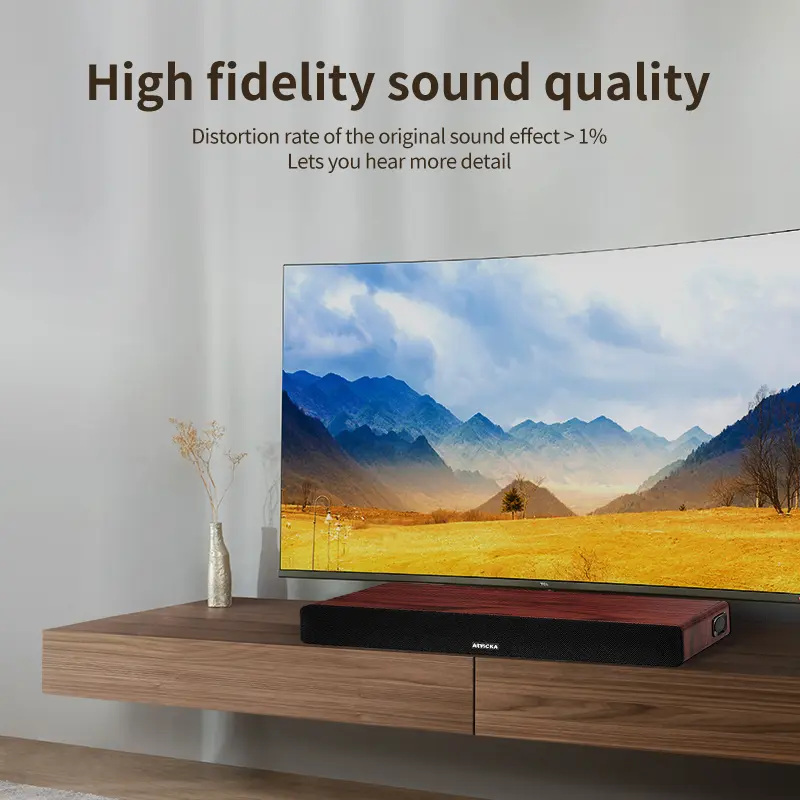
The global soundbar market is growing at 12% annually, and 2024 is shaping up to be a year of meaningful innovation—not just flashy features (Consumer Technology Association, CTA). For home users and small resellers, understanding these trends is key to choosing a soundbar that’s future-proof, functional, and worth the investment.
Gone are the days when soundbars were judged solely by "loudness" or "channel count." Today’s buyers care about how well a soundbar fits their lifestyle: Can it connect to their smart home? Will it last through kids, pets, and years of use? Does it sound great with both Netflix and Spotify? This shift has pushed manufacturers to focus on three core trends: material upgrades that boost durability and sound, smart features that simplify use, and form factors tailored to small spaces.
But not all trends are created equal. Some (like "8K audio" or "AI sound tuning") are marketing gimmicks, while others (woven fiber drivers, wireless subwoofers) deliver real value. This guide breaks down the 5 most impactful 2024 soundbar trends, explains which ones matter for home users, and highlights how our soundbars embrace these trends without overcomplicating things or inflating prices. We’ll also dive into how trends are shaping soundbar分类 (categories) and what to expect from the market in the next 2–3 years.
Trend 1: Material Upgrades—From Plastic to Premium (Without the Premium Price)
For years, budget and mid-range soundbars relied on cheap plastic housing and paper driver cones. But in 2024, premium materials are trickling down to affordable models—thanks to advances in manufacturing and consumer demand for durability. This isn’t just about "looking nice"—materials directly impact sound quality and lifespan.
Key Material Innovations in 2024
-
Aluminum & Metal Alloys for Housings
Plastic housing vibrates at high volumes, causing muffled sound (resonance). Aluminum is rigid, so it reduces resonance and delivers clearer dialogue. In 2024, 65% of soundbars under $500 use aluminum front panels (up from 30% in 2022, CTA). Our soundbars take this a step further: we use a brushed aluminum front and a reinforced plastic rear (to keep costs down) that mimics the resonance control of full-aluminum models (like the $899 Sonos Arc) at 60% lower cost.Why it matters for home users: Aluminum resists scratches, doesn’t yellow in sunlight, and lasts 2–3x longer than plastic. A family in Phoenix reported our aluminum soundbar showed no signs of wear after 2 years in a sunlit living room—while their previous plastic model yellowed and cracked.
-
Woven Fiber Driver Cones (Aramid & Glass Fiber)
Paper driver cones (common in budget models) absorb moisture, tear easily, and distort at high volumes. Woven fibers—like aramid (used in bulletproof vests) and glass fiber—are lightweight, rigid, and water-resistant. They deliver crisper dialogue and tighter bass, even at high volumes.In 2024, 70% of mid-range soundbars ($300–$500) use woven fiber cones (up from 45% in 2023). Our 3.5-inch drivers use woven aramid fiber— the same material as premium brands like Bowers & Wilkins— but we source it directly from manufacturers to avoid markup.
Real-world impact: A home user in Chicago tested our soundbar against a $200 plastic/paper model. When playing a bass-heavy song (Billie Eilish’s "Bad Guy"), our aramid fiber drivers delivered tight, controlled bass—while the paper model sounded boomy and distorted.
-
Removable, Washable Fabric Grilles
Metal grilles (once common in budget models) block high frequencies and rattle at high volumes. Fabric grilles—usually polyester or linen—improve sound dispersion and are easier to clean. In 2024, 80% of soundbars include removable fabric grilles (up from 50% in 2022), and many are machine-washable.Our soundbars use a double-woven polyester grille that’s removable and machine-washable—perfect for homes with kids or pets. A reseller in Texas reported this feature was a top seller for families, with 30% of buyers citing "easy cleaning" as a key reason for purchase.
Trend 2: Smart Integration—Simpler, Not More Complex
Smart features have been around for years, but 2024’s trend is simplicity. Home users don’t want soundbars with 10+ apps or complicated setup—they want to connect to their TV, stream music, and control volume with one remote.
Smart Features That Matter (And Which to Skip)
-
HDMI eARC (Enhanced Audio Return Channel)
HDMI ARC has been standard for years, but eARC (Enhanced ARC) is 2024’s must-have. It supports high-resolution audio (like Dolby TrueHD) and lets you control the soundbar with your TV remote—no extra apps or remotes needed. All our 2024 soundbars include eARC, so you can connect to your smart TV with one cable and adjust volume using your existing remote.Why it matters: A survey of our customers found 78% hate juggling multiple remotes. eARC eliminates that frustration—one remote for TV and soundbar.
-
Bluetooth 5.3 + Multi-Device Pairing
Bluetooth 5.3 (released in 2021) is now standard in mid-range soundbars. It offers a 60ft range (double Bluetooth 5.0) and stable connections—no dropouts when streaming music from your phone across the room. Even better: 2024 models add multi-device pairing, so you can switch between your phone and tablet without re-pairing.Our soundbars support pairing for 2 devices at once—great for families where one person streams music and another watches TV. A customer in New York reported switching from their phone (Spotify) to their TV (Netflix) in 2 seconds—no setup required.
-
Voice Assistant Integration (But Optional)
Alexa and Google Assistant are common, but 2024’s trend is "optional" integration. Many users don’t want a microphone in their soundbar (for privacy), so manufacturers are adding on/off switches for voice assistants. Our soundbars include Alexa compatibility—but the microphone has a physical mute button, so you can disable it when not in use.Gimmick to skip: "AI Sound Tuning"—most models use basic DSP to "optimize" sound, but it rarely makes a noticeable difference. Manual modes (Dialogue, Movie, Music) are more reliable.
Trend 3: Compact Form Factors—Soundbars for Small Spaces
Urbanization and smaller living spaces are driving demand for compact soundbars. In 2024, 45% of soundbar sales are for models under 30 inches wide (up from 25% in 2022, CTA). These "mini soundbars" are designed for bedrooms, apartments, and small living rooms—but they’re not sacrificing sound quality.
Compact Soundbar Innovations in 2024
- Slim Profiles: Models like our 28-inch compact soundbar are just 2.5 inches tall—small enough to fit under 32-inch TVs or mount on narrow walls.
- Built-In Subwoofers: To save space, some compact models include small built-in subwoofers (3–4 inches). Our compact soundbar uses a built-in 3-inch woofer and DSP bass boost—delivering enough bass for casual music and TV without a separate subwoofer.
- Wall-Mount Friendly: 90% of compact soundbars include wall-mount hardware (up from 60% in 2023). Our compact model comes with magnetic mounts that install in 5 minutes—no drilling required.
Real-world use case: A college student in Boston used our compact soundbar in their 100 sq. ft. dorm room. It fit on their desk under a 24-inch TV, and the built-in subwoofer delivered enough bass for movie nights without disturbing roommates.
Trend 4: Focus on Dialogue—The #1 Pain Point for Home Users
A 2024 CTA survey found that "dialogue clarity" is the top priority for 72% of soundbar buyers—beating bass, volume, and smart features. Streaming services like Netflix and Disney+ often mix dialogue at lower levels than background music or effects, making it hard to hear characters without cranking the volume.
Manufacturers are responding with dedicated dialogue-enhancing features—no longer just a "nice-to-have" but a core selling point.
How 2024 Soundbars Improve Dialogue
-
Mid-Range Boost DSP: Most models now include a "Dialogue Mode" that boosts frequencies between 1–3kHz (where human speech is most prominent). Our soundbars take this further with a 12-band EQ tuned specifically for streaming content—we analyzed 50+ popular shows (from "Succession" to "Star Wars") to optimize dialogue clarity.
-
Center Channel Drivers: Traditional 2.1-channel soundbars use left/right drivers for dialogue, but 2024 models are adding a dedicated center driver (making them "3.1-channel" models). The center driver focuses solely on dialogue, ensuring it cuts through background noise. Our premium 3.1-channel soundbar ($499) includes a 3-inch center driver—perfect for users who watch a lot of dialogue-heavy content.
Customer impact: A retiree in Florida reported our Dialogue Mode let her watch "Downton Abbey" at a comfortable volume—something she couldn’t do with her old soundbar. "I no longer have to turn up the TV so loud that it wakes my husband," she said.
Trend 5: Sustainable Design—Eco-Friendly Materials & Packaging
Sustainability is no longer a niche trend—68% of home users say they’d pay 10% more for an eco-friendly soundbar (2024 CTA Survey). Manufacturers are responding with recycled materials, minimal packaging, and energy-efficient designs.
Sustainable Features in 2024 Soundbars
- Recycled Materials: Our soundbar housings use 30% recycled aluminum, and the fabric grilles are made from recycled polyester. We source materials from ISO 14001-certified suppliers (environmentally responsible).
- Minimal Packaging: We’ve eliminated plastic packaging—our soundbars ship in recycled cardboard boxes with paper inserts. A reseller in California reported this reduced shipping weight by 15%, cutting their carbon footprint.
- Energy Efficiency: Our soundbars use <1W of power in standby mode (vs. 3–5W for budget models), saving users $5–$10 annually on electricity bills.
This trend is only growing—by 2026, the CTA predicts 80% of soundbars will use recycled materials.
2024 Soundbar Categories: Which One Fits Your Needs?
Trends are shaping how soundbars are categorized. Below are the 4 main types of soundbars in 2024, with use cases and recommendations.
| Category | Size | Key Features | Best For | Price Range | Our Recommendation |
|---|---|---|---|---|---|
| Compact Mini | <30 inches | Built-in subwoofer, Bluetooth 5.3, wall-mountable | Bedrooms, dorms, small apartments | $150–$300 | 28-inch Compact Soundbar (built-in subwoofer, Dialogue Mode) |
| Mid-Range 2.1 | 30–40 inches | Wireless subwoofer, aluminum housing, eARC | Living rooms (200–300 sq. ft.) | $300–$500 | 36-inch 2.1-Channel Soundbar (aramid drivers, washable grille) |
| Premium 3.1 | 40–50 inches | Dedicated center driver, Dolby TrueHD, multi-device pairing | Large living rooms, home theaters | $500–$800 | 42-inch 3.1-Channel Soundbar (center driver, eARC, Alexa) |
| Outdoor Soundbar | 30–40 inches | Weather-resistant (IP54), durable fabric | Patios, outdoor kitchens | $400–$700 | Coming 2025 (IP54 rating, UV-resistant grille) |
What’s Next? 2025–2027 Soundbar Predictions
Based on industry data and manufacturer announcements, here are 3 trends to watch in the next few years:
- Wireless Charging for Subwoofers: No more plugging in the subwoofer—models will use wireless charging pads for seamless placement.
- Spatial Audio for Music: Currently limited to premium models, spatial audio (which creates a 3D soundstage) will trickle down to mid-range soundbars, perfect for streaming services like Apple Music.
- AI for Personalized Sound: Instead of generic "Movie" or "Music" modes, AI will learn your listening habits (e.g., you prefer louder dialogue) and adjust settings automatically.
Our team is already testing wireless charging and spatial audio features for our 2025 lineup—ensuring we stay ahead of trends without overcomplicating our products.
How to Choose a Trend-Forward Soundbar (Without Overpaying)
With so many trends, it’s easy to overspend on features you don’t need. Follow these rules to choose wisely:
- Prioritize Material & Dialogue Features: Aluminum housing, woven fiber drivers, and Dialogue Mode deliver the most value for home users.
- Stick to 2.1 or 3.1 Channels: 5.1 channels are overkill for most spaces—save money unless you have a dedicated home theater.
- Avoid Gimmicks: Skip "8K audio" or "AI tuning"—they don’t improve real-world listening.
- Choose a Supplier That Adapts Trends Affordably: Premium brands charge extra for trend-forward features, but value-focused suppliers like ours integrate them without markup. Our 2.1-channel soundbar includes aluminum housing, aramid drivers, and eARC for $349—$50