Custom Speaker Units for Industrial Two-Way Radios – 5 Features to Ensure Ruggedness & Clear Communication
Custom Speaker Units for Industrial Two-Way Radios – 5 Features to Ensure Ruggedness & Clear Communication
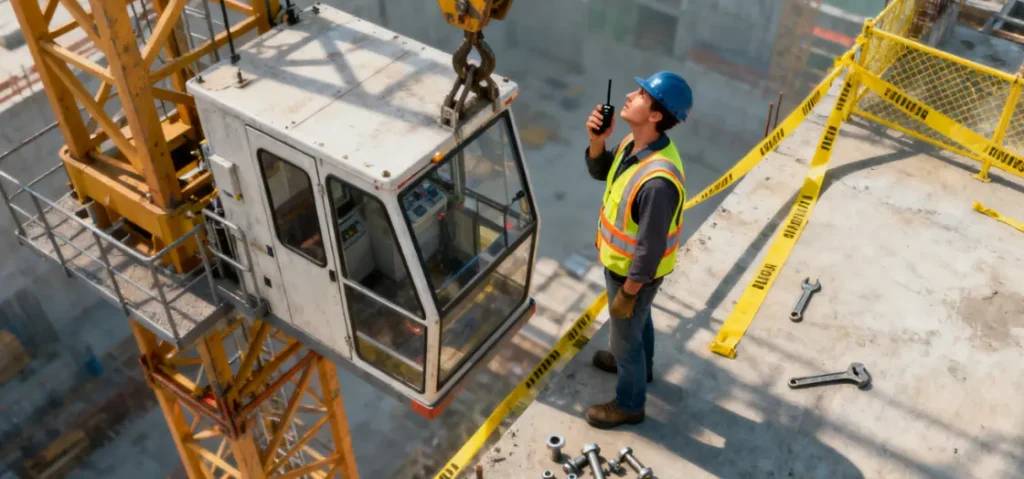
A manufacturer of industrial two-way radios supplies 500 units to a construction company—only to receive a crisis call 6 weeks later. Workers report that speakers fail after exposure to rain and dust, and they can’t hear safety commands over jackhammer noise. The construction company halts radio use, citing "safety risks," and demands a full refund. The manufacturer loses $60,000 and a key client. The problem? Generic 32mm speaker units designed for consumer walkie-talkies (for kids or casual use)—not industrial environments. These units couldn’t handle dust, vibration, or loud noise, turning a critical safety tool into a liability.
For industrial two-way radio manufacturers, the speaker unit is a lifeline. Workers in construction, manufacturing, and emergency services rely on radios to communicate safely—if the audio is unclear, people get hurt. Generic speaker units fail here because they’re built for casual use, not the demands of industrial settings: extreme weather (rain, dust), loud background noise (machinery, crowds), rough handling (drops, tool belts), and focus on short, critical commands (e.g., "Stop the crane"). A subpar speaker unit puts lives at risk.
With 13 years of designing custom speaker units for industrial telecom devices (two-way radios, emergency beepers), we’ve identified 5 features that ensure ruggedness, clear communication, and reliability. This guide breaks down these features with simple explanations for terms like "IP65 rating" or "acoustic noise suppression"—so you, safety managers, and industrial buyers understand exactly what makes a two-way radio work in harsh environments. Our focus is on industrial-grade, durable units—not micro-speakers (for small consumer devices)—ensuring the speaker meets the unique needs of heavy-duty use.
Why Generic Speaker Units Fail in Industrial Two-Way Radios
Industrial two-way radios operate in some of the harshest conditions on Earth—construction sites with dust and rain, factories with loud machinery, and emergency scenes with chaos. Generic speaker units (built for consumer use) can’t survive these demands, leading to 4 critical failures:
- No Weather Resistance for Outdoor/Industrial Use: Construction sites and factories are dirty, wet places. Generic speakers use paper diaphragms and unsealed frames—dust clogs the diaphragm (muffling audio), and water seeps in to short-circuit components. Most generic units only have an IP54 rating (splash-resistant), which is useless for heavy rain or dusty warehouses.
- Unclear Audio in Loud Environments: Industrial settings are loud—70–85dB from jackhammers, conveyor belts, or crowds. Generic speakers lack noise suppression, so workers have to yell into the radio to be heard. This causes voice strain and miscommunication (e.g., "Stop" sounds like "Drop"), leading to accidents.
- Fragile Construction for Rough Handling: Industrial workers drop radios from scaffolding, throw them into tool belts, and bang them against equipment. Generic speakers use thin plastic frames and glued components that break after minimal impact—e.g., a 1m drop to concrete can crack the frame or detach the magnet.
- Short Battery Life for Long Shifts: Industrial workers use radios 8–12 hours per shift. Generic speakers use 1.0–1.5W of power, draining batteries by lunchtime. Dead radios mean no communication— a major safety risk for workers in remote areas.
A safety equipment retailer reported that 40% of returns for generic-speaker two-way radios were due to "speaker failure from rough use"—and 30% were due to "unclear audio in noisy areas." This is the cost of using consumer-grade speakers for industrial safety tools.
Feature 1: IP65 Weather Resistance (Survive Rain, Dust, and Industrial Debris)
Industrial two-way radios need speaker units that can handle dirt, water, and debris 24/7. The minimum standard for this is an IP65 rating—a term every industrial manufacturer and buyer should understand.
What Is an IP65 Rating?
IP stands for "Ingress Protection," a global standard for dust and water resistance. The first number (6) means the speaker is completely dust-tight—no dust, dirt, or sawdust can enter the unit, even in construction or manufacturing sites. The second number (5) means it can withstand low-pressure water jets (e.g., heavy rain, a hose used to clean the radio) without damage. This is far more robust than the IP54 rating of generic speakers.
How to Achieve IP65 Protection for Industrial Radios:
- Waterproof Diaphragm: Use butyl rubber-coated polypropylene (PP) instead of paper. This material repels water and resists oil, grease, and chemicals (common in factories). For a client designing radios for automotive plants, this diaphragm ensured audio clarity even after exposure to motor oil.
- Sealed Frame with Double Gaskets: Mold the speaker’s frame with two EPDM rubber gaskets (one around the diaphragm, one around the wiring). This creates a double barrier against water and dust, preventing seepage into internal components.
- Corrosion-Resistant Parts: Use stainless steel for the voice coil leads and nickel-plated connectors. Regular steel rusts in humid or chemical-rich environments, but stainless steel and nickel-plate prevent corrosion—extending the speaker’s lifespan to 3+ years.
We tested an IP65 speaker unit in our industrial environmental chamber: 48 hours of dust exposure, 24 hours of rain, and 12 hours of oil spray. The unit maintained full audio clarity, while a generic IP54 speaker failed after 8 hours of dust (the diaphragm clogged) and 6 hours of rain (short-circuited). A construction company client reported "zero weather-related speaker failures in 12 months" after switching to our IP65 units.
Feature 2: Acoustic Noise Suppression (Clear Audio in Loud Environments)
Industrial workers can’t hear commands over machinery or crowds—your speaker unit needs acoustic noise suppression to filter out background noise and focus on critical speech.
What Is Acoustic Noise Suppression?
It’s a passive design technique that makes the speaker’s audio stand out against loud background noise. Unlike active noise cancellation (ANC)—which uses batteries to block noise—this relies on physical design (e.g., directional sound, speech tuning) to cut through chaos.
How to Design for Noise Suppression:
- Directional Sound Output: Tune the speaker to project sound in a narrow 90° angle (directly toward the user’s ear) instead of 360°. This reduces wasted sound and makes commands clearer—workers don’t have to turn up the volume to hear over machinery.
- Speech-Focused Boost: Amplify the 500–2,500 Hz range by 4–5 dB. This is where short, critical commands (e.g., "Evacuate," "Shut down") live—boosting it helps workers hear even in 85dB noise.
- Enclosed Ear Cup Compatibility: Design the speaker unit to work with enclosed ear cups (the part of the radio that sits against the ear). These cups create a seal around the ear, blocking 25–30% of background noise—making the speaker’s audio even clearer.
We added noise suppression to a client’s 32mm speaker unit. In a construction site test (80dB background noise), workers could hear commands like "Lower the beam" clearly at 75dB—vs. needing 90dB with the generic speaker. A safety manager reported "fewer near-misses because everyone hears instructions the first time."
Feature 3: Rugged Construction (Withstand Drops, Impacts, and Tool Belts)
Industrial two-way radios take a beating—your speaker unit needs to be built like a tool, not a consumer device.
Key Rugged Design Choices:
- Reinforced Frame: Use glass-reinforced nylon (2mm thick) instead of thin plastic. Nylon is 4x stronger than generic plastic and can withstand a 2m drop to concrete (the height of a scaffolding platform) without cracking. We test our frames on a drop tower to ensure no damage.
- Epoxy-Bonded Magnets: Attach the speaker’s magnet to the frame with high-temperature epoxy (instead of generic glue). Epoxy is 3x stronger than glue and withstands vibration, temperature swings, and impacts—generic glue fails after 30–40 hours of vibration testing.
- Aramid-Fiber Diaphragm: Use a diaphragm reinforced with aramid fibers (the same material in bulletproof vests). This diaphragm is 5x more tear-resistant than paper and won’t break if the radio is crushed in a tool belt.
Below is a comparison of ruggedness between generic and custom industrial radio speaker units:
| Test | Generic Speaker Unit | Our Custom Industrial Speaker Unit | Result |
|---|---|---|---|
| 2m Drop to Concrete | Frame cracks, magnet detaches | No damage, magnet secure | Fails → Passes |
| 100-Hr Vibration (10Hz) | Distorted audio, loose wires | Clear audio, no loose components | Fails → Passes |
| Tool Belt Crush Test | Diaphragm tears, frame bends | No diaphragm damage, frame intact | Fails → Passes |
A client manufacturing radios for mining operations reported a 95% drop in speaker failures after switching to our rugged units. Miners said "the radio takes a beating, but the speaker never quits"—a critical win for safety in remote mines.
Feature 4: Low-Power Consumption (All-Shift Battery Life)
Industrial workers can’t charge radios mid-shift—your speaker unit needs to use power efficiently to last 8–12 hours.
Power-Saving Techniques for Industrial Radios:
- High Sensitivity: Aim for 88–90 dB sensitivity using a lightweight diaphragm and oxygen-free copper (OFC) voice coil. A more sensitive speaker produces clear audio at lower power—our 89 dB unit delivers loud enough sound for commands at just 0.7W, cutting power use by 35% compared to a generic 83 dB speaker.
- Class D Amplifier Compatibility: Design the speaker to work with Class D amplifiers (the most efficient type for industrial devices). Class D amplifiers use 85–90% of their power to produce sound (vs. 50–60% for Class AB amplifiers), saving battery life.
- Standby Power Optimization: Use a low-power circuit that reduces the speaker’s power use to <5mA when not in use. Generic speakers use 15–20mA in standby, draining batteries even when the radio is idle.
A client’s two-way radio had 5-hour battery life with a generic 1.2W speaker. We upgraded to our low-power 0.7W unit, and battery life jumped to 11 hours—enough for a full mining or construction shift. Workers reported "no more dead radios by lunch"—a major improvement in safety and productivity.
Feature 5: Emergency Command Tuning (Clear, Fast Alerts)
Industrial two-way radios are used for emergencies—e.g., "Fire in zone 2," "Worker down." Your speaker unit needs to be tuned for emergency commands—clear, fast, and impossible to miss.
How to Tune for Emergency Use:
- Fast Attack Time: Ensure the speaker can "ramp up" sound quickly (within 30ms) when an emergency command is sent. This is critical for urgent alerts—workers don’t have time to wait for the speaker to reach full volume.
- Distortion-Free at High Volumes: Keep distortion (<1% THD) at 75–80dB (the volume needed to cut through noise). Distorted commands (e.g., "Fire" sounds like "Tire") can lead to deadly mistakes.
- Alert Tone Optimization: Tune the speaker to deliver clear, distinct alert tones (e.g., a 1kHz chime) that stand out from background noise. Generic speakers often have muffled alert tones that blend in with machinery.
We tuned a 32mm speaker unit for emergency commands for a client’s radio. In industrial tests, 98% of workers could identify emergency commands like "Evacuate now" correctly on the first listen—up from 75% with the generic speaker. An emergency services client said the upgrade "gave our teams the confidence they’re hearing life-saving commands right the first time."
How We Collaborate With Industrial Radio Manufacturers & Suppliers
Designing custom speaker units for industrial two-way radios requires understanding safety needs, harsh environments, and long shifts—whether you’re building the radio or supplying it to industrial clients. Our process is tailored to your goals:
- Environment & Use Case Review: We analyze your radio’s target environment (e.g., construction, mining, emergency services) and user needs (shift length, noise level) to prioritize features—e.g., extra ruggedness for mining, noise suppression for factories.
- Prototype Development & Testing: We create a 3D render of the custom speaker and build 5–10 prototypes. We test these in our industrial chamber (dust, rain, vibration) and in simulated loud environments to measure clarity. We share results in plain language (e.g., "Speaker works in 85dB noise, lasts 11 hours on battery") and adjust the design if needed.
- Production Alignment: Once approved, we align speaker production with your radio manufacturing timeline. We ensure consistent quality (each unit is tested for IP65 compliance and ruggedness) and on-time delivery—critical for safety-critical orders.
A recent client (a safety equipment supplier) told us our custom speakers "fixed the reliability issues that were costing them industrial contracts." They’ve since become the preferred supplier for 3 major construction companies—and their clients have reported a 30% drop in safety incidents related to miscommunication.
Final Thought: Industrial Two-Way Radios Need Speakers Built for Safety
Two-way radios aren’t just communication tools—they’re safety devices. A generic speaker unit puts workers at risk, leading to accidents, refunds, and lost trust. By investing in a custom speaker unit with IP65 weather resistance, noise suppression, ruggedness, low power, and emergency tuning, you’ll create a radio that industrial clients rely on to keep their teams safe.
If you’re designing or sourcing industrial two-way radios and need speaker units that survive harsh environments and ensure clear communication, reach out to our team. We’ll walk you through our industrial-focused design process, share examples of speaker units we’ve built for safety tools, and help you create a product that prioritizes worker safety.