Smart Doorbell Speaker Customization (Non-Mini): Essential Parameters for Small Security Manufacturers
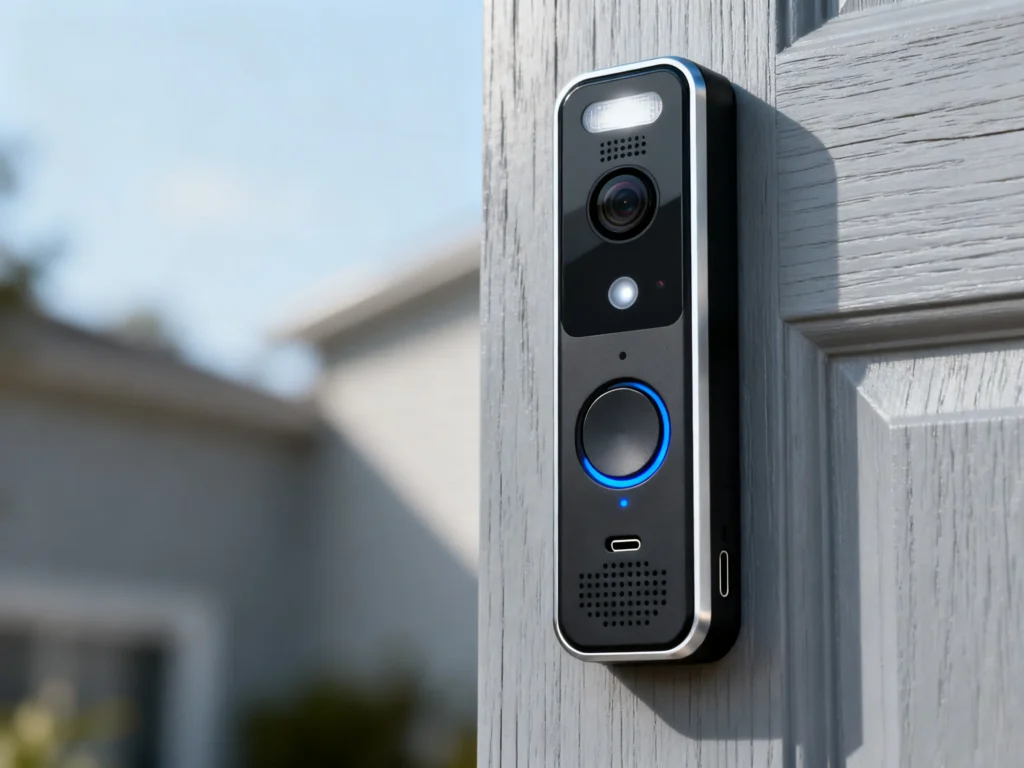
Small security manufacturers face a unique challenge when sourcing custom speakers for smart doorbells: balancing performance, size, and cost—without access to the engineering resources of large brands. Smart doorbells rely on speakers to deliver clear audio (for two-way communication) and loud alerts (to deter intruders), but most small manufacturers don’t know which speaker parameters matter. They either overpay for high-end speakers with unnecessary features or settle for cheap speakers that produce distorted audio—both of which lead to poor customer reviews and lost sales.
The problem is compounded by the fact that speaker terminology is often confusing for non-audio experts. Terms like “sensitivity,” “frequency response,” and “impedance” sound technical, and many suppliers use them to upsell unnecessary features. As a 13-year audio OEM/ODM provider that specializes in non-mini speaker customization (including smart doorbells), we’ve worked with dozens of small security manufacturers to simplify the customization process. Here’s a practical guide to the essential parameters you need to specify—no engineering degree required.
First: What Is a Non-Mini Smart Doorbell Speaker?
Before diving into parameters, let’s clarify what we mean by “non-mini.” Mini speakers (less than 1 inch in diameter) are often used in wearables or small electronics, but smart doorbells require speakers between 1.5-2.5 inches in diameter (40-65mm). These speakers balance sound clarity (for two-way talk) and volume (for alerts) without taking up too much space in the doorbell enclosure. We don’t manufacture mini speakers, so we focus on these mid-sized speakers—perfect for smart doorbells, security cameras, and other small security devices.
Why Smart Doorbell Speakers Need Specific Customization (Not Off-the-Shelf)
Off-the-shelf speakers might seem like a cost-effective solution, but they’re designed for general use (e.g., portable radios, toys)—not smart doorbells. Smart doorbells have unique requirements:
- Small enclosure: The speaker must fit in a compact doorbell housing (often 3-4 inches wide).
- Two-way communication: The speaker must reproduce human voices clearly (not just music or alerts).
- Weather resistance: Outdoor doorbells require speakers that can withstand temperature changes, humidity, and dust.
- Low power consumption: Smart doorbells are often battery-powered, so the speaker must draw minimal current.
Customizing a speaker for these requirements ensures your smart doorbell performs better than competitors using off-the-shelf parts—without paying for unnecessary features like Hi-Fi sound (which no one needs in a doorbell).
Essential Parameters for Smart Doorbell Speaker Customization (Simplified)
Below are the 5 key parameters you need to specify. We’ve simplified technical details, explained why each matters, and provided recommended ranges for small security manufacturers (based on our experience with 100+ smart doorbell projects).
1. Speaker Size (Diameter): 1.5-2.5 Inches (40-65mm)
The size of the speaker driver (the circular part that produces sound) directly impacts volume and bass response. For smart doorbells:
- 1.5-inch (40mm) speakers: Best for compact doorbells (less than 3 inches wide). They’re small enough to fit in tight spaces but can still produce clear voice audio and alerts up to 85 decibels (dB)—loud enough to be heard inside a home.
- 2.0-inch (50mm) speakers: The most popular size for smart doorbells. They balance size and performance, producing clear voices and alerts up to 90dB. They fit in most standard doorbell enclosures and are cost-effective for small batches.
- 2.5-inch (65mm) speakers: Ideal for larger doorbells or doorbells that need extra volume (e.g., for homes with thick walls). They can produce alerts up to 95dB but require a larger enclosure.
Our Recommendation: Start with a 2.0-inch (50mm) speaker. It’s the most versatile size, fits most enclosures, and meets the needs of 80% of small security manufacturers. We offer custom 50mm speakers with pre-engineered mounting holes (so you don’t have to redesign your enclosure).
2. Sensitivity: 85-92 dB (1W/1m)
Sensitivity measures how loud a speaker is when fed 1 watt of power (measured 1 meter away). For smart doorbells:
- Why it matters: Battery-powered doorbells can only supply limited power (often 0.5-1 watt). A more sensitive speaker produces louder sound with less power—critical for extending battery life.
- Recommended range: 85-92 dB. Speakers below 85dB will be too quiet (alerts won’t be heard inside), and speakers above 92dB will draw too much power (reducing battery life).
Common Mistake: Choosing a speaker with 95+ dB sensitivity thinking it will be louder. For battery-powered doorbells, this just wastes power—we’ve tested speakers with 95dB sensitivity that drain batteries 30% faster than 90dB speakers, with no noticeable volume difference.
3. Frequency Response: 300Hz-8kHz
Frequency response measures the range of sounds a speaker can reproduce (low bass to high treble). For smart doorbells:
- Why it matters: Human voices range from 300Hz (deep male voices) to 3kHz (high female voices). Alerts (e.g., chimes, sirens) often go up to 8kHz. A speaker that covers this range will reproduce voices clearly and alerts sharply.
- Recommended range: 300Hz-8kHz. Speakers with a lower frequency range (e.g., 200Hz) will add unnecessary bass (which wastes power), and speakers with a higher range (e.g., 10kHz) will reproduce high-pitched noise that’s irrelevant for doorbells.
Our Expertise: We tune our smart doorbell speakers to emphasize the 300Hz-3kHz range (human voices) and 5kHz-8kHz range (alerts). This ensures two-way communication is clear—even if the doorbell is mounted outside with wind or ambient noise.
4. Impedance: 4Ω or 8Ω
Impedance (measured in ohms, Ω) is the electrical resistance of the speaker. It must match the doorbell’s amplifier (the component that powers the speaker):
- 4Ω speakers: Draw more current (power) and produce louder sound. They’re ideal for doorbells with powerful amplifiers (1-2 watts) or wired doorbells (which have unlimited power).
- 8Ω speakers: Draw less current and are more energy-efficient. They’re perfect for battery-powered doorbells with weak amplifiers (0.5-1 watt).
How to Choose: Check your doorbell’s amplifier specifications. If you’re not sure, choose an 8Ω speaker—it’s compatible with most small amplifiers and extends battery life. We offer both 4Ω and 8Ω custom speakers, and our engineering team can help you match the impedance to your amplifier.
5. Weather Resistance: IPX4 or IPX5
Outdoor smart doorbells need speakers that can withstand rain, humidity, and temperature changes. Weather resistance is rated using the IP (Ingress Protection) scale:
- IPX4: Protects against splashing water (from any direction). Suitable for covered doorbells (e.g., under a porch).
- IPX5: Protects against low-pressure water jets (e.g., heavy rain). Ideal for exposed doorbells.
Our Recommendation: Choose IPX5 weather resistance. It’s only slightly more expensive than IPX4 and gives your customers peace of mind (no one wants a doorbell speaker that fails in the rain). We achieve IPX5 resistance by coating the speaker cone with a water-repellent material and sealing the edges with silicone—cost-effective for small batches.
Additional Customization Options (Small-Batch Friendly)
For small security manufacturers looking to differentiate their smart doorbells, we offer these low-cost customization options:
- Mounting holes: We can drill custom mounting holes (e.g., 2mm or 3mm) to match your enclosure—no extra cost.
- Wire length: We can cut wires to your desired length (e.g., 10cm or 15cm) to simplify assembly.
- Logo printing: We can print your brand logo on the speaker frame (costs $0.10-$0.20 per unit) to add a professional touch.
Smart Doorbell Speaker Customization Process for Small Manufacturers
Working with us is simple—we’ve streamlined the process to avoid engineering headaches for small teams:
- Share your requirements: Tell us your doorbell’s enclosure size, amplifier specifications (if known), and desired performance (e.g., “needs to be loud enough for a 1,500 sq. ft. home”).
- We recommend parameters: Our team will suggest the best size, sensitivity, frequency response, impedance, and weather resistance for your project—based on 13 years of audio experience.
- Sample production: We produce 5-10 samples (1-2 weeks lead time) for you to test in your doorbells. We’ll adjust parameters if needed (e.g., increase sensitivity if the sound is too quiet).
- Small-batch production: Once samples are approved, we start production (3-4 weeks lead time for batches of 500-5,000 units). We use bulk sourcing to keep costs low—our custom speakers cost 15-20% less than off-the-shelf speakers from large suppliers.
Why Small Security Manufacturers Choose Our Speaker Customization Services
We understand the constraints of small manufacturers—tight budgets, limited engineering resources, and the need for fast lead times. Here’s how we stand out:
- Non-mini focus: We specialize in 1.5-2.5 inch speakers (perfect for smart doorbells) and don’t waste your time with mini speakers that won’t work.
- Simplified communication: We don’t use jargon. We explain parameters in plain English and provide visual guides (e.g., 3D renderings of the speaker in your enclosure) to ensure you’re on the same page.
- Small-batch flexibility: We don’t require minimum orders of 10,000+ units. We support batches as small as 500-1000 units—so you don’t have to overstock.
- Security industry expertise: We’ve customized speakers for smart doorbells, security cameras, and intercom systems. We know what works (e.g., clear voice reproduction) and what doesn’t (e.g., unnecessary bass) for security devices.
Common Mistakes to Avoid When Customizing Smart Doorbell Speakers
- Overlooking impedance matching: If the speaker’s impedance doesn’t match your amplifier, the audio will be distorted or the speaker won’t work. Always confirm impedance with your amplifier supplier—or let us help you match it.
- Choosing a speaker that’s too big: A 2.5-inch speaker won’t fit in a compact enclosure. Measure your enclosure first, then choose a speaker size that leaves 2-3mm of space for wiring and ventilation.
- Sacrificing weather resistance for cost: IPX4 might seem cheaper, but it will lead to returns if the doorbell is exposed to heavy rain. Invest in IPX5—it’s a small cost that improves customer satisfaction.
- Focusing on Hi-Fi sound: Smart doorbells don’t need to reproduce music. Don’t pay extra for a speaker with a 20Hz-20kHz frequency response—stick to 300Hz-8kHz for clear voices and alerts.
Final Thoughts: Custom Speakers Don’t Have to Be Complex or Expensive
Small security manufacturers don’t need to be audio experts to customize smart doorbell speakers. By focusing on the 5 essential parameters (size, sensitivity, frequency response, impedance, weather resistance) and working with a partner who understands your needs, you can source speakers that improve your doorbell’s performance—without breaking the bank.
We’ve helped small manufacturers from Europe, the U.S., and Australia launch smart doorbells with custom speakers that get 4.5+ star reviews. Our approach is simple: we prioritize function over form, so you get speakers that work well, fit your enclosure, and are cost-effective for small batches.
Ready to customize speakers for your smart doorbell? Reach out to our team for a free sample quote—we’ll share parameter recommendations and a detailed cost breakdown, so you know exactly what to expect. No engineering experience required—we’ll handle the technical details, so you can focus on growing your security business.