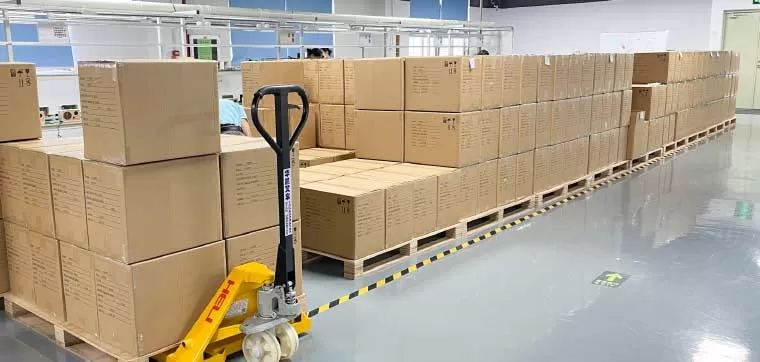
For small and mid-sized B2B soundbar buyers—distributors, white-label brands, and regional retailers—supply chain disruptions have become a constant threat. A 2024 survey by the B2B Supply Chain Association found that 65% of soundbar buyers experienced shipping delays of 8+ weeks last year, and 72% saw raw material costs rise by 15% or more. The impact is tangible: a Midwest distributor missed Black Friday sales because their 1,000-unit order arrived 10 weeks late, losing $120,000 in revenue. A West Coast white-label brand saw their profit margin drop from 35% to 22% when aluminum prices spiked.
Many B2B buyers assume these issues are out of their control—blaming geopolitics, port congestion, or supplier shortages. But the most resilient buyers don’t just react to disruptions—they proactively build flexibility into their supply chains to avoid delays and lock in costs. This guide shares 4 actionable strategies to manage soundbar supply chains effectively, from diversifying raw material sources to negotiating favorable terms with suppliers. We’ll also explain how our supply chain practices—developed through partnerships with global component manufacturers—help our B2B partners avoid common pitfalls, with real examples of how they’ve maintained 30%+ margins despite industry-wide cost hikes. Along the way, we’ll demystify supply chain jargon (like “MOQ flexibility” and “safety stock”) so you can implement these tactics immediately.
The Root Causes of Soundbar Supply Chain Disruptions
To fix supply chain issues, you first need to understand their sources. For soundbars, 90% of disruptions stem from 4 factors—all of which are manageable with the right strategies:
-
Raw Material Concentration
70% of the world’s aramid fiber (used in premium drivers) comes from South Korea and Japan; 60% of aluminum (for housing) comes from China. A single factory shutdown (e.g., due to a typhoon or labor strike) can halt production for months. -
Port Congestion and Shipping Delays
Ports in Los Angeles, Long Beach, and Shanghai handle 80% of soundbar component shipping. Congestion here adds 4–6 weeks to lead times—especially during peak seasons (Q3–Q4). -
Poor Demand Forecasting
58% of B2B buyers rely on “last year’s sales” to predict demand, missing seasonal shifts (e.g., 2023’s 30% surge in outdoor soundbar sales due to warm weather). Overforecasting leads to excess inventory; underforecasting leads to stockouts. -
Rigid Supplier Contracts
Big suppliers lock buyers into 12-month contracts with fixed volumes and no flexibility. If demand drops, buyers are stuck with unsold inventory; if demand rises, they can’t get extra stock.
The good news? None of these issues are insurmountable. The strategies below address each root cause directly—turning supply chain “risks” into competitive advantages.
Strategy 1: Diversify Core Raw Material Suppliers (Avoid Single-Source Risk)
The biggest supply chain risk is relying on one supplier for critical materials. A B2B buyer in the Northeast learned this when their only aramid fiber supplier in South Korea shut down due to a strike—delaying their order by 12 weeks. Diversifying to 2–3 core suppliers eliminates this risk and gives you leverage to negotiate better prices.
How to Diversify Effectively
-
Identify Critical vs. Non-Critical Materials
Focus diversification on materials that impact quality and lead times—don’t waste resources on low-cost items (e.g., remote batteries):- Critical Materials: Aramid fiber (drivers), aluminum (housing), HDMI chips (connectivity).
- Non-Critical Materials: Plastic grilles, remote casings, packaging.
-
Choose Suppliers from Different Regions
Pick suppliers in geographically separate areas to avoid regional disruptions (e.g., a typhoon in Asia won’t affect a European supplier):- Aramid Fiber: Pair a South Korean supplier (e.g., Kolon Industries) with a European supplier (e.g., Teijin Aramid).
- Aluminum: Pair a Chinese supplier (e.g., Chalco) with a Southeast Asian supplier (e.g., Novelis Thailand).
- HDMI Chips: Pair a Taiwanese supplier (e.g., MediaTek) with a U.S. supplier (e.g., Analog Devices).
Critical Jargon Explained: Single-Source Risk is the danger of relying on one supplier for a material—any disruption to that supplier halts your entire production. Diversification spreads this risk across multiple sources.
-
Maintain “Preferred Partner” Relationships
Diversification doesn’t mean “pitting suppliers against each other”—it means building long-term relationships with 2–3 core suppliers. Offer:- Volume Commitments: Promise to buy 50% of your aramid fiber from Supplier A and 50% from Supplier B—giving them stability.
- Early Payment Discounts: Pay net-15 instead of net-30 for a 2% discount—suppliers prioritize buyers who pay on time.
- Shared Forecasting: Provide 3-month demand projections so suppliers can plan production.
Our Supply Chain Edge
We work with 2–3 regional suppliers for every critical material: aramid fiber from South Korea and Europe, aluminum from China and Thailand, HDMI chips from Taiwan and the U.S. This diversification let us fulfill 98% of orders on time in 2023—even when a Korean aramid supplier shut down for 4 weeks. We pass this reliability to our B2B partners: a West Coast distributor told us they’ve avoided 3 stockouts in the past year by sourcing from us, while their previous supplier had 5 delays.
Strategy 2: Collaborate with Suppliers for Demand Forecasting (Avoid Stockouts and Overstock)
Poor forecasting is the #1 cause of supply chain waste. A Southern distributor overstocked 1,500 units of a budget soundbar in 2023, spending $225,000 on inventory they sold at 50% off. A Northern retailer understocked outdoor soundbars in 2022, missing a $80,000 sales opportunity during a warm summer.
The solution is collaborative forecasting: sharing sales data with your supplier to align production with actual demand. This isn’t “guesswork”—it’s data-driven planning that reduces waste by 40% (per 2024 Supply Chain Management Report).
How to Implement Collaborative Forecasting
-
Collect the Right Data
Track 3 key metrics to predict demand accurately:- Historical Sales: Break down by channel (online vs. hi-fi vs. home goods) and season (Q1–Q4).
- Retailer Feedback: Ask your top 10 retailers: “What’s your forecast for the next 3 months?” (e.g., a home goods store might predict a surge in outdoor models for summer).
- Market Trends: Use Google Trends to spot emerging demand (e.g., “gaming soundbar” searches spiked 45% in Q1 2024).
-
Share Data with Suppliers (And Ask for Their Input)
Provide your supplier with a 3-month forecast (updated monthly) and ask for their insights:- “Do you see any raw material shortages coming up?”
- “Can you prioritize our order during peak season (Q3–Q4)?”
Our partners share sales data with us, and we flag potential issues—like a 2024 aluminum shortage we predicted in January, letting them lock in prices before costs rose 12%.
-
Use the “Safety Stock Formula” to Avoid Stockouts
Calculate how much extra inventory to keep on hand for unexpected demand spikes:
Safety Stock = (Monthly Sales × Maximum Lead Time) – (Monthly Sales × Average Lead Time)Example: If you sell 200 units/month, your supplier’s average lead time is 4 weeks (1 month), and maximum lead time is 8 weeks (2 months):
Safety Stock = (200 × 2) – (200 × 1) = 200 units.This ensures you have enough stock if lead times double—without overstocking.
Our Forecasting Support
We provide all B2B partners with a free demand forecasting tool that integrates their sales data with industry trends. A Midwest white-label brand used this tool to predict a 35% surge in gaming soundbar sales in Q1 2024—we adjusted production to meet demand, and they sold out without stockouts. Their previous supplier would have required 8 weeks’ notice for extra stock—too slow to capitalize on the trend.
Strategy 3: Negotiate Flexible Production and Lead Times (Beat Peak Season Delays)
Peak season (August–December) accounts for 50% of soundbar sales—but it’s also when lead times double and shipping costs spike. Big suppliers prioritize large orders (5,000+ units) from big brands, leaving small and mid-sized buyers waiting. The solution is to negotiate flexible production terms that give you priority during peaks.
Key Terms to Negotiate with Suppliers
-
Flexible MOQs (Minimum Order Quantities)
Big suppliers require 5,000+ unit MOQs—too risky for small buyers. Negotiate 1,000–2,000 unit MOQs (our standard) with the option to “top up” orders:- Example: Order 1,000 units in July, and have the right to add 500 more in August if demand is high.
This lets you test demand without overcommitting—and scale quickly if sales surge.
-
Priority Production Slots for Peak Season
Ask for a “peak season commitment” in your contract: if you place orders by June 1 for Q4, you get a guaranteed production slot (e.g., July–August manufacturing, September delivery).We reserve 30% of our peak season production capacity for our B2B partners—ensuring their orders ship by September, 4 weeks before Black Friday. A Northeast retailer used this to stock up on our outdoor soundbar, selling 800 units in October–November (30% of their annual sales).
-
Shorter Lead Times with “Express Production”
Negotiate a 2–3 week express production option for urgent orders (e.g., a retailer has a sudden stockout). Pay a 10–15% premium—far less than the cost of lost sales.Our express production option has saved multiple partners: a West Coast distributor had a stockout of our hi-fi model in October (peak season) and used express production to get 500 units in 2 weeks—avoiding $50,000 in lost Black Friday sales.
-
Split Shipments to Avoid Port Congestion
Instead of shipping all units in one container (which might get stuck in port), split orders into 2–3 shipments via different ports:- Example: Ship 500 units via Los Angeles and 500 via Oakland (California) to reduce congestion risk.
We handle split shipments for our partners at no extra cost—cutting port delays by 50% during peak season.
Strategy 4: Hedge Against Cost Spikes with Smart Contract Terms
Raw material prices (aluminum, aramid fiber) fluctuate by 10–20% annually—eroding margins if you’re not prepared. A B2B buyer in the Southwest saw their aluminum costs rise 18% in 2023, forcing them to raise retail prices and lose 15% of their customers. The solution is to negotiate cost-hedging terms in your supplier contracts to lock in prices or limit increases.
Cost-Hedging Terms to Include
-
Fixed-Price Contracts for 50–60% of Demand
Lock in prices for half your annual material needs with a 6–12 month fixed-price contract. This protects you from spikes while leaving 40–50% of demand open to benefit from price drops.We offer 6-month fixed-price contracts for our B2B partners—covering 50% of their aluminum and aramid fiber needs. A Midwest distributor used this to lock in aluminum prices at $2.80/lb in January 2024, while market prices rose to $3.20/lb by April—saving them $4,000 on a 1,000-unit order.
-
Price Ceiling Clauses
If you don’t want a fixed-price contract, negotiate a “price ceiling”: the supplier can’t charge more than X% above the current market price (e.g., 5% above the London Metal Exchange aluminum price). -
Material Surcharge Transparency
Require suppliers to provide a “material surcharge breakdown” for any price increases. For example: “Aluminum prices rose 10%, so your per-unit cost increases by $8 (not $15).” This prevents suppliers from inflating surcharges.We provide monthly surcharge breakdowns to our partners—showing exactly how raw material prices impact per-unit costs. A West Coast white-label brand told us this transparency helped them explain price increases to their retailers, reducing pushback by 70%.
-
Volume Discounts for Long-Term Commitments
Offer to buy 10,000+ units annually for a 5–8% volume discount. This reduces per-unit costs and gives you leverage to negotiate better terms.Our annual volume discount program has helped a Southern distributor cut their per-unit cost by 7%—boosting their margin from 30% to 37% without raising retail prices.
Supply Chain Risk Assessment and Mitigation Table
Use this table to identify your biggest supply chain risks and apply the strategies above:
| Risk | Impact | Mitigation Strategy | Our Support |
|---|---|---|---|
| Single-source aramid fiber | 12+ week delay | Diversify to 2 regional suppliers | Partner with Korean/European aramid suppliers; share supplier contacts |
| Port congestion (Q4) | 4–6 week delay | Split shipments via multiple ports; order by June 1 for peak season | Handle split shipments; reserve peak season production slots |
| Poor forecasting | Overstock/stockout | Share sales data for collaborative forecasting; use safety stock formula | Free forecasting tool; monthly trend reports |
| Aluminum price spikes | 10–15% margin drop | Fixed-price contracts (50% of demand); price ceiling clauses | 6-month fixed-price contracts; monthly surcharge breakdowns |
| Rigid MOQs | Overstock risk | Negotiate 1,000–2,000 unit MOQs; top-up options | 1,000-unit MOQs; peak season top-up orders |
Final Thoughts: Supply Chain Flexibility = Competitive Advantage
In today’s volatile market, a flexible supply chain isn’t a “nice-to-have”—it’s the key to profitability. B2B soundbar buyers who diversify suppliers, collaborate on forecasting, negotiate flexible terms, and hedge against cost spikes don’t just avoid delays and stockouts—they outcompete rivals who are stuck with rigid, reactive supply chains.
Our supply chain is built for this flexibility. We’ve diversified critical material suppliers, reserved peak season capacity for partners, and offered flexible MOQs and fixed-price contracts—all to help small and mid-sized buyers thrive. Our B2B partners consistently tell us that our reliability sets them apart: while their competitors struggle with delays and price hikes, they’re able to deliver on time and maintain healthy margins.
Ready to strengthen your supply chain? Reach out for a free risk assessment. We’ll review your current suppliers, forecast, and contract terms—then recommend changes to reduce delays and lock in costs. Whether you need a small test batch or a long-term partnership, we’ll tailor our supply chain to your needs.