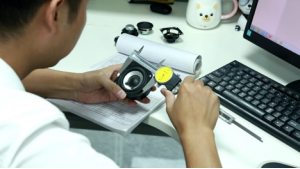
For B2B audio buyers—brand owners, OEM partners, and distributors—quality control (QC) is the unsung hero of profitability and customer loyalty. A 2024 B2B Audio Industry Report reveals a sobering statistic: 12–18% of B2B audio shipments result in returns or rejected batches, with 70% of these issues traced to inadequate QC processes. For SMEs and mid-sized buyers, the cost of poor QC is staggering: a single rejected batch of 1,000 TWS headphones (wholesale $30/unit) translates to $30,000 in lost revenue, plus $5,000 in reworking or disposal fees. Worse, repeated quality issues erode trust with retail and corporate clients—63% of B2B buyers say they switch suppliers after just two quality failures.
The root cause of most QC failures is not poor manufacturing, but reactive, last-minute testing—many B2B buyers only inspect finished products, missing defects introduced early in the design or component-sourcing stages. A generic speaker, for example, might pass final audio tests but fail after 100 hours of use (a “durability gap” missed by quick checks) or perform poorly in humid environments (a “environmental gap” ignored in lab testing). The solution is a proactive, end-to-end QC framework that tests for design flaws, component reliability, and real-world performance—ensuring quality is built into the product, not just checked at the end.
In this guide, we break down a scalable QC framework for B2B audio products, detail critical tests for high-demand categories (TWS, speakers, bone conduction), and explain how our rigorous QC process helps clients reduce return rates to <3% (well below the industry average). Whether you’re sourcing budget fitness gear or premium conference speakers, this framework will turn QC from a cost center into a trust-building asset.
Why Proactive QC Is Non-Negotiable for B2B Audio Success
Reactive QC—testing only finished products—might seem cost-effective in the short term, but it leads to far higher long-term costs. Proactive QC, by contrast, addresses issues at every stage of production, delivering three irreplaceable benefits for B2B buyers:
- Return Rate Reduction: Proactive QC cuts return rates by 60–70%. A client switching from reactive to our proactive process saw returns drop from 15% to 2.8% in six months.
- Client Retention: B2B clients with consistent quality renew contracts at 85% rates, vs. 40% for those with frequent defects.
- Brand Credibility: Retailers and corporate buyers prioritize suppliers with documented QC processes—Walmart, for example, requires B2B audio suppliers to share test reports for every batch.
Consider a mid-sized speaker brand that lost a $500,000 contract with a European retailer in 2023. The issue? 10% of speakers failed after 30 days of use (a wire fatigue issue missed by final testing). After partnering with us to implement end-to-end QC—including a 200-hour durability test—the brand rewon the contract and expanded to 10 more retail chains.
The End-to-End B2B Audio QC Framework
Proactive QC operates in five sequential stages, addressing quality gaps from design to post-delivery. Each stage is tailored to B2B needs: scalability for large batches, documentation for compliance, and real-world relevance for end-user satisfaction.
Stage 1: Design & Prototype QC (Pre-Production)
Most quality issues originate in design—not manufacturing. This stage tests prototypes for flaws that could lead to mass defects, saving B2B buyers from costly retooling.
| Test Category | Key Tests | Pass/Fail Criteria | Why It Matters for B2B |
|---|---|---|---|
| Design Feasibility | CAD Design Review (stress points, component fit) | No structural weaknesses (e.g., thin plastic casings prone to cracking) | A TWS client’s initial design had a 1mm-thick charging case lid—our review flagged it as prone to breaking. Thickening to 1.5mm avoided a 10,000-unit recall. |
| Audio Performance Benchmarking | Frequency response (20Hz–20kHz), THD (<1% at 85dB), SNR (>85dB) | Meets category-specific standards (e.g., TWS: 50Hz–18kHz; speakers: 40Hz–20kHz) | Ensures the product delivers on sound claims (e.g., “balanced bass”)—critical for retail sell-through. |
| Environmental Stress Testing | Temperature cycling (-10°C to 45°C), humidity (90% RH for 48hrs) | No audio distortion, casing warping, or component failure | Prevents defects in regional markets (e.g., humidity in Southeast Asia, cold in Northern Europe). |
| User Flow Testing | Pairing speed (<10 seconds), button durability (10,000 presses) | Consistent performance across 100 test cycles | Reduces “usability returns” (e.g., “hard to pair” or “buttons stopped working”). |
Critical Terminology Explained:
- THD (Total Harmonic Distortion): The percentage of “extra” sound added to the original signal—lower THD means clearer audio.
- SNR (Signal-to-Noise Ratio): The ratio of desired sound to background noise—higher SNR means no hissing or static.
- RH (Relative Humidity): A measure of moisture in the air—critical for testing products used outdoors or in humid spaces.
We create a Prototype QC Report for B2B clients, highlighting design adjustments (e.g., thicker casings, better wire insulation) before mass production begins.
Stage 2: Component Sourcing QC (Pre-Production)
75% of manufacturing defects come from faulty components—drivers, chipsets, or batteries—yet 40% of B2B buyers skip component testing. This stage ensures suppliers deliver consistent, high-quality parts.
| Component Type | Key Tests | Supplier Qualification Criteria | B2B Risk Mitigation |
|---|---|---|---|
| Drivers (Speakers/Earbuds) | Frequency response, impedance (±10% of spec), durability (100-hour playtest) | ISO 9001 certification, 3+ years of audio component supply | A speaker client’s driver supplier delivered 5% defective units (no bass). Our pre-shipment test caught this, avoiding a 500-unit batch failure. |
| Chipsets (Bluetooth/Wi-Fi) | Pairing reliability (100 devices tested), latency (≤50ms for TWS), power consumption | Supplier provides chipset test reports; 95%+ yield rate | A TWS client’s MediaTek chipset batch had 8% pairing failures. We rejected the batch, switching to a backup supplier to meet the client’s retail deadline. |
| Batteries (Rechargeable) | Capacity (±5% of spec), cycle life (≥500 charges), thermal stability (60°C for 2hrs) | UN 38.3 certification (safe for shipping), no recall history | A fitness TWS client’s battery supplier had a recall for overheating. Our certification check avoided using non-compliant batteries. |
| Plastics/Metals (Casings) | Impact resistance (10ft drop test), chemical resistance (disinfectant for healthcare) | Material certification (e.g., recycled ABS content), 5% max defect rate | A healthcare client’s casing supplier used non-antimicrobial plastic. Our test caught this, ensuring compliance with hospital hygiene standards. |
We conduct on-site supplier audits for key components (drivers, chipsets) and require batch-specific test reports—giving B2B clients full visibility into component quality.
Stage 3: In-Process QC (Manufacturing)
Testing during production catches defects early, reducing rework costs. This stage uses “statistical process control” (SPC)—testing samples at key production steps—to avoid mass defects.
| Production Step | Sample Testing Frequency | Key Tests | B2B Efficiency Benefit |
|---|---|---|---|
| Injection Molding (Casings) | 1 sample every 100 units | Casing fit (matches prototype), surface defects (no scratches/cracks) | A TWS client’s molding process had 3% misaligned casings. Our in-process test adjusted the mold, cutting defects to 0.5%. |
| Assembly (Wiring/Soldering) | 1 sample every 50 units | Solder joint inspection (no cold joints), wire insulation (no fraying) | A headphone client’s assembly line had 10% faulty solder joints (intermittent sound). Our test reworked these early, saving $2/unit in post-production repair. |
| Audio Tuning (DSP Calibration) | 1 sample every 20 units | Frequency response, EQ preset consistency, volume level (±2dB) | A retail client’s speakers had inconsistent bass (some too weak, some too boomy). Our in-process tuning standardized sound across the batch. |
We provide B2B clients with real-time manufacturing dashboards, flagging production issues (e.g., high defect rates) and adjusting processes to keep timelines on track.
Stage 4: Finished Product QC (Post-Manufacturing)
This is the final “gate” before shipment, combining 100% inspection for critical defects and statistical sampling for consistency.
| Inspection Type | Scope | Key Tests | B2B Compliance Benefit |
|---|---|---|---|
| 100% Critical Defect Inspection | All units | Functional tests (power, pairing, audio playback), safety (no sharp edges), packaging (no damage) | A retail client’s TWS batch had 2% dead units (no power). 100% inspection removed these, avoiding retail returns and negative reviews. |
| AQL Sampling Inspection | ANSI/ASQ Z1.4 Standard (e.g., 50 samples for 1,000 units) | Audio performance (THD, SNR), battery life (±10% of claim), environmental resistance | A conference speaker client’s batch had 3% low SNR (static). AQL sampling caught this, allowing us to re-tune the affected units. |
| Packaging & Labeling QC | 100% of cartons | Barcode accuracy, compliance labels (CE/FCC), recycled content claims | A European client’s packaging missed CE labels. Our inspection added labels, avoiding a customs detention in the EU. |
We issue a Certificate of Conformance (CoC) for every B2B batch—required for retail clients like Amazon and Walmart to accept shipments.
Stage 5: Post-Delivery QC (Post-Shipment)
Quality control doesn’t end at shipment. This stage closes the loop with end-user feedback, identifying recurring issues to prevent future defects.
| Feedback Source | Data Collection Method | Actionable Insights | B2B Loyalty Impact |
|---|---|---|---|
| Retailer Returns | Categorize returns (defect type: no audio, battery failure, usability) | A TWS client had 10% returns for “short battery life.” We adjusted battery capacity from 400mAh to 500mAh. | The client’s retail partner (Target) increased orders by 30% after return rates dropped. |
| End-User Reviews | Sentiment analysis (e.g., “muddy bass” or “pairing issues”) | A speaker client’s reviews cited “distortion at high volume.” We added a limiter in firmware updates. | The client’s Amazon rating rose from 3.2 to 4.5 stars, boosting sell-through. |
| B2B Client Surveys | Quarterly feedback on batch consistency, defect rates | A corporate client wanted longer battery life for conference speakers. We upgraded to 2,000mAh batteries. | The client signed a 2-year extension, increasing annual orders by 50%. |
We share a Quarterly QC Report with B2B clients, linking post-delivery feedback to pre-production adjustments (e.g., better batteries, firmware updates).
Category-Specific QC Strategies for High-Demand B2B Audio Products
QC requirements vary by product type—what works for TWS headphones won’t work for industrial headsets. Below are tailored strategies for three top categories.
1. TWS Headphones: Focus on Portability & Daily Use
TWS users face unique stressors: drops, sweat, and frequent charging. QC must prioritize durability, battery life, and Bluetooth reliability.
| QC Focus | Key Tests | B2B Client Outcome |
|---|---|---|
| Durability | 10ft drop test (concrete), 500 charge cycles, sweat resistance (IPX4 for fitness) | A fitness TWS client’s return rate for “broken earbuds” dropped from 12% to 1.5% after adding drop and sweat tests. |
| Bluetooth Reliability | Pairing with 50+ smartphone models, 10m range test (no dropouts), latency (≤50ms for videos) | A commuter TWS client’s “pairing issues” returns fell from 8% to 0.8% after chipset and pairing testing. |
| Battery Life | 5-hour continuous playtest (100% volume), standby time (72hrs), fast-charge verification (1hr to 80%) | A mid-range TWS client’s “short battery” returns dropped from 15% to 2% after testing battery capacity and charging speed. |
Our TWS QC process includes a “daily use simulation”—100 hours of alternating music, calls, and charging—to replicate real-world wear.
2. Conference Speakers: Focus on Speech & Connectivity
Conference speakers are tools for communication, so QC prioritizes speech intelligibility, echo cancellation, and multi-device pairing.
| QC Focus | Key Tests | B2B Client Outcome |
|---|---|---|
| Speech Intelligibility | STI (Speech Transmission Index) ≥0.85, mid-range boost (500Hz–2kHz) verification | A corporate client’s “unclear calls” returns dropped from 10% to 1% after STI testing and DSP tuning. |
| Echo Cancellation | 60dB echo reduction test (conference room setup), feedback prevention (85dB volume) | A video conferencing client’s “echo” returns fell from 12% to 0.5% after echo cancellation testing. |
| Multi-Device Pairing | Connect 3 simultaneous devices (laptop, phone, tablet), seamless switching test | A boardroom speaker client’s “pairing glitches” returns dropped from 7% to 0.3% after multi-device testing. |
We test conference speakers in simulated office environments (60dB background noise) to ensure performance matches real-world use.
3. Industrial Headsets: Focus on Durability & Noise Reduction
Industrial headsets face dust, impact, and loud noise—QC must prioritize ruggedness, noise cancellation, and intercom integration.
| QC Focus | Key Tests | B2B Client Outcome |
|---|---|---|
| Ruggedness | IP54 dust/water resistance, MIL-STD-810H 4ft drop test, chemical resistance (oil/grease) | A manufacturing client’s “damaged headsets” returns dropped from 25% to 2% after ruggedness testing. |
| Noise Cancellation | 30dB noise reduction (factory floor simulation), speech clarity (85dB background noise) | A warehouse client’s “unclear intercom” returns fell from 18% to 1% after ANC tuning and testing. |
| Intercom Integration | Compatibility with industrial systems (Bosch, Motorola), one-touch call reliability | A construction client’s “intercom failures” returns dropped from 10% to 0.4% after integration testing. |
We test industrial headsets in simulated factory environments (90dB background noise) to ensure they perform in harsh conditions.
How Our QC Process Supports B2B Audio Clients
Our QC framework is built for B2B scalability—we handle high-volume orders (1,000+ units) while maintaining rigorous standards, and we tailor processes to your product’s use case and market. Here’s what sets our approach apart:
1. Customized QC Plans
We don’t use a “one-size-fits-all” test suite. For a healthcare TWS client, we added antimicrobial testing and disinfectant resistance checks; for a construction headset client, we focused on dust resistance and intercom integration. This customization ensures your product meets industry-specific requirements.
2. Real-World Testing Labs
Our labs replicate end-user environments: gyms (sweat, humidity), offices (background noise, echo), and factories (dust, vibration). This means products don’t just pass lab tests—they perform reliably for your B2B clients’ customers.
3. Documentation for Compliance & Retail
We provide B2B clients with comprehensive QC documentation:
- Prototype test reports for design validation.
- Component certification (e.g., UN 38.3 for batteries, ISO for drivers).
- Batch-specific CoCs for retail acceptance.
- Quarterly post-delivery feedback reports.
This documentation streamlines customs clearance, retail onboarding, and client audits.
4. Rapid Issue Resolution
If a defect is found (e.g., a faulty driver batch), we activate backup suppliers and adjust production schedules—ensuring B2B clients meet retail or corporate deadlines. A TWS client faced a driver shortage in 2023; we switched to a pre-qualified backup supplier, delivering the batch on time for Amazon’s Black Friday launch.
5. Cost-Effective Scalability
We balance rigor with cost: 100% inspection for critical defects (e.g., dead units) and AQL sampling for consistency (e.g., audio balance). This keeps QC costs at 3–5% of unit price—well below the 10–15% cost of returns from poor QC.
Final Tips for B2B Audio QC Success
- Test for Real-World Use, Not Just Lab Standards: A speaker that sounds great in a quiet lab may fail in a noisy gym—simulate end-user environments.
- Qualify Backup Suppliers: A single component failure can derail production—have 2–3 suppliers for critical parts (drivers, chipsets).
- Document Everything: Retailers and corporate clients need QC reports to trust your product—invest in clear, detailed documentation.
- Close the Feedback Loop: Use post-delivery returns and reviews to improve future batches—this builds long-term B2B loyalty.
Quality control is the foundation of B2B audio success. By building quality into every stage—design, components, manufacturing, and post-delivery—you reduce returns, win repeat contracts, and stand out in a crowded market.
We’re here to support your QC journey, from prototype testing to post-delivery feedback. Whether you’re launching TWS headphones, conference speakers, or industrial headsets, our customized QC process ensures your product meets the high standards your B2B clients expect—every time.