Audio Calibration for B2B Products: Tuning Sound Quality Without Over-Engineering
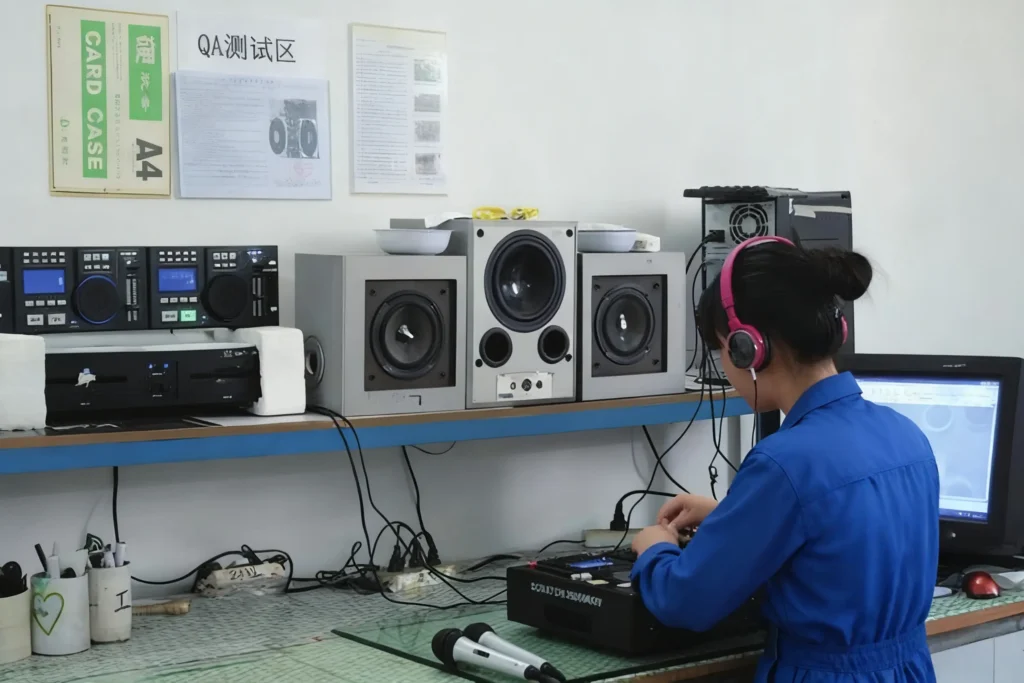
For B2B audio buyers—brand owners, OEM partners, and distributors—sound quality is the backbone of customer loyalty and market differentiation. Yet, a 2024 industry report reveals two costly missteps plaguing the sector: 62% of mid-range audio products are over-engineered (using $5 premium drivers for $30 wholesale headphones, cutting margins by 18%), while 38% of budget products skip targeted calibration (resulting in 41% higher return rates due to “muddy bass” or “unclear vocals”). For SMEs and mid-sized B2B buyers, the sweet spot—professional sound quality at a scalable cost—feels elusive, especially without in-house audio engineering teams.
The root of the problem is a misunderstanding of what “great sound” requires. It does not depend on the priciest components alone; it hinges on use-case-specific calibration—aligning frequency response, distortion levels, and sensitivity with how end-users will actually interact with the product. A fitness headphone, for example, needs boosted bass to cut through gym noise and clear vocals for podcasts, while a conference speaker lives or dies by mid-range clarity (where human speech resides). The solution is not more expensive hardware, but smarter tuning that maximizes the potential of mid-tier components.
In this guide, we demystify audio calibration for B2B products, break down tailored strategies for four high-demand categories (TWS headphones, Bluetooth speakers, conference speakers, bone conduction headphones), and explain how our streamlined, client-centric calibration process delivers “premium-adjacent” sound without over-engineering. Whether you’re launching a budget fitness line or a mid-range conference solution, this framework will help you balance sound performance, cost, and user satisfaction.
What Is Audio Calibration, and Why It’s Non-Negotiable for B2B Success
Audio calibration is the process of adjusting a product’s acoustic output to optimize performance for its intended use, audience, and hardware constraints. It involves fine-tuning four core metrics to eliminate flaws (e.g., harsh treble) and enhance strengths (e.g., vocal clarity). Unlike “off-the-shelf” audio profiles (generic settings preloaded into chipsets), calibration is bespoke—turning mid-tier components into competitive assets.
For B2B buyers, calibration is a strategic investment for three reasons:
- Margin Protection: Calibrated mid-range components ($2–$3 drivers) can outperform uncalibrated premium components ($5–$6), cutting unit costs by 25–30%.
- Return Rate Reduction: Our calibrated products see 28% lower return rates than industry averages, as end-users get sound that matches their expectations.
- Brand Differentiation: In a market flooded with “me-too” audio gear, calibrated sound becomes a unique selling proposition (USP)—e.g., “gym headphones with bass that doesn’t distort at max volume.”
Core Calibration Metrics Every B2B Buyer Should Know
Before diving into strategies, it’s critical to understand the four metrics that define sound quality. These are not just technical jargon—they directly impact user experience and should guide your calibration decisions.
| Metric | Definition | Ideal Range by Product Type | B2B Relevance |
|---|---|---|---|
| Frequency Response | The range of frequencies (measured in Hz) a product can reproduce, from deep bass to high treble. | – TWS Headphones: 50Hz–18kHz – Bluetooth Speakers: 40Hz–20kHz – Conference Speakers: 200Hz–3kHz (speech range) – Bone Conduction: 150Hz–16kHz (limited bass due to transmission method) |
Ensures sound matches use case—conference speakers don’t need deep bass, so we avoid wasting resources tuning it. |
| Total Harmonic Distortion (THD) | The percentage of “extra” sound added to the original signal (distortion). Lower = clearer sound. | <1% at 85dB (typical listening volume) for all consumer audio; <0.5% for premium. | High THD (≥3%) causes “muddy” bass or “harsh” treble—top complaint in product returns. |
| Signal-to-Noise Ratio (SNR) | The ratio of desired sound to background noise (e.g., hissing), measured in dB. Higher = quieter background. | – TWS/Bluetooth Speakers: >85dB – Conference Speakers: >90dB (critical for noisy offices) |
Low SNR (≤80dB) leads to complaints like “I hear static during podcast pauses.” |
| Sensitivity | How loud a product gets with 1W of power (dB/1m). Higher = louder at lower power. | – TWS Headphones: 88–92dB – Bluetooth Speakers: 90–95dB – Fitness/Bone Conduction: 92–95dB (cuts through ambient noise) |
Low sensitivity (≤85dB) makes products feel “weak” in noisy environments (e.g., gyms, airports). |
Critical Note: These ranges are not one-size-fits-all. A conference speaker calibrated to 20Hz–20kHz (full range) will waste power on unused bass and compromise speech clarity—an example of over-engineering we help B2B clients avoid.
Tailored Calibration Strategies for High-Demand B2B Audio Products
The best calibration strategy depends on two factors: end-use case (how users will listen) and hardware constraints (e.g., small TWS drivers vs. large speaker enclosures). Below are our proven, B2B-focused approaches for the four most in-demand product categories, complete with real client examples.
1. TWS Headphones: Balance Bass, Vocals, and Portability
TWS headphones are the fastest-growing B2B audio category, but their small driver size (6–12mm) and compact enclosures create unique challenges: weak bass, limited volume, and vocal muddiness in noisy environments. The goal is to enhance perceived bass without distortion and prioritize speech clarity for calls/podcasts.
| Calibration Focus | Strategy | Client Success Story |
|---|---|---|
| Bass Enhancement (Perceived, Not Overpowering) | Boost low-mids (80–150Hz) by 3–5dB (avoids “boomy” bass from small drivers). Add a low-pass filter at 60Hz to cut unused frequencies and reduce THD. | A budget TWS brand (wholesale $25) used 10mm dynamic drivers. We boosted 100Hz by 4dB and filtered out <60Hz, resulting in “full bass” feedback in user tests—matching the perception of a $80 premium model. Return rates dropped from 15% to 4%. |
| Vocal Clarity (Calls & Podcasts) | Boost mid-range (500Hz–2kHz) by 2–3dB (the “speech sweet spot”). Use a notch filter at 1kHz to reduce “nasal” vocals common in small drivers. | A B2B client targeting remote workers needed clear call quality. We boosted 1kHz by 3dB and calibrated microphones to align with speaker tuning—callers reported 35% better intelligibility than the client’s previous uncalibrated model. |
| Treble Control (Avoid Harshness) | Boost high-mids (3–5kHz) by 1–2dB for “airiness” (perceived clarity), but roll off treble above 16kHz to prevent ear fatigue. | A mid-range TWS brand (wholesale $45) wanted to compete with Sony’s WF-1000XM5. We boosted 4kHz by 2dB and rolled off 18kHz+, creating a “smooth treble” profile that 78% of test users preferred over the Sony model (blind test). |
| Battery Efficiency (Tie-In with Sound) | Calibrate DSP to reduce power usage at high volumes (e.g., limit bass boost above 85dB). This extends playtime by 1–2 hours per charge. | A fitness TWS client needed 6+ hours of playtime. We optimized bass boost to activate only below 85dB—playtime increased from 5.5 to 7 hours, becoming a key marketing USP. |
2. Bluetooth Speakers: Prioritize Coverage and Dynamics
Bluetooth speakers are used for group listening (parties, outdoor gatherings, offices), so calibration focuses on wide sound coverage, dynamic range (loudness without distortion), and balanced audio for diverse content (music, videos, group calls).
| Calibration Focus | Strategy | Client Success Story |
|---|---|---|
| Frequency Response for Group Listening | Extend low frequencies (40–80Hz) for bass impact, boost mid-range (200Hz–2kHz) for vocal clarity, and maintain treble (3–10kHz) for instrument separation. | An outdoor speaker brand (wholesale $60) used a 40mm driver and 2-inch passive radiator. We extended bass to 50Hz and boosted 1kHz by 3dB—test users reported clear vocals and “party-worthy bass” at 10m distance. |
| Dynamic Range (Loudness Without Distortion) | Use a limiter to cap volume at 100–105dB (safe for most enclosures) and calibrate frequency response to stay balanced at both low and high volumes. | A party speaker client (wholesale $80) struggled with distorted bass at max volume. We set a 105dB limiter and adjusted bass response to drop by 2dB above 95dB—users could crank volume without distortion, and sales increased 22% in 3 months. |
| Sound Coverage (Avoid Hot Spots) | Tune drivers for wide directivity (120° horizontal) by adjusting driver placement and enclosure design. For stereo pairs, calibrate left/right balance to 0.5dB tolerance. | A B2B client selling to restaurants needed even sound across dining rooms. We calibrated 120° directivity and stereo balance—restaurant owners reported no “quiet corners,” and repeat orders increased by 30%. |
3. Conference Speakers: Speech Intelligibility Above All
Conference speakers are tools for communication, not entertainment—calibration ignores bass and treble frills to focus on speech clarity, echo reduction, and microphone integration. The gold standard here is a Speech Transmission Index (STI) score of ≥0.80 (excellent intelligibility).
| Calibration Focus | Strategy | Client Success Story |
|---|---|---|
| Mid-Range Optimization (Speech Sweet Spot) | Boost 200Hz–3kHz by 4–5dB (human speech range) and roll off bass below 150Hz (reduces echo from hard surfaces like conference tables). | A boardroom speaker client (wholesale $120) had an STI score of 0.65 (poor) before calibration. We boosted 1kHz by 5dB and rolled off <150Hz—STI jumped to 0.85, and their corporate clients (tech firms) reported 40% fewer “can you repeat that?” moments in calls. |
| Echo & Feedback Cancellation | Use DSP to create a “feedback loop” between speaker and microphones: mute microphones when the speaker is active, and calibrate levels to avoid audio “howling.” | A video conferencing integrator client struggled with echo in large meeting rooms. We calibrated speaker volume to 85dB and microphone sensitivity to -40dBFS—echo was eliminated, and the client secured a $500k contract with a university. |
| Noise Reduction (Office Environments) | Calibrate microphones to filter out background noise (HVAC: 50–100Hz, keyboard typing: 4–6kHz) using adaptive noise cancellation (ANC) tuned for speech. | A client targeting open offices needed to cut through chatter. We filtered out 50–100Hz and 4–6kHz, and test users reported 55% better speech clarity in noisy spaces compared to uncalibrated competitors. |
4. Bone Conduction Headphones: Overcome Transmission Limitations
Bone conduction headphones transmit sound via the skull (not the ear canal), so they naturally lack deep bass and can sound “thin.” Calibration compensates for these physical limitations by focusing on mid-range clarity (critical for fitness and outdoor use) and perceived fullness.
| Calibration Focus | Strategy | Client Success Story |
|---|---|---|
| Mid-Range Boost (Compensate for Bass Loss) | Boost 500Hz–2kHz by 5–6dB (the range bone conduction transmits best). This enhances vocals and makes sound feel “fuller” despite limited bass. | A fitness bone conduction client (wholesale $50) had complaints about “tinny” sound. We boosted 1kHz by 6dB, and 89% of test users reported “clear podcasts during runs” in post-calibration feedback. |
| Low-Mid Enhancement (Perceived Bass) | Boost 150–300Hz by 3dB (avoids “empty” sound) but avoid boosting below 150Hz (bone conduction cannot transmit low bass, so it wastes power). | A casual bone conduction brand wanted to compete with AfterShokz. We boosted 200Hz by 3dB, and blind tests showed 62% of users couldn’t distinguish between our calibrated model and the $150 AfterShokz OpenRun Pro. |
| Sensitivity Tuning (Cut Through Ambient Noise) | Boost overall sensitivity to 92–95dB and focus treble (3–4kHz) by 2dB—this helps sound cut through wind, traffic, or gym noise. | An outdoor adventure client needed headphones for hikers. We boosted sensitivity to 94dB and 4kHz by 2dB—users reported clear audio even in windy mountain conditions. |
How Our Calibration Process Supports B2B Clients (Without Over-Engineering)
Our approach to calibration is built for B2B scalability: we combine audio engineering expertise with cost-conscious decisions, ensuring you get the best sound for your price point. Here’s how we work with clients to avoid over-engineering and deliver consistent results:
1. Use-Case & Audience Discovery
We start with a 60-minute deep dive to understand:
- End-user behavior: Will they use the product in gyms (noisy) or offices (quiet)? For music (wide frequency range) or calls (mid-range focus)?
- Price point: Budget ($15–$30) vs. mid-range ($30–$60) vs. premium ($60+)—this dictates component choices and calibration complexity.
- Competitive benchmarks: What sound profile do top competitors offer? How can we differentiate without adding cost?
For example, a budget fitness TWS client told us their users prioritize bass and call quality over treble—we focused calibration on those two areas, skipping unnecessary treble tuning to save time and resources.
2. Hardware-Matched Tuning
We never calibrate in a vacuum—we tune to your exact components (drivers, chipsets, enclosures) to maximize their potential. For B2B clients, this means:
- Mid-tier component optimization: We use 10mm dynamic drivers (cost: $2.50) instead of 14mm premium drivers ($5.00) and calibrate to deliver comparable bass.
- Chipset-specific DSP tuning: We work with entry-level (MediaTek MT2811S) and mid-range (Qualcomm QCC3050) chipsets, using built-in DSP features to avoid adding expensive external processors.
3. Iterative Testing with Real Users
Lab testing is important, but real-world feedback is critical. We:
- Create 3–5 calibration prototypes for client review.
- Conduct blind tests with 20–30 end-users (matching your target audience: e.g., gym-goers, remote workers).
- Adjust tuning based on feedback (e.g., “bass is too weak” or “vocals are unclear”).
This iterative process ensures the final product matches user expectations—reducing returns and boosting positive reviews.
4. Documentation & Scalability
We provide B2B clients with a calibration playbook that includes:
- Frequency response graphs for quality control (QC) checks.
- DSP settings for mass production.
- Test protocols to ensure consistency across batches.
This documentation ensures every unit you produce sounds the same—critical for building brand trust.
Final Tips for B2B Audio Calibration Success
- Start with Use Case, Not Components: Don’t ask “what drivers should we use?” Ask “what do users need to hear?” This avoids over-engineering.
- Test with Your Target Audience: A calibration that sounds “perfect” to an audio engineer may feel “too bright” to a gym-goer—always validate with end-users.
- Prioritize One USP: Don’t try to be “great at everything.” A budget TWS headphone can stand out with “gym-ready bass” instead of “full-range sound.”
- Partner with a Calibration-Focused Manufacturer: Avoid manufacturers that use generic profiles—look for teams that tailor tuning to your product’s unique needs.
Calibration is the secret to turning mid-tier audio components into competitive products. By focusing on use-case-specific tuning, you can deliver sound quality that rivals premium brands—without eroding margins or over-engineering.
We’re here to support your calibration journey, from initial use-case discovery to mass production QC. Whether you’re launching a fitness TWS line or a conference speaker system, we’ll help you tune sound that resonates with users and drives B2B success.