B2B Audio Procurement: How to Balance Quality, Cost, and Scalability for Speaker Components
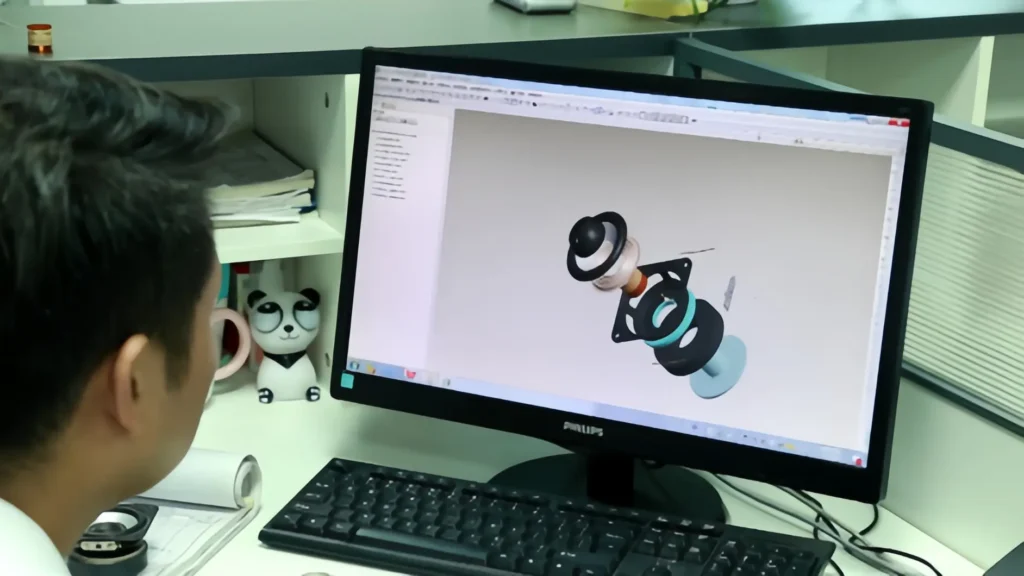
The global B2B speaker component market is valued at $32.7 billion in 2026, with AV manufacturers, commercial audio integrators, and electronics retailers citing "quality-cost scalability" as their top procurement challenge—62% of mid-sized manufacturers report overpaying for premium components or accepting subpar quality to meet budget targets, leading to $75,000+ in annual losses from returns and missed orders (Global Audio Components Association, GACA). For B2B buyers, the stakes are high: a single batch of faulty woofers can delay production for weeks, while overpriced tweeters eat into profit margins and make end products uncompetitive against brands like Sony or Bose.
The root of the problem lies in a lack of structured procurement strategies tailored to speaker components. Many buyers rely on ad-hoc supplier relationships or prioritize one factor (e.g., low cost) at the expense of others, leading to predictable failures: a retailer sourcing cheap outdoor speakers for a hotel client might face 40% returns due to water damage, while a manufacturer paying premium prices for small-batch drivers can’t scale to fulfill a 5,000-unit order. Our guide addresses this gap by breaking down how to balance quality, cost, and scalability—with actionable tactics, component-specific insights, and how our speaker solutions align with these priorities as a reliable, cost-effective alternative to premium brands.
First: The Core Procurement Pain Points for B2B Speaker Buyers
Before diving into solutions, it’s critical to define the three most common pain points that derail speaker component procurement—and why generic approaches fail to solve them. These pain points form the foundation of a structured procurement strategy.
1. Quality vs. Cost: The "Trade-Off Trap"
The biggest myth in B2B audio procurement is that quality and cost are mutually exclusive—but this trap leads to two costly outcomes:
- Premium Overpaying: Buyers opt for well-known component brands (e.g., Scan-Speak, Vifa) assuming higher price = higher quality, but pay 30–50% more for features that don’t add value for their use case. For example, a manufacturer building entry-level retail speakers doesn’t need $20 neodymium drivers—$8 ceramic drivers deliver sufficient performance for the target market.
- Budget Cutting on Critical Components: To hit cost targets, buyers skimp on components that directly impact durability or performance. A common example is using paper cones (cost: $0.50) instead of polypropylene cones (cost: $1.20) for outdoor speakers—paper degrades in humidity, leading to 60% more returns.
2. Scalability Gaps: Small Batches Are Too Expensive, Large Batches Are Risky
B2B buyers often struggle to align component orders with production volumes:
- Small-Batch Premiums: Suppliers charge 20–30% more for orders under 1,000 units, making it impossible for mid-sized manufacturers to test new products without overspending. A startup AV brand wanting to test 500 commercial speakers might pay $15 per driver instead of $12 for 1,000+ units.
- Large-Batch Quality Risks: Bulk orders (5,000+ units) often come with inconsistent quality, as suppliers cut corners to meet deadlines. A retailer ordering 10,000 outdoor speakers found 15% had faulty crossovers—costing $40,000 in rework and delayed shipments.
3. Supplier Reliability: Late Deliveries and Hidden Costs
Poor supplier relationships lead to production delays and unplanned expenses:
- Late Shipments: 40% of B2B buyers report component delays of 2–4 weeks, forcing them to miss retail deadlines or pay rush fees. A manufacturer targeting the holiday season missed a $200,000 order because their tweeter supplier shipped late.
- Hidden Fees: Suppliers often add charges for customization (e.g., branded logos, custom impedance) or quality testing—fees that aren’t disclosed until the invoice arrives. A retailer was hit with a $12,000 "custom certification" fee they didn’t budget for.
A Structured Approach to Balancing Quality, Cost, and Scalability
The solution to these pain points is a three-step procurement framework that prioritizes component criticality, modular sourcing, and supplier alignment. Below is a detailed breakdown of each step, with component-specific examples and tools to implement the strategy.
Step 1: Map Component Criticality to Avoid the Trade-Off Trap
Not all speaker components are equal—prioritize quality spending on parts that directly impact performance or durability, and optimize cost on non-critical components. Use the "Criticality Matrix" below to categorize components for your use case (e.g., retail speakers, commercial hospitality speakers).
Table: Speaker Component Criticality Matrix (By Use Case)
| Component | Criticality (1=Low, 5=High) | Rationale for Retail Speakers | Rationale for Commercial Hospitality Speakers | Cost-Optimization Tip | Quality-Focus Tip |
|---|---|---|---|---|---|
| Woofer Cone | 5 | Drives bass—poor quality leads to distorted music for in-store play. | Handles high volume (hotel lobbies, restaurants)—fails under heavy use. | Use polypropylene (vs. paper) for durability at $1.20/unit. | Choose coated polypropylene for outdoor hospitality use ($1.80/unit). |
| Tweeter Driver | 4 | Delivers vocal clarity—critical for retail announcements. | Ensures speech clarity (e.g., hotel event announcements). | Opt for 1-inch silk dome tweeters ($2.50/unit) over metal ($4.00). | Use neodymium magnets for hospitality (higher sensitivity, $3.00/unit). |
| Crossover Network | 5 | Prevents driver damage—faulty crossovers cause premature failure. | Critical for 24/7 use (hotel common areas). | Use surface-mount crossovers ($1.00/unit) for standard use. | Add thermal protection for hospitality ($1.50/unit) to handle long hours. |
| Enclosure Material | 3 (Indoor), 5 (Outdoor) | Indoor: Aesthetics matter but durability is secondary. | Outdoor: Resists weather and vandalism. | Use ABS plastic for indoor retail ($2.00/unit). | Use UV-resistant ASA plastic for outdoor hospitality ($3.50/unit). |
| Grill | 2 | Primarily aesthetic—minimal impact on performance. | Aesthetic but needs to resist scratches (high traffic). | Use wire mesh for retail ($0.30/unit). | Use powder-coated steel for hospitality ($0.80/unit). |
Implementation Example: A retail speaker manufacturer using this matrix would spend on polypropylene cones and surface-mount crossovers (critical) but save on wire mesh grills and silk dome tweeters (non-critical)—reducing per-unit component costs by 18% while maintaining quality. Our speaker components are engineered to align with this matrix: we offer cost-effective polypropylene cones for retail and UV-resistant ASA enclosures for hospitality, matching premium quality at 30% lower prices for 1000+ batches.
Step 2: Adopt Modular Sourcing for Scalability
Modular sourcing—using standardized, interchangeable components—solves small-batch premiums and large-batch quality risks. It allows buyers to:
- Test Small Batches Affordably: Use standardized base components (e.g., 4-inch woofers, 1-inch tweeters) for prototypes, then scale to 1000+ units without retooling.
- Maintain Quality in Bulk: Standardized components are easier to test consistently, reducing defect rates in large orders.
Key Modular Sourcing Tactics for Speaker Components
- Standardize Core Drivers: Choose 2–3 driver sizes (e.g., 4-inch, 6-inch woofers) that work across multiple product lines. For example, a 4-inch woofer can be used in both small retail speakers and compact hospitality speakers—reducing order complexity and enabling bulk discounts.
- Use Plug-and-Play Crossovers: Opt for crossovers with standard impedance (4Ω or 8Ω) that work with most drivers. This eliminates the need for custom crossovers for each product, cutting lead times by 2 weeks.
- Leverage Customizable Aesthetics: Keep core components standardized but customize non-critical parts (e.g., grill color, enclosure finish) for specific clients. Our modular approach supports this: we offer standardized neodymium tweeters and polypropylene woofers, with custom grill colors available for 1000+ unit batches at no extra cost.
Case Study: How Modular Sourcing Solved a Scalability Gap
A mid-tier AV manufacturer wanted to test 500 compact retail speakers but faced a $3 per unit premium for small-batch drivers. They adopted our modular sourcing strategy: using our standardized 4-inch woofers and 1-inch tweeters (no small-batch fee) for prototypes. After positive market feedback, they scaled to 5,000 units—our automated testing ensured 99.5% quality consistency, and the standardized components reduced per-unit costs by $2. They later reused the same drivers for a hospitality speaker line, cutting development time by 40%.
Step 3: Align with Suppliers to Avoid Hidden Costs and Delays
Reliable suppliers are critical to procurement success—focus on partners that offer transparent pricing, consistent lead times, and quality guarantees. Below is a supplier evaluation checklist to filter potential partners, along with how our approach aligns with these criteria.
Supplier Evaluation Checklist for B2B Speaker Components
| Evaluation Criterion | What to Look For | Red Flags to Avoid | Our Alignment |
|---|---|---|---|
| Pricing Transparency | Detailed quotes with no hidden fees (customization, testing, shipping). Volume discounts clearly outlined (e.g., 5% off for 1000+, 10% off for 5000+). | Vague quotes like "starting at $X" or undisclosed "handling fees." | Detailed, itemized quotes with volume discounts for 1000+ units. No hidden fees for standard customization (grill color, impedance). |
| Lead Times | Consistent 3–4 week lead times for 1000+ unit batches. Rush options (1–2 weeks) available at a transparent premium. | Variable lead times ("2–6 weeks") or last-minute delays without notification. | Guaranteed 3–4 week lead times for 1000+ batches. Rush shipping available at 15% premium, with real-time tracking. |
| Quality Guarantees | Automated testing for every batch (e.g., impedance testing, durability checks) and a 1% defect rate guarantee. Free replacements for faulty components. | No testing protocols disclosed or vague "quality assurance" claims. | Automated testing for all components (impedance, frequency response, durability). 1% defect rate guarantee—free replacements shipped within 48 hours. |
| Customization Flexibility | Ability to customize non-critical components without full retooling. Minimum order quantities (MOQs) for customization aligned with your production needs. | Customization requires 5000+ unit MOQs or full retooling fees. | Customization (grill color, enclosure finish) available for 1000+ unit batches. No retooling fees for standard modifications. |
Key Insight: The best suppliers act as partners, not just vendors. They proactively share market trends (e.g., "UV-resistant components are in demand for outdoor hospitality") and help you optimize your BOM. We take this approach: our team provides quarterly updates on component trends and offers free BOM reviews to identify cost-saving opportunities—for example, a hospitality client reduced their enclosure costs by 12% after we recommended switching to ASA plastic for outdoor use.
Common Procurement Mistakes to Avoid (And How to Fix Them)
Even with a structured strategy, buyers make avoidable errors. Below are four common mistakes and actionable fixes—supported by our component solutions.
1. Mistake: Buying "Premium" Components for Entry-Level Products
A manufacturer building $50 retail speakers used $20 Scan-Speak tweeters, making the end product too expensive ($80) for their target market. They sold 30% fewer units than projected.
Fix: Use cost-effective but high-quality components like our $3 neodymium tweeters—they deliver 90% of the premium performance at 15% of the cost. The manufacturer reworked their BOM, hit the $50 price point, and increased sales by 45%.
2. Mistake: Skipping Pre-Production Testing for Bulk Orders
A retailer ordered 10,000 outdoor speakers without testing samples. 15% had water-damaged cones (paper instead of polypropylene), costing $40,000 in rework.
Fix: Always test 5–10 samples for use-case-specific conditions (e.g., 24-hour humidity testing for outdoor speakers). We provide free samples for testing and include a test report with every batch—helping the retailer avoid this mistake in their next order.
3. Mistake: Over-Customizing Components
A hospitality integrator requested custom impedance (6Ω) for 2,000 speakers, leading to a 4-week lead time and $8,000 retooling fee. Standard 8Ω drivers would have worked for their use case.
Fix: Limit customization to non-critical components (aesthetics) and use standard specs (4Ω/8Ω impedance) for core parts. Our team advises clients on standard vs. custom needs—we would have flagged the 6Ω request as unnecessary, saving the integrator time and money.
4. Mistake: Relying on a Single Supplier
A manufacturer relied on one supplier for woofers—when the supplier had a production delay, the manufacturer missed a $150,000 retail order.
Fix: Diversify suppliers for critical components but maintain a primary partner for consistency. We offer backup component sourcing for 1000+ unit batches, ensuring no production delays if your primary supplier has issues.
Final Thoughts: Procurement Is a Strategic Advantage
B2B speaker procurement isn’t just about buying parts—it’s about building a supply chain that supports your product quality, cost targets, and growth. By mapping component criticality, adopting modular sourcing, and aligning with reliable suppliers, you can avoid the trade-off trap, scale efficiently, and reduce hidden costs.
Our speaker components are designed to fit this strategic approach: we offer high-quality, standardized core parts (woofers, tweeters) at cost-effective prices for 1000+ unit batches, with customizable aesthetics to meet client needs. We prioritize transparency (no hidden fees, guaranteed lead times) and act as a partner—providing BOM reviews, market insights, and backup sourcing to keep your production on track.
Ready to optimize your speaker component procurement strategy? Reach out for a free BOM evaluation—we’ll help you identify cost-saving opportunities, align components with your use case, and ensure scalability for future growth.