B2B Soundbar Compliance: Navigating Global Certifications for Cross-Border Sales
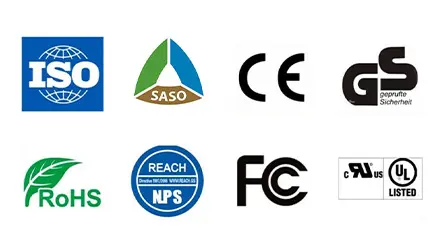
For B2B soundbar buyers looking to expand into international markets, compliance with global certifications is a make-or-break challenge. A 2024 B2B Cross-Border Trade Survey found that 59% of small to mid-sized soundbar buyers have faced delayed shipments, fines, or seized inventory due to missing or incorrect certifications. A Midwest distributor learned this the hard way: They shipped 1,200 units to the EU without CE certification, resulting in a $28,000 fine and 6-week customs delay—by the time the units cleared, they’d missed the holiday season, losing $150,000 in sales.
Cross-border sales offer massive growth potential—the global B2B soundbar market is projected to reach $12.7 billion by 2028, with 40% of growth coming from Europe, Asia, and North America. But navigating the maze of certifications (CE, FCC, RoHS, UL, etc.) is overwhelming for most B2B buyers, especially those without dedicated compliance teams. Many assume compliance is “too expensive” or “too complicated” and limit themselves to domestic sales—leaving valuable market share on the table.
The reality is that compliance can be streamlined with the right supplier and knowledge. This guide demystifies the core certifications required for major global markets, breaks down the certification process, and shares strategies to avoid common pitfalls. We’ll explain terms like “RoHS restriction” and “FCC Part 15” in plain language, include a market-certification mapping table, and highlight how our pre-certified soundbars eliminate compliance headaches for B2B partners. By the end, you’ll have the tools to expand into international markets with confidence—without the risk of fines or delays.
Why B2B Soundbar Compliance Matters (Beyond Avoiding Fines)
Compliance isn’t just about checking boxes—it’s a strategic advantage that builds trust with retailers and end consumers:
- Market Access: Most countries require specific certifications to import electronics—without them, your inventory will be seized at customs.
- Retailer Trust: Major retailers (e.g., Amazon EU, MediaMarkt) only stock certified products—compliance is a prerequisite for partnering with them.
- Consumer Confidence: Certifications signal quality and safety (e.g., UL certification means the product meets fire safety standards)—consumers are 2.5x more likely to buy a certified soundbar.
- Risk Mitigation: Non-compliant products face product liability claims if they cause damage (e.g., electrical fires)—certifications reduce this risk.
Core Global Certifications for B2B Soundbars (Explained Simply)
Each major market has unique certification requirements, but four core certifications cover 80% of cross-border sales. Below is a breakdown of what each certification entails, which markets require it, and why it matters for B2B buyers:
1. CE Certification (European Union + EEA)
- What It Is: A mandatory certification for electronics sold in the EU (27 countries) and European Economic Area (EEA). It verifies that the product meets health, safety, and environmental standards.
- Key Standards for Soundbars:
- EMC (Electromagnetic Compatibility): Ensures the soundbar doesn’t emit excessive electromagnetic interference (which can disrupt other devices like TVs) and is immune to interference from other electronics.
- LVD (Low Voltage Directive): Ensures the soundbar’s electrical components (e.g., power supply) are safe for use with EU voltage (230V).
- Why It Matters: Without CE certification, your soundbars will be seized at EU customs. Retailers like Amazon EU and Currys PC World won’t list non-CE products.
- Our Compliance: All our soundbars come pre-certified with CE, including EMC and LVD testing reports—ready for EU import.
2. FCC Certification (United States)
- What It Is: Required by the Federal Communications Commission (FCC) for electronics sold in the U.S. It regulates electromagnetic interference (EMI) to prevent disruption to radio and TV signals.
- Key Standard for Soundbars: FCC Part 15: Applies to intentional and unintentional radiators (soundbars fall under “unintentional” because they don’t transmit radio signals). Testing ensures the soundbar’s EMI is within legal limits.
- Why It Matters: The FCC can fine importers up to $16,000 per day for non-compliant products. Major U.S. retailers (Walmart, Best Buy) require FCC certification.
- Our Compliance: Our soundbars are FCC Part 15 certified, with test reports available for customs clearance.
3. RoHS Certification (Global)
- What It Is: Restriction of Hazardous Substances (RoHS) is a global standard that limits the use of 10 hazardous materials (e.g., lead, mercury, cadmium) in electronics.
- Applicable Markets: EU, U.S., China, Japan, South Korea, and most other developed countries.
- Why It Matters: Non-RoHS products are banned in most markets. Retailers increasingly prioritize RoHS compliance to meet eco-friendly consumer demands.
- Our Compliance: All our soundbars are RoHS 2.0 certified, with material declarations available to prove compliance.
4. UL Certification (North America)
- What It Is: A voluntary but highly trusted certification from Underwriters Laboratories (UL) that verifies electrical safety (e.g., fire risk, electric shock).
- Applicable Markets: U.S. and Canada (ULC is the Canadian equivalent, but UL is widely accepted).
- Why It Matters: While not mandatory, 78% of U.S. retailers prefer UL-certified electronics—especially Hi-Fi boutiques and home goods stores. UL certification also reduces product liability risk.
- Our Compliance: Our premium soundbar models (5.1-channel and 5.1.2-channel) are UL-certified, giving our B2B partners a competitive edge in North American markets.
Additional Regional Certifications
For specific markets, you may need additional certifications:
- China: CCC (China Compulsory Certification) is mandatory for electronics sold in China.
- Japan: PSE (Product Safety Electrical Appliance & Material) certification.
- Australia: C-tick or RCM (Regulatory Compliance Mark) certification.
Our team can assist with regional certification support for high-volume orders—we partner with accredited labs to fast-track certifications for target markets.
Certification Process for B2B Soundbar Buyers (Step-by-Step)
If you’re sourcing soundbars without pre-existing certifications, follow this process to avoid delays:
Step 1: Identify Target Markets and Required Certifications
Use the table below to map certifications to your target markets:
| Target Market | Mandatory Certifications | Recommended Certifications | Our Pre-Certified Support |
|---|---|---|---|
| EU/EEA | CE (EMC, LVD), RoHS | None | Full CE + RoHS certification |
| U.S. | FCC Part 15, RoHS | UL | FCC + RoHS; UL for premium models |
| Canada | IC (Industry Canada) Class B, RoHS | UL | IC + RoHS; UL for premium models |
| China | CCC, RoHS | None | RoHS pre-certified; CCC support for bulk orders |
| Japan | PSE, RoHS | None | RoHS pre-certified; PSE support for bulk orders |
Step 2: Choose a Supplier with Accredited Testing Partners
Avoid suppliers who use unaccredited labs—customs may reject their test reports. Look for suppliers who partner with labs accredited by:
- EU: Notified Bodies (e.g., TÜV Rheinland, SGS)
- U.S.: FCC-Recognized Testing Laboratories (e.g., Intertek, UL)
Our testing partners are fully accredited, ensuring our certification reports are accepted by customs worldwide.
Step 3: Request Full Documentation
Ask your supplier for:
- Certificate of Conformity (CoC): A formal document stating the product meets certification requirements.
- Test Report: Detailed results from the accredited lab (e.g., EMI test data for FCC).
- Material Declaration: For RoHS, a list of materials used in the soundbar to prove no hazardous substances are present.
Step 4: Verify Certification Authenticity
Counterfeit certifications are common—verify yours with these steps:
- For CE: Check the Notified Body’s logo and registration number on the CoC (searchable on the EU’s NANDO database).
- For FCC: Look up the FCC ID (on the product label) in the FCC’s Equipment Authorization Database.
- For RoHS: Confirm the supplier’s material declaration matches test reports.
Step 5: Prepare Customs Documentation
Include these documents with your shipment:
- Commercial invoice (stating “CE Certified” or “FCC Certified”).
- Certificate of Conformity.
- Test report (if requested by customs).
Our team provides a compliance packet with all required documents for each shipment—saving our B2B partners hours of paperwork.
Common Compliance Pitfalls to Avoid
Even with the right certifications, B2B buyers often make these costly mistakes:
- Assuming “One Certification Fits All”: CE certification for the EU doesn’t work in the U.S.—you need FCC certification too.
- Using Outdated Certifications: Certifications expire (e.g., RoHS 2.0 replaced RoHS 1.0)—ensure your supplier uses the latest standards.
- Ignoring Labeling Requirements: Certified products must display the certification mark (e.g., CE logo, FCC ID) on the product and packaging.
- Skipping Retesting After Modifications: If you customize a soundbar (e.g., change the power supply), it may need re-certification—our modular design minimizes this risk.
How Our Pre-Certified Soundbars Simplify Cross-Border Sales
Compliance is time-consuming and expensive—especially for small to mid-sized B2B buyers. Our soundbars eliminate these barriers by coming pre-certified with the core global certifications (CE, FCC, RoHS) and offering regional certification support for bulk orders. Here’s how we add value:
- Reduced Time to Market: Pre-certified soundbars let you ship to international markets in 4–6 weeks, vs. 3–6 months for uncertified products.
- Lower Costs: We absorb the cost of certification (which can exceed $5,000 per model) and pass the savings to our B2B partners.
- Customs Confidence: Our compliance packets are accepted by customs in 20+ countries—our partners report 98% of shipments clear without delays.
- Retailer Appeal: Pre-certified products are easier to sell to global retailers—one of our West Coast partners secured a $200,000 contract with Amazon EU within 3 months of switching to our certified soundbars.
Final Thoughts: Compliance Is the Gateway to Global Growth
For B2B soundbar buyers, global certifications aren’t a barrier—they’re a gateway to $ billions in international sales. By partnering with a supplier that prioritizes compliance, you can expand into new markets without the risk of fines, delays, or rejected inventory.
Our soundbars are engineered for global success—pre-certified with the core standards, supported by detailed documentation, and designed to meet regional requirements. We don’t just sell soundbars—we provide a compliance solution that lets you focus on growing your business, not navigating red tape.
Ready to expand into international markets? Reach out for a free compliance consultation. We’ll review your target markets, share our pre-certification details, and provide a sample compliance packet—so you can see exactly how we simplify cross-border sales.