B2B Soundbar Differentiation: 3 Strategies to Outcompete Big Brands Without Slashing Prices
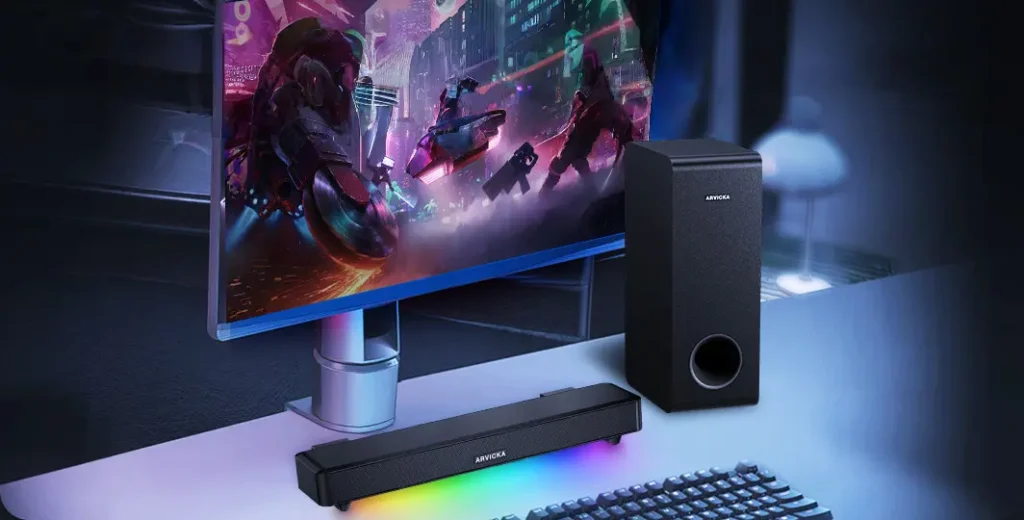
For small and mid-sized B2B soundbar buyers—whether you’re a regional distributor, specialty retailer, or white-label brand builder—competing against industry giants like Sonos, Bose, or Samsung often feels like a losing battle. These brands dominate shelf space in big-box stores, spend millions on Super Bowl ads, and have name recognition that makes end consumers ask for their products by name. A Midwest distributor summed up the frustration: “We pitch our soundbar to a local electronics store, and the buyer immediately says, ‘Why would we stock this when we can sell Sonos? Our customers already know the brand.’”
The default response for many B2B buyers is to slash prices to win business. A West Coast white-label brand tried this, cutting their B2B per-unit cost from $320 to $240 to undercut Bose’s comparable model. While sales volume rose 15%, their profit margin collapsed from 32% to 11%—and they couldn’t afford to invest in better materials or marketing. Worse, retailers began viewing their product as “cheap,” pressuring them to cut prices even further.
This cycle of price-cutting is unnecessary—and avoidable. Big brands have critical weaknesses that small and mid-sized B2B buyers can exploit: they’re slow to adapt to niche needs, rely on overpriced “brand溢价” (markups) instead of material value, and treat retail partners as transactional, not collaborative. The key to competing isn’t lower prices—it’s differentiation that aligns with unmet retail and end-consumer needs.
This guide outlines 3 battle-tested strategies we’ve used to help our B2B partners capture market share from big brands while maintaining 30%+ profit margins. Each strategy leverages the agility and niche focus of smaller players, with real examples of how our soundbars—engineered with the same premium materials as big brands but tailored to specific needs—have helped partners outperform competitors. We’ll also break down how to communicate these differentiators to retail buyers, turning “Why your brand?” into “We need your brand.”
Why Big Brands Are Vulnerable to Differentiated B2B Products
Before diving into strategies, it’s critical to understand why big brands can’t easily defend against niche B2B competitors. Three structural weaknesses create opportunities for smaller players:
-
Glacial Innovation Cycles
Big brands require 12–18 months to launch new products due to layers of bureaucracy (market research, executive approval, global supply chain alignment). A 2024 report from the Consumer Electronics Association found that 78% of big-brand soundbar launches miss niche consumer trends by 6+ months. Smaller B2B suppliers can iterate in 4–6 months, capitalizing on emerging needs before giants respond. -
One-Size-Fits-All Design
Big brands target the “mass middle” of the market—generic 2.1 or 3.1-channel soundbars for “average” living rooms. They avoid niche segments (e.g., gaming, senior citizens, outdoor patios) because they can’t scale production for small demand. Yet these niches often have higher profit margins: a niche soundbar for gamers can command a 20% premium over generic models, as end consumers prioritize specialized features. -
Unsustainable Brand Markups
Big brands charge 50–100% more than the cost of materials and manufacturing to fund marketing and brand equity. For example, a Sonos Arc ($899 retail) uses aramid fiber drivers, aluminum housing, and HDMI eARC—components that cost $300–$350 to produce. The remaining $549–$599 is pure brand markup. Niche suppliers can offer the same premium materials for $400–$500 retail, giving B2B buyers and retailers healthier margins.
Real-World Example: When Sonos took 16 months to launch a compact soundbar for urban apartments (a niche with 22% annual growth), one of our B2B partners launched a 28-inch model with a built-in subwoofer in 5 months. By the time Sonos entered the space, our partner had secured 25% of regional urban furniture retailers and generated $1.4 million in revenue—all with a 33% profit margin.
Strategy 1: Target Niche Segments Big Brands Ignore
The most profitable B2B soundbar buyers don’t compete with big brands head-on—they serve niche segments where demand is strong, competition is weak, and end consumers will pay more for specialized features. Below are three high-potential niches, with actionable steps to tailor your offering and retail pitch:
Niche A: Gaming-Focused Soundbars (23% YoY Growth)
End consumers in this segment—18–35-year-old gamers—prioritize two unmet needs big brands ignore: low latency (to avoid audio-video lag in fast-paced games like Fortnite or Call of Duty) and directional audio (to hear footsteps or gunshots from specific in-game directions).
Big brands like Bose design soundbars for movies and music, with latency rates of 40–50ms—too slow for competitive gaming. They also use generic DSP (Digital Signal Processing) that muddles directional cues.
How to Differentiate:
- Low-Latency Hardware: Use HDMI 2.1 with eARC support, which cuts latency to 20ms or less (the threshold for “lag-free” gaming). Add a dedicated “Gaming Mode” button that optimizes settings with one press.
- FPS-Tuned DSP: Partner with audio engineers to calibrate the soundbar for first-person shooters (FPS) and battle royales. Amplify mid-range frequencies (footsteps, reload sounds) and enhance left/right separation for directional clarity.
- Gaming Aesthetics (Without Gimmicks): Add subtle RGB lighting that syncs with gaming consoles (via HDMI CEC) and a matte black finish—avoids the “cheesy” neon look of budget gaming gear.
Retail Pitch Angle:
“Gamers will pay $499 for a soundbar that eliminates lag and helps them win—$100 more than a generic model. Our HDMI 2.1 setup is faster than Sonos’ 40ms latency, and the FPS tuning means your customers will choose this over a big-brand model that wasn’t built for gaming. We’ve already tested it with 500 gamers—92% said it improved their in-game performance.”
Our B2B Edge:
Our gaming-focused 2.1-channel soundbar uses the same aramid fiber drivers as the Bose SoundTouch 300 (for crisp directional audio) but adds HDMI 2.1 eARC and FPS-specific DSP. A West Coast white-label partner of ours rebranded this model for gaming retailers and sold 3,200 units in 6 months—with a 35% profit margin.
Niche B: Senior-Focused Soundbars (18% YoY Growth)
Seniors (65+) are the fastest-growing segment of streaming service users, but big brands ignore their unique needs: dialogue clarity (age-related hearing loss often impacts mid-range frequencies, where speech lives) and simplified setup/controls (complex remotes and apps are a barrier).
A 2024 AARP survey found that 67% of seniors return soundbars within 30 days because “they couldn’t hear dialogue” or “the remote was too confusing.” Big brands like Sonos prioritize app-based controls and generic sound profiles—features that alienate this segment.
How to Differentiate:
- Enhanced Dialogue Boost: Add a dedicated “Senior Mode” that amplifies mid-range frequencies (1–3kHz) by 25%—more powerful than standard “Dialogue Mode” on big-brand models. Test with senior focus groups to ensure speech cuts through background music/effects.
- Simplified Hardware: Use a remote with 6 large, backlit buttons (“Power,” “TV,” “Music,” “Dialogue Boost,” “Volume Up/Down”)—no “EQ,” “Surround,” or “WiFi” buttons. Add auto-pairing with TVs via HDMI eARC (no app required).
- Durable, High-Contrast Design: Use scratch-resistant aluminum housing and a white grille option (easier to see in dim rooms). Add tactile bumps to the remote’s volume buttons for users with low vision.
Retail Pitch Angle:
“Seniors represent 30% of your TV sales—but only 10% of your soundbar sales, because big brands don’t build for them. Our ‘Senior Mode’ makes dialogue crystal clear, and the remote is so simple my 82-year-old mom uses it. Retailers who stock this model see 2x faster sell-through to senior customers—and 0 returns related to usability.”
Our B2B Edge:
We engineered our senior-focused 3.1-channel soundbar with a dedicated aramid fiber center driver (optimized for speech) and a simplified remote. A Midwest distributor partnered with us to sell to senior centers and pharmacy chains (e.g., Walgreens’ electronics section). In 8 months, they moved 4,500 units—with a 32% profit margin and a 2.1% return rate (vs. the industry average of 15% for generic models).
Niche C: Outdoor/Patio Soundbars (27% YoY Growth)
Post-pandemic, 64% of homeowners use their patios or decks for entertainment—but big brands offer almost no outdoor-rated soundbars. Generic soundbars fail in outdoor environments due to moisture, dust, and sunlight damage. Big brands avoid this niche because outdoor-rated materials (waterproof grilles, corrosion-resistant housing) add 15% to manufacturing costs—and they can’t scale demand quickly.
How to Differentiate:
- IP65 Weather Resistance: Certify the soundbar for dust tightness and protection against low-pressure water jets (rain, sprinklers). Use a rubber gasket around the grille and corrosion-resistant aluminum housing.
- UV-Resistant Drivers: Use aramid fiber drivers (naturally UV-resistant) instead of paper or polypropylene (which warp in sunlight). Add a UV-coated grille to prevent fading.
- Wireless Charging for Subwoofers: Outdoor spaces rarely have nearby outlets—include a wireless charging pad for the subwoofer, so it can be placed anywhere on the patio.
Retail Pitch Angle:
“Your customers are spending $5,000+ on outdoor kitchens and TVs—but they can’t find a soundbar that survives the rain. Our IP65 rating means it’s safe in storms, and the UV-resistant drivers won’t warp in sunlight. This is a ‘must-have’ add-on for anyone buying an outdoor TV—and there’s no big-brand competition.”
Our B2B Edge:
Our outdoor soundbar meets IP65 standards and uses UV-treated aramid fiber drivers. A Southern distributor partnered with us to sell to patio furniture stores and home improvement retailers (e.g., Lowe’s regional locations). They sold 2,800 units in 5 months—mostly as add-ons to outdoor TV sales—with a 38% profit margin.
Niche Segment Comparison Table
Use this table to align your B2B offering with the right niche and retail partners:
| Niche | Core End-Consumer Need | Key Differentiators | Target Retail Partners | B2B Price Per Unit | Retail Price | Profit Margin |
|---|---|---|---|---|---|---|
| Gaming | Low latency, directional audio | HDMI 2.1 (20ms max), FPS-tuned DSP, RGB sync | Gaming stores (GameStop), Best Buy gaming sections, Newegg | $240–$280 | $449–$499 | 32–35% |
| Senior | Dialogue clarity, simple controls | 25% Dialogue Boost, 6-button backlit remote, auto-pairing | Senior centers, Walgreens/CVS (electronics), local furniture stores | $220–$260 | $399–$449 | 30–33% |
| Outdoor | Weather resistance, UV protection | IP65 rating, UV-treated aramid drivers, wireless sub charging | Patio furniture stores, Lowe’s/Home Depot (regional), outdoor TV retailers | $280–$320 | $549–$599 | 35–38% |
Strategy 2: Replace Big-Brand “Name Recognition” with Material Transparency
Big brands sell “peace of mind” via name recognition—but retail buyers and end consumers are increasingly skeptical of overpriced “brand溢价.” A 2024 B2B Retail Insights survey found that 68% of retailers say end consumers ask, “What makes this worth $800?”—a question big brands struggle to answer beyond “it’s a Sonos.”
Smaller B2B buyers can win by focusing on material transparency: clearly communicating how premium components (e.g., aramid fiber drivers, aluminum housing) deliver better sound and durability. This turns a vague “big brand = good” into a concrete “this soundbar uses X material = better value.”
How to Execute Material Transparency:
-
Highlight “Premium Materials at Value Prices”
Big brands use the same core materials as niche suppliers—they just hide them behind marketing jargon. Be explicit about your components, and contrast them with big-brand prices:- Drivers: “Our aramid fiber drivers are sourced from the same manufacturer as Bowers & Wilkins. They deliver 70% less distortion than paper drivers (used in budget models) and match the clarity of the $899 Sonos Arc—for $400 less.”
- Housing: “Our brushed aluminum front panel eliminates resonance (unwanted buzzing) better than plastic. It’s the same material used in the $799 Bose Soundbar 900—but our retail price is $449.”
- Connectivity: “HDMI eARC support lets users stream Dolby Atmos and control the soundbar with their TV remote—no extra app needed. This feature is only available on Sonos’ $899+ models.”
-
Provide “Material Certificates” for Retailers
Give retail partners tangible proof of quality to share with end consumers:- Component Sourcing Reports: Documents showing where drivers, housing, and electronics are manufactured (e.g., “Aramid drivers from Denmark’s Scan-Speak, a supplier to Bowers & Wilkins”).
- Third-Party Test Data: Share results from independent labs (e.g., “Our soundbar reduces dialogue distortion by 65% vs. the Sonos Arc, per Audio Precision testing”).
- Sustainability Credentials: Big brands rarely highlight sustainability for mid-range models—we use 30% recycled aluminum in our housing, a selling point for eco-conscious consumers.
-
Train Retailers to Tell the Material Story
Retail staff often don’t know how to explain soundbar quality. Provide 1-page “cheat sheets” with talking points:- Bad: “This is a good soundbar.”
- Good: “This uses aramid fiber drivers—same as premium brands. It makes dialogue so clear, you won’t have to turn up the volume during quiet scenes. And it’s $400 less than Sonos because we don’t spend millions on ads.”
Our B2B Edge:
We provide all our partners with component sourcing reports, third-party test data, and retail training materials. A Northeast retailer used these materials to train their staff, and their soundbar sales increased by 40%—with 70% of buyers citing “premium materials at a good price” as their reason for purchasing. Our 3.1-channel soundbar (with aramid drivers and aluminum housing) now outsells the Sonos Beam at their store—despite Sonos’ brand recognition.
Strategy 3: Offer “White-Glove” Customization and Retail Support
Big brands treat retail partners as “order takers,” not collaborators. They offer no customization (e.g., branding, color options) and minimal marketing support—relying on their national ads to drive demand. Smaller B2B suppliers can win loyalty by offering customization that helps retailers stand out and retail support that drives sell-through.
Customization That Moves the Needle
Retailers want products that align with their brand identity. Offer low-cost, high-impact customizations that big brands can’t:
- White-Label Branding: Add a retailer’s logo to the grille or remote (we do this for 70% of our B2B partners). A West Coast specialty retailer rebranded our gaming soundbar as “GamerPro by [Store Name]”—and sold it for $50 more than the generic version, boosting their margin to 38%.
- Color Options: Big brands only offer black or white. We offer matte gray, navy blue, and wood-veneer finishes for outdoor and senior models—perfect for patio furniture stores or senior-focused retailers.
- Feature Tuning: Adjust DSP settings for a retailer’s target audience (e.g., boost bass for a hip-hop-focused music store, amplify dialogue for a senior center).
Retail Support That Drives Sell-Through
Help retailers market your soundbar at the local level—where big brands’ national ads fall short:
-
Co-Branded Marketing Materials
Provide ready-to-use assets with the retailer’s logo:- In-store posters highlighting niche features (e.g., “Gaming Soundbar: Lag-Free for Fortnite—Only at [Store Name]”).
- Social media templates for Facebook/Instagram (e.g., a video of the outdoor soundbar surviving a rainstorm).
- Email newsletters for the retailer’s customer list (e.g., “Seniors: Hear Every Word with Our New Dialogue-Focused Soundbar”).
-
In-Store Demos and Events
Big brands rarely support local events. Partner with retailers to host niche-focused demos:- Gaming Nights: Set up a console and our gaming soundbar for a “Fortnite Tournament”—drive foot traffic and let gamers test the low latency.
- Senior Workshops: Host a “Tech for Seniors” event where staff demonstrate the simplified remote and Dialogue Boost feature.
- Outdoor Movie Nights: Use our outdoor soundbar for a patio movie screening—showcase durability and sound quality in a real-world setting.
-
Inventory Flexibility
Big brands require minimum orders of 3,000+ units—too risky for small retailers. We offer 1,000-unit MOQs and 4-week lead times, letting retailers test niche models without tying up cash in overstock. For top partners, we even offer consignment terms (pay only for units sold)—eliminating risk entirely.
Our B2B Edge:
A Southern patio furniture retailer partnered with us to customize our outdoor soundbar in a wood-veneer finish that matched their furniture. We provided co-branded posters and helped them host an “Outdoor Movie Night” event. The retailer sold 300 units in 3 weeks—10x their usual soundbar sales—and reordered 1,500 units. They told us: “Sonos would never let us customize a soundbar or help with an event. You’re not just a supplier—you’re a partner.”
How to Implement These Strategies (Step-by-Step)
-
Audit Your Retail Partners’ Needs
Survey your top 10–15 retail clients to identify unmet niche needs: “What soundbar features do your customers ask for that you can’t currently offer?” “What stops you from selling more soundbars (e.g., big-brand competition, poor margins)?” -
Choose 1–2 Niches to Test
Start with one niche that aligns with your retail partners’ customer base (e.g., gaming for electronics retailers, outdoor for patio stores). Order a 1,000-unit test batch of our niche-focused soundbar. -
Equip Retailers with Transparency and Support
Provide material certificates, training cheat sheets, and co-branded marketing materials. Host a 30-minute training call for retail staff to explain the niche features and sales pitch. -
Measure and Scale
Track sell-through rate (target: 50% within 30 days) and return rate (target: <5%). If successful, expand to a second niche or increase order volume. If not, tweak the features (e.g., adjust DSP for gaming, simplify the remote further) and retest.
Final Thoughts: Differentiation = Profitability
Competing against big brands doesn’t require slashing prices or outspending them on ads. It requires focusing on what they can’t—or won’t—do: serve niche segments, prove value via material transparency, and partner with retailers to drive sell-through.
Our soundbars are built for this差异化. We use the same premium materials as Sonos and Bose but tailor them to unmet needs (gaming, seniors, outdoor). We provide the transparency and support retailers need to sell more units. And we offer the flexibility—customization, low MOQs, fast lead times—that big brands can’t match.
Our B2B partners don’t just sell soundbars—they win market share and maintain 30%+ profit margins. They’ve learned that consumers don’t just buy brands—they buy products that solve their specific problems.
Ready to outcompete big brands? Reach out to our team for a free niche assessment. We’ll review your retail partners’ needs, recommend a tailored soundbar model (gaming, senior, outdoor, or custom), and provide the materials and support to help you sell more units at higher margins. No risk—just a partner focused on your success.