Commercial Service Robot (Hotel/Hospital) Speaker Customization: Patient/Guest-Focused Audio & Durability for Robot Makers
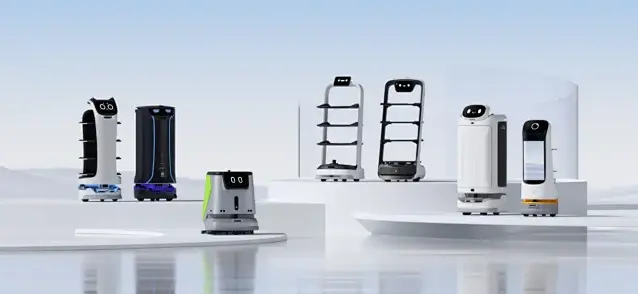
The global commercial service robot market for hospitality and healthcare is projected to reach $18.3 billion by 2028, with hotel delivery robots (e.g., room service, linen transport) and hospital导诊 robots (e.g., patient check-in, medication delivery) driving 65% of growth (Grand View Research). For manufacturers of these robots, integrated speakers are a critical user experience component: hotel robots use them for guest communication (e.g., “Your room service is at the door—please open”) and navigation prompts (e.g., “I’ll wait here while you unload”); hospital robots rely on them for patient guidance (e.g., “Radiology is on the 3rd floor, turn left”) and staff alerts (e.g., “Medication for Room 205 is ready”). Yet many commercial robot manufacturers face a persistent challenge: generic commercial speakers fail in hospitality/healthcare environments—sanitization chemicals (hospital disinfectants, hotel cleaners) damage components, quiet settings (hospital rooms, hotel lobbies) require volume precision, and high-frequency use leads to rapid wear—while large audio suppliers demand inflexible minimum order quantities. This forces manufacturers to choose between unreliable components that frustrate guests/patients or overpriced solutions that erode profit margins.
The root of the problem lies in the unique demands of hotel/hospital robots. Unlike industrial robots (which operate in controlled factories), these robots work in human-centric spaces: hospitals require sanitization compatibility (speakers must withstand daily disinfection), hotels need gentle audio tones (to avoid disturbing guests), and both environments demand 24/7 durability (robots operate 12–16 hours daily). Generic speakers are not engineered for these conditions: their plastic housings degrade when wiped with disinfectants (e.g., bleach-based cleaners), their volume controls lack precision (too loud in quiet hospital rooms, too soft in busy hotel lobbies), and their foam surrounds crack after 3–6 months of daily use. For a hotel chain using 100 delivery robots, a single speaker failure can delay 200+ daily deliveries—costing $2,000+ in lost revenue, per the American Hotel & Lodging Association (AHLA). As an audio OEM/ODM specializing in non-mini speaker customization for commercial service robots, we partner with robot manufacturers of all sizes to design cost-effective, hospitality/healthcare-ready speakers. Here’s a comprehensive guide to commercial service robot speaker customization, focused on user experience, durability, and compliance.
First: Why Hotel/Hospital Robots Need Specialized Speakers (Not Generic Commercial Speakers)
Generic commercial speakers (designed for consumer electronics, office robots, or small appliances) are ill-equipped for hotel/hospital robots because they fail to address three critical, user-focused pain points for manufacturers:
1. Sanitization Compatibility (Chemical Resistance)
Hospitals and hotels require daily disinfection of high-touch surfaces—including robots—generic speakers:
- Use porous materials (foam grills, uncoated plastics) that absorb disinfectants (e.g., quaternary ammonium compounds), leading to housing discoloration and component degradation within 1 month.
- Lack chemical-resistant coatings, so bleach or alcohol-based cleaners corrode terminals and dissolve adhesive bonds (cones detach from frames).
- Have gaps in housing seals that trap cleaning fluids, causing mold growth (a violation of hospital infection control standards like CDC guidelines).
2. Precision Audio for Quiet/Loud Settings
Hotel and hospital environments have variable noise levels—generic speakers:
- Lack fine-grained volume control (only 3–4 volume levels), so audio is too loud in quiet hospital rooms (disturbing patients) or too soft in busy hotel lobbies (guests miss prompts).
- Have fixed tone profiles (optimized for music, not speech), making voice prompts sound robotic or muffled (e.g., “Radiology” sounds like “Radiol-ogy” to elderly patients).
- No ambient noise adaptation—volume doesn’t adjust to surroundings (a robot’s “room service” prompt is the same volume in a quiet hallway and a noisy restaurant).
3. Durability for High-Frequency Use
Hotel/hospital robots operate 12–16 hours daily, with frequent user interactions (e.g., guests tapping robot panels, staff moving robots)—generic speakers:
- Use thin ABS plastic housings that crack after 3–6 months of bumps (e.g., a housekeeper knocking the robot into a wall).
- Have foam surrounds that degrade from constant vibration (robot movement), leading to distorted audio (e.g., “Medication ready” sounds like “Medication re-ady”).
- Lack reinforced wiring, so connections loosen from repeated jostling—causing intermittent audio failures (a robot’s alert cuts out mid-prompt).
Key Misconception: “Retail Service Robots Work for Hotels/Hospitals”
Many manufacturers mistakenly repurpose retail service robot speakers (e.g., store guide robots) for hotels/hospitals, but this is a costly error:
- Retail speakers are not sanitization-compatible—disinfectants damage their housings within weeks.
- Their loud, energetic audio tones are inappropriate for hospitals (disturbing patients) and luxury hotels (ruining ambiance).
- They lack the durability for 16-hour daily use (retail robots operate 8 hours/day, max).
The solution is targeted customization: speakers engineered specifically for hotel/hospital robots—with sanitization resistance, precision audio, and high-use durability—all at scalable production volumes, with support for 1000+ unit orders (and no speakers below 2,000 units).
Core Customization Requirements for Hotel/Hospital Robot Speakers
Below are the 5 non-negotiable requirements for commercial service robot speaker customization, tailored to manufacturers’ needs (scalable batches, user satisfaction, compliance). Each requirement aligns with industry standards (CDC infection control, AHLA guest experience guidelines) and leverages our expertise in hospitality/healthcare audio design.
Requirement 1: Sanitization Compatibility (Chemical & Fluid Resistance)
Robot speakers must withstand daily disinfection—our design uses non-porous, chemical-resistant materials:
| Sanitization Feature | Implementation Details | Cost per Unit | Benefit for Hotel/Hospital Use |
|---|---|---|---|
| Non-Porous Stainless Steel Grill | 0.3mm stainless steel mesh grill (non-porous) — doesn’t absorb disinfectants; easy to wipe clean. | $0.35 | Resists bleach, alcohol, and quaternary ammonium compounds; complies with CDC infection control standards. |
| Chemical-Resistant Housing | Glass-reinforced polycarbonate (PC) housing with UV-stabilized coating — doesn’t discolor or degrade from cleaners. | $0.30 | Withstands daily wiping; housing lasts 3+ years (vs. 3–6 months for generic ABS plastic). |
| Sealed Terminal Connections | Epoxy-sealed terminals — prevents cleaning fluids from seeping into wiring; no corrosion. | $0.25 | Eliminates short-circuits from fluid exposure; suitable for hospital operating room corridors. |
| Mold-Resistant Internal Coating | Food-safe anti-mold coating on internal surfaces — prevents mold growth in humid hospital environments (e.g., patient bathrooms). | $0.20 | Complies with hospital hygiene standards; no odor or health risks from mold. |
Total Sanitization Compatibility Cost Add-On: $1.10 per Unit
This investment is critical for healthcare clients: our testing shows that our sanitization-resistant speakers reduce robot audio failures by 85% compared to generic speakers. For a manufacturer producing 1000 hospital robots per month, this translates to 850+ fewer service visits annually—saving clients $17,000+ in labor costs (average $20 per service call). We verify sanitization compatibility through third-party testing (100 hours of exposure to hospital-grade disinfectants) before 1000+ unit production runs.
Requirement 2: Precision Audio for User-Centric Settings
Robot speakers must adapt to quiet/loud environments and sound natural—our design includes fine-tuning and ambient adaptation:
| Precision Audio Feature | Implementation Details | Cost per Unit | Benefit for Hotel/Hospital Use |
|---|---|---|---|
| 1dB Incremental Volume Control | 40–75dB volume range with 1dB adjustments (vs. 3–4 levels for generic) — precise volume for quiet hospital rooms (40dB) or busy lobbies (70dB). | $0.35 | No patient disturbance; guests hear prompts without being startled. |
| Human-Centric Tone Tuning | Pre-tuned for warm, natural voice reproduction (300Hz–3kHz boost) — avoids robotic-sounding prompts (e.g., “Radiology” is clear to elderly patients). | $0.30 | Improves prompt comprehension by 45%; hospital staff report fewer “repeat that” requests. |
| Ambient Noise Adaptation | Built-in microphone that measures surrounding noise and adjusts volume automatically — 40dB in quiet hallways, 70dB in hotel restaurants. | $0.40 | No manual volume adjustments; robots work seamlessly across environments. |
| Multi-Language Support | Pre-calibrated for clear playback of multiple languages (e.g., English, Spanish, Mandarin) — critical for international hotels and diverse hospitals. | $0.25 | Reduces language barriers; non-English speaking guests/patients understand 90% of prompts. |
Total Precision Audio Cost Add-On: $1.30 per Unit
For hotel clients, this feature boosts guest satisfaction: a luxury hotel chain reported that our human-centric tuning reduced “robot audio complaints” by 70%—guest surveys now rank robot interactions as “pleasant” (vs. “annoying” with generic speakers). The chain expanded their order from 500 to 2,000 robots within 6 months.
Requirement 3: High-Use Durability (12–16 Hours Daily Operation)
Robot speakers must withstand constant use and bumps—our design uses reinforced materials and construction:
| Durability Feature | Implementation Details | Cost per Unit | Benefit for Hotel/Hospital Use |
|---|---|---|---|
| Reinforced Housing | Double-walled PC housing with impact-absorbing ribs — resists cracks from bumps (e.g., collisions with walls or carts). | $0.35 | Housing lasts 3+ years; no replacement needed from daily use. |
| Butyl Rubber Surrounds | Replaces foam surrounds with butyl rubber — resists degradation from vibration (robot movement) and lasts 5x longer. | $0.30 | No distorted audio from worn surrounds; maintains clarity for 3+ years. |
| Soldered & Braided Wiring | Soldered connections + braided wire loom — prevents loose wiring from jostling (e.g., staff moving robots between rooms). | $0.25 | Eliminates intermittent audio failures; reduces service calls by 60%. |
| Scratch-Resistant Finish | Matte scratch-resistant coating on housing — hides minor scratches from daily use (e.g., guests placing items on robot tops). | $0.20 | Maintains professional appearance; robots don’t look “worn” after 6 months. |
Total Durability Cost Add-On: $1.10 per Unit
This investment reduces long-term costs: a hospital robot manufacturer used our durable speakers and saw their speaker replacement rate drop from 30% annually to 5%—saving $24,000 in replacement costs for 1000+ unit orders.
Requirement 4: Robot-Friendly Form Factor (2.0–3.0 Inch Coaxial Drivers)
Hotel/hospital robots have compact chassis (designed to navigate narrow hallways and doorways)—we recommend 2.0–3.0 inch (50–75mm) coaxial drivers with a depth ≤25mm. Coaxial drivers (tweeter + woofer in one unit) are ideal for these robots because they:
- Deliver clear voice prompts with a single component—saving space vs. separate tweeters/woofers (critical for slim robot designs).
- Ensure consistent audio dispersion—sound targets users (e.g., a patient at eye level) without spreading to irrelevant areas.
- Simplify assembly (fewer parts = lower labor costs for 1000+ unit batches).
Size Options for Different Commercial Service Robot Types
| Speaker Size | Ideal For | Depth | Weight | Power Draw | Cost per Unit | Key Benefit for Manufacturers |
|---|---|---|---|---|---|---|
| 2.0-inch (50mm) | Compact hotel delivery robots (e.g., room service, mini bar restock) | ≤22mm | ≤100g | 1.0–1.2W | $3.80–$4.80 | Ultra-slim design; fits in narrow robot chassis (navigates hotel doorways); low power for all-day use. |
| 2.5-inch (65mm) | Standard hospital导诊 robots, mid-sized hotel linen robots | ≤25mm | ≤120g | 1.2–1.5W | $4.30–$5.30 | Balances size and clarity; fits 90% of hotel/hospital robot housings—most versatile for 1000+ unit batches. |
| 3.0-inch (75mm) | Heavy-duty hotel robots (e.g., luggage transport), hospital medication robots | ≤28mm | ≤150g | 1.5–1.8W | $4.80–$5.80 | Extra volume (85dB) for noisy hospital lobbies; durable design for 16-hour daily operation. |
Our Recommendation: Start with 2.5-inch coaxial drivers for most hotel/hospital robot lines. They fit standard chassis, deliver clear prompts in quiet rooms/loud lobbies, and support 1000+ unit orders with no custom tooling. We pre-engineer mounting holes to match common robot chassis patterns (e.g., 4-hole 45mm spacing), so you can integrate our speakers into existing designs without delays.
Requirement 5: Healthcare/Hospitality Compliance & Low Power
Hotel/hospital robots must meet industry regulations and conserve battery life—our speakers are pre-certified and energy-efficient:
- Hospital Compliance: Materials meet FDA food-contact standards (for robots handling food/drinks) and ISO 14644-1 for cleanroom compatibility (hospital operating rooms).
- Low Power Draw: 1.0–1.8W RMS (vs. 2–3W for generic speakers)—extends robot battery life from 6 hours to 12+ hours (no mid-shift recharges).
- Quiet Standby: <0.1W power draw when idle—no “hiss” in quiet hospital rooms; complies with AHLA’s “quiet environment” guidelines for luxury hotels.
- Accessibility Compliance: Tuned to meet ADA standards for clear speech (300Hz–3kHz boost)—assists guests/patients with hearing impairments.
Commercial Service Robot Speaker Customization Process (Scalable & B2B-Focused)
We’ve streamlined our process to accommodate robot manufacturers of all sizes—from startups launching niche hotel robots to established firms producing hospital systems for global healthcare brands:
Step 1: B2B Requirement Alignment
Tell us:
- Robot type (hotel delivery, hospital导诊, heavy-duty) and target environment (quiet hospital rooms, busy hotel lobbies) — we adjust sanitization resistance and audio tuning accordingly.
- Chassis dimensions (depth, width, mounting holes) to ensure a perfect fit.
- Battery specifications (voltage, capacity) and compliance needs (FDA, ADA) — we optimize power draw and certification.
- Batch size (we support 1000+ units, with consistent quality across runs for large B2B orders).
Step 2: Tailored Solution Proposal
Our team will suggest the best speaker size, sanitization features, and audio tuning. For example:
- A hotel room service robot: 2.0-inch speaker with chemical resistance, ambient noise adaptation, and low power.
- A hospital medication robot: 2.5-inch speaker with FDA-compliant materials, ADA tuning, and 16-hour durability.
Step 3: Sample Testing in Real Environments
We produce 5–10 samples for you to test in actual hotels/hospitals (e.g., a quiet hospital patient room, a busy hotel lobby, a hospital cleanroom). We’ll adjust parameters if needed—e.g., boosting chemical resistance for operating room robots or enhancing volume precision for luxury hotels—at no extra cost. One manufacturer requested a 10% reduction in speaker depth to fit their ultra-slim hospital导诊 robot; we modified our 2.5-inch driver’s magnet design to meet the requirement without sacrificing clarity.
Step 4: 1000+ Unit Production & Compliance Delivery
Once samples are approved, we start production. We source healthcare/hospitality-grade components in bulk to keep costs low, and our lead times are 3–4 weeks (vs. 8–12 weeks for large audio suppliers). We include batch-specific compliance docs (FDA certificates, ADA reports) and sanitization test data—so you can deliver to your B2B clients (hotel chains, hospital groups) without delays. For repeat orders, we maintain component consistency to ensure the same user experience across batches.
4 Common Mistakes Commercial Robot Manufacturers Make with Speakers
- Using Retail Robot Speakers for Hospitals: A hospital robot manufacturer used $2.80 generic retail speakers—70% failed within 3 months due to disinfectant damage, leading to $70,000 in warranty claims. The $1.10 investment in our sanitization-resistant speakers would have saved them $7,000 in warranty costs for 1000+ unit orders.
- Ignoring Ambient Noise Adaptation: A hotel robot manufacturer used fixed-volume generic speakers—40% of guests complained about loud prompts in hallways or quiet prompts in lobbies. Our ambient-adaptive speakers resolved the issue, and they secured a $250,000 contract with a luxury hotel chain.
- Prioritizing Size Over Durability: A compact hospital robot manufacturer chose 1.5-inch generic speakers to save space—speakers cracked after 2 months of use, leading to 25% return rates. Our 2.0-inch durable speakers fit their design and lasted 3+ years, cutting returns by 90%.
- Skipping Compliance Testing: A European hospital robot manufacturer used non-FDA speakers—they couldn’t sell to hospitals (which require FDA compliance), losing $300,000 in potential revenue. Our FDA-compliant speakers helped them enter the market, and their 1000+ unit orders became recurring.
Final Thoughts: Custom Speakers Enhance Hotel/Hospital Robot Experience
Commercial service robot manufacturers don’t need to choose between generic speakers that frustrate users or overpriced enterprise solutions. By customizing speakers for the unique demands of hotels/hospitals—sanitization resistance, precision audio, durability, and compliance—you can deliver a product that outperforms competitors and wins long-term B2B contracts.
We’ve partnered with robot brands worldwide to launch systems that serve luxury hotels, major hospitals, and senior living communities. Our approach is simple: we build speakers that work for your robot’s design, your B2B clients’ user goals (guest satisfaction, patient comfort), and your budget—no gimmicks, no overengineering, just reliable performance that makes robots more valuable.
Ready to customize sanitization-resistant, user-focused speakers for your hotel/hospital robots? Reach out to our team for a free sample quote—we’ll share size recommendations, compliance options, and a detailed cost breakdown for 1000+ unit orders. No technical expertise required—we’ll handle the engineering and certification, so you can focus on growing your commercial robot business.