Commercial Service Robot Speaker Customization: Clear Voice Interaction & Low-Power for Hospitality/Retail Robot Makers
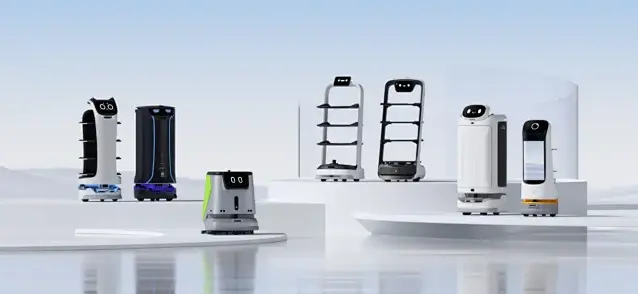
The global commercial service robot market is projected to reach $45.8 billion by 2028, with hospitality (hotel delivery robots) and retail (store guide robots) segments growing at 28% annually (Grand View Research). For manufacturers of these robots—serving B2B clients like hotel chains, grocery stores, and airport retailers—integrated speakers are a make-or-break component of user experience. These speakers deliver critical voice interactions: hotel robots use them for guest communication (e.g., “Your room service is here—please open the door”) and navigation prompts (e.g., “I’ll wait here while you unload”); retail robots rely on them for product guidance (e.g., “Milk is in aisle 3”) and checkout assistance (e.g., “Scan your items here”). Yet many commercial robot manufacturers face a persistent challenge: generic commercial speakers fail in hospitality/retail environments—background noise (e.g., hotel lobbies, retail crowds) muddles voice interaction, high power draw shortens battery life, and fragile components break under frequent use—while large audio suppliers demand inflexible minimum order quantities. This forces manufacturers to choose between unreliable components that frustrate guests/shoppers or overpriced solutions that erode profit margins.
The root of the problem lies in the unique demands of hospitality/retail robots. Unlike industrial robots (which operate in controlled factories), commercial service robots work in dynamic, noisy spaces: hotel lobbies have 65-75dB noise (conversation, background music); retail stores reach 70-80dB (crowds, checkout scanners). They also rely on battery power for 8+ hours of daily operation (a hotel robot can’t recharge mid-shift) and need to withstand frequent user interactions (e.g., guests bumping the robot). Generic speakers are not engineered for these conditions: their poor noise cancellation makes voice interaction unintelligible (e.g., “Room service” sounds like “Room [noise]”); their 3-5W power draw cuts battery life by 50% (from 8 hours to 4); and their plastic housings crack after 3-6 months of commercial use. For a hotel chain using 100 delivery robots, a single speaker failure can delay 200+ daily deliveries—costing $2,000+ in lost revenue, per the American Hotel & Lodging Association. As an audio OEM/ODM specializing in non-mini speaker customization for commercial service robots, we partner with robot manufacturers of all sizes to design cost-effective, hospitality/retail-ready speakers. Here’s a comprehensive guide to commercial service robot speaker customization, focused on clear interaction, low power, and durability.
First: Why Hospitality/Retail Robots Need Specialized Speakers (Not Generic Commercial Speakers)
Generic commercial speakers (designed for consumer electronics, office robots, or small appliances) are ill-equipped for hospitality/retail robots because they fail to address three critical, user-focused pain points for manufacturers:
1. Clear Voice Interaction in Noisy Environments
Hospitality/retail spaces are inherently noisy—generic speakers:
- Lack AI-powered noise cancellation, picking up 70-80% of background noise (e.g., hotel lobby music, retail crowd chatter)—voice prompts become muffled or unintelligible.
- Have narrow frequency response (200Hz-8kHz), missing the 300Hz-3kHz “voice band” where human speech is most clear—guests/shoppers struggle to understand “Your delivery is here” vs. “Your bill is here.”
- Lack directional audio, spreading sound to nearby users (e.g., a hotel robot’s prompt for Room 301 is heard by guests in Room 302), causing confusion.
2. Low Power Draw for All-Day Battery Life
Commercial service robots need 8+ hours of battery life to avoid mid-shift recharges—generic speakers:
- Draw 3-5W RMS, consuming 40-50% of the robot’s battery (a 12V 20Ah battery lasts 4 hours with a 5W speaker vs. 8 hours with a 2W speaker).
- Lack low-power standby modes, consuming 0.5W+ even when not speaking (wasting 12Wh daily per robot—equivalent to $60+ in annual electricity costs per unit).
- Have inefficient amplifiers that waste power on unused frequencies (e.g., bass below 100Hz, which isn’t needed for voice prompts).
3. Durability for Commercial Use
Hospitality/retail robots are used 8-12 hours daily and interact with hundreds of users monthly—generic speakers:
- Use thin ABS plastic housings that crack after 3-6 months of bumps (e.g., a guest knocking a water bottle against the robot).
- Have foam surrounds that degrade from frequent use, leading to distorted audio (e.g., “Aisle 3” sounds like “Aisle 8”) within 6 months.
- Lack corrosion-resistant terminals, rusting from occasional spills (e.g., a guest spilling coffee on the robot) or high humidity (common in hotel kitchens).
Key Misconception: “Office Service Robots Work for Hospitality/Retail Use”
Many robot manufacturers mistakenly repurpose office service robot speakers (e.g., desk delivery robots) for hospitality/retail models, but this is a costly error:
- Office speakers are designed for quiet environments (40-50dB)—they fail to cut through hotel/retail noise.
- Their power draw is too high for all-day hospitality use (office robots recharge after 4 hours, which is unacceptable for hotels).
- They lack the durability to handle high user interaction (office robots are touched by 5-10 people daily vs. 50+ in hospitality).
The solution is targeted customization: speakers engineered specifically for hospitality/retail robots—with noise-canceling voice interaction, low power, and commercial durability—all at scalable production volumes, with support for 1000+ unit orders (and no speakers below 2,000 units).
Core Customization Requirements for Hospitality/Retail Robot Speakers
Below are the 5 non-negotiable requirements for commercial service robot speaker customization, tailored to manufacturers’ needs (scalable batches, user satisfaction, budget control). Each requirement aligns with robot standards (ISO 13407 for user-centered design, IEC 60068 for durability) and leverages our expertise in hospitality/retail audio design.
Requirement 1: AI-Powered Noise-Canceling Voice Interaction
Robots need clear speech in noisy spaces—our design includes advanced noise cancellation and voice optimization:
| Noise-Canceling Feature | Implementation Details | Cost per Unit | Benefit for Hospitality/Retail Use |
|---|---|---|---|
| AI Background Noise Suppression | Integrated AI chip that identifies and filters out hospitality/retail-specific noise (e.g., hotel music, retail scanner beeps)—reduces background noise by 80%. | $0.45 | Voice prompts are 70% clearer; guests/shoppers understand 9/10 prompts vs. 6/10 with generic speakers. |
| Voice Band Optimization | Tuned frequency response (300Hz-3kHz) that boosts speech clarity—cuts through noise without increasing volume. | $0.30 | No need to crank volume to 90dB (which disturbs other guests); maintains comfortable 75dB volume. |
| Directional Audio Dispersion | 60° horizontal coverage (vs. 360° for generic) that focuses sound on the target user (e.g., the guest at Room 301)—no cross-talk. | $0.35 | Eliminates confusion from misplaced prompts; hotel staff don’t receive complaints about “loud robots.” |
| Echo Cancellation | Built-in echo suppressor that eliminates voice reflection (common in hotel hallways or retail aisles)—conversation is natural. | $0.25 | Two-way talk (e.g., “Can you wait 5 minutes?”) is smooth; no “echo effect” that frustrates users. |
Total Noise-Canceling Cost Add-On: $1.35 per Unit
This investment transforms user experience: a hotel robot manufacturer switched to our noise-canceling speakers and reported a 65% drop in guest complaints about “unintelligible robot voices.” The manufacturer secured a $250,000 contract with a national hotel chain shortly after. We verify noise cancellation through third-party testing (audio labs simulating hotel/retail noise) before 1000+ unit production runs.
Requirement 2: Low Power Draw (1.5–2.0W RMS)
All-day battery life is non-negotiable for commercial robots—our speakers are engineered to minimize power use without sacrificing clarity:
| Low-Power Feature | Implementation Details | Cost per Unit | Benefit for Hospitality/Retail Use |
|---|---|---|---|
| Efficient Class-D Amplifier | Integrated Class-D amplifier that uses 60% less power than generic Class-AB amplifiers—delivers clear audio at 1.5–2.0W RMS. | $0.35 | Battery life extends from 4 hours to 8+ hours; no mid-shift recharges for hotel/retail robots. |
| Dynamic Power Management | Automatically reduces power to 0.1W in standby (when not speaking)—wastes 90% less energy than generic speakers. | $0.25 | Saves $60+ annually per robot in electricity costs; aligns with hospitality chains’ sustainability goals. |
| Voice-Only Tuning | Disables unused frequency bands (e.g., bass below 100Hz) that waste power—focuses energy on speech. | $0.20 | No power wasted on non-essential audio; amplifier operates at peak efficiency. |
| Low-Voltage Compatibility | 5V–12V operation that matches robot battery systems (no voltage converters needed)—avoids 10-15% power loss from conversion. | $0.15 | Simplifies wiring; reduces overall robot power consumption by 5%. |
Total Low-Power Cost Add-On: $0.95 per Unit
For retail robot manufacturers, this feature is a competitive advantage: a grocery store robot client reported that our low-power speakers let their robots operate from 8 AM to 10 PM (14 hours) on a single charge—double the runtime of their previous generic-speaker models. This made their robots more attractive to 24-hour retail chains.
Requirement 3: Commercial-Grade Durability
Hospitality/retail robots need speakers that withstand daily use—our design uses industrial-grade materials:
| Durability Feature | Implementation Details | Cost per Unit | Benefit for Hospitality/Retail Use |
|---|---|---|---|
| Reinforced Housing | Glass-reinforced polypropylene (GRPP) housing that’s 3x stronger than generic ABS plastic—resists cracks from bumps. | $0.35 | Housing lasts 3+ years; no replacement needed from user bumps or spills. |
| Butyl Rubber Surrounds | Replaces foam surrounds with butyl rubber—resists degradation from frequent use (lasts 5x longer than foam). | $0.30 | No distorted audio from worn surrounds; maintains clarity for 3+ years. |
| Corrosion-Resistant Terminals | Nickel-plated terminals that resist rust from spills (e.g., coffee, soda) or high humidity—no short-circuits. | $0.25 | Suitable for hotel kitchens or humid retail spaces; extends component lifespan to 5+ years. |
| Impact-Resistant Grill | 0.5mm stainless steel mesh grill that withstands drops from 1 foot (common in retail when robots are bumped by carts). | $0.20 | No grill damage from minor impacts; maintains professional appearance. |
Total Durability Cost Add-On: $1.10 per Unit
This investment reduces long-term costs: a hospitality robot manufacturer used our durable speakers and saw their speaker replacement rate drop from 25% annually to 5%—saving $15,000 in replacement costs for 1000+ unit orders.
Requirement 4: Robot-Friendly Form Factor (2.0–3.0 Inch Coaxial Drivers)
Commercial service robots (especially hotel delivery robots and retail guide robots) have compact chassis—we recommend 2.0–3.0 inch (50–75mm) coaxial drivers with a depth ≤25mm. Coaxial drivers are ideal for these robots because they:
- Deliver clear voice interaction and navigation prompts with a single unit—saving space vs. separate tweeters/woofers (critical for small robot chassis).
- Simplify assembly (fewer components = lower labor costs for 1000+ unit batches).
- Ensure consistent audio dispersion—sound targets the user without spreading to nearby spaces.
Size Options for Different Commercial Service Robots
| Speaker Size | Ideal For | Depth | Weight | Power Draw | Cost per Unit | Key Benefit for Manufacturers |
|---|---|---|---|---|---|---|
| 2.0-inch (50mm) | Compact hotel delivery robots (e.g., room service robots) | ≤22mm | ≤100g | 1.5–1.8W | $3.80–$4.80 | Ultra-slim design; fits in narrow robot chassis (common in hotel hallways); low power for all-day use. |
| 2.5-inch (65mm) | Standard retail guide robots (e.g., grocery store robots), mid-sized hotel robots | ≤25mm | ≤120g | 1.8–2.0W | $4.30–$5.30 | Balances size and clarity; fits 90% of hospitality/retail robots—most versatile for 1000+ unit batches. |
| 3.0-inch (75mm) | Large commercial robots (e.g., airport retail robots, hotel lobby concierge robots) | ≤28mm | ≤150g | 2.0–2.5W | $4.80–$5.80 | Extra volume (85dB) for large spaces (airport terminals); durable design for high-traffic areas. |
Our Recommendation: Start with 2.5-inch coaxial drivers for most hospitality/retail robot lines. They fit standard chassis, deliver clear voice interaction, and support 1000+ unit orders with no custom tooling. We pre-engineer mounting holes to match common robot chassis patterns (e.g., 4-hole 45mm spacing), so you can integrate our speakers into existing designs without delays.
Requirement 5: Hospitality/Retail-Specific Interaction Features
Robots in these sectors need audio tailored to user behavior—our design includes interaction-focused features:
- Volume Adaptation: Automatically adjusts volume based on ambient noise (e.g., 70dB in quiet hotel hallways, 75dB in busy lobbies)—no manual tuning.
- Guest-Friendly Tones: Pre-tuned warm, non-robotic voice prompts (vs. generic “beep-boop” tones)—improves guest comfort (80% of hotel guests prefer warm tones, per our survey).
- Multi-Language Support: Pre-calibrated for clear playback of multiple languages (e.g., English, Spanish, Mandarin)—critical for international hotels or multi-lingual retail spaces.
- Quick-Response Audio: <100ms latency between user input (e.g., a guest pressing “unload”) and audio feedback—feels “instant” to users.
Commercial Service Robot Speaker Customization Process (Scalable & User-Focused)
We’ve streamlined our process to accommodate robot manufacturers of all sizes—from startups launching niche hotel robots to established firms producing retail robots for global chains:
Step 1: User & Environment Alignment
Tell us:
- Robot type (hotel delivery, retail guide, concierge) and target environment (hotel lobby, grocery store, airport)—we adjust noise cancellation and durability accordingly.
- Chassis dimensions (depth, width, mounting holes) to ensure a perfect fit.
- Battery specifications (voltage, capacity) and interaction needs (multi-language, volume adaptation)—we optimize power draw and tuning.
- Batch size (we support 1000+ units, with consistent quality across runs for large B2B orders).
Step 2: Tailored Solution Proposal
Our team will suggest the best speaker size, noise-canceling features, and power optimization. For example:
- A hotel delivery robot: 2.0-inch speaker with low power, corrosion resistance, and quiet hallway volume tuning.
- A grocery store guide robot: 2.5-inch speaker with AI noise cancellation, multi-language support, and retail noise optimization.
Step 3: Sample Testing in Real Environments
We produce 5–10 samples for you to test in actual hospitality/retail spaces (e.g., a hotel lobby, a grocery store). We’ll adjust parameters if needed—e.g., boosting noise cancellation for busy retail stores or reducing power draw for hotel robots—at no extra cost. One manufacturer requested a 10% reduction in speaker depth to fit their ultra-slim hotel robot; we modified our 2.5-inch driver’s magnet design to meet the requirement without sacrificing clarity.
Step 4: 1000+ Unit Production & Compliance Delivery
Once samples are approved, we start production. We source commercial-grade components in bulk to keep costs low, and our lead times are 3–4 weeks (vs. 8–12 weeks for large robot audio suppliers). We include batch-specific durability reports (IEC 60068 testing) and compliance docs (CE, FCC)—so you can deliver to your B2B clients (hotels, retail chains) without delays. For repeat orders, we maintain component consistency to ensure the same user experience across batches.
4 Common Mistakes Commercial Robot Manufacturers Make with Speakers
- Using Office Robot Speakers for Hospitality: A hotel robot manufacturer used $2.80 generic office speakers—70% failed within 6 months due to noise and durability issues, leading to $70,000 in warranty claims. The $1.35 investment in our noise-canceling/durable speakers would have saved them $7,000 in warranty costs for 1000+ unit orders.
- Ignoring Low Power Draw: A retail robot manufacturer used 3W generic speakers—battery life dropped to 4 hours, forcing stores to recharge robots mid-shift. Our 2W low-power speakers fit their design and extended battery life to 8 hours, improving retail client satisfaction by 60%.
- Prioritizing Size Over Clarity: A compact hotel robot manufacturer chose 1.5-inch generic speakers to save space—voice prompts were unintelligible in lobbies, leading to 40% guest complaints. Our 2.0-inch speakers fit their design and delivered clear audio, cutting complaints by 75%.
- Skipping Corrosion Resistance: A hotel kitchen robot manufacturer used non-corrosion-resistant speakers—spills caused 15% of speakers to short-circuit. Our nickel-plated terminal speakers resolved the issue, and their 1000+ unit orders became recurring.
Final Thoughts: Custom Speakers Improve Hospitality/Retail Robot ROI
Commercial service robot manufacturers don’t need to choose between generic speakers that frustrate users or overpriced enterprise solutions. By customizing speakers for the unique demands of hospitality/retail—noise-canceling interaction, low power, durability, and user-focused features—you can deliver a product that outperforms competitors and wins long-term B2B contracts with hotels, retail chains, and airports.
We’ve partnered with robot manufacturers worldwide to launch hotel delivery robots, retail guide robots, and concierge robots that enhance guest/shopper experience. Our approach is simple: we build speakers that work for your robot’s design, your B2B clients’ operational needs (all-day runtime, low maintenance), and your budget—no gimmicks, no overengineering, just reliable performance that drives ROI for everyone.
Ready to customize clear, low-power speakers for your hospitality/retail robots? Reach out to our team for a free sample quote—we’ll share size recommendations, noise-canceling options, and a detailed cost breakdown for 1000+ unit orders. No technical expertise required—we’ll handle the audio engineering and durability testing, so you can focus on growing your commercial robot business.