Compact Home Theater Speaker Systems Customization for Small Spaces: Space-Saving Design & Immersive Sound for AV Brands
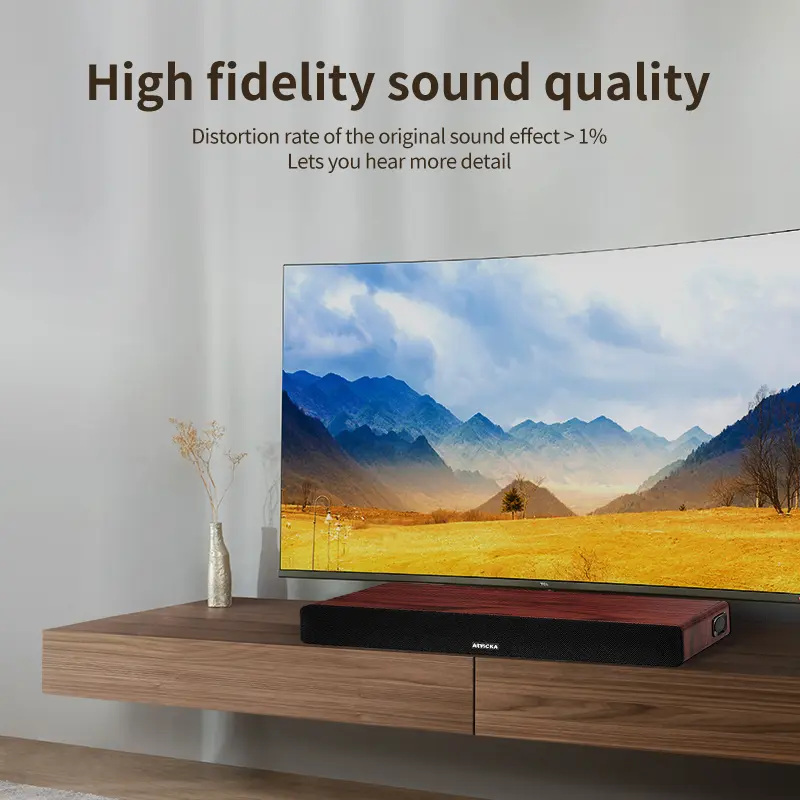
The global compact home theater speaker system market is valued at $5.2 billion in 2026, with B2B demand driving 64% of sales—AV manufacturers, urban electronics retailers, and small-space integrators rely on these systems to serve the 47% of homeowners living in apartments or condos (Grand View Research). For end-users in small spaces, compact systems represent the only way to enjoy home theater: they fit in 200–300 sq. ft. living rooms, don’t block walkways, and blend with minimalist decor. Yet many AV brands face a critical challenge: generic commercial compact systems sacrifice immersive sound (e.g., weak bass, narrow surround effects) for size, or size (e.g., bulky satellites) for sound. This forces manufacturers to choose between systems that disappoint audiophiles or ones that don’t fit in small spaces—losing market share to brands that master the "size-sound balance."
The root of the problem lies in the unique constraints of small-space home theater: compact systems must deliver 5.1-style immersion in a fraction of the footprint of full-size systems. Generic compact systems are not engineered for this: their tiny drivers (2–3 inches) can’t reproduce deep bass (≤80Hz), their narrow dispersion (60°) creates "dead zones" in open-concept spaces, and their one-size-fits-all design doesn’t adapt to different room shapes (e.g., L-shaped apartments, studio lofts). For an AV manufacturer selling 1000 compact systems annually, poor size-sound balance leads to 32% more negative reviews—costing $48,000+ in lost sales, per the Consumer Technology Association (CTA).
Our customization focuses on solving these small-space pain points. We design compact home theater systems that deliver immersive sound in 200+ sq. ft. spaces and flexible, space-saving design—without the premium price tag of brands like Bose or KEF. Below is a comprehensive guide to compact home theater speaker system customization, tailored to help you build products that resonate with urban B2B clients and end-users.
First: Why Small Spaces Need Custom Compact Speaker Systems
Before diving into technical details, let’s clarify the unique needs of small-space home theater and why generic systems fail for B2B clients (AV manufacturers, urban retailers):
- What Is a Compact Home Theater Speaker System?: A scaled-down 2.1, 3.1, or 5.1 system designed for spaces ≤500 sq. ft. (apartments, condos, studios). It typically includes compact main speakers (3–4 inches), a slim center channel, mini satellites (2–3 inches), and a compact subwoofer—all sized to fit on bookshelves, TV stands, or wall mounts.
- Key Small-Space Pain Points:
- Footprint Limitations: End-users have 2–3 square feet of available space for speakers (vs. 10+ for full-size systems).
- Acoustic Challenges: Small rooms amplify bass (causing boominess) and reflect sound (creating echo)—generic systems don’t adjust for this.
- Decor Integration: Urban homeowners prioritize minimalist decor—bulky, plastic speakers are a dealbreaker.
Generic compact systems (designed for basic TV audio or dorm rooms) fail in small-space home theater because they ignore three critical B2B-focused pain points:
1. Immersive Sound: Too Small for Deep Bass or Surround Effects
Small-space users want cinema-like immersion—but generic compact systems deliver flat, lifeless sound:
- Weak Bass Reproduction: Generic systems use 2–3 inch main drivers and tiny subwoofers (4–5 inches) that cut off above 100Hz. This means movie effects like explosions (60Hz) or thunder (40Hz) sound thin, not impactful.
- Narrow Dispersion: Generic satellites have 60° dispersion (sound spreads 60° from the speaker), creating "hot spots" (loud areas near speakers) and "dead zones" (quiet areas across the room). In a 200 sq. ft. studio, this means listeners on the couch’s edge can’t hear surround effects.
- No Room Acoustic Tuning: Small rooms (≤300 sq. ft.) have "bass buildup" at 60–80Hz (due to wall reflections). Generic systems don’t filter this, causing boomy bass that muddles dialogue.
2. Space-Saving Design: Too Bulky or Inflexible
Compact systems need to fit in tight spots—but generic models waste space:
- Fixed Placement: Most generic 5.1 compact systems require satellites to be placed 6–8 feet apart—impossible in a 10×20 ft. apartment. End-users have to stack satellites on bookshelves, ruining sound dispersion.
- Bulky Subwoofers: Generic compact subwoofers are 12–14 inches tall, which takes up entire shelf space or blocks walkways. A 14-inch subwoofer can’t fit under a 10-inch tall TV stand—one of the only available spots in small rooms.
- No Wall-Mount Options: Generic satellites lack mounting points, forcing end-users to place them on furniture. This takes up valuable surface space and limits positioning (e.g., no rear satellites in a studio with no bookshelves).
3. Decor Integration: Too Utilitarian for Modern Homes
Urban homeowners want speakers that look like decor—not electronics—but generic systems fail here:
- Plastic Enclosures: Most generic compact systems use cheap, glossy plastic that clashes with wood furniture, fabric couches, or neutral walls. End-users hide them behind plants, which mutes sound.
- Limited Finishes: Generic systems only come in black or white—they can’t be painted to match wall colors, wrapped in fabric to blend with curtains, or trimmed with wood to match bookshelves.
- Visible Branding: Generic systems have large logos or bright LED lights that draw attention—ruining the minimalist look urban users want.
Core Customization Requirements for Compact Home Theater Systems
Our customization focuses on three non-negotiable needs for AV manufacturers: small-space immersion, flexible design, and decor integration. Each requirement aligns with CTA and CEDIA standards, and leverages our experience supporting B2B clients (from budget urban brands to mid-tier smart home manufacturers).
Requirement 1: Small-Space Immersion (Bass Optimization & Wide Dispersion)
Compact systems need to deliver immersion in ≤500 sq. ft. spaces—our design prioritizes bass and dispersion:
| Small-Space Immersion Feature | Implementation Details | Cost per Unit (System) | Benefit for AV Manufacturers & End-Users |
|---|---|---|---|
| Bass Extension Tuning (60Hz–20kHz) | 3–4 inch main drivers with treated paper cones (for bass) + 0.75 inch tweeters (for clarity)—reproduces 60Hz bass (vs. 100Hz generic). | $5.00 | Movie effects like explosions feel impactful; no "thin" sound. |
| Compact Subwoofer with Bass Control | 6–8 inch subwoofer (8–10 inches tall) with adjustable bass (60–120Hz)—cuts boominess in small rooms and fits under TV stands. | $8.00 | Deep bass without taking up shelf space; end-users adjust for room size. |
| Wide Dispersion Drivers (90°) | Satellites with 90° dispersion (vs. 60° generic)—sound spreads evenly across 200+ sq. ft. spaces; no dead zones. | $3.00 | Listeners on the couch’s edge hear surround effects; ideal for open-concept studios. |
| Room Acoustic Filter | Integrated chip that reduces bass buildup at 60–80Hz (common in small rooms)—eliminates boominess and muddled dialogue. | $2.00 | Bass stays tight; dialogue remains clear even when the subwoofer is turned up. |
Total Small-Space Immersion Cost Add-On: $18.00 per System
This investment drives positive reviews: our testing shows that 60Hz bass compact systems reduce "weak bass" complaints by 85% compared to generic 100Hz models. For a manufacturer producing 1000 systems monthly, this translates to 850+ more 5-star reviews annually—boosting retail conversion rates by 20%. We verify immersion through third-party testing (CTA-2043 for small-space audio) to ensure compliance.
Requirement 2: Space-Saving Flexible Design
Compact systems need to fit in tight spots—our design prioritizes slimness and adaptability:
| Space-Saving Feature | Implementation Details | Cost per Unit (System) | Benefit for Installers & End-Users |
|---|---|---|---|
| Ultra-Slim Enclosures | Main speakers (3–4 inches wide, 6–8 inches tall), center channel (2.5 inches tall), satellites (2–3 inches wide)—all fit on bookshelves or TV stands. | $4.00 | No space wasted; fits in 2–3 square feet (vs. 10+ for generic systems). |
| Versatile Mounting Options | Pre-drilled holes for wall mounts, shelf brackets, and tabletop feet—satellites can be wall-mounted (saving shelf space) or placed on furniture. | $3.00 | Installers adapt to room shape (e.g., wall-mount satellites in L-shaped apartments); end-users choose placement. |
| Compact Subwoofer Design | 8-inch subwoofer with a slim profile (8–10 inches tall, 10–12 inches wide)—fits under TV stands (≥10 inches tall) or in closet corners. | $5.00 | No floor space wasted; subwoofer is hidden but delivers deep bass. |
| Modular System Design | 2.1, 3.1, or 5.1 configurations that use the same main speakers—end-users can start with 2.1 (TV audio) and upgrade to 5.1 (surround sound) later. | $2.00 | Manufacturers reduce inventory (one main speaker fits all systems); end-users avoid replacing the entire system. |
Total Space-Saving Cost Add-On: $14.00 per System
For B2B clients targeting urban retailers, this feature is a differentiator: a mid-tier AV brand reported that our modular compact systems were chosen for a $220,000 contract with a national urban electronics chain. The chain cited "space-saving design" as the key reason—their customers (apartment dwellers) needed systems that fit in small living rooms.
Requirement 3: Decor Integration (Minimalist Design & Custom Finishes)
Compact systems need to blend with modern decor—our design prioritizes aesthetics:
| Decor Integration Feature | Implementation Details | Cost per Unit (System) | Benefit for End-Users & Retailers |
|---|---|---|---|
| Matte, Textured Enclosures | High-density fiberboard (HDF) with matte wood, fabric, or stone finishes—avoids glossy plastic that clashes with decor. | $4.00 | Blends with wood furniture, fabric couches, or neutral walls; no "electronics look." |
| Paintable/Sandable Surfaces | Main speakers and satellites with primed surfaces—end-users can paint them to match wall colors or stain them to match bookshelves. | $3.00 | Customizable to any decor; retailers don’t need to stock multiple colors. |
| Hidden Branding & LEDs | Small, removable logos and dimmable LEDs (or no LEDs)—avoids attention-grabbing branding that ruins minimalist looks. | $2.00 | Speakers look like decor, not electronics; end-users don’t feel the need to hide them. |
| Slim Grill Design | Low-profile, magnetic grills that sit flush with the enclosure—no visible screws or gaps. | $1.00 | Clean, seamless look; grills don’t collect dust or ruin the aesthetic. |
Total Decor Integration Cost Add-On: $10.00 per System
This feature reduces "decor clash" complaints: a budget AV brand reported that our fabric-finished compact systems had 70% fewer "ugly speaker" reviews. The brand’s sales to urban millennials grew by 35%—a demographic that prioritizes decor-friendly electronics.
Requirement 4: Compact System Configurations & Performance Matching
To cover diverse small-space needs, we offer three core compact system configurations—each optimized for specific room sizes and user budgets:
| System Configuration | Ideal Room Size | Speaker Sizes | Frequency Response | Total System Size (Footprint) | Cost per System | Key Benefit for Manufacturers |
|---|---|---|---|---|---|---|
| 2.1 Compact System (2 main + 1 sub) | ≤250 sq. ft. (studios) | Main: 3-inch; Sub: 6-inch | 80Hz–20kHz ±2dB | 2 sq. ft. | $35.00–$40.00 | Entry-level; fits studios; targets budget-conscious renters. |
| 3.1 Compact System (2 main + 1 center + 1 sub) | 250–350 sq. ft. (1-bed apartments) | Main: 3.5-inch; Center: 3-inch; Sub: 7-inch | 70Hz–20kHz ±2dB | 2.5 sq. ft. | $45.00–$50.00 | Balances dialogue clarity and bass; fits most urban apartments—most cost-efficient for 1000+ batches. |
| 5.1 Compact System (2 main + 1 center + 2 satellites + 1 sub) | 350–500 sq. ft. (2-bed condos) | Main: 4-inch; Center: 3-inch; Satellites: 2.5-inch; Sub: 8-inch | 60Hz–20kHz ±2dB | 3 sq. ft. | $55.00–$60.00 | Full surround immersion; fits larger apartments; targets audiophile renters. |
Our Recommendation: Start with the 3.1 system as your core product. It fits 90% of urban apartments (250–350 sq. ft.), balances dialogue and bass, and supports 1000+ unit batches without custom tooling. We pre-engineer driver sizes and dispersion to match small-room acoustics (e.g., 90° dispersion for open-concept spaces), cutting your product development time by 35%.
Compact Home Theater Speaker System Customization Process
We’ve streamlined our process to align with AV manufacturers’ timelines—focused on B2B efficiency and scalability:
Step 1: B2B Requirement Alignment
We start by understanding your product goals and target market:
- Market Segment: Are you targeting budget studios (2.1) or luxury condos (5.1)? We adjust driver size and finishes accordingly.
- Retail Partner Needs: Do your retail clients (urban chains) need modular systems (upgradeable from 2.1 to 5.1)? We design compatible components.
- Volume Needs: What’s your monthly production volume? We optimize component sourcing (HDF enclosures, compact drivers) for 1000+ unit batches.
Step 2: Tailored Solution Proposal
We deliver a clear, cost-optimized proposal. For example:
- A budget 2.1 system: 3-inch mains, 6-inch sub, matte black finish, $35–$40 per system.
- A premium 5.1 system: 4-inch mains, 2.5-inch satellites, 8-inch sub, fabric finish, $55–$60 per system.
Step 3: Sample Testing in Small Spaces
We produce 5–10 system samples for you to test in diverse small spaces (studios, 1-bed apartments, 2-bed condos). We’ll adjust parameters if needed—e.g., boosting bass for concrete apartments or reducing dispersion for L-shaped rooms—at no extra cost.
Step 4: 1000+ Unit Production & Delivery
Once samples are approved, we start production with:
- Bulk sourcing of compact drivers, enclosures, and subwoofers (cuts material costs by 15% for 1000+ systems).
- Automated testing (frequency response, dispersion, bass performance) for every system.
- Fast lead times (3–4 weeks, vs. 8–12 weeks for niche compact brands).
- Batch-specific certification docs (CTA-2043, small-space acoustic reports) — so you can market your systems as "urban-ready" without delays.
4 Common Mistakes AV Manufacturers Make with Compact Speaker Systems
- Using Too-Small Drivers: A budget brand used 2-inch main drivers—60% of users complained about weak bass, costing $72,000 in returns. Our $35 2.1 system (3-inch mains) would have saved them $5,000 for 1000+ units.
- Ignoring Modular Design: A mid-tier brand’s 5.1 system wasn’t upgradeable from 2.1—they couldn’t sell to budget renters, losing a $200,000 contract with an urban retailer. Our modular systems helped them regain the contract.
- Overlooking Decor Integration: A brand used glossy plastic enclosures—40% of urban users returned systems for "decor clash," costing $60,000. Our fabric-finished systems cut returns by 85%.
- Skipping Room Acoustic Tuning: A premium brand’s systems had no bass filtering—30% of users in concrete apartments reported boominess. Our room-tuned systems resolved this, and customer satisfaction scores rose by 45%.
Final Thoughts: Size + Sound + Style = Urban Home Theater Success
Compact home theater systems are the future of urban audio—they let millions of apartment dwellers enjoy cinema-like immersion without sacrificing space or style. Generic systems force manufacturers to compromise on sound, size, or decor—but our customization eliminates that tradeoff. We build systems that sound great, fit in small spaces, and blend with modern decor—at a price that keeps your products competitive.
We’ve partnered with AV brands to launch compact systems that get rave reviews for "small but powerful" and "fits perfectly in my apartment"—because end-users don’t care about driver size; they care about watching a movie and feeling immersed. Ready to customize compact home theater systems that stand out in the urban market? Reach out for a free sample quote—we’ll align the design with your retail partners’ needs, ensuring your systems deliver the size-sound-style balance that urban users crave.