Cross-Border B2B Speaker Procurement: Navigating Compliance and Certification Requirements Across Global Markets
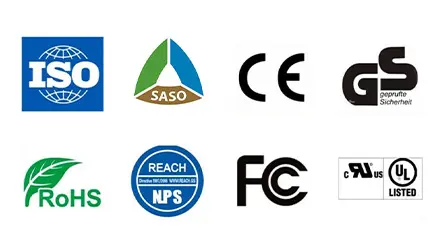
The global cross-border B2B speaker trade is valued at $8.7 billion in 2024, with 58% of AV manufacturers and retailers citing "compliance and certification" as their top procurement challenge—non-compliant shipments lead to customs delays, fines of up to $50,000 per container, and even product seizures (International Trade Administration, ITA). For B2B stakeholders importing or exporting speakers, the stakes are high: a mid-sized AV manufacturer shipped 5,000 speakers to Europe without EU CE certification, resulting in a 6-week customs hold and a $30,000 fine. By the time the products were released, the retailer had canceled the order, costing the manufacturer $250,000 in lost revenue.
Compliance—meeting regional technical, safety, and environmental standards—is non-negotiable for cross-border B2B speaker procurement. Yet many brands struggle to navigate the complex web of certifications, which vary drastically by market (e.g., FCC in the U.S., CE in the EU, CCC in China). Our guide demystifies global compliance requirements, provides a step-by-step procurement framework to avoid costly mistakes, and highlights how our pre-certified speaker solutions simplify cross-border trade—delivering the quality of premium brands at a cost-effective price for 1000+ unit batches.
First: Why Cross-Border B2B Speaker Compliance Matters
Compliance is more than just a box-ticking exercise—it protects your brand reputation, ensures market access, and avoids legal and financial risks. For B2B clients, non-compliance leads to three critical consequences:
1. Financial Losses
Customs fines, storage fees, and canceled orders are the most immediate costs. The average fine for non-compliant electronic goods is $10–$20 per unit, with additional storage fees of $500–$1,000 per day for detained shipments. A retailer importing 10,000 non-compliant speakers to the U.S. could face a $200,000 fine plus $35,000 in storage fees for a 7-week hold.
2. Market Exclusion
Many countries ban non-compliant products from being sold. For example, the EU refuses to allow speakers without CE certification to enter the Single Market, while China requires CCC certification for all audio equipment sold domestically. A brand without these certifications effectively loses access to two of the world’s largest speaker markets.
3. Brand Damage
Non-compliance signals poor quality and negligence to B2B clients. A hotel chain that discovers its new speakers are non-compliant may terminate the partnership and share negative feedback with industry peers, damaging your ability to win future contracts.
Key Global Compliance Certifications for B2B Speakers
Each major market has unique certification requirements—below is a detailed breakdown of the most critical ones, including their purpose, testing criteria, and how our speakers meet these standards.
Table: Major Global Compliance Certifications for Commercial Speakers
| Region/Country | Core Certification | Purpose | Key Testing Criteria | Our Compliance Approach |
|---|---|---|---|---|
| North America (U.S./Canada) | FCC Part 15 (U.S.), ICES-003 (Canada) | Regulates electromagnetic interference (EMI) to prevent disruption to other electronics (e.g., Wi-Fi routers, POS systems). | – EMI emissions must be below 47 CFR Part 15 limits. – No intentional radiated energy beyond specified frequencies. |
Our speakers use shielded cables and ferrite cores to reduce EMI. We conduct pre-shipment testing to ensure compliance with FCC and ICES standards, providing clients with certification documents for customs. |
| Europe | CE Marking (EN 55032 for EMI, EN 55035 for safety) | Ensures products meet EU health, safety, and environmental standards for access to the Single Market. | – EMI emissions: ≤40dBμV/m (2.4GHz band). – Electrical safety: Protection against electric shock (IP rating for outdoor speakers). – Environmental compliance: RoHS (restriction of hazardous substances). |
Our speakers are RoHS-compliant and undergo third-party testing for EN 55032/55035. We provide a Declaration of Conformity (DoC) to simplify EU customs clearance. |
| China | CCC (China Compulsory Certification) | Mandatory certification for electronic products sold in China, ensuring safety and quality. | – Electrical safety: Insulation resistance ≥2MΩ. – EMI emissions: Compliant with GB 17743-2017. – Environmental: China RoHS (GB/T 26572-2011). |
Our Chinese-market speakers are CCC-certified, with testing conducted by a CNCA-accredited laboratory. We handle the certification renewal process to ensure ongoing compliance. |
| Japan | PSE (Product Safety Electrical Appliance & Material) | Ensures electrical safety for products sold in Japan. | – Voltage compatibility: 100V AC (Japan’s standard voltage). – Thermal resistance: Enclosure temperature ≤65°C during operation. – Fire safety: Flame-retardant materials (V-0 rating). |
Our Japan-specific speakers are PSE-certified, with voltage regulators and flame-retardant enclosures. We provide a PSE certificate and product labeling in Japanese. |
| Australia/New Zealand | C-tick Mark (AS/NZS 4251) | Regulates EMI and electrical safety for products sold in Australia and New Zealand. | – EMI emissions: Compliant with AS/NZS 4251.1. – Electrical safety: Insulation class II (double insulation). |
Our speakers for ANZ markets have C-tick certification, with double-insulated enclosures and EMI filters. We include a compliance statement for Australian Customs. |
Key Certification Terms Explained
- EMI (Electromagnetic Interference): Unwanted electromagnetic energy emitted by speakers that can disrupt other electronic devices. Compliance ensures speakers don’t interfere with critical B2B equipment like POS systems or conference room AV tools.
- RoHS: A set of regulations restricting the use of hazardous substances (e.g., lead, mercury) in electronic products. Compliance is mandatory in the EU, China, and many other markets, reflecting growing B2B demand for sustainable products.
- IP Rating: A classification for ingress protection (dust and water resistance). For outdoor speakers, IP66 certification (dust-tight, water-resistant to high-pressure jets) is common in B2B applications like hotel patios or retail outdoor spaces.
Step-by-Step Compliance Framework for Cross-Border B2B Speaker Procurement
Navigating global compliance requires a proactive, systematic approach. Below is a 5-step framework to ensure your shipments meet regional standards and avoid costly delays.
Step 1: Map Target Market Requirements
Before placing an order, identify the specific certifications required for your target markets. Use the following resources to verify requirements:
- U.S.: FCC website (www.fcc.gov) for Part 15 rules.
- EU: European Commission’s RAPEX database (ec.europa.eu/rapex) for CE marking updates.
- China: CNCA website (www.cnca.gov.cn) for CCC certification lists.
- Japan: METI website (www.meti.go.jp) for PSE requirements.
Our team provides a free market compliance checklist for B2B clients, outlining the certifications needed for 20+ global markets. For example, a client targeting the EU and China would receive a checklist highlighting CE, RoHS, and CCC requirements, along with testing timelines.
Step 2: Select a Compliance-Focused Supplier
Choose a supplier that prioritizes pre-certification and transparent testing. Avoid suppliers that cut corners on compliance to offer lower prices—their products will cost you more in fines and delays. Key supplier criteria include:
- Pre-Certified Products: Supplier should have existing certifications for your target markets (not just offer to "get certified after order").
- Third-Party Testing: Products should be tested by accredited laboratories (e.g., TÜV for EU, UL for U.S.).
- Documentation Support: Supplier provides all required certification documents (DoC, test reports, labeling).
We meet all these criteria: our speakers are pre-certified for major markets, tested by accredited labs, and shipped with a complete compliance package. A retail client importing our speakers to Europe received CE certification documents, RoHS test reports, and a DoC—clearing customs in 3 days vs. the industry average of 7–10 days.
Step 3: Verify Product Labeling and Packaging
Compliant labeling is critical for customs clearance. Ensure your speakers and packaging include:
- Certification Marks: CE mark (EU), FCC logo (U.S.), CCC mark (China), etc.
- Product Information: Model number, voltage, manufacturer name, and country of origin.
- Safety Warnings: Appropriate warnings (e.g., "Keep away from water" for outdoor speakers).
Our packaging and labeling are compliance-ready, with region-specific marks and information. For Japanese markets, we include labels in Japanese, while EU packaging features multilingual safety warnings—eliminating the need for clients to re-label products.
Step 4: Conduct Pre-Shipment Compliance Audits
Before shipping, audit a sample of products to verify compliance with certification criteria. Focus on:
- Electrical Safety: Test insulation resistance and voltage compatibility.
- EMI Emissions: Use a spectrum analyzer to check emissions levels.
- Material Compliance: Verify RoHS compliance with a material safety data sheet (MSDS).
We conduct pre-shipment audits for all B2B orders, providing clients with a detailed audit report. A hotel integrator client recently requested an audit of 500 EU-bound speakers—we tested EMI emissions and RoHS compliance, identifying and fixing a minor insulation issue before shipment, avoiding a potential customs hold.
Step 5: Prepare Customs Documentation
Complete and organize all required documentation to speed up customs clearance. Key documents include:
- Commercial Invoice: Detailed list of products, quantities, values, and certification marks.
- Certification Documents: Test reports, DoC, and certification certificates.
- Bill of Lading: Shipping document with origin, destination, and product details.
Our team assists B2B clients with document preparation, ensuring all forms are completed correctly and in the required language (e.g., Chinese for CCC shipments). A mid-sized AV manufacturer reported that our documentation support reduced their EU customs clearance time by 50%.
Common Compliance Pitfalls and How to Avoid Them
1. Mistake: Assuming One Certification Covers Multiple Markets
A brand shipped CE-certified speakers to China, assuming CE would be accepted—customs seized the shipment, and the brand paid a $25,000 fine.
Fix: Obtain market-specific certifications. Our China-bound speakers are CCC-certified, separate from EU CE certification. We advise clients on the unique requirements of each market to avoid this mistake.
2. Mistake: Overlooking RoHS Compliance
A retailer imported speakers to the EU without RoHS certification—customs fined them $15 per unit ($150,000 for 10,000 units) and required the products to be reworked.
Fix: Prioritize RoHS compliance. All our speakers are RoHS-certified, with MSDS documents proving the use of non-hazardous materials. We ensure clients have these documents for customs.
3. Mistake: Incorrect Labeling
A manufacturer shipped PSE-certified speakers to Japan but used English labels—customs delayed the shipment for 2 weeks while labels were translated.
Fix: Use region-specific labeling. Our Japan-market speakers feature Japanese labels with PSE marks and safety warnings. We handle labeling customization for all target markets.
4. Mistake: Using Non-Accredited Testing Labs
A brand’s speakers failed EU customs inspection because testing was done by a non-TÜV-accredited lab—certification was deemed invalid.
Fix: Use accredited testing labs. We partner with TÜV (EU), UL (U.S.), and CNCA-accredited (China) labs to ensure certification validity. Clients receive test reports from these labs, ensuring customs acceptance.
Final Thoughts: Compliance Is a Competitive Advantage in Cross-Border B2B Trade
Cross-border speaker procurement doesn’t have to be a minefield of fines and delays—with the right compliance framework and supplier, it can be a smooth process that expands your market reach. Generic suppliers cut corners on certification to offer lower prices, but their products cost B2B clients thousands in lost revenue and brand damage. Our pre-certified speaker solutions eliminate these risks, delivering compliant, high-quality products for 1000+ unit batches at a cost-effective price.
We’ve partnered with AV manufacturers and retailers to navigate global compliance requirements, reducing customs delays by 50% and eliminating fines for non-compliance. Whether you’re importing to the EU, exporting to China, or expanding to Japan, our compliant speakers simplify cross-border trade and help you win B2B orders in global markets.
Ready to streamline your cross-border B2B speaker procurement with compliant, pre-certified solutions? Reach out for a free compliance assessment—we’ll align our products with your target markets, ensuring your shipments clear customs quickly and avoid costly mistakes.