Custom Speaker Units for Security & Robotics: How Small Suppliers Fix Fit & Sound Quality Issues
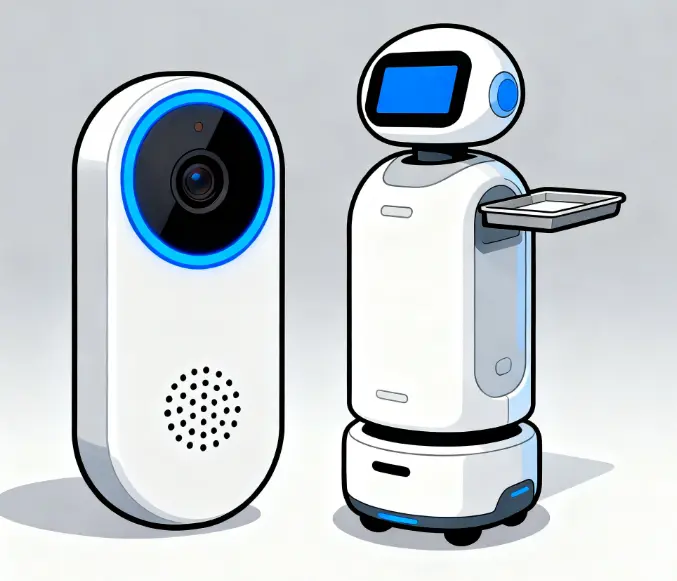
Custom Speaker Units for Security & Robotics: How Small Suppliers Fix Fit & Sound Quality Issues
If you’re an engineer at a security system company or a procurement manager at a robotics firm, you know this struggle: You need a custom speaker unit for your product—say, a speaker that fits in a compact smart doorbell or delivers clear voice audio for a service robot—but large audio component suppliers aren’t interested. They’ll tell you, “We only make standard sizes,” or “The MOQ for custom speakers is 10,000 units.” So you’re stuck: Either you redesign your product to fit a standard speaker (wasting time and money), or you settle for a speaker that’s too big, too quiet, or doesn’t work in your use case.
For small to mid-sized B2B clients (like your company), this is a major roadblock. Your security cameras need speakers that can transmit clear warnings (“Motion detected!”) in noisy environments. Your robots need speakers that fit in tight spaces without sacrificing sound quality. Standard speakers won’t cut it—but large suppliers don’t care about your “niche” needs.
As a 13-year-old audio工贸企业 that’s made custom speaker units for 30+ B2B clients (from security system brands in the US to robotics firms in Europe), we specialize in solving these fit and sound quality issues. We offer custom speaker units with no minimum order requirements (yes, even 100 units) and a 5-step process to ensure they fit your product and sound great—something large suppliers can’t match. In this guide, we’ll explain why custom speaker projects fail, how our small-team approach fixes them, and how we’ve helped clients like you get the perfect speaker unit.
Why Custom Speaker Unit Projects Fail (3 Common Pitfalls)
Before we talk solutions, let’s look at the most frequent problems we see B2B clients face when working with large suppliers on custom speakers. These issues often lead to delayed projects or unusable products:
-
“One-Size-Fits-All” Design: Large suppliers use standard tooling for custom speakers, so they’ll try to force your needs into their existing molds. For example, if you need a 30mm diameter speaker for a smart doorbell, they might say, “We only have 35mm molds—can you make your doorbell bigger?” This forces you to compromise on your product’s design, which can hurt its appeal to your own clients.
-
Ignoring Use-Case Requirements: Sound quality isn’t just about “loudness”—it’s about fitting the use case. A security camera speaker needs clear voice reproduction (so people can hear warnings), while a robot speaker needs balanced audio (for both voice commands and alerts). Large suppliers often test speakers for “general audio quality” but ignore your specific needs. We had a client who ordered custom speakers for their conference system from a large supplier—only to find the speakers distorted when someone spoke loudly (a common issue in conferences).
-
High MOQs & Long Lead Times: Large suppliers require 5,000–10,000 units for custom speakers, which is impossible for small clients. Even if you can afford the MOQ, lead times are 4–6 weeks—so you’re stuck waiting while your product launch slips.
For your business, these failures aren’t just frustrating—they’re costly. If your security system’s speaker is too quiet, your clients might return it. If your robot’s speaker doesn’t fit, you’ll have to delay production. You need a supplier who listens to your needs, not their bottom line.
Our 5-Step Process for Custom Speaker Units (Fit + Sound = Perfect)
We built our custom speaker process around your needs: a speaker that fits your product, sounds great for your use case, and is delivered fast—even in small quantities. Here’s how we do it, with examples from clients we’ve helped:
Step 1: Deep Dive into Your Use Case (Day 1–2)
The first thing we do is understand why you need a custom speaker—not just “what” specs you want. We’ll ask you 4 key questions:
- What product is the speaker for? (e.g., “smart doorbell,” “service robot,” “conference system”)
- What will the speaker be used for? (e.g., “transmitting voice alerts,” “playing background music,” “enabling two-way talk”)
- What are the physical constraints? (e.g., “max diameter 25mm, max depth 10mm,” “must fit in a waterproof casing”)
- What environment will it be used in? (e.g., “outdoor (rainy),” “noisy offices,” “quiet homes”)
This helps us avoid the “one-size-fits-all” trap. For example, a US-based security client needed a speaker for their outdoor camera. They told us the speaker needed to:
- Fit in a 30mm x 15mm space.
- Transmit clear voice alerts (even in rain and wind).
- Withstand temperatures from -20℃ to 60℃.
We didn’t just make a small speaker—we designed one with a water-resistant membrane and tuned the audio for voice clarity (boosting mid-range frequencies, which are key for speech).
Step 2: Design a Prototype (Day 3–7)
Using your answers, our in-house engineers design a custom speaker prototype. We use 3D printing for the frame (so we can adjust sizes quickly) and select components (like diaphragms and voice coils) that fit your use case:
- For voice-focused use cases (security alerts, robot commands), we use paper or silk diaphragms (which excel at mid-range frequencies).
- For outdoor use cases, we use rubber surrounds (which resist water and temperature changes).
- For compact spaces (small robots, smart doorbells), we use neodymium magnets (which are smaller and stronger than standard magnets).
We’ll share a 3D render of the prototype with you for approval—so you can see if it fits your product’s design. If you need changes (e.g., “make the depth 1mm smaller”), we adjust the design in 1–2 days.
Step 3: Test for Fit & Sound (Day 8–10)
Once you approve the prototype design, we build 5–10 physical samples and test them for two critical things:
A. Fit Testing
We use a 3D-printed mockup of your product (or your actual product, if you send us one) to ensure the speaker fits perfectly. We check:
- Does it fit in the allocated space without forcing?
- Are the mounting holes aligned with your product’s design?
- Does it leave enough room for other components (e.g., microphones, batteries)?
A robotics client in Europe sent us a sample of their service robot, and we found our initial prototype was 0.5mm too deep—it would have pressed against the robot’s battery. We adjusted the design, and the revised prototype fit perfectly.
B. Sound Quality Testing (Use-Case Specific)
We don’t just measure “decibel levels”—we test the speaker for your specific use case. Here’s how we test for common applications:
| Use Case | Test Method | Pass Criteria |
|---|---|---|
| Security Camera Alerts | Play a sample alert (“Motion detected—please step back”) in a noisy room | Alert is understandable from 10 meters away |
| Robot Two-Way Talk | Conduct a test call between two speakers; measure distortion at high volumes | No distortion when speaking at 80 decibels |
| Conference System | Play a recorded speech; measure clarity at different distances | Speech is clear from 5 meters away in a quiet room |
We share a test report with you (with audio clips, if you want) so you can hear the speaker’s performance for yourself.
Step 4: Revise & Finalize (Day 11–14)
If the prototype doesn’t meet your needs (e.g., the sound is too quiet, or it doesn’t fit), we revise it—usually in 2–3 days. We don’t charge extra for small revisions (like adjusting the audio tuning or shrinking the frame by 1mm)—we want you to be happy with the final product.
For the US security client, we had to revise the speaker once: The initial prototype’s voice alerts were clear, but they were too quiet in windy conditions. We adjusted the diaphragm material to a stiffer paper, which reduced wind noise, and the second prototype passed their tests.
Step 5: Production & Delivery (Day 15–21)
Once you approve the final prototype, we start production. Unlike large suppliers, we don’t require high MOQs—you can order as few as 100 units (or as many as 10,000, if you need them). Production takes 5–7 days, and we ship the units to your location (we work with logistics partners who specialize in shipping electronic components, so your speakers arrive safely).
The US security client ordered 500 units of their custom speaker, and we delivered them in 18 days (from initial consultation to delivery). They’re now using the speakers in their outdoor cameras, and they’ve reordered 2,000 more units.
How We Keep Custom Speakers Affordable (For Small Clients)
We know small to mid-sized B2B clients have tight budgets for custom components. Here’s how we keep our custom speaker units affordable:
- No Tooling Fees for Small Orders: Large suppliers charge $1,000–$5,000 in tooling fees for custom speakers. We waive tooling fees for orders of 500+ units, and we charge a small fee ($200–$300) for orders under 500 units—far less than large suppliers.
- Reusable Designs: If you need to reorder the same custom speaker later, we don’t charge tooling fees again—we reuse the existing design.
- In-House Production: We make all our speakers in-house, so we don’t have to outsource production (which adds cost). This lets us keep prices low even for small orders.
For example, a small conference system brand ordered 200 custom speakers from us. We charged a $250 tooling fee, and the speakers cost $8 per unit—total cost $1,850. A large supplier quoted them $3,000 in tooling fees plus $12 per unit (total $5,400)—so they saved 66% by working with us.
Final Thought: Custom Speakers Don’t Have to Be a Luxury
You don’t need a huge budget or a 10,000-unit order to get a custom speaker unit that fits your product and sounds great. Small audio suppliers like ours have the flexibility to design for your needs, test for your use case, and deliver fast—without the big-company price tag.
If you’re stuck with standard speakers that don’t fit or sound right, reach out to our team. We’ll walk you through our 5-step process, share a quote (including any tooling fees), and help you get a custom speaker unit that works for your product—so you can stop compromising and start delivering better products to your clients.