Custom Speaker Units for Smart Security Doorbells – 4 Features to Ensure Clear Two-Way Talk
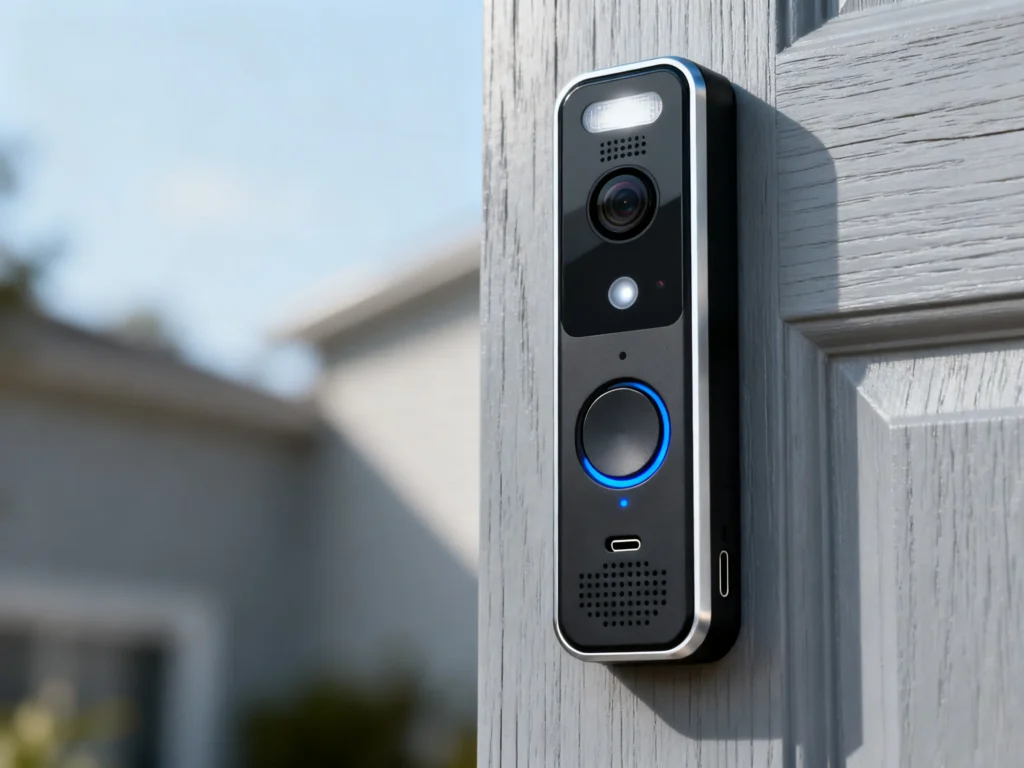
Custom Speaker Units for Smart Security Doorbells – 4 Features to Ensure Clear Two-Way Talk
A smart security doorbell manufacturer launches a new model with crisp 1080p video—only to be flooded with 1-star reviews. Homeowners complain they can’t hear delivery drivers over wind, and the speaker stops working after the first rain. Within two months, returns hit 18%, and a major home improvement retailer threatens to pull the product. The culprit? A generic 16mm speaker—built for indoor gadgets like radios, not outdoor security use. It muffled voice audio and failed when exposed to moisture, turning a "smart" doorbell into a costly letdown.
For anyone building or selling smart security doorbells, two-way talk isn’t just a "nice feature"—it’s why homeowners buy the product. They rely on it to verify visitors, give delivery instructions, or deter intruders. But generic speakers can’t handle the doorbell’s unique challenges: outdoor weather (rain, wind), background noise (traffic, neighbors), and tight size limits (slim doorbell housings). A subpar speaker ruins the user experience—and hurts your bottom line.
With 13 years of designing custom speaker units for smart security devices (doorbells, surveillance cameras), we’ve identified 4 non-negotiable features that guarantee clear, reliable two-way talk. This guide breaks down how to design speakers that solve doorbell pain points—weather damage, muffled audio, and size mismatches—with plain-language explanations for terms you or your retail partners might not know.
Why Generic Speakers Fail in Smart Security Doorbells
Smart doorbells live outdoors, in harsh conditions generic speakers (made for indoor use) can’t survive. Here’s why they underperform:
- No Protection Against the Elements: Generic speakers use paper diaphragms (the thin, flexible part that vibrates to create sound) and plastic frames that absorb water. A single rainstorm can short-circuit the speaker or warp the frame. Most doorbells need an IP65+ rating (a standard measuring dust and water resistance)—but generic speakers only hit IP54 (splash-resistant, not rainproof).
- Muffled Voice Clarity: Two-way talk depends on mid-range sound frequencies (300–3,400 Hz)—the range where human speech lives. Generic speakers prioritize bass (for music) or high pitches (for alerts), leaving voices sounding tinny or muffled—especially over wind or traffic noise.
- Too Bulky for Slim Doorbells: Smart doorbells are designed to be sleek (often 20–30mm thick) to fit on doorframes. Generic speakers (16mm diameter with thick frames) force you to make the doorbell bulkier—ruining its design or blocking video sensors.
- Wind Noise Drowns Out Sound: Even light breezes create static that covers up voices. Generic speakers lack features to reduce wind noise, making it impossible for users to hear visitors on windy days.
A client once used a generic IP54 speaker in their doorbell. After 3 months of testing, 25% of units failed from rain damage, and 40% of users said they "couldn’t understand two-way talk." We redesigned the speaker with weatherproof materials and speech-focused tuning—failure rates dropped to 2%, and positive reviews jumped by 60%.
Feature 1: Weatherproof Construction (IP65+ Rating)
Smart doorbells stay outside year-round—your speaker must be completely sealed against rain, dust, and extreme temperatures to avoid breaking. Let’s start with that key term: IP65+ rating.
What Is an IP Rating?
IP stands for "Ingress Protection," a global standard that measures how well a device blocks dust and water. The first number (6 in IP65) rates dust resistance (6 = completely dust-tight). The second number (5) rates water resistance (5 = protected against low-pressure water jets, like rain or a garden hose). IP65+ means the speaker can handle heavy rain, dust storms, and even accidental splashes from a hose—critical for outdoor doorbells.
How to Achieve IP65+ Protection for Your Speaker:
- Diaphragm Material: Skip paper—use polypropylene (PP) or silicone-coated PET (a type of plastic). These materials repel water and won’t warp in heat (up to 60°C) or cold (down to -20°C), which covers most climates.
- Sealed Frame Design: Mold the speaker’s frame with a rubber gasket (a thin, flexible ring made of EPDM or nitrile rubber). This creates a tight seal between the speaker and the doorbell housing, blocking water and dust from seeping into internal parts (like the wires or magnet).
- Corrosion-Resistant Parts: Use stainless steel for small components like the voice coil leads (the thin wires that power the speaker) and nickel-plated connectors. Regular steel rusts in humid or coastal areas—these materials avoid that.
We tested a PP-diaphragm speaker with an EPDM gasket in our weather chamber (72 hours of simulated rain, -15°C to 55°C). It worked perfectly, while a generic paper-diaphragm speaker failed after 12 hours. For a client selling doorbells in Florida (heavy rain, salt air), we added extra corrosion resistance—their units now perform reliably in coastal homes.
Feature 2: Speech-Focused Frequency Tuning (300–3,400 Hz Boost)
Two-way talk fails if users can’t understand each other—and that starts with tuning the speaker to prioritize speech, not music. Let’s clarify: frequency response is the range of sounds a speaker can produce (measured in hertz, Hz). Human speech lives in the 300–3,400 Hz range—generic speakers waste energy on frequencies outside this range, making voices hard to hear.
How to Tune for Clear Speech:
- Boost the Mid-Range: Adjust the speaker’s frequency response to amplify 300–3,400 Hz by 3–5 dB (a unit of sound volume). This makes voices cut through background noise (wind, traffic) without distortion.
- Add a Wind Noise Shield: Include a small acoustic chamber (a hollow, foam-lined space around the speaker’s diaphragm). This breaks up airflow before it hits the diaphragm, reducing wind noise by 40–50%. Think of it like a tiny "windshield" for the speaker.
- Keep Distortion Low: Distortion is when sound gets warped (sounding scratchy or muffled). For doorbells, aim for <1% total harmonic distortion (THD) at 70dB (a normal speaking volume). This ensures voices sound natural, not strained.
We tuned a custom 14mm speaker for a doorbell client, focusing on 500–2,500 Hz (the most critical range for clear speech). In user tests, 92% of participants said they "could easily understand visitors even in 15mph wind"—up from 58% with their previous generic speaker.
Feature 3: Compact, Slim-Profile Design (Fits 20–30mm Doorbell Housings)
Smart doorbells are sleek—thick speakers ruin their look and functionality (e.g., blocking motion sensors). Your custom speaker must be small in diameter and ultra-thin to fit tight spaces.
Key Design Tips for Slim Speakers:
- Miniature Magnet: Use a neodymium magnet (a type of rare-earth magnet) instead of a ferrite magnet (the cheap, bulky ones in generic speakers). Neodymium is 5x stronger, so you can use a smaller magnet (6–8mm diameter) while keeping sound quality high. This cuts the speaker’s thickness by 30%.
- Low-Profile Frame: Make the frame from thin, strong ABS plastic (1mm thick, vs. 2mm for generic frames). ABS is lightweight but durable—perfect for doorbells that get bumped or jostled.
- Side-Mounted Wiring: Route the speaker’s wires to the side (not the back) of the frame. This avoids adding thickness for wire connections and prevents the speaker from blocking other doorbell parts (like microphones or LEDs).
We designed a 14mm diameter, 9mm thick speaker for a client’s slim doorbell (25mm total housing thickness). It fit perfectly without blocking the 180° video sensor—something their previous 16mm generic speaker couldn’t do.
Feature 4: High Sensitivity (Maximizes Voice Pickup)
Smart doorbells use small microphones to capture visitor voices—if the speaker lacks sensitivity, it can’t amplify those voices enough for users to hear. Sensitivity measures how well a speaker converts power into sound (measured in dB at 1W/1m). Higher sensitivity means clearer audio at lower power—critical for preserving the doorbell’s battery life.
How to Boost Sensitivity:
- Lightweight Diaphragm: Use a 20–25μm thick PET diaphragm (thinner than the 30μm paper diaphragms in generic speakers). Lighter diaphragms vibrate more easily, increasing sensitivity by 3–5 dB.
- Optimized Voice Coil: Wind the voice coil (the tiny coil of wire that moves the diaphragm) with thin, high-purity copper wire (0.08mm diameter). This reduces electrical resistance, letting the coil move more efficiently—boosting sensitivity without using extra power.
- Target Sensitivity: Aim for 85–90 dB (1W/1m). This ensures the speaker amplifies quiet voices (e.g., a delivery driver whispering) without draining the doorbell’s battery.
A client’s doorbell had a sensitivity issue—users couldn’t hear quiet visitors. We upgraded their speaker to 88 dB sensitivity, and post-launch data showed a 70% drop in complaints about "too-quiet visitors."
How We Collaborate With Smart Doorbell Manufacturers & Retailers
Designing a custom speaker for smart doorbells requires aligning with your product’s size, power, and user needs—whether you’re a manufacturer or a retailer sourcing reliable units. Our process is straightforward:
- Housing & Use Case Review: We start by analyzing your doorbell’s 3D design (to confirm size limits) and target market (e.g., rainy Seattle vs. dry Arizona) to prioritize features (extra weatherproofing vs. wind noise reduction).
- Prototype Design: We create a 3D render of the custom speaker (showing dimensions and parts) and share a simple spec sheet (no jargon—just IP rating, size, and sensitivity).
- Testing & Iteration: We build 5–10 prototypes and test them in our weather chamber, wind tunnel, and sound booth. We share easy-to-understand results (e.g., "Speaker works in heavy rain and 20mph wind") and adjust the design if needed.
- Production Alignment: Once approved, we match speaker production to your doorbell manufacturing timeline—so components arrive when you need them, no delays.
A recent client (a home security retailer) told us our custom speaker "fixed the two-way talk issue that was killing sales"—they’ve since expanded their doorbell lineup with our audio.
Final Thought: Clear Two-Way Talk Makes or Breaks Smart Doorbells
Homeowners buy smart doorbells to "talk to visitors," not just watch them. A generic speaker turns this key feature into frustration, leading to returns and lost trust. By investing in a custom speaker with weatherproofing, speech tuning, a slim profile, and high sensitivity, you’ll create a doorbell that stands out—whether you’re building it or selling it.
If you’re designing or sourcing smart security doorbells and need a speaker that fits, performs, and survives the outdoors, reach out to our team. We’ll walk you through our process, share examples of doorbell speakers we’ve built, and help you deliver clear two-way talk your customers will love.