Durability Design for Smart Doorbell & Robot Speakers (Surviving Drops, Dust, and Wear)
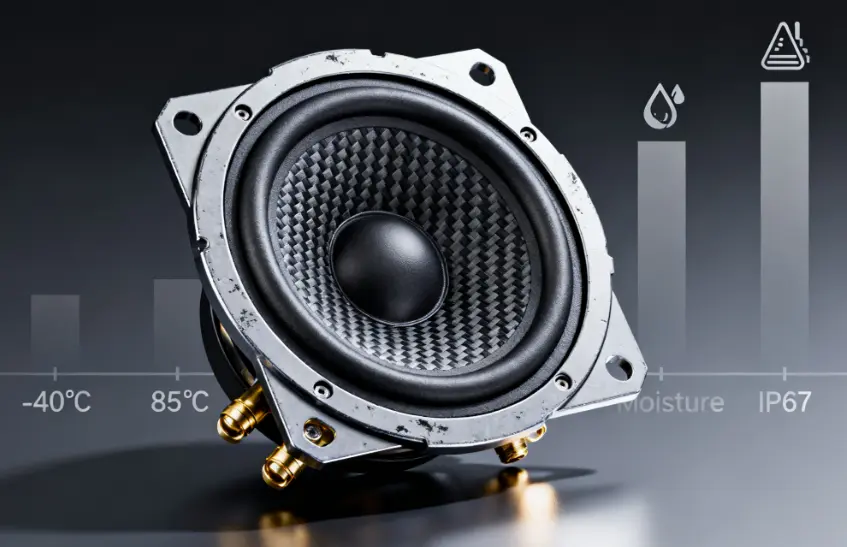
Smart doorbells and robots operate in high-stress environments: Doorbells face rain, vandalism, and temperature swings; robots endure drops, dust, and constant movement. A speaker that fails after 6 months of use isn’t just a replacement cost—it’s a security gap (for doorbells) or a usability failure (for robots). Generic speakers prioritize cost over durability—they use cheap materials and flimsy enclosures that break easily.
We’ve engineered speakers for long-term reliability: One client’s outdoor doorbells have a 95% survival rate after 3 years, vs. 60% for generic models. Let’s break down how to design speakers that withstand abuse, from impact-resistant drivers to corrosion-proof materials, and how to test durability before launch.
Durability Priorities for Doorbell Speakers
Doorbells are stationary but exposed—focus on weather, vandalism, and long-term wear:
1. Weather Resistance (Rain, Snow, Heat)
- IP Rating: Aim for IP54 or higher (IP65 for areas with heavy rain/snow). IP54 blocks dust and splashing water; IP65 adds protection against low-pressure jets (e.g., pressure washing).
- Material Choices:
- Grilles: Stainless steel (resists rust) or UV-stabilized plastic (avoids fading/cracking).
- Enclosures: ABS plastic (impact-resistant) or aluminum (heat-dissipating for hot climates).
- Sealing: Use EPDM rubber gaskets around ports (microphone, speaker) to block moisture. Replace foam gaskets (which degrade) with EPDM (lasts 5+ years).
2. Vandalism Resistance
- Reinforced Grilles: 1mm-thick stainless steel grilles (resists prying or impacts from tools). Avoid thin plastic grilles (break in one hit).
- Tamper-Proof Mounts: Use security screws (requires a special tool to remove) to prevent theft or damage.
- Shock-Resistant Drivers: Mount drivers on rubber isolators to absorb impacts (e.g., a kicked doorbell).
Durability Priorities for Robot Speakers
Robots are mobile—focus on drops, dust, and vibration:
1. Impact Resistance (Drops and Collisions)
- Shock-Absorbing Enclosures: Use TPE (thermoplastic elastomer) around the speaker to cushion drops. A 1m drop onto concrete should not damage the driver.
- Rigid Driver Frames: Aluminum frames (stiffer than plastic) keep drivers aligned after impacts.
- Cable Management: Secure speaker wires with cable ties to avoid fraying during robot movement.
Example: A delivery robot with our shock-absorbing speaker survived 50+ 1m drops during testing—no loss in sound quality.
2. Dust & Debris Protection
- IP6X Dust Rating: Blocks all dust (critical for factory or construction robots). Use mesh screens over vents to trap fine particles.
- Self-Cleaning Grilles: Sloped grilles (for vertical-mounted speakers) let dust slide off, instead of accumulating.
3. Vibration Resistance
- Anti-Vibration Mounts: Rubber or foam mounts isolate the speaker from robot motors (vibration distorts sound and damages components).
- Stiff Enclosures: Avoid flexible plastics—use ABS or aluminum to reduce resonance from vibration.
Durability Testing: Ensure Long-Term Reliability
Don’t just test for “does it work?”—test for “will it work in 3 years?”:
- Environmental Chamber Test: Expose speakers to -20°C to 60°C (-4°F to 140°F) and 95% humidity for 1,000 hours (simulates 3 years of use).
- Impact Test: Drop doorbells/robots from 1m onto concrete (10 times) and check for functionality.
- Abrasion Test: Rub grilles with sandpaper (100 cycles) to simulate wear—no damage to drivers means pass.
A client skipped environmental testing and launched a robot speaker that failed in cold weather—costing $50,000 to redesign.