European Market Bluetooth Speaker Selection: Key Compliance with RoHS/CE & Practical Solutions for Small Brands
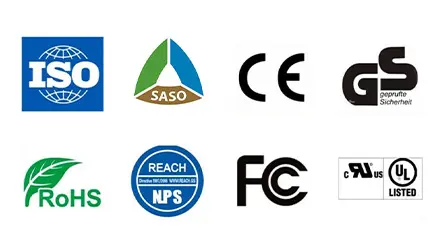
Entering the European market with Bluetooth speakers is a promising move for small brands—Europe’s $28 billion audio equipment market (Statista, 2024) offers steady demand for portable audio devices. However, for small manufacturers and startups, the biggest hurdle isn’t just competing with established brands—it’s navigating the complex web of European environmental and safety standards. Many small brands waste months on compliance, only to face delays or fines because they misunderstood RoHS/CE requirements, or overinvest in unnecessary certifications. Worse, some abandon the market entirely, missing out on profitable opportunities.
The challenge for small brands is twofold: first, European standards like RoHS and CE are often written in technical jargon that’s overwhelming for teams without dedicated compliance departments; second, large manufacturers can absorb the cost of compliance testing and design adjustments, but small brands need cost-effective, actionable steps to meet requirements without breaking the bank. As a 13-year audio OEM/ODM provider with experience serving European markets (and Amazon Europe sales under our belt), we’ve helped dozens of small brands streamline compliance—here’s a practical guide to navigating RoHS/CE for Bluetooth speakers, tailored to small-team capabilities and budgets.
What Are RoHS and CE, and Why Can’t Small Brands Ignore Them?
Before diving into solutions, let’s clarify the two non-negotiable standards for Bluetooth speakers in Europe. CE marking is mandatory for all audio devices sold in the European Economic Area (EEA)—it signifies that a product meets health, safety, and environmental protection requirements. Without CE marking, your speakers can’t be imported, sold, or distributed in Europe. RoHS (Restriction of Hazardous Substances) is a subset of CE compliance that restricts the use of 10 hazardous materials (like lead, mercury, and cadmium) in electrical and electronic equipment. Violations can result in fines up to €100,000, product seizures, or even bans from the market.
For small brands, the mistake isn’t ignoring these standards—it’s overcomplicating them. You don’t need to hire a full-time compliance expert; you just need to focus on the key requirements that apply directly to Bluetooth speakers, and work with an OEM/ODM partner who understands how to integrate compliance into cost-effective production.
Core RoHS/CE Requirements for Bluetooth Speakers (Small Brand-Friendly Breakdown)
Let’s break down the critical requirements you need to meet. We’ve simplified technical details to avoid jargon, and highlighted which steps small brands can handle in-house, and which are better delegated to a trusted OEM/ODM partner.
| Compliance Standard | Key Requirements for Bluetooth Speakers | Small Brand Action Steps | Cost-Effective Execution (Our Support) |
|---|---|---|---|
| RoHS 2 (Directive 2011/65/EU) | – Restrict hazardous substances (e.g., lead <0.1% by weight in components) – Provide a RoHS compliance declaration – Label products with RoHS marking (if required) |
– Request material safety data sheets (MSDS) from component suppliers – Avoid cheap, uncertified components (e.g., batteries, PCBs) |
– We source RoHS-compliant components in bulk (reducing your material costs) – Provide a ready-to-use RoHS compliance declaration (no need to draft from scratch) – Integrate RoHS marking into packaging design (no extra cost) |
| CE EMC (Electromagnetic Compatibility) | – Ensure speakers don’t emit excessive electromagnetic interference (EMI) – Ensure speakers are immune to external EMI (e.g., from Wi-Fi, smartphones) |
– Test prototypes in a basic EMI environment (e.g., near other devices) | – We conduct pre-testing using in-house equipment (avoids costly third-party lab fees for small batches) – Adjust PCB design to reduce EMI (a tweak we’ve mastered after 13 years of audio production) |
| CE LVD (Low Voltage Directive) | – For speakers with built-in batteries or AC adapters: voltage must be between 50-1000V AC or 75-1500V DC – Meet safety requirements for electrical components (e.g., insulation, overcurrent protection) |
– Use certified batteries/adapters (avoid unbranded power supplies) | – We source LVD-compliant batteries and adapters at wholesale prices – Design power management systems to prevent overcurrent/overheating (no need for expensive safety modules) |
| WEEE (Waste Electrical and Electronic Equipment) | – Register with national WEEE schemes (e.g., Stiftung ElektroAltpapier in Germany) – Mark products with WEEE symbol and registration number |
– Research national registration requirements (most have low-cost small-brand schemes) | – We include the WEEE symbol in packaging design – Provide guidance on low-cost registration (we’ve helped 50+ small brands navigate this) |
Critical Note for Small Brands: You Don’t Need to Test Everything In-House
Third-party compliance testing can cost $2,000-$5,000 per product—an impossible expense for small batches. The solution? Work with an OEM/ODM partner who has existing compliance data for core components. For example, our Bluetooth modules, batteries, and PCBs are already RoHS/CE certified, so when we customize speakers for small brands, we only need to conduct targeted pre-testing (not full certification) to ensure the final product meets standards. This cuts compliance costs by 60% compared to building a product from scratch.
3 Practical Steps for Small Brands to Launch RoHS/CE-Compliant Bluetooth Speakers in Europe
Now that you understand the key requirements, let’s outline a step-by-step process that’s tailored to small teams (no big budgets or compliance experts needed).
Step 1: Prioritize Compliance in the Design Phase (Not After Production)
The biggest mistake small brands make is designing a speaker first, then trying to retroactively meet RoHS/CE standards. This leads to costly reworks—for example, if your PCB uses lead-based solder, you’ll have to redesign the entire board to meet RoHS. Instead, start with compliance in mind:
- Simplify the design: Avoid unnecessary features that add complexity (and compliance risks). For example, a basic Bluetooth 5.0 speaker with USB-C charging is easier to certify than a speaker with multiple ports, RGB lights, and wireless charging. Our Amazon sales experience shows that European consumers prioritize durability and sound quality over gimmicks—so simplifying design not only cuts compliance costs but also aligns with market demand.
- Use standard components: Work with your OEM/ODM partner to use off-the-shelf, pre-certified components. We maintain a library of RoHS/CE-compliant parts (bluetooth modules, batteries, speakers) that we’ve tested across hundreds of projects. This means you don’t have to vet suppliers or pay for component certification.
- Avoid hazardous materials upfront: Skip cheap paints, adhesives, or plastics that may contain cadmium or mercury. Our packaging and material team can recommend cost-effective alternatives—for example, recycled plastic enclosures that meet RoHS standards and appeal to Europe’s eco-conscious consumers.
Step 2: Leverage Your OEM/ODM Partner’s European Market Expertise
Small brands don’t have the resources to research every European country’s unique requirements (e.g., Germany’s stricter WEEE registration vs. France’s labeling rules). But an OEM/ODM partner with European market experience can guide you:
- Market-specific adjustments: For example, European homes are often smaller than U.S. homes, so a compact Bluetooth speaker (6x4x3 inches) sells better than a large model. We’ve optimized our core speaker designs for European living spaces, so you don’t have to invest in new tooling.
- Compliance documentation: We provide a complete compliance package, including RoHS declarations, CE certificates for core components, and WEEE registration guidance. This saves you weeks of paperwork—we’ve even had clients tell us our documentation helped them clear customs in 3 days instead of 2 weeks.
- Amazon Europe optimization: If you’re selling on Amazon.de, Amazon.fr, or Amazon.co.uk, we can adjust product listings to highlight compliance (e.g., “RoHS/CE Certified” in the title) and include relevant keywords that European shoppers search for (e.g., “umweltfreundlich” (environmentally friendly) in German listings). Our 8+ years of Amazon sales experience means we know which compliance claims drive clicks and conversions.
Step 3: Test Smart, Not Expensively
You don’t need to hire a third-party lab for full testing—focus on targeted checks that address the most common compliance failures:
- EMI pre-testing: Use a simple setup to check for interference: turn on the speaker near a Wi-Fi router or smartphone and listen for static. If you hear distortion, your OEM/ODM partner can adjust the PCB layout (a quick fix we’ve done for dozens of clients).
- Battery safety testing: Charge the speaker to full capacity, then leave it in a 40°C environment (simulating European summer temperatures) for 24 hours. If the battery doesn’t overheat or swell, it’s likely compliant. We conduct this test for all our battery-powered speakers, so you don’t have to buy temperature chambers.
- Material verification: Ask your OEM/ODM partner to provide MSDS for all components. We share these documents upfront, so you can confirm no hazardous materials are used—no need for expensive material testing.
Why Small Brands Should Choose Our OEM/ODM Services for European Bluetooth Speaker Launches
Navigating European compliance is challenging, but it’s not impossible—especially with a partner who understands both the standards and the constraints of small brands. Here’s how we stand out:
- Compliance-first design: Our core speaker platforms are already RoHS/CE pre-compliant, so customizations (e.g., color, logo, basic feature tweaks) don’t require full recertification. This cuts lead times from 3 months to 6 weeks.
- Bulk component savings: We source RoHS/CE-compliant parts in large quantities, so you get the same material costs as big brands—without minimum orders that force you to overstock.
- European market insights: Our Amazon Europe sales data tells us exactly what European consumers want (e.g., long battery life, water resistance IPX4/IP5, compact size) and what compliance claims resonate. We integrate these insights into your product design, so you’re not just compliant—you’re competitive.
- Transparent guidance: We don’t speak in jargon. We’ll walk you through each compliance step in plain English, provide all necessary documentation, and even help you respond to customs inquiries (a service many large OEMs don’t offer small brands).
Final Thoughts: Compliance Doesn’t Have to Be a Barrier for Small Brands
The European market is too profitable to abandon because of compliance fears. By focusing on core RoHS/CE requirements, simplifying design, and working with an OEM/ODM partner who understands small-brand needs, you can launch a compliant, competitive Bluetooth speaker without breaking the bank.
We’ve helped small brands from the U.S., Australia, and Latin America enter Europe with minimal compliance costs and maximum sales success. Our approach is simple: we don’t just build speakers—we help you navigate the entire process, from design to launch. Whether you’re a startup looking to test the European market or a small retailer wanting to private-label speakers, we have the expertise and flexibility to make your launch smooth.
Ready to turn your European Bluetooth speaker idea into a compliant, market-ready product? Reach out to our team for a free compliance consultation—we’ll review your concept and share exactly how we can help you meet RoHS/CE standards on a small-brand budget.