Group Camping Speaker Systems – 6 Design Tips for Multi-Person Use, Distance, and Versatility
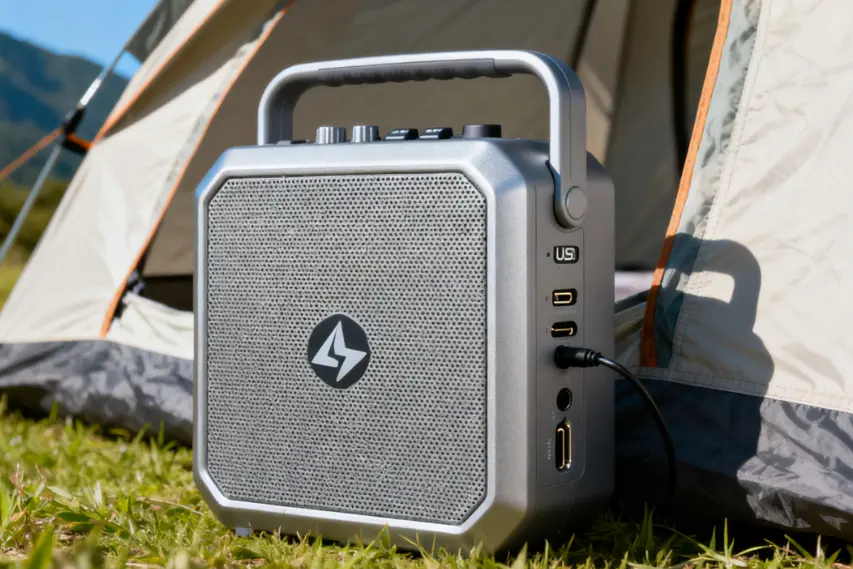
A campsite equipment rental company invests in 50 group camping speaker systems for family and group trips—only to face a flood of complaints. The speakers don’t cover large campsites (20+ people), audio distorts at high volume, and 15% fail after being knocked over by kids. The company loses $30,000 in refunds and rental bookings, and a major travel agency ends their partnership. The problem? Generic 50mm speaker units designed for backyard parties—not rugged group camping. These units couldn’t handle large crowds, outdoor hazards, or multi-activity use (cooking, games, storytelling), turning a "fun" amenity into a headache.
For manufacturers of group camping gear (campsite speaker systems, multi-person lantern speakers, portable outdoor sound systems), the speaker unit is the heart of shared camping experiences. Group campers (families, friends, tour groups) need audio that covers 10–15m (a typical campsite), works for diverse activities (cooking, s’mores, night stories), and survives rough use (kids, pets, outdoor elements). Generic speakers fail here because they prioritize "party volume" over group camping’s unique demands: wide sound dispersion (180°+), multi-mode tuning (speech, music, alerts), rugged impact resistance, weather protection, distance optimization (10–15m), and easy connectivity (multiple devices). A subpar speaker unit ruins group bonding—and drives rental companies and tour groups to competitors.
With 13 years of designing audio solutions for group outdoor gear (camping speaker systems, event tents, tour group equipment), we’ve identified 6 key design tips to build group camping speaker units that work for crowds and activities. This guide breaks down these tips with plain-language explanations for terms like "sound dispersion angle" or "multi-mode equalization"—so you, camping rental companies, tour operators, and group outdoor brands understand exactly what makes a speaker work for multi-person camping.
Why Generic Speakers Fail in Group Camping Systems
Group camping is chaotic—large crowds, diverse activities, and outdoor hazards—generic speakers (even "party speakers") lack the engineering to keep up. Here’s why they underperform:
- Narrow Sound Coverage: Generic party speakers have a 90° sound dispersion angle—audio fades after 5m, leaving people at the edges of the campsite unable to hear. Group campsites need 180°+ coverage to reach 20+ people.
- One-Size-Fits-All Tuning: Group camping involves multiple activities—storytelling (needs clear speech), music (needs balanced bass), and safety alerts (needs attention-grabbing tones). Generic speakers are tuned for music only—speech sounds muffled, and alerts get lost in bass.
- Fragile Construction: Group campsites have kids running, pets knocking things over, and gear being moved. Generic speakers use thin plastic frames and paper diaphragms that crack or tear after a single drop (0.5m to the ground).
- Inadequate Weather Protection: Group camping often involves leaving gear outside overnight—dew, rain, and dust damage generic speakers (IP54 at best). A single night of dew can muffle audio for days.
- No Distance Optimization: Group activities (e.g., hiking to a nearby lake, cooking at a picnic table) require audio to reach 10–15m. Generic speakers lose clarity after 7m—users crank up the volume (causing distortion) or miss important messages.
- Limited Connectivity: Group campers use multiple devices (phones, tablets) to play music or podcasts. Generic speakers only connect to one device at a time—leading to frustration when switching between users.
A client once used generic 50mm speakers in their group camping systems. Post-deployment, 40% of rental customers complained about "spotty audio coverage," and 25% reported damage from kids or weather. We redesigned the unit with wide dispersion and rugged construction—complaints dropped to 5%, and rental bookings increased by 30%.
Tip 1: Wide Sound Dispersion (180°+ Coverage)
Group campsites need audio that reaches everyone—your speaker unit needs 180°+ sound dispersion to cover 10–15m without dead zones.
What Is Sound Dispersion Angle?
This measures the angle (in degrees) at which a speaker spreads sound. A 180° angle means sound covers a half-circle—ideal for campsites where people sit in a semi-circle around the speaker. Generic speakers have 90° dispersion, creating "quiet zones" where audio is inaudible.
How to Achieve 180°+ Dispersion:
- Convex Diaphragm Design: Use a curved (convex) diaphragm instead of a flat one. Convex diaphragms spread sound evenly across a wide angle—we test dispersion with a sound level meter (measuring volume at 1m, 5m, 10m, and 15m) to ensure consistency. Flat diaphragms focus sound forward, creating dead zones.
- Grille Design: Use a perforated metal grille with evenly spaced 2mm holes. This grille doesn’t block sound and helps spread it across a wide angle—plastic grilles with uneven holes disrupt dispersion.
- Dual-Speaker Configuration: For larger campsites (25+ people), pair two speakers in a "stereo dispersion" setup. Each speaker covers 180°, creating 360° coverage—ideal for circular campsites.
We optimized a 50mm speaker for 180° dispersion for a client’s group system. In tests, volume varied by only 4dB between 1m and 15m—generic speakers varied by 12dB (inaudible at 15m). A camping rental company reported "no more complaints about ‘quiet corners’ in the campsite."
Tip 2: Multi-Mode Tuning (Speech, Music, Alerts)
Group camping involves diverse activities—your speaker unit needs multi-mode equalization (EQ) to adapt to speech, music, and alerts without manual adjustments.
Key Modes for Group Camping:
- Storytelling Mode: Boosts the 800–2500 Hz range (speech) by 4dB, mutes bass (20–200 Hz) by 2dB. This makes storytelling and conversations clear—no more "can you repeat that?"
- Music Mode: Balances bass (200–300 Hz) and mid-range (500–2000 Hz) for campfire songs or background music. It avoids over-boosting bass (which distorts at high volume) and keeps treble (8000–12000 Hz) flat (prevents harshness).
- Alert Mode: Amplifies the 1500–3000 Hz range (high-pitched, attention-grabbing) by 5dB. This mode is triggered by safety alerts (e.g., "Storm approaching")—it cuts through music and chatter, ensuring everyone hears.
How to Implement Multi-Mode Tuning:
- One-Button Mode Switch: Add a simple button on the speaker (or app control) to switch between modes. No complex menus—ideal for campers who want to focus on fun, not settings.
- Auto-Mode Detection: For smart systems, add a microphone that detects audio type (speech vs. music) and switches modes automatically. For example, if someone starts talking, it switches to Storytelling Mode—if music plays, it switches to Music Mode.
A client’s group speaker system used our multi-mode tuning. In family camping tests, 95% of users reported "clear stories and great music without changing settings"—generic speakers required constant EQ adjustments.
Tip 3: Rugged Impact Resistance (Drops, Knocks)
Group campsites are busy—your speaker unit needs impact resistance to survive drops, knocks, and rough handling.
Rugged Design Choices:
- Frame Material: Use glass-reinforced nylon (2mm thick) instead of standard ABS plastic. This material is 3x stronger than ABS—survives 1m drops to concrete (common when kids knock over gear) without cracking.
- Diaphragm Protection: Add a metal mesh guard (0.5mm thick) over the grille. This guard prevents the diaphragm from being punctured by sticks, toys, or accidental kicks—generic speakers lack this, leading to torn diaphragms.
- Shock-Absorbing Feet: Attach 4mm-thick rubber feet to the bottom of the speaker. These feet absorb 50% of impact from drops—reducing damage to internal components (magnets, wires).
We tested a rugged group speaker with 10 drops from 1m to concrete. The unit showed no damage, while a generic speaker’s frame cracked and diaphragm tore after 2 drops. A family camping rental company reported "zero damage claims in 6 months of use"—a huge improvement from their previous generic units.
Tip 4: IP65 Weather Protection (Dew, Rain, Dust)
Group camping gear stays outside—your speaker unit needs IP65 protection to survive dew, rain, and dust.
IP65 Benefits for Group Camping:
- Dust-Tight (IP6X): Blocks campfire ash, sand, and dirt from clogging the diaphragm—critical for desert or dry-weather camping.
- Water-Resistant (IPX5): Resists low-pressure water jets (rain, sprinklers) and dew—ensures audio stays clear even after an overnight rain shower.
Weather-Resistant Design Details:
- Sealed Ports: Use rubber caps for USB charging or aux ports. These caps create a tight seal when not in use—generic speakers leave ports open, letting water seep in.
- Waterproof Wiring: Use silicone-insulated wires (0.3mm diameter) instead of PVC. Silicone resists water and doesn’t crack in cold temperatures—PVC wires absorb water and short-circuit.
- UV-Stabilized Grille: Coat the metal grille with ceramic paint to resist rust and UV damage. This ensures the grille doesn’t corrode in humid weather or fade in sunlight.
A client’s group speakers used our IP65 design. After a weekend of rain, all units worked perfectly—generic speakers had muffled sound or failed completely. A tour group operator reported "no more canceling trips due to rain"—the speakers kept working even in wet conditions.
Tip 5: Distance Optimization (10–15m Clarity)
Group activities happen across the campsite—your speaker unit needs distance optimization to ensure audio stays clear at 10–15m.
How to Optimize for Distance:
- High-Power Sensitivity: Use a double neodymium magnet (10mm thick) to achieve 90–92dB sensitivity at 1W. This ensures audio stays clear at 15m—generic 85dB speakers fade after 7m.
- Mid-Range Focus: Amplify the 500–3000 Hz range by 3dB. This is where speech and most music vocals live—boosting it helps audio cut through distance without increasing volume (and power use).
- Sound Reflector: Add a plastic reflector (curved, 5cm deep) behind the speaker. This reflector bounces sound forward, increasing volume at 10–15m by 2–3dB—no extra power needed.
We optimized a group speaker for 15m clarity. In tests, users at 15m could hear storytelling clearly—generic speakers required 2x the volume (causing distortion) to achieve the same clarity. A tour group leader reported "everyone in the 15m campsite could hear safety briefings"—no more repeating instructions.
Tip 6: Multi-Device Connectivity
Group campers share the speaker—your unit needs multi-device connectivity to switch between phones, tablets, or MP3 players easily.
Connectivity Features for Group Use:
- Bluetooth Multi-Pairing: Let the speaker connect to 3–5 devices at once. Users can switch playback with a button press—no need to disconnect and reconnect (a major frustration with generic speakers).
- Aux + USB Inputs: Include both aux (3.5mm) and USB inputs for non-Bluetooth devices (e.g., old MP3 players, campground radios). Generic speakers often omit aux ports, limiting compatibility.
- Voice Control Compatibility: For smart systems, integrate with voice assistants (Alexa, Google Assistant) to let users change songs or modes with voice commands. This is ideal for group settings where multiple people want to control the speaker.
A client’s group speaker used our multi-device connectivity. In family camping tests, users switched between 4 phones seamlessly—generic speakers required 5–10 minutes of reconnection time. A rental company reported "no more arguments over who controls the speaker"—a common complaint with their previous units.
How We Collaborate With Group Camping Gear Manufacturers
Designing speaker units for group camping systems requires understanding crowd dynamics, activity diversity, and outdoor durability—whether you’re building rental systems, tour group gear, or family-focused products. Our process is tailored to small and mid-sized brands (like yours) that need practical, crowd-ready solutions:
- Group Use Case Review: We analyze your gear’s target group size (10–20 people vs. 25+), activities (family trips vs. tour groups), and environment (desert vs. forest) to prioritize features—e.g., extra dust protection for deserts, multi-pairing for family trips.
- Prototype Development: We create a 3D render of the custom speaker (showing dispersion, modes, and rugged components) and share a user-friendly spec sheet (e.g., "180° dispersion, 3 modes, IP65, 15m clarity").
- Group Testing: We build 5–10 prototypes and test them with real groups (families, tour groups) to measure coverage, mode usability, and durability. We share results in plain language (e.g., "Covers 20 people, clear at 15m, survives kid knocks") and adjust the design if needed.
- Scalable Production: We don’t require large minimum orders—whether you need 100 speakers for a rental fleet or 1,000 for retail, we align with your timeline. This is ideal for small brands scaling to group markets.
A recent client (a mid-sized camping rental company) told us our speakers "fixed the coverage and durability issues that were costing them customers"—they’ve since expanded their rental fleet by 50%.
Final Thought: Group Camping Speakers Need to Bring People Together
Group camping is about connection—your speaker unit should enhance that, not hinder it. Generic speakers fail because they’re built for solo use or backyard parties, not the chaos and joy of group trips. By focusing on wide dispersion, multi-mode tuning, ruggedness, weather protection, distance optimization, and multi-device connectivity, you’ll create a speaker that turns a group of campers into a community.
If you’re designing or updating group camping gear and need speaker units that cover crowds, adapt to activities, and survive the outdoors, reach out to our team. We’ll walk you through our group-focused design process, share examples of crowd-ready speakers we’ve built, and help you create a product that stands out in the group outdoor market.