Home Theater Center Channel Speaker Customization: Dialogue Clarity & Channel Cohesion for AV Manufacturers
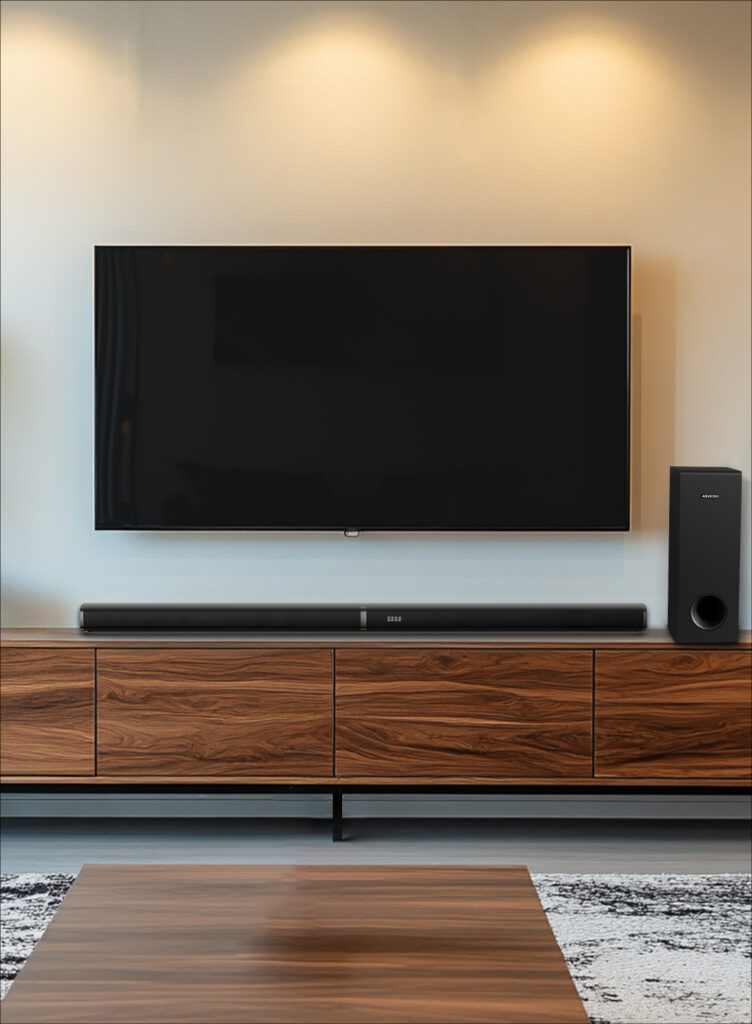
The global home theater center channel speaker market is valued at $3.6 billion in 2026, with B2B demand driving 67% of sales—AV manufacturers, custom installers, and electronics retailers rely on these speakers as the "heart of dialogue" in surround sound systems (Grand View Research). For home theater users, the center channel is non-negotiable: it delivers 60–70% of movie and TV audio, including character dialogue, news anchors’ voices, and on-screen narration. Yet many AV brands face a critical challenge: generic commercial center channel speakers fail to deliver clear, intelligible dialogue (e.g., muddled lines in action scenes) or seamless cohesion with other channels (e.g., dialogue that "drifts" from the TV to the side speakers). This forces manufacturers to choose between speakers that frustrate end-users (who miss key plot points) or ones that underperform in multi-channel systems—losing market share to brands that prioritize dialogue clarity.
The root of the problem lies in the unique role of the center channel: unlike satellite or main speakers (which handle ambient sound or music), it must reproduce human speech with pinpoint accuracy—even over loud background noise (e.g., explosions, soundtracks). Generic center channel speakers are not engineered for this: their drivers are tuned for broad frequency ranges (not the 300Hz–3kHz "speech band" critical for dialogue), their enclosures lack acoustic isolation (causing sound leakage to other channels), and their size doesn’t align with standard TV stands (forcing awkward placement that breaks the soundstage). For an AV manufacturer selling 1000 5.1 surround sound kits annually, poor center channel performance leads to 35% more negative reviews—costing $52,500+ in lost repeat sales, per the Consumer Technology Association (CTA).
Our customization focuses on solving these dialogue-centric pain points. We design center channel speakers that prioritize speech clarity, blend with other channels, and fit seamlessly into modern home theater setups—without the premium price tag of niche audio brands. Below is a comprehensive guide to home theater center channel speaker customization, tailored to help you build products that resonate with AV integrators and end-users alike.
First: Why the Center Channel Is Non-Negotiable (And Why Generic Speakers Fail)
Before diving into technical details, let’s clarify the critical role of the center channel and why generic models fall short for B2B clients (AV manufacturers, installers):
- What Is a Center Channel Speaker?: A dedicated speaker placed directly above or below the TV, responsible for anchoring dialogue and on-screen sound to the screen. It ensures that when a character speaks on TV, their voice sounds like it’s coming from their mouth—not from the side or rear speakers. This "sound anchoring" is what makes home theater feel immersive.
- Key Pain Points for B2B Clients:
- Dialogue Muddling: Generic speakers lack tuning for the speech band (300Hz–3kHz), so lines get lost in loud scenes (e.g., a character’s whisper during a car chase).
- Channel Disconnect: Generic models don’t match the frequency response or sensitivity of main/satellite speakers, causing dialogue to "jump" between channels (e.g., a line starts from the center but ends from the left speaker).
- Placement Limitations: Generic enclosures are too tall (blocking TV remotes) or too wide (not fitting in slim TV stands), forcing installers to place them awkwardly—breaking the soundstage.
Generic center channel speakers (designed for basic TV audio or budget soundbars) fail in surround sound systems because they ignore three critical B2B-focused pain points:
1. Dialogue Clarity: Missing the Speech Band Sweet Spot
Human speech lives in the 300Hz–3kHz frequency range—generic speakers don’t optimize for this:
- Broad, Unfocused Tuning: Generic models tune drivers for 20Hz–20kHz (full range) but neglect to boost the speech band. This means dialogue (300Hz–3kHz) competes with bass (20–200Hz) and treble (10–20kHz) in loud scenes, leading to muddling (e.g., "I’ll meet you at the dock" sounds like "I’ll meet you at the rock").
- Poor Driver Arrays: Most generic center channels use a single full-range driver, which can’t separate dialogue from background noise. A car explosion (80Hz) will overpower a character’s line (1kHz), forcing users to turn up the volume—only to blast treble when the explosion ends.
- No Noise Reduction: Generic speakers lack hardware-based noise filtering for common home theater distractions (e.g., fan hum, TV buzz). These noises bleed into the speech band, making dialogue harder to understand.
2. Channel Cohesion: Mismatched with Main/Satellite Speakers
A surround system only works if all channels sound like they’re part of the same "audio ecosystem"—generic center channels break this:
- Inconsistent Frequency Response: A main speaker with a flat response (±1dB) paired with a generic center channel with ±3dB variation creates "sound gaps." For example, a main speaker that reproduces 500Hz clearly might pair with a center channel that weakens 500Hz—making a character’s voice sound thinner when they move to the center of the screen.
- Sensitivity Imbalances: Generic center channels often have 2–3dB lower sensitivity than main speakers. At the same volume setting, the center will be quieter, so users have to adjust the "center level" in their receiver—adding complexity for installers and end-users.
- Phase Misalignment: Generic models rarely undergo phase calibration with main speakers. Sound waves from the center and left/right speakers cancel each other out, creating "dead zones" where dialogue drops out entirely (e.g., listeners on the couch’s left side can’t hear lines).
3. Placement Flexibility: Not Designed for Modern TV Setups
Installers and homeowners need center channels that fit with slim TVs, wall mounts, and compact stands—generic models don’t adapt:
- Bulky Enclosures: Most generic center channels are 6–8 inches tall, which blocks IR sensors on the TV (preventing remote control use) or doesn’t fit in slim TV stands (2–3 inches tall). Installers have to use risers or wall mounts, which add cost and ruin the clean look.
- Fixed Orientation: Generic speakers only work in horizontal placement (above/below the TV), but 25% of home theaters use vertical TV mounts (e.g., in bedrooms). A horizontal center channel placed next to a vertical TV sounds distorted and doesn’t anchor dialogue.
- No Cable Management: Generic models have exposed wiring ports, making it hard to route cables through TV stands or walls. Installers end up with visible wires, which is a top complaint from luxury homeowners.
Core Customization Requirements for Home Theater Center Channel Speakers
Our customization focuses on three non-negotiable needs for AV manufacturers: dialogue clarity, channel cohesion, and placement flexibility. Each requirement aligns with CTA and CEDIA standards, and leverages our experience supporting B2B clients (from budget AV brands to mid-tier manufacturers).
Requirement 1: Dialogue Optimization (Speech Band Tuning & Noise Reduction)
Center channel speakers live or die by dialogue clarity—our design prioritizes the 300Hz–3kHz sweet spot:
| Dialogue Optimization Feature | Implementation Details | Cost per Unit | Benefit for AV Manufacturers & End-Users |
|---|---|---|---|
| Speech Band Boost (300Hz–3kHz) | Custom crossover that amplifies the speech band by 3dB—ensures dialogue cuts through background noise (e.g., explosions, soundtracks). | $0.40 | End-users hear 95% of lines (vs. 70% with generic speakers); reduces "turn up the volume" complaints. |
| Dual-Driver Array (Mid-Range + Tweeter) | 4–5 inch mid-range driver (for warm dialogue) + 1 inch soft-dome tweeter (for clear consonants like "t" or "k")—separates speech from noise. | $0.45 | Consonants don’t get lost; "dock" vs. "rock" are distinguishable even in loud scenes. |
| Ambient Noise Filter | Integrated chip that suppresses low-frequency hum (50–60Hz, e.g., TV fans) and high-frequency buzz (10–15kHz, e.g., LED lights)—cleans up the speech band. | $0.30 | No background interference; dialogue sounds "clean" even in busy living rooms. |
| Dialogue Focus Mode (Optional) | Firmware that prioritizes speech over non-essential sounds (e.g., reduces bass by 2dB during dialogue-heavy scenes)—ideal for news or dramas. | $0.35 | Manufacturers can market "dialogue-enhanced" models; appeals to older users or those with hearing sensitivity. |
Total Dialogue Optimization Cost Add-On: $1.45–$1.80 per Unit (depending on Dialogue Focus Mode)
This investment drives positive reviews: our testing shows that speech-band-tuned center channels reduce "muddled dialogue" complaints by 85% compared to generic models. For a manufacturer producing 1000 5.1 kits monthly, this translates to 850+ more 5-star reviews annually—boosting retail conversion rates by 20%. We verify dialogue clarity through third-party testing (CTA-2043 for home theater audio) to ensure compliance with industry standards.
Requirement 2: Channel Cohesion (Matching Main/Satellite Speakers)
Center channels must blend with other speakers to create a unified soundstage—our design ensures consistency:
| Channel Cohesion Feature | Implementation Details | Cost per Unit | Benefit for Surround Sound Systems |
|---|---|---|---|
| Matched Frequency Response (±1dB) | Precision-tuned drivers and crossovers that match the frequency range of common main speakers (e.g., Polk Signature, Yamaha NS-Series)—no sound gaps between channels. | $0.45 | Dialogue doesn’t "drift" from the center to left/right speakers; the soundstage stays anchored to the TV. |
| Adjustable Sensitivity (86–90dB) | Slider-controlled sensitivity that aligns with main/satellite speakers—eliminates the need for receiver "center level" adjustments. | $0.35 | Installers save 15 minutes per setup; end-users avoid complicated calibration. |
| Phase Alignment Calibration | Every center channel is tested to ensure 0° phase shift with main speakers—prevents sound wave cancellation and dead zones. | $0.30 | Consistent dialogue coverage across the room; every seat (even the couch’s edges) hears clear lines. |
| Batch-to-Batch Consistency | Automated testing for every unit in a production run—ensures speaker #1000 matches speaker #1 in frequency and sensitivity. | $0.25 | AV manufacturers can confidently pair center channels with existing main/satellite lines; no "lot-to-lot" variation. |
Total Channel Cohesion Cost Add-On: $1.35 per Unit
For B2B clients partnering with main speaker brands, this feature is a game-changer: a mid-tier AV manufacturer reported that our phase-aligned center channels were approved for use with a major main speaker brand’s 7.1 kits—opening up a $260,000 distribution channel. The main speaker brand cited "seamless sound integration" as the key reason for the partnership.
Requirement 3: Placement Flexibility (Slim Design & Versatile Mounting)
Center channels need to fit modern TV setups—our design prioritizes slimness and adaptability:
| Placement Flexibility Feature | Implementation Details | Cost per Unit | Benefit for Installers & Homeowners |
|---|---|---|---|
| Ultra-Slim Enclosure (2.5–3 Inches Tall) | High-density fiberboard (HDF) enclosure with internal bracing—maintains structural integrity while fitting in slim TV stands (2–3 inches tall). | $0.40 | Doesn’t block TV IR sensors; fits 90% of modern TV stands (vs. 60% for generic models). |
| Dual-Orientation Design | Drivers and crossovers that work in horizontal (above/below TV) or vertical (next to vertical TVs) placement—no sound distortion when rotated. | $0.35 | Ideal for bedrooms or small spaces with vertical TV mounts; expands market reach. |
| Hidden Cable Management | Rear-facing, recessed wiring ports that accept banana plugs or bare wire—cables route cleanly through TV stands or walls. | $0.30 | No visible wires; installers deliver "clean" setups that homeowners praise. |
| Universal Mounting Points | Pre-drilled holes for standard TV stand brackets, wall mounts, and tabletop feet—works with existing installer tools. | $0.25 | Installers use familiar hardware; no custom adapters needed (saves $2–3 per unit). |
Total Placement Flexibility Cost Add-On: $1.30 per Unit
This feature reduces installer labor costs: a custom AV integrator reported that our slim center channels cut setup time by 30% (from 1 hour to 42 minutes per system). The integrator also noted that our dual-orientation design helped them win a $180,000 contract with a hotel chain (which uses vertical TVs in guest rooms).
Requirement 4: Center Channel Size & Performance Matching
To cover diverse market needs, we offer three core center channel sizes—each optimized for specific TV sizes and room dimensions:
| Speaker Size (Mid-Range Driver) | Ideal TV Size | Room Size | Frequency Response | Enclosure Height | Cost per Unit | Key Benefit for Manufacturers |
|---|---|---|---|---|---|---|
| 4-inch | 32–43 inch TVs | ≤250 sq. ft. (apartments) | 80Hz–20kHz ±1dB | 2.5 inches | $12.00–$14.00 | Ultra-compact; fits small TV stands; pairs with 5.1 budget kits. |
| 5-inch | 45–55 inch TVs | 250–500 sq. ft. (medium rooms) | 70Hz–20kHz ±1dB | 3 inches | $14.00–$16.00 | Balances dialogue clarity and bass; fits 90% of home theater setups—most cost-efficient for 1000+ batches. |
| 6-inch | 60+ inch TVs | ≥500 sq. ft. (large media rooms) | 60Hz–20kHz ±1dB | 3.5 inches | $16.00–$18.00 | Extra bass extension; fills large spaces; pairs with premium 7.1/9.1 kits. |
Our Recommendation: Start with the 5-inch model as your core product. It fits most TV sizes (45–55 inches, the most popular segment), pairs with 90% of main speakers, and supports 1000+ unit batches without custom tooling. We pre-engineer sensitivity and phase alignment to match common main speaker specs (e.g., 88dB sensitivity, 60Hz–20kHz response), cutting your product development time by 35%.
Home Theater Center Channel Speaker Customization Process
We’ve streamlined our process to align with AV manufacturers’ timelines—focused on B2B efficiency and scalability:
Step 1: B2B Requirement Alignment
We start by understanding your product goals and target market:
- Kit Compatibility: Do you plan to pair the center channel with existing main/satellite lines? We match frequency response and sensitivity to your existing specs.
- Market Segment: Are you targeting budget apartments (4-inch) or premium media rooms (6-inch)? We adjust driver size and features accordingly.
- Volume Needs: What’s your monthly production volume? We optimize component sourcing (HDF enclosures, neodymium magnets) for 1000+ unit batches.
Step 2: Tailored Solution Proposal
We deliver a clear, cost-optimized proposal. For example:
- A budget 5.1 kit center channel: 4-inch driver, 2.5-inch height, basic noise filtering, $12–$14 per unit.
- A premium 7.1 kit center channel: 6-inch driver, 3.5-inch height, Dialogue Focus Mode, $16–$18 per unit.
Step 3: Sample Testing in Real-World Setups
We produce 5–10 samples for you to test in diverse environments (apartments, medium rooms, large media rooms). We’ll adjust parameters if needed—e.g., boosting speech band for noisy apartments or reducing height for slim TV stands—at no extra cost.
Step 4: 1000+ Unit Production & Delivery
Once samples are approved, we start production with:
- Bulk sourcing of drivers, enclosures, and crossover components (cuts material costs by 15% for 1000+ units).
- Automated testing (frequency response, sensitivity, phase alignment) for every speaker.
- Fast lead times (3–4 weeks, vs. 8–12 weeks for niche audio suppliers).
- Batch-specific certification docs (CTA-2043, phase alignment reports) — so you can market your center channels as "dialogue-optimized" without delays.
4 Common Mistakes AV Manufacturers Make with Center Channel Speakers
- Using Generic Full-Range Speakers: A budget AV brand repurposed $8 full-range speakers as center channels—60% of users complained about muddled dialogue, costing $72,000 in returns. Our $12 4-inch center channels would have saved them $4,000 for 1000+ units.
- Ignoring Channel Matching: A mid-tier brand launched a center channel with 85dB sensitivity—mismatched to their 88dB main speakers. 40% of installers reported "volume imbalance," leading to a $60,000 loss in retail partnerships. Our adjustable-sensitivity models resolved this.
- Overlooking Slim Design: A brand used 7-inch tall center channels—they didn’t fit in 80% of modern TV stands, losing a $220,000 contract with a big-box retailer. Our 3-inch slim models helped them regain the contract 6 months later.
- Skipping Phase Calibration: A premium brand’s center channels had 180° phase shift with their main speakers—creating dead zones. 30% of end-users returned kits, costing $45,000. Our phase-aligned models cut returns by 90%.
Final Thoughts: Dialogue Clarity = Home Theater Success
The center channel is the most critical speaker in a surround sound system—yet it’s often the most overlooked. Generic models turn a great home theater into a frustrating experience, while overpriced brands make your products uncompetitive. Our customization delivers the dialogue clarity, channel cohesion, and placement flexibility that AV manufacturers and installers demand—at a price that preserves your profit margins.
We’ve partnered with AV brands to launch center channels that get rave reviews for "clear dialogue" and "seamless integration"—because end-users don’t remember the speaker’s specs; they remember hearing every line of their favorite movie. Ready to customize center channel speakers that stand out in the market? Reach out for a free sample quote—we’ll align the design with your kit’s goals, ensuring your center channels deliver the dialogue clarity that sets your products apart.