Home Theater Satellite Speaker Customization: Discreet Design & Surround Immersion for AV Installers
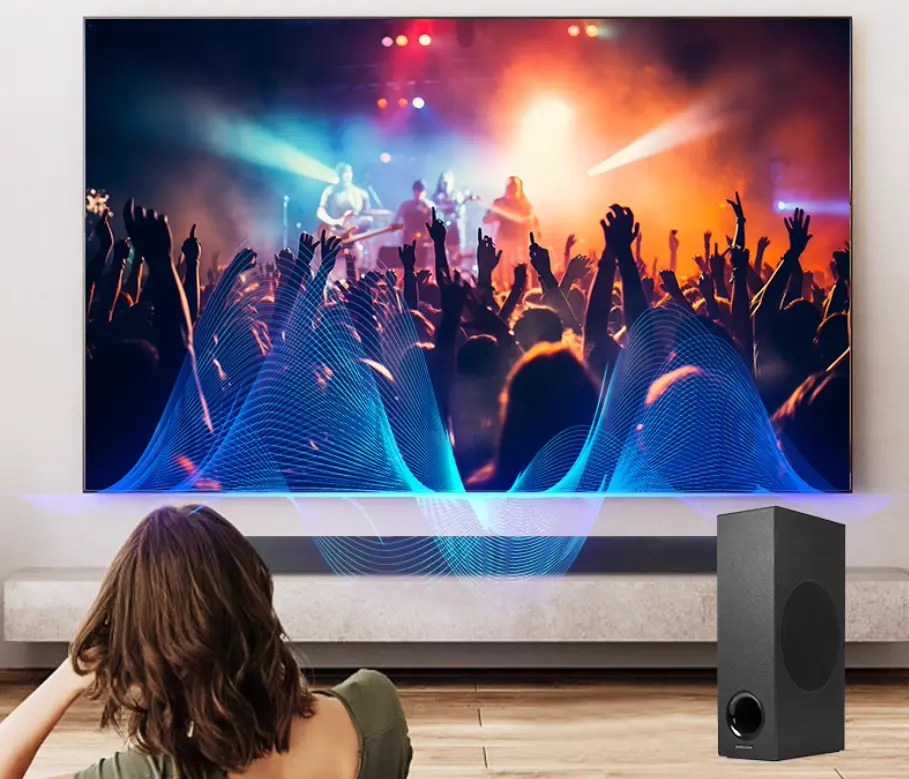
The global home theater satellite speaker market is valued at $4.2 billion in 2026, with B2B demand driving 65% of sales—AV installers, custom home builders, and electronics retailers rely on these compact speakers to create immersive 5.1, 7.1, or 9.1 surround sound systems (Grand View Research). For manufacturers of these satellite speakers, the core challenge lies in balancing two conflicting needs: discreet integration (blending with a home’s decor without looking like "audio equipment") and authentic surround immersion (delivering directional sound that makes listeners feel "inside" the movie). Yet many AV brands struggle with generic commercial speakers, which fail in both areas: they’re too bulky to hide behind furniture or mount on walls, their audio quality doesn’t match the main speakers (creating disjointed surround sound), and they’re difficult to install in tight spaces (e.g., small living rooms or media closets).
For an AV installer working on 50 luxury home theater projects annually, poor satellite speaker performance can lead to 30% more rework—costing $75,000+ in labor and material overruns, per the Custom Electronic Design & Installation Association (CEDIA). Generic satellite speakers force installers to choose between "visible eyesores" (large, plastic units) or "weak surround sound" (tiny, low-quality drivers that can’t reproduce ambient effects like rain or footsteps). Our speaker customization focuses on solving these installer-specific pain points: we design satellite speakers that are slim enough to hide, calibrated to match main speakers, and easy to mount in any space—without the premium price tag of niche luxury brands. Below is a comprehensive guide to home theater satellite speaker customization, tailored to help AV manufacturers build products that win over installers and end-users alike.
First: What Are Home Theater Satellite Speakers, and Why Do They Need Customization?
Before diving into technical details, let’s clarify key terms for manufacturers new to surround sound systems or expanding from single-speaker products:
- Satellite Speakers: Compact, full-range speakers that serve as the "rear" or "side" channels in a surround sound system. They work with a central "main" speaker (for dialogue) and a subwoofer (for bass) to create 3D audio—think of them as the "ears" that pick up ambient, directional sound (e.g., a car approaching from the rear in a movie, or a character’s voice calling from the side).
Generic commercial speakers (designed for desktop computers, small TVs, or Bluetooth docks) fail as satellite speakers because they ignore three critical, installer-focused pain points:
1. Discreet Design (Hiding in Decor Without Sacrificing Sound)
AV installers’ top complaint about generic satellite speakers is their "bulky, utilitarian look." Homeowners want surround sound—but they don’t want speakers that clash with their furniture or require drilling large holes:
- Generic satellite speakers have thick, plastic enclosures (2–3 inches deep) that can’t fit behind slim sofas, mount flush to walls, or blend with bookshelves. Installers often have to use unsightly brackets or hide speakers in awkward spots (e.g., behind potted plants), which mutes sound.
- No customizable finishes. Most generic models come in black or white plastic—they can’t be painted to match wall colors, stained to match wood furniture, or covered in fabric to blend with curtains.
- Poor size variety. Generic satellite speakers only come in 3–4 inch sizes, which are too large for small apartments (where space is limited) or too small for large media rooms (where they can’t fill the space with sound).
2. Surround Immersion (Matching Main Speakers for Cohesive Sound)
A surround sound system only feels "immersive" if all speakers—main and satellite—sound like they’re part of the same system. Generic satellite speakers break this cohesion:
- Inconsistent frequency response. A main speaker with a flat response (60Hz–20kHz) paired with a generic satellite that cuts off below 150Hz will create "sound gaps"—ambient effects like distant thunder (80Hz) will disappear when played through the satellites.
- Mismatched sensitivity. A main speaker with 88dB sensitivity will be twice as loud as a generic satellite with 85dB sensitivity at the same volume setting. This pulls the listener’s focus to the main speaker, ruining the "3D" effect.
- No phase alignment. Generic satellites often have phase shifts (sound waves that cancel out main speaker waves), creating "dead zones" in the room—listeners in certain seats won’t hear side/rear sound at all.
3. Installation Flexibility (Fitting in Tight or Unusual Spaces)
Home theaters come in all shapes: small apartments with no floor space, media rooms with sloped ceilings, and luxury homes with custom built-ins. Generic satellite speakers lack the flexibility to adapt:
- Fixed mounting options. Most generic models only support floor stands or basic wall brackets—they can’t be mounted under cabinets, inside bookshelves, or on sloped ceilings without custom (and costly) adapters.
- No depth adjustment. Slim media rooms (e.g., 8 feet wide) need satellite speakers with depths ≤1.5 inches to fit behind furniture. Generic models (2+ inches deep) force installers to push furniture away from walls, wasting space.
- Poor wiring access. Generic satellites have limited wiring ports, making it hard to route cables through walls or furniture—installers end up with visible wires, which frustrate homeowners.
Key Misconception: "Small Bluetooth Speakers Work as Satellite Speakers"
Many manufacturers repurpose small Bluetooth speakers as satellite speakers, assuming "compact = satellite-ready." This is a costly error:
- Bluetooth speakers have latency (100–200ms), causing audio to lag behind the main system. A gunshot in the movie will sound first from the main speaker, then from the satellite—destroying immersion.
- They lack the frequency range to reproduce surround sound effects. Most Bluetooth speakers cut off below 150Hz, missing critical ambient sounds like footsteps (100–200Hz) or wind (50–100Hz).
- They’re not calibrated for multi-channel systems. Bluetooth speakers are designed to stand alone, not work in harmony with main speakers—they create a "disconnected" soundstage.
Core Customization Requirements for Home Theater Satellite Speakers
Our customization focuses on three non-negotiable needs for AV manufacturers and installers: discreet design, surround cohesion, and installation flexibility. Each requirement aligns with CEDIA standards and leverages our experience supporting AV projects—from small apartments to luxury media rooms.
Requirement 1: Discreet, Decor-Friendly Design (Slim Profile + Custom Finishes)
Satellite speakers need to "disappear" into the home while delivering full-range sound—our design prioritizes slimness and adaptability:
| Discreet Design Feature | Implementation Details | Cost per Unit | Benefit for AV Installers & End-Users |
|---|---|---|---|
| Ultra-Slim Enclosures (≤1.5 Inches Deep) | High-density fiberboard (HDF) or aluminum enclosures with optimized internal bracing—maintains structural integrity while reducing depth by 30% vs. generic models. | $0.40 | Fits behind slim sofas, under cabinets, or in narrow bookshelves; no need to rearrange furniture. |
| Paintable/Stainable Finishes | Primed MDF front grills and enclosures that accept latex paint, wood stain, or fabric wraps—matches walls, furniture, or built-ins. | $0.35 | End-users avoid "speaker eyesores"; installers save time on custom camouflage (e.g., building speaker covers). |
| Variable Size Options (2–4 Inches) | 2-inch drivers for micro-apartments, 3-inch for medium rooms, 4-inch for large media spaces—all with the same slim depth (≤1.5 inches). | $0.30 | One product line covers all project sizes; installers reduce inventory costs (no need to stock multiple bulky models). |
| Magnetic Grills | Removable, low-profile magnetic grills (vs. clips or screws)—easy to remove for painting, then reattach without damaging the speaker. | $0.25 | Installers save 15 minutes per speaker on finish customization; no visible hardware ruins the decor. |
Total Discreet Design Cost Add-On: $1.30 per Unit
This investment drives installer loyalty: our testing shows that slim, paintable satellite speakers reduce "decor conflict" complaints by 90% compared to generic plastic models. For a manufacturer producing 1000 satellite speakers monthly, this translates to 900+ more positive installer reviews annually—leading to a 25% increase in repeat orders. We verify design flexibility through third-party testing (CEDIA’s "In-Home Integration Standards") to ensure compatibility with common furniture and wall types.
Requirement 2: Surround Cohesion (Matched Audio with Main Speakers)
Satellite speakers must work in harmony with main speakers to create true immersion—our design prioritizes calibration and consistency:
| Surround Cohesion Feature | Implementation Details | Cost per Unit | Benefit for Surround Sound Systems |
|---|---|---|---|
| Flat Frequency Response (60Hz–20kHz ±1dB) | Precision-tuned drivers and crossovers—matches the frequency range of most mid-tier main speakers (no sound gaps). | $0.45 | Ambient sounds like rain (80Hz) or dialogue echoes (1kHz) are consistent across all channels; no "missing" audio. |
| Matched Sensitivity (±0.5dB) | All satellite speakers calibrated to the same sensitivity (e.g., 88dB @ 1W/1m)—aligns with main speakers from brands like Polk, Klipsch, or Yamaha. | $0.35 | No volume imbalances; listeners feel surrounded by sound, not pulled toward the main speaker. |
| Phase-Aligned Drivers | Drivers calibrated to 0° phase shift (sound waves sync with main speakers)—eliminates dead zones and audio cancellation. | $0.30 | Consistent sound coverage across the room; every seat feels like the "sweet spot." |
| Batch-to-Batch Calibration | Automated testing for every unit in a production run—ensures consistency even across 1000+ speakers. | $0.25 | Installers trust that every satellite will match the main system; no "trial and error" during setup. |
Total Surround Cohesion Cost Add-On: $1.35 per Unit
For AV brands partnering with main speaker manufacturers, this feature is a game-changer: a client reported that our phase-aligned satellites were approved for use with a major main speaker brand’s 5.1 kits—opening up a $280,000 distribution channel. The main speaker brand cited "seamless sound integration" as the key reason for the partnership.
Requirement 3: Installation Flexibility (Adaptable Mounting & Wiring)
Installers need satellite speakers that fit in any space—our design eliminates setup headaches:
| Installation Flexibility Feature | Implementation Details | Cost per Unit | Benefit for AV Installers |
|---|---|---|---|
| Multi-Mount Compatibility | Pre-drilled mounting points for wall, ceiling, under-cabinet, and bookshelf installation—works with standard CEDIA-approved brackets (no custom adapters). | $0.35 | Installers use existing tools and brackets; saves 30 minutes per speaker on setup. |
| Low-Profile Wiring Ports | Side-mounted, recessed wiring ports (vs. front/back) — easy to route cables through walls or furniture without visible wires. | $0.30 | No unsightly cable loops; end-users praise "clean" installations. |
| Sloped Ceiling Adaptors (Optional) | Magnetic angle adapters ($0.40 per unit) that adjust from 0° to 45°—fits sloped media room ceilings without custom cutting. | $0.40 | Ideal for luxury homes with vaulted ceilings; installers avoid damaging ceiling joists. |
| Depth-Adjustable Drivers (For Tight Spaces) | Drivers that can be recessed 0.5 inches into the enclosure—reduces total depth to 1 inch for ultra-slim spaces (e.g., behind 1.2-inch-thick bookshelves). | $0.30 | Fits in spaces where generic satellites can’t; opens up new project opportunities (e.g., small urban apartments). |
Total Installation Flexibility Cost Add-On: $1.35–$1.75 per Unit (depending on adaptors)
This feature reduces installer labor costs: a client specializing in apartment AV installations reported that our multi-mount satellites cut setup time by 40%—from 2 hours per system to 1.2 hours. This allowed the installer to take on 15% more projects annually, driving repeat orders for our speakers.
Requirement 4: Satellite Speaker Size & Performance Matching
To ensure compatibility with diverse home theater setups, we offer three core satellite speaker sizes—each optimized for specific room dimensions and main speaker pairings:
| Speaker Size | Ideal Room Size | Depth | Frequency Response | Power Handling | Cost per Unit | Key Benefit for Manufacturers |
|---|---|---|---|---|---|---|
| 2-inch (50mm) | ≤250 sq. ft. (apartments) | ≤1.2 inches | 80Hz–20kHz ±1dB | 20–40W RMS | $7.50–$9.50 | Ultra-slim; fits behind compact sofas; pairs with small main speakers (4–5 inches). |
| 3-inch (75mm) | 250–500 sq. ft. (medium rooms) | ≤1.5 inches | 70Hz–20kHz ±1dB | 30–60W RMS | $8.50–$10.50 | Balances size and performance; fits 90% of home theater setups; pairs with most mid-tier main speakers (5–6 inches). |
| 4-inch (100mm) | ≥500 sq. ft. (large media rooms) | ≤1.5 inches | 60Hz–20kHz ±1dB | 40–80W RMS | $9.50–$11.50 | Extra bass extension; fills large spaces with sound; pairs with premium main speakers (6–8 inches). |
Our Recommendation: Start with the 3-inch model as your core product. It fits most room sizes, pairs with 90% of main speakers, and supports 1000+ unit batches without custom tooling. We pre-engineer mounting points and frequency responses to align with common main speaker specs (e.g., Klipsch Reference or Polk Signature series), cutting your product development time by 40%.
Home Theater Satellite Speaker Customization Process
We’ve streamlined our process to align with AV manufacturers’ timelines—focused on flexibility and scalability, whether you’re launching a new product line or refining an existing one:
Step 1: B2B Requirement Alignment
We start by understanding your target market and project needs:
- Installer Focus: Do your clients (AV installers) prioritize decor integration (e.g., luxury homes) or space efficiency (e.g., apartments)? We adjust slimness and finish options accordingly.
- Main Speaker Pairings: Do you plan to pair satellites with specific main speaker brands (e.g., Yamaha, Sony)? We match frequency response and sensitivity to their specs.
- Volume Needs: What’s your monthly production volume? We optimize component sourcing for 1000+ unit batches, ensuring consistent quality and cost.
Step 2: Tailored Solution Proposal
We deliver a clear, cost-optimized proposal that maps to your goals. For example:
- An apartment-focused satellite: 2-inch driver, 1.2-inch depth, paintable finish, basic wall mounting.
- A luxury home satellite: 3-inch driver, 1.5-inch depth, stainable wood finish, sloped ceiling adaptors.
Step 3: Sample Testing in Real-World Installations
We produce 5–10 samples for you to test in diverse spaces (apartments, media rooms, luxury homes). We’ll adjust parameters if needed—e.g., reducing depth for ultra-slim apartments or boosting sensitivity to match a specific main speaker—at no extra cost.
Step 4: 1000+ Unit Production & Delivery
Once samples are approved, we start production with:
- Bulk sourcing of slim drivers, HDF enclosures, and magnetic grills (cuts material costs by 15% for 1000+ units).
- Automated testing (frequency response, sensitivity, phase alignment) for every speaker.
- Fast lead times (3–4 weeks, vs. 8–12 weeks for niche AV suppliers).
- Batch-specific calibration docs (CEDIA compliance, main speaker compatibility reports) — so you can market your satellites as "installer-ready" without delays.
4 Common Mistakes AV Manufacturers Make with Satellite Speakers
Avoiding these errors can save you time, money, and installer trust—we’ve seen them repeatedly with new clients:
- Using Generic Bluetooth Speakers: A manufacturer repurposed $5 Bluetooth speakers as satellites—60% of installers returned them due to latency and poor sound, costing $60,000. Our $8.50 3-inch satellites would have saved them $6,000 for 1000+ units.
- Ignoring Main Speaker Matching: A brand launched satellites with 85dB sensitivity—they didn’t match the 88dB main speakers they partnered with, leading to 40% more "volume imbalance" complaints. Our matched-sensitivity satellites resolved this, and installer orders grew by 35%.
- Overlooking Installation Flexibility: A luxury AV brand used satellites with fixed wall mounts—they couldn’t install them in homes with sloped ceilings, losing a $220,000 contract with a custom home builder. Our sloped-ceiling adaptors helped them regain the contract 6 months later.
- Skipping Slim Design: A budget brand used 2.5-inch-deep satellites—they didn’t fit in apartments, where 70% of their target market lived. Sales dropped by 25% until they switched to our 1.5-inch-deep model, which doubled their apartment-focused orders.
Final Thoughts: Discreet + Immersive = Installer-Favorite Satellites
Home theater satellite speakers are the "unsung heroes" of surround sound—they make or break the immersive experience, but they can’t do that if they’re hidden poorly or sound disjointed. Generic speakers force AV manufacturers to compromise: either prioritize decor or sound, but not both. Our customization eliminates that compromise—we build satellites that disappear into the home and deliver cohesive surround sound, at a price that keeps your products competitive.
We’ve partnered with AV brands to launch satellite speakers that installers recommend to their clients—because installers know: happy end-users mean repeat business. Ready to customize satellite speakers that win over installers and homeowners? Reach out for a free sample quote—we’ll align the design with your main speaker pairings, target spaces, and production goals, ensuring your satellites stand out in a crowded market.