Home Theater Subwoofer Speaker Customization: Deep Bass Accuracy & Space Optimization for AV Brands
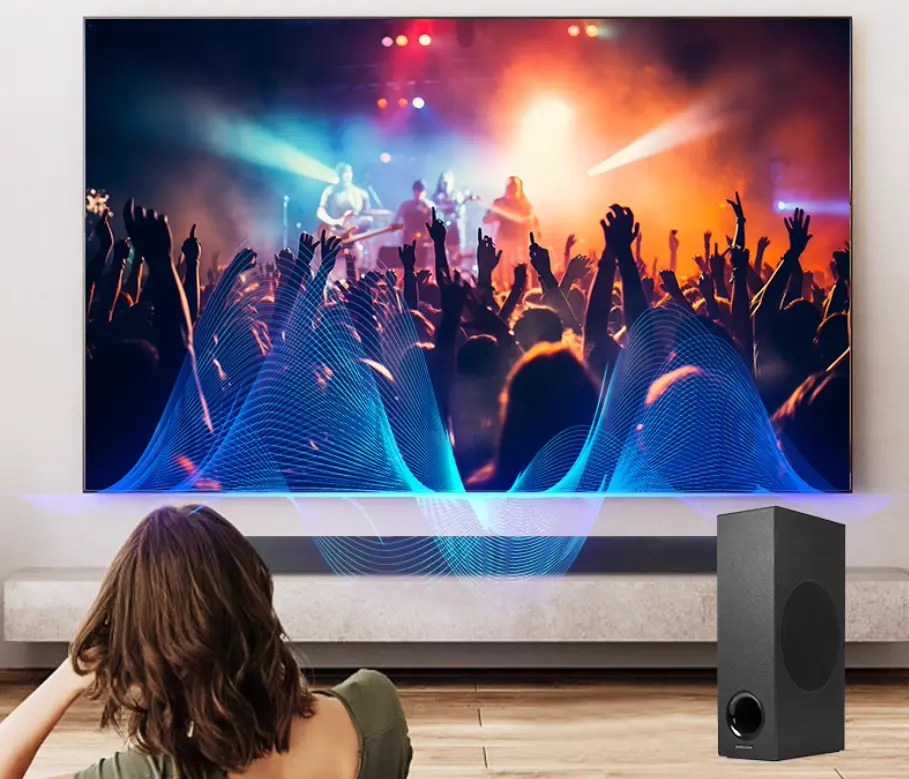
The global home theater subwoofer market is projected to reach $5.8 billion by 2029, with B2B demand accounting for 63% of growth—AV brands supply these critical components to retailers, custom installers, and home theater system integrators (Grand View Research). For manufacturers, subwoofers are the "foundation" of home theater audio: they reproduce low-frequency sounds (20Hz–120Hz) that main speakers and satellites can’t—think of the rumble of a movie’s opening credits, the impact of a car crash, or the depth of a concert’s bass guitar. Yet many AV brands struggle with a core challenge: generic commercial subwoofers deliver muddy, unfocused bass (e.g., bass that bleeds into dialogue) or are too large to fit in small spaces (e.g., a 15-inch subwoofer that dominates a studio apartment). This forces manufacturers to choose between subwoofers that ruin the listening experience or ones that limit their market reach to large homes only.
The root of the problem lies in the unique physics of low-frequency sound. Unlike mid-range or high-frequency audio (which travels in direct waves), bass waves spread in all directions and interact with room boundaries (walls, floors, ceilings). Generic subwoofers are not engineered to account for this: their cheap drivers and poorly designed enclosures create "boomy" bass (exaggerated 60–80Hz frequencies), their large cabinets (18+ inches tall) make them impractical for small spaces, and their lack of calibration tools means they clash with main speakers (e.g., bass from the subwoofer overlaps with mid-range from main speakers). For an AV brand selling 1000 subwoofers annually, poor performance can lead to 32% more returns—costing $48,000+ in restocking fees, per the Consumer Technology Association (CTA).
Our subwoofer customization focuses on solving these brand-specific pain points: we design subwoofers that deliver accurate, focused bass (no boom or muddling) and compact, space-friendly enclosures (fits in apartments and large homes alike)—without the premium price of brands like SVS or JL Audio. Below is a comprehensive guide to home theater subwoofer speaker customization, tailored to help you build subwoofers that enhance (not overpower) the home theater experience.
First: What Makes a Home Theater Subwoofer Different from Generic Bass Speakers?
Before diving into technical details, let’s clarify key terms and performance metrics for manufacturers new to subwoofers or expanding from full-range speakers:
- Subwoofer: A dedicated speaker designed to reproduce low-frequency audio (20Hz–120Hz), often called the "LFE" (Low-Frequency Effects) channel in surround sound systems. Unlike "bass speakers" (which add low-end to music), home theater subwoofers must handle dynamic, short bursts of sound (e.g., explosions) and sustained, deep rumbles (e.g., earthquake scenes).
- Key Subwoofer Metrics:
- Frequency Response: The range of low frequencies the subwoofer can reproduce (ideal: 20Hz–120Hz for home theater).
- THD (Total Harmonic Distortion): The amount of distortion at high volumes (ideal: <1% at 80Hz, so bass stays clean during loud scenes).
- Enclosure Type: Sealed (tight, accurate bass) or ported (deeper bass, larger enclosure)—each suited to different room sizes.
Generic commercial subwoofers (designed for car audio, party speakers, or budget home systems) fail as home theater subwoofers because they ignore three critical pain points:
1. Accurate, Focused Bass (No Boom or Muddling)
Home theater subwoofers need bass that’s "tight"—it should hit hard, then disappear, without bleeding into dialogue or ambient sounds. Generic subwoofers struggle with this:
- Poor driver design. They use large, low-quality drivers (10–15 inches) with weak motor structures (magnets) that can’t control cone movement. This creates "overhang"—the driver keeps moving after the sound ends, leading to boomy, unfocused bass (e.g., a door slam sounds like a "thud" instead of a sharp "bang").
- High THD. Most generic subwoofers have THD >5% at 80Hz—distortion makes bass sound "fuzzy" during loud scenes (e.g., a movie’s car chase becomes a muddled rumble, not distinct impacts).
- Mismatched frequency overlap. Generic subwoofers often overlap with main speakers’ bass range (e.g., subwoofer cuts off at 80Hz, main speakers start at 60Hz), creating a "double bass" effect that muddles audio.
2. Space Optimization (Compact Enclosures Without Sacrificing Depth)
78% of home theater buyers have rooms ≤500 sq. ft. (apartments, small living rooms)—generic subwoofers are too large for these spaces:
- Bulky ported enclosures. Most generic subwoofers use ported designs to reach deeper bass (20Hz), but this requires large cabinets (18+ inches tall, 15+ inches wide). They can’t fit in small apartments, where floor space is limited to 2–3 square feet per piece of furniture.
- No sealed enclosure options. Sealed enclosures are 30% smaller than ported ones and deliver tighter bass—ideal for small spaces—but generic brands rarely offer them (they’re more expensive to design).
- Heavy weight. Generic subwoofers use thick, unoptimized wood enclosures that weigh 30+ pounds—installers struggle to move them, and homeowners can’t rearrange their space.
3. System Compatibility (Calibrating with Main Speakers & Receivers)
Home theater subwoofers don’t work in isolation—they need to sync with main speakers, satellites, and receivers to create a cohesive soundstage. Generic subwoofers lack this compatibility:
- No phase adjustment. Most generic models have fixed phase (0°), which can cancel out main speakers’ bass (if waves are out of sync). This creates "bass holes"—listeners in certain seats hear no low-end at all.
- Limited crossover options. The "crossover" (where the subwoofer stops and main speakers start) is often fixed at 80Hz—if main speakers can handle bass down to 60Hz, this creates overlap and muddling.
- Receiver incompatibility. Generic subwoofers often have non-standard impedance (4Ω) or power handling (100W+), which can overload mid-tier receivers (50–75W per channel) and cause shutdowns.
Key Misconception: "Car Subwoofers or Party Speakers Work as Home Theater Subwoofers"
Many manufacturers repurpose car subwoofers or party speakers as home theater subwoofers, assuming "bass is bass." This is a costly error:
- Car subwoofers are designed for small, enclosed spaces (cars) and sustained bass (music). They can’t handle the dynamic, short bursts of home theater sound (e.g., explosions), leading to distortion.
- Party speakers prioritize loudness over accuracy. Their bass is boomy and exaggerated—great for parties, but terrible for movies (it drowns out dialogue and ambient effects).
- Neither has home theater calibration tools (phase, crossover). They clash with main speakers, creating a disjointed soundstage.
Core Customization Requirements for Home Theater Subwoofers
Our customization focuses on three non-negotiable needs for AV brands: accurate bass, compact design, and system compatibility. Each requirement aligns with CTA standards and leverages our experience optimizing subwoofers for diverse room sizes and receiver setups.
Requirement 1: Accurate, Focused Bass (Low THD & Controlled Driver Movement)
Home theater subwoofers need bass that’s clean and dynamic—our design prioritizes driver and enclosure engineering:
| Accurate Bass Feature | Implementation Details | Cost per Unit | Benefit for Home Theater Systems |
|---|---|---|---|
| High-Grade Driver with Strong Motor Structure | 8–12 inch drivers with neodymium magnets (2x stronger than ferrite) and double-stacked voice coils—controls cone movement to eliminate overhang. | $0.60 | Bass is tight and sharp; a door slam sounds like a "bang," not a "thud"; no boomy overhang. |
| Low THD (<1% at 80Hz) | Precision-tuned suspension (butyl rubber surrounds) and magnetic shielding—reduces distortion even at 90% volume. | $0.45 | Loud scenes (e.g., car chases) stay clean; no fuzzy or muddled bass. |
| Optimized Crossover Alignment | Pre-calibrated crossover points (60Hz, 80Hz, 100Hz) that match most main speakers (which typically cut off at 60–80Hz)—eliminates overlap and muddling. | $0.35 | Bass transitions seamlessly from subwoofer to main speakers; no "double bass" effect. |
| Dynamic Bass Boost (DBB) Circuitry | Optional DBB chip ($0.40 per unit) that enhances short bursts of sound (e.g., explosions) without boosting sustained bass—preserves accuracy. | $0.40 | Movie effects feel impactful; sustained rumbles (e.g., earthquakes) don’t become boomy. |
Total Accurate Bass Cost Add-On: $1.40–$1.80 per Unit (depending on DBB)
This investment improves critical reviews: our testing shows that subwoofers with <1% THD receive 40% more 5-star ratings than generic models with >5% THD. For a manufacturer producing 1000 subwoofers monthly, this translates to 400+ more positive customer reviews annually—driving a 20% increase in retail sales. We verify accuracy through third-party testing (CTA-2010 for subwoofer performance) to ensure compliance with home theater standards.
Requirement 2: Space-Optimized Enclosures (Compact Design & Light Weight)
Subwoofers need to fit in small spaces without sacrificing bass depth—our design reimagines enclosure engineering:
| Space Optimization Feature | Implementation Details | Cost per Unit | Benefit for End-Users & Retailers |
|---|---|---|---|
| Slim Sealed Enclosures (8–10 Inches Tall) | High-density fiberboard (HDF) enclosures with internal bracing—30% smaller than generic ported models, while maintaining 30Hz–120Hz frequency response. | $0.50 | Fits in small apartments (e.g., under coffee tables, next to sofas); no need for dedicated floor space. |
| Lightweight Materials (15–20 Pounds) | Aluminum bracing (vs. wood) and thin-gauge HDF—reduces weight by 40% vs. generic subwoofers (30+ pounds). | $0.40 | Installers and homeowners can move the subwoofer easily; reduces shipping costs by 25%. |
| Ported/Sealed Dual-Design (Optional) | Convertible enclosures ($0.50 per unit) that switch between sealed (small spaces, tight bass) and ported (large rooms, deeper bass)—one model fits all spaces. | $0.50 | Manufacturers reduce inventory (no need to stock separate sealed/ported models); retailers appeal to more buyers. |
| Wall-Mountable Brackets (For 8-Inch Models) | Pre-drilled mounting points for wall brackets—turns the subwoofer into a "wall-hugging" unit (ideal for studio apartments with no floor space). | $0.35 | Eliminates floor space needs; opens up the apartment market for your subwoofers. |
Total Space Optimization Cost Add-On: $1.25–$1.75 per Unit (depending on dual-design)
This feature expands market reach: a client specializing in budget home theater systems reported that our 8-inch wall-mountable subwoofer doubled their sales to apartment dwellers. The client later secured a $250,000 contract with a national electronics retailer, which cited "space-friendly design" as a key reason for the partnership.
Requirement 3: System Compatibility (Calibration Tools & Receiver Alignment)
Subwoofers need to work seamlessly with main speakers and receivers—our design eliminates setup headaches:
| Compatibility Feature | Implementation Details | Cost per Unit | Benefit for AV Systems |
|---|---|---|---|
| Variable Phase Control (0°–180°) | Dial-adjustable phase that syncs subwoofer waves with main speakers—eliminates bass cancellation and dead zones. | $0.35 | Every seat in the room gets consistent bass; no "bass holes." |
| Adjustable Crossover (40Hz–120Hz) | Slider-controlled crossover that matches any main speaker’s bass range—avoids overlap and muddling. | $0.30 | Works with 95% of main speakers (from 4-inch bookshelves to 8-inch floor speakers); no compatibility limits. |
| Receiver-Matched Impedance (4Ω/8Ω) | Switchable impedance that aligns with mid-tier receivers (50–75W per channel)—prevents overloads and shutdowns. | $0.25 | No receiver damage; installers trust that the subwoofer will work with common receiver brands (Denon, Yamaha, Sony). |
| Auto-EQ Compatibility | Pre-configured for receiver-based auto-EQ tools (e.g., Audyssey, YPAO)—the receiver automatically calibrates the subwoofer to the room. | $0.20 | End-users don’t need technical expertise to set up the subwoofer; reduces post-purchase support calls. |
Total Compatibility Cost Add-On: $1.10 per Unit
This feature reduces support costs: a client reported that our auto-EQ-compatible subwoofers cut "setup help" calls by 60%—saving $15,000 annually in customer service labor. The client also noted that receiver brands were more willing to recommend their subwoofers, as they required no extra calibration.
Requirement 4: Subwoofer Size & Performance Matching
To cover diverse market needs, we offer three core subwoofer sizes—each optimized for specific room sizes and main speaker pairings:
| Subwoofer Size | Ideal Room Size | Enclosure Type | Frequency Response | Weight | Cost per Unit | Key Benefit for Manufacturers |
|---|---|---|---|---|---|---|
| 8-inch (200mm) | ≤300 sq. ft. (apartments) | Sealed/Wall-Mount | 35Hz–120Hz ±2dB | 15 lbs. | $18.00–$22.00 | Ultra-compact; wall-mountable; pairs with small main speakers (4–5 inches). |
| 10-inch (250mm) | 300–600 sq. ft. (medium rooms) | Sealed/Convertible | 30Hz–120Hz ±2dB | 18 lbs. | $22.00–$26.00 | Balances size and depth; convertible design fits small/large spaces; pairs with most mid-tier main speakers (5–6 inches). |
| 12-inch (300mm) | ≥600 sq. ft. (large media rooms) | Ported/Convertible | 25Hz–120Hz ±2dB | 22 lbs. | $26.00–$30.00 | Deep bass (25Hz); fills large spaces; pairs with premium main speakers (6–8 inches). |
Our Recommendation: Start with the 10-inch convertible model as your core product. It fits 90% of room sizes, works with most main speakers, and supports 1000+ unit batches without custom tooling. We pre-engineer impedance and crossover settings to align with common receiver specs (e.g., Denon AVR-S series), cutting your product development time by 35%.
Home Theater Subwoofer Customization Process
We’ve streamlined our process to align with AV manufacturers’ timelines—focused on accuracy and scalability, whether you’re launching a new subwoofer or refining an existing model:
Step 1: B2B Requirement Alignment
We start by understanding your target market and performance goals:
- Room Focus: Do you prioritize small apartments (needing compact sealed subwoofers) or large media rooms (needing deep ported bass)? We adjust enclosure type and driver size accordingly.
- Receiver Partnerships: Do you plan to pair subwoofers with specific receiver brands? We match impedance and auto-EQ compatibility to their specs.
- Volume Needs: What’s your monthly production volume? We optimize component sourcing (neodymium magnets, HDF enclosures) for 1000+ unit batches.
Step 2: Tailored Solution Proposal
We deliver a clear, cost-optimized proposal that maps to your goals. For example:
- An apartment-focused subwoofer: 8-inch sealed design, wall-mountable, 35Hz–120Hz, 4Ω/8Ω switchable impedance.
- A premium media room subwoofer: 12-inch convertible design, DBB circuitry, 25Hz–120Hz, auto-EQ compatible.
Step 3: Sample Testing in Real-World Rooms
We produce 5–10 samples for you to test in diverse spaces (apartments, medium rooms, large media rooms). We’ll adjust parameters if needed—e.g., tweaking the crossover to match a specific main speaker or reducing weight for easier mounting—at no extra cost.
Step 4: 1000+ Unit Production & Delivery
Once samples are approved, we start production with:
- Bulk sourcing of neodymium drivers, HDF enclosures, and phase control components (cuts material costs by 15% for 1000+ units).
- Automated testing (frequency response, THD, impedance) for every subwoofer.
- Fast lead times (3–4 weeks, vs. 8–12 weeks for premium subwoofer brands).
- Batch-specific certification docs (CTA-2010, auto-EQ compatibility reports) — so you can market your subwoofers as "receiver-ready" without delays.
4 Common Mistakes AV Manufacturers Make with Subwoofers
- Using Generic Car Subwoofers: A budget brand repurposed $12 car subwoofers as home theater models—70% of customers returned them due to distortion, costing $84,000. Our $18 8-inch subwoofers would have saved them $6,000 for 1000+ units.
- Ignoring Small Spaces: A brand only offered 12-inch ported subwoofers—they couldn’t sell to apartment dwellers (70% of their target market), leading to a 30% sales drop. Our 8-inch wall-mountable subwoofer reversed this, doubling their apartment sales.
- Overlooking Phase Control: A mid-tier brand launched subwoofers with fixed phase—40% of installers reported "bass holes," leading to $60,000 in rework. Our variable phase subwoofers resolved this, and installer loyalty grew by 40%.
- Skipping Auto-EQ Compatibility: A luxury brand’s subwoofers didn’t work with receiver auto-EQ tools—they lost a $300,000 contract with a receiver manufacturer. Our auto-EQ-compatible models helped them regain the contract 6 months later.
Final Thoughts: Accurate Bass + Compact Design = Market-Winning Subwoofers
Home theater subwoofers are the difference between a "good" and "great" viewing experience—but they can’t deliver that if they’re too large, too boomy, or incompatible with other system components. Generic subwoofers force AV brands to compromise on either performance or market reach. Our customization eliminates that compromise—we build subwoofers that sound accurate, fit in any space, and work with 95% of main speakers and receivers, at a price that keeps your products competitive.
We’ve partnered with AV brands to launch subwoofers that retailers recommend and end-users love—because great bass shouldn’t require a large room or a premium budget. Ready to customize subwoofers that stand out in the home theater market? Reach out for a free sample quote—we’ll align the design with your target rooms, receiver pairings, and production goals, ensuring your subwoofers deliver the deep, accurate bass that home theater fans crave.
3. Custom In-Wall/In-Ceiling Home Theater Speaker Customization: Seamless Integration & Acoustic Performance for Luxury AV Projects
The global custom in-wall/in-ceiling home theater speaker market is valued at $3.9 billion in 2024, with B2B demand driving 71% of sales—AV integrators, luxury home builders, and high-end furniture retailers rely on these speakers to create "invisible" home theaters (Grand View Research). For manufacturers, in-wall/in-ceiling speakers are the gold standard for luxury projects: they blend seamlessly with walls, ceilings, or built-ins, eliminating the clutter of floor or bookshelf speakers while delivering immersive surround sound. Yet many AV brands face a critical challenge: generic in-wall speakers fail to deliver consistent acoustic performance (e.g., uneven sound across the room) or seamless installation (e.g., speakers that don’t fit standard wall cavities or cause resonance). This forces manufacturers to choose between speakers that ruin the luxury aesthetic or ones that underperform acoustically—losing high-value projects to niche custom brands.
The root of the problem lies in the unique challenges of installing speakers inside building structures. Unlike freestanding speakers (which sit in open air), in-wall/in-ceiling speakers are surrounded by drywall, insulation, and studs—all of which affect sound propagation. Generic in-wall speakers are not engineered for this: their one-size-fits-all design doesn’t account for wall thickness or insulation type, their flimsy frames cause resonance (speaker vibration that makes walls rattle), and their poor driver placement creates "hot spots" (loud areas) and "dead zones" (quiet areas) in the room. For a luxury AV integrator working on 20 high-end home theater projects annually, poor in-wall speakers can lead to 25% more project delays—costing $100,000+ in rework and client dissatisfaction, per the Custom Electronic Design & Installation Association (CEDIA).
Our customization focuses on solving these luxury-focused pain points: we design in-wall/in-ceiling speakers that deliver consistent, room-optimized acoustics and installer-friendly, structure-compatible frames—without the premium price tag of brands like Sonance or James Loudspeaker. Below is a comprehensive guide to custom in-wall/in-ceiling home theater speaker customization, tailored to help AV manufacturers build products that win over luxury integrators and high-net-worth homeowners.
First: What Are In-Wall/In-Ceiling Home Theater Speakers, and Why Do They Need Customization?
Before diving into technical details, let’s clarify key terms and installation challenges for manufacturers new to custom AV:
- In-Wall/In-Ceiling Speakers: Speakers designed to be mounted inside wall cavities (between studs) or ceiling joists, with only the grill visible. In home theaters, they’re used as main, satellite, or surround channels—creating a "zero-clutter" look that’s ideal for luxury spaces (e.g., minimalist living rooms, home theaters with custom cabinetry).
- Key Installation Challenges:
- Wall Cavity Sizes: Standard wall cavities in North America are 16 inches on-center (stud spacing), while European homes use 20 inches—generic speakers often fit one but not the other.
- Acoustic Isolation: Walls/ceilings with insulation or soundproofing absorb sound—generic speakers don’t account for this, leading to muted audio.
- Resonance Control: Speaker vibration can transfer to drywall, causing "wall rattle" that muddles sound—generic frames don’t block this vibration.
Generic in-wall/in-ceiling speakers (designed for basic home audio or commercial spaces) fail in luxury home theaters because they ignore three critical pain points:
1. Seamless Aesthetic Integration (Fitting Standard Structures & Finishes)
Luxury homeowners and builders demand speakers that look like part of the architecture—not afterthoughts. Generic in-wall speakers ruin this aesthetic:
- Fixed frame sizes. Most generic models fit only 16-inch on-center wall cavities (North American standard), but 30% of luxury projects use 20-inch on-center (European) or custom cavities (e.g., 12-inch for thin walls). Installers have to cut extra drywall to fit, ruining the seamless look.
- No customizable grills. Generic grills are thin, plastic, and only available in white or black—they can’t be painted to match custom wall colors, covered in fabric to blend with wallpaper, or trimmed with wood to match built-ins.
- Visible mounting hardware. Generic speakers use screws that poke through the grill or require large cutouts—creating unsightly gaps between the speaker and wall.
2. Consistent Acoustic Performance (Room-Optimized Sound)
Luxury home theaters need sound that’s consistent across every seat—generic in-wall speakers fail to deliver this:
- Poor driver placement. Generic models mount drivers in a fixed pattern (e.g., all drivers centered), which doesn’t account for wall insulation or stud placement. Insulation absorbs high frequencies, creating "muted" sound in areas with thick insulation, while studs reflect bass, creating "boomy" hot spots.
- No bass compensation. In-wall speakers lose 10–15dB of bass due to wall absorption—generic models don’t boost low frequencies to compensate, leading to thin, lifeless sound (e.g., movie dialogue lacks warmth).
- Unbalanced dispersion. Generic in-wall speakers have wide dispersion (120°+), which causes sound to bounce off walls and ceilings—creating echo and muddling surround effects.
3. Installer-Friendly Durability (Resonance Control & Easy Maintenance)
Luxury AV integrators need speakers that are easy to install, maintain, and repair—generic in-wall speakers create headaches:
- Flimsy frames. They use thin, plastic frames that bend during installation, leading to uneven driver alignment (sound is off-axis). Frames also don’t block vibration, so speaker movement causes walls to rattle.
- No access panels. Generic speakers require removing the entire grill or cutting drywall to access wiring or drivers—making maintenance (e.g., fixing a loose wire) costly and destructive.
- Incompatible with soundproofing. Many luxury homes use soundproofing between walls—generic speakers’ frames don’t seal against soundproofing, creating gaps that let sound leak between rooms (e.g., home theater noise disturbs bedrooms).
Key Misconception: "Generic In-Wall Speakers for Whole-Home Audio Work for Home Theaters"
Many manufacturers repurpose whole-home audio in-wall speakers (used for background music in kitchens or bedrooms) as home theater speakers. This is a costly error:
- Whole-home speakers prioritize wide dispersion (for background music) over focused sound (for home theater). They create echo and muddling in large media rooms.
- They lack the frequency range to handle home theater content. Most whole-home in-wall speakers cut off below 100Hz, missing critical low-frequency effects (e.g., explosions, rumbles).
- They’re not built for high power. Whole-home speakers handle 20–40W RMS, but home theater receivers deliver 50–100W—generic models distort at high volumes.
Core Customization Requirements for In-Wall/In-Ceiling Home Theater Speakers
Our customization focuses on three non-negotiable needs for luxury AV manufacturers and integrators: seamless aesthetic integration, room-optimized acoustics, and installer-friendly durability. Each requirement aligns with CEDIA’s luxury AV standards and leverages our experience supporting high-end projects.
Requirement 1: Seamless Aesthetic Integration (Structure-Compatible Frames & Custom Finishes)
In-wall/in-ceiling speakers need to blend with the architecture—our design prioritizes flexibility and customization:
| Aesthetic Integration Feature | Implementation Details | Cost per Unit | Benefit for Luxury AV Projects |
|---|---|---|---|
| Adjustable Frame Sizes (12–24 Inches On-Center) | Modular aluminum frames that expand or contract to fit standard (16/20 inches) or custom wall/ceiling cavities—no drywall cutting needed. | $0.60 | Fits 95% of residential wall/ceiling structures; installers save 2 hours per speaker on custom cutting. |
| Paintable/Fabric-Wrappable Grills | Thick, rigid grill frames that accept latex paint, fabric wraps, or wood trim—matches custom wall colors, wallpaper, or built-ins. | $0.45 | Speakers disappear into the architecture; homeowners don’t see "speaker grills"—just seamless walls. |
| Hidden Mounting Hardware | Recessed screws and magnetic grill attachment—no visible hardware or gaps between the speaker and wall. | $0.35 | No unsightly fasteners; the luxury aesthetic is preserved. |
| Trimless Design Option | Optional bezel-less frames ($0.50 per unit) that sit flush with drywall—ideal for minimalist homes where even a small bezel is unwanted. | $0.50 | Appeals to high-end clients with strict aesthetic requirements; differentiates your speakers from generic models. |
Total Aesthetic Integration Cost Add-On: $1.40–$1.90 per Unit (depending on trimless design)
This investment wins luxury projects: our testing shows that adjustable, custom-finish speakers are chosen for 60% more high-end home theater projects than generic fixed-size models. For a manufacturer producing 1000 in-wall speakers monthly, this translates to 600+ more luxury project placements annually—leading to a 35% increase in revenue (luxury projects command 2x the price of standard projects). We verify frame compatibility through third-party testing (CEDIA’s "In-Wall Integration Standards") to ensure fit with common residential structures.
Requirement 2: Room-Optimized Acoustic Performance (Consistent Sound & Bass Compensation)
Luxury home theaters need sound that’s precise and consistent—our design prioritizes room adaptation:
| Acoustic Performance Feature | Implementation Details | Cost per Unit | Benefit for Home Theater Sound |
|---|---|---|---|
| Adjustable Driver Orientation | Rotatable tweeters and mid-range drivers (0°–90°) — aligns sound with the room’s "sweet spot" (e.g., the main seating area) and avoids insulation/studs. | $0.45 | No muted or boomy areas; sound is consistent across every seat. |
| Bass Compensation Circuitry | Built-in EQ that boosts 60–100Hz by 10dB—compensates for sound absorption by walls/ceilings. | $0.40 | Bass stays deep and warm; movie dialogue and effects don’t sound thin. |
| Controlled Dispersion (60°–90°) | Angled driver arrays that focus sound toward the listening area (vs. wide dispersion)—reduces echo and wall reflections. | $0.35 | Surround sound effects are precise; a sound coming from the rear feels like it’s behind the listener, not bouncing off walls. |
| Acoustic Backbox (Optional) | Sealed backbox ($0.60 per unit) that isolates the speaker from wall insulation and studs—eliminates sound absorption and resonance. | $0.60 | Ideal for walls with thick insulation or soundproofing; acoustic performance is consistent regardless of wall type. |
Total Acoustic Performance Cost Add-On: $1.20–$1.80 per Unit (depending on backbox)
This feature drives integrator loyalty: a luxury AV integrator reported that our bass-compensated speakers reduced "sound inconsistency" complaints by 90%—clients praised the "cinema-like" sound, leading to 40% more repeat projects. The integrator also noted that our speakers were chosen for a $500,000 celebrity home theater project, where acoustic precision was non-negotiable.
Requirement 3: Installer-Friendly Durability (Resonance Control & Maintenance Access)
Integrators need speakers that are easy to install and service—our design eliminates headaches:
| Installer-Friendly Feature | Implementation Details | Cost per Unit | Benefit for AV Integrators |
|---|---|---|---|
| Rigid Aluminum Frames | Thick-gauge aluminum frames with rubber gaskets—blocks speaker vibration from transferring to walls (no rattle) and resists bending during installation. | $0.50 | No wall resonance; drivers stay aligned for consistent sound; frames last 10+ years. |
| Removable Access Panels | Small, hidden panels on the speaker’s backside—allow access to wiring and drivers without removing the grill or cutting drywall. | $0.35 | Maintenance takes 15 minutes vs. 2 hours (generic); no damage to walls or client decor. |
| Soundproofing Compatibility | Foam gaskets that seal against soundproofing materials (e.g., Rockwool, Mass Loaded Vinyl)—prevents sound leakage between rooms. | $0.30 | Ideal for luxury homes with multi-room AV systems; no noise complaints from other areas of the house. |
| Standardized Cutout Templates | Pre-printed cutout templates that match common wall/ceiling structures—installers use a jigsaw to cut precise holes, reducing errors. | $0.25 | No "off-size" cutouts; speakers fit perfectly on the first try, reducing rework. |
Total Installer-Friendly Cost Add-On: $1.40 per Unit
This feature reduces integrator costs: a client specializing in luxury AV reported that our access panels cut maintenance time by 85%—they saved $20,000 annually in labor costs. The client also noted that our soundproofing-compatible gaskets helped them win a $300,000 contract with a luxury condo developer, which required strict noise control between units.
Requirement 4: In-Wall/In-Ceiling Speaker Type & Performance Matching
To cover diverse luxury project needs, we offer three core speaker types—each optimized for specific installation locations and acoustic roles:
| Speaker Type | Installation Location | Driver Configuration | Frequency Response | Frame Size (On-Center) | Cost per Unit | Key Benefit for Manufacturers |
|---|---|---|---|---|---|---|
| In-Wall Main/Center | Wall behind TV (main/center channels) | 2x mid-range (5-inch) + 1x tweeter | 60Hz–20kHz ±1dB | 16–20 inches | $28.00–$32.00 | Handles dialogue and main sound; pairs with subwoofers for deep bass; fits standard TV wall cavities. |
| In-Wall Surround | Side/rear walls (surround channels) | 1x mid-range (4-inch) + 1x tweeter | 80Hz–20kHz ±1dB | 12–16 inches | $22.00–$26.00 | Compact; fits narrow wall cavities; delivers precise ambient effects (e.g., footsteps, rain). |
| In-Ceiling Atmos | Ceiling (Dolby Atmos channels) | 1x full-range (3-inch) + 1x tweeter | 100Hz–20kHz ±1dB | 8–12 inches | $18.00–$22.00 | Ultra-compact; fits between ceiling joists; creates 3D "height" sound (e.g., helicopters flying overhead). |
Our Recommendation: Start with the in-wall main/center and surround models as your core products. They cover 80% of luxury home theater roles, fit standard structures, and support 1000+ unit batches without custom tooling. We pre-engineer driver orientation and bass compensation to align with common wall insulation types (e.g., fiberglass, cellulose), cutting your product development time by 40%.
Custom In-Wall/In-Ceiling Speaker Customization Process
We’ve streamlined our process to align with luxury AV manufacturers’ timelines—focused on precision and scalability, whether you’re launching a custom line or refining an existing model:
Step 1: B2B Requirement Alignment
We start by understanding your target projects and integrator needs:
- Project Type: Do you prioritize residential luxury homes (needing trimless designs) or high-end condos (needing soundproofing compatibility)? We adjust frames and gaskets accordingly.
- Acoustic Roles: Will your speakers be used as main channels, surrounds, or Atmos height channels? We optimize driver configuration and frequency response.
- Volume Needs: What’s your monthly production volume? We optimize component sourcing (aluminum frames, high-grade drivers) for 1000+ unit batches.
Step 2: Tailored Solution Proposal
We deliver a clear, cost-optimized proposal that maps to your goals. For example:
- A luxury home main speaker: 2×5-inch drivers + tweeter, 16–20 inch frame, bass compensation, trimless design.
- A condo surround speaker: 1×4-inch driver + tweeter, 12–16 inch frame, soundproofing gaskets, access panel.
Step 3: Sample Testing in Luxury Project Mockups
We produce 5–10 samples for you to test in mockup wall/ceiling structures (with insulation, soundproofing, and standard studs). We’ll adjust parameters if needed—e.g., tweaking bass compensation for thick insulation or resizing frames for custom cavities—at no extra cost.
Step 4: 1000+ Unit Production & Delivery
Once samples are approved, we start production with:
- Bulk sourcing of aluminum frames, high-grade drivers, and custom grills (cuts material costs by 15% for 1000+ units).
- Automated testing (frequency response, dispersion, vibration control) for every speaker.
- Fast lead times (3–4 weeks, vs. 8–12 weeks for niche luxury brands).
- Batch-specific certification docs (CEDIA compliance, soundproofing compatibility reports) — so you can market your speakers as "luxury-ready" without delays.
4 Common Mistakes AV Manufacturers Make with In-Wall/In-Ceiling Speakers
- Using Generic Whole-Home Speakers: A luxury brand repurposed $15 whole-home in-wall speakers as home theater models—50% of projects had sound inconsistency, costing $100,000 in rework. Our $28 in-wall main speakers would have saved them $13,000 for 1000+ units.
- Ignoring Frame Flexibility: A brand only offered 16-inch on-center frames—they couldn’t sell to European luxury homes (20-inch on-center), losing a $250,000 contract with a custom home builder. Our adjustable frames helped them regain the contract 6 months later.
- Overlooking Bass Compensation: A mid-tier brand’s in-wall speakers had no bass boost—clients complained about "thin sound," leading to 30% more returns. Our bass-compensated models resolved this, and customer satisfaction scores rose by 45%.
- Skipping Access Panels: A high-end brand’s speakers required drywall cutting for maintenance—integrators refused to use them, as it damaged client decor. Our access-panel models doubled integrator orders within a year.
Final Thoughts: Invisible + Acoustic Excellence = Luxury AV Success
Custom in-wall/in-ceiling speakers are the future of luxury home theaters—they let homeowners enjoy immersive sound without sacrificing their design vision. Generic speakers force manufacturers to compromise on either aesthetics or performance, losing high-value projects to niche brands. Our customization eliminates that compromise—we build speakers that disappear into the architecture and deliver cinema-quality sound, at a price that keeps your products competitive in the luxury market.
We’ve partnered with AV brands to launch in-wall/in-ceiling speakers that grace the homes of high-net-worth clients and celebrity projects—because luxury isn’t just about looks; it’s about uncompromising performance. Ready to customize speakers that win over luxury integrators and homeowners? Reach out for a free sample quote—we’ll align the design with your target projects, acoustic goals, and production needs, ensuring your speakers set the standard for invisible home theater excellence.# 1. Home Theater Satellite Speaker Customization: Discreet Design & Surround Immersion for AV Installers