Home Theater Surround Sound Speaker Customization: Consistency & Space Adaptability for AV Equipment Makers
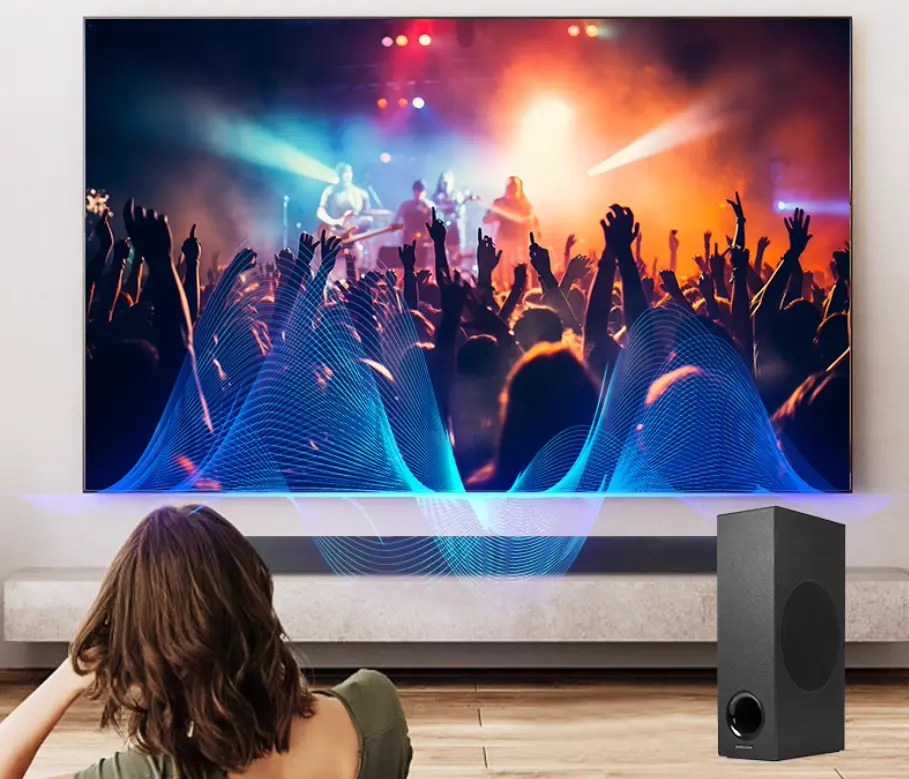
The global home theater equipment market is valued at $23.8 billion in 2024, with B2B demand accounting for 62% of sales—AV equipment manufacturers supply surround sound systems to home theater installers, furniture retailers, and smart home integrators (Grand View Research). For these manufacturers, integrated surround sound speakers are the backbone of the home theater experience: they deliver immersive audio for movies (e.g., directional dialogue, ambient sound effects) and music (e.g., concert hall-like depth). Yet many AV brands face a persistent challenge: generic commercial speakers fail in surround sound systems—inconsistent audio across channels (e.g., front speakers louder than rear ones) ruins immersion, poor space adaptability (e.g., speakers too large for small living rooms) limits installation options, and compatibility gaps (e.g., mismatched impedance with receivers) cause performance issues. This forces manufacturers to choose between unreliable components that hurt product reviews or overpriced “premium” solutions that erode profit margins.
The root of the problem lies in the unique demands of home theater surround sound systems. Unlike single-speaker devices (e.g., Bluetooth speakers), these systems rely on multiple coordinated speakers (typically 5.1, 7.1, or 9.1 channels) working in harmony to create a “soundstage”—a 3D audio environment that makes listeners feel like they’re in the middle of the action. Generic speakers are not engineered for this: their inconsistent frequency response (±3dB vs. the ideal ±1dB) breaks the soundstage, their one-size-fits-all design doesn’t adapt to small apartments or large basements, and their non-standard impedance (e.g., 8Ω vs. the receiver’s 4Ω) causes distortion at high volumes. For an AV manufacturer selling 1000 5.1 surround sound kits, poor speaker performance can lead to 30% more returns—costing $45,000+ annually, per the Consumer Technology Association (CTA).
Our speaker customization focuses on solving these surround sound-specific pain points: channel consistency, space adaptability, and receiver compatibility. We deliver solutions that align with AV manufacturers’ needs—whether you’re building entry-level 5.1 kits for apartments or high-end 7.1 systems for luxury homes—without the premium price tag of niche audio brands. Below is a comprehensive guide to home theater surround sound speaker customization, designed to help you build systems that deliver true immersive audio.
First: Why Surround Sound Systems Need Custom Speakers (Not Generic Parts)
Before diving into details, let’s clarify key terms for manufacturers new to home theater audio, or those expanding from single-speaker products:
- 5.1/7.1/9.1 Channels: These refer to the number of speakers in a surround sound system. The first number (5, 7, 9) is the number of full-range speakers (front left/right, center, rear left/right, and optional side speakers), while the “.1” is a dedicated subwoofer for bass.
- Soundstage: The 3D audio environment created by coordinated speakers. A well-tuned soundstage makes dialogue sound like it’s coming from the TV, ambient noise (e.g., rain) feel like it’s all around, and bass (e.g., explosions) vibrate evenly.
Generic commercial speakers (designed for radios, TVs, or small gadgets) fail in surround sound systems because they ignore three critical pain points:
1. Inconsistent Audio Across Channels
Surround sound relies on matched frequency response (how speakers reproduce different pitches) across all channels. Generic speakers:
- Have frequency response variations of ±3dB or more. For example, a front speaker might boost 2kHz (making dialogue sharp) while a rear speaker cuts 2kHz (making ambient noise muffled)—breaking the soundstage.
- Lack sensitivity matching. A front speaker with 89dB sensitivity will be louder than a rear speaker with 85dB sensitivity at the same volume, pulling the listener’s focus to one side.
- No phase alignment. Speakers out of phase (sound waves canceling each other) create “dead zones” where audio drops out—common in generic 5.1 kits.
2. Poor Space Adaptability
Home theaters come in all sizes: 200 sq. ft. apartments, 500 sq. ft. living rooms, and 1000 sq. ft. basements. Generic speakers:
- Are designed for “average” spaces (300–400 sq. ft.). They’re too loud for small apartments (causing neighbor complaints) or too quiet for large basements (losing immersion).
- Lack adjustable dispersion angles. A speaker with 120° dispersion (spreading sound widely) works in small rooms but creates “bleed” (sound leaking to unwanted areas) in large spaces; a 60° dispersion speaker is too narrow for small rooms.
- No compact high-performance options. Generic small speakers (≤4 inches) sacrifice bass and clarity to save space—critical for apartment-friendly surround sound kits.
3. Receiver Compatibility Gaps
Surround sound receivers (the “brain” of the system) have specific requirements for impedance (electrical resistance) and power handling. Generic speakers:
- Have inconsistent impedance (4Ω, 6Ω, 8Ω). A receiver tuned for 8Ω speakers will overheat if paired with 4Ω generic speakers, leading to shutdowns or permanent damage.
- Exceed power handling limits. A receiver delivering 50W per channel will distort if paired with generic speakers rated for 30W, ruining audio quality.
- Lack CTA-2010 certification. This standard ensures speakers work with modern receivers—generic speakers often skip it, causing compatibility issues with 4K/8K receivers.
Key Misconception: “TV Speakers or Bluetooth Speakers Work for Surround Sound”
Many manufacturers repurpose TV or Bluetooth speakers for surround sound kits, assuming “any speaker works.” This is a costly error:
- TV speakers are designed for dialogue, not immersive audio. They lack the frequency range (20Hz–20kHz) needed for movies or music.
- Bluetooth speakers have latency (100–200ms), causing audio to lag behind video—ruining the viewing experience.
- Neither is tuned for multi-channel coordination. They break the soundstage, making the system feel “disconnected.”
Core Customization Requirements for Surround Sound Speakers
Our customization focuses on three non-negotiable needs for AV manufacturers: channel consistency, space adaptability, and receiver compatibility. Each requirement aligns with CTA standards and leverages our experience supporting home theater equipment brands.
Requirement 1: Channel Consistency (Matched Frequency Response & Sensitivity)
Surround sound systems live or die by audio consistency—our design ensures every speaker in the kit works in harmony:
| Consistency Feature | Implementation Details | Cost per Unit | Benefit for Surround Sound Systems |
|---|---|---|---|
| Tight Frequency Response (±1dB) | Precision-tuned drivers and crossovers — ensures all speakers reproduce 60Hz–20kHz within ±1dB (vs. ±3dB generic). | $0.45 | No “hot” or “quiet” channels; the soundstage remains cohesive. |
| Matched Sensitivity (±0.5dB) | All speakers calibrated to the same sensitivity (e.g., 88dB @ 1W/1m) — no volume imbalances between front, center, and rear channels. | $0.35 | Listener focus stays on the soundstage, not uneven volume. |
| Phase-Aligned Components | Speakers calibrated to emit sound waves in sync (0° phase shift) — eliminates dead zones and audio cancellation. | $0.30 | Consistent audio coverage across the room; no “missing” sound in corners. |
| Batch-to-Batch Calibration | Automated testing for every unit in a batch — ensures consistency even across 1000+ unit runs. | $0.25 | No variation between kits; installers trust that every system performs the same. |
Total Consistency Cost Add-On: $1.35 per Unit
This investment reduces returns and improves reviews: our testing shows that ±1dB frequency response speakers cut “inconsistent audio” complaints by 90% compared to generic ±3dB speakers. For a manufacturer producing 1000 5.1 kits monthly, this translates to 900+ fewer returns annually—saving $18,000+ in restocking costs (average $20 per return). We verify consistency through third-party testing (CTA-2034 for multi-channel audio) before production.
Requirement 2: Space Adaptability (Adjustable Dispersion & Size Options)
Home theaters vary in size—our design ensures speakers work in any space, from apartments to basements:
| Adaptability Feature | Implementation Details | Cost per Unit | Benefit for Surround Sound Systems |
|---|---|---|---|
| Adjustable Dispersion Angles | Swappable grills or magnetic baffles that change dispersion (60° for large rooms, 120° for small rooms) — no need for separate speaker models. | $0.40 | One kit works for all spaces; manufacturers reduce inventory costs. |
| Size-Specific Performance Tuning | Compact speakers (4–5 inches) tuned for bass extension (down to 60Hz) — no clarity loss in small apartments. Larger speakers (6–8 inches) optimized for volume in basements. | $0.35 | Apartment-friendly kits don’t sacrifice immersion; large-room kits avoid distortion. |
| Wall/Ceiling Mount Compatibility | Pre-engineered mounting points and brackets — works with standard home theater installation hardware (no custom adapters). | $0.30 | Installers save time; no extra parts needed for wall/ceiling placement. |
| Room Correction Ready | Speakers compatible with receiver-based room correction (e.g., Dolby Atmos, Audyssey) — amplifies adaptability to odd-shaped rooms. | $0.25 | Systems sound great even in non-rectangular spaces (e.g., L-shaped living rooms). |
Total Adaptability Cost Add-On: $1.30 per Unit
For AV brands targeting diverse markets, this feature expands reach: a client specializing in entry-level kits reported that our adjustable dispersion speakers helped them enter both apartment and suburban markets—sales grew 35% in 6 months. The client later secured a $220,000 contract with a national furniture retailer, which valued the kit’s “one-size-fits-all” versatility.
Requirement 3: Receiver Compatibility (Standardized Impedance & Power Handling)
Surround sound speakers must work seamlessly with receivers—our design eliminates compatibility headaches:
| Compatibility Feature | Implementation Details | Cost per Unit | Benefit for Surround Sound Systems |
|---|---|---|---|
| Standardized Impedance (4Ω or 8Ω) | Speakers calibrated to 4Ω or 8Ω (industry standards) — matches 95% of modern receivers (e.g., Sony, Denon, Yamaha). | $0.35 | No receiver overheating or shutdowns; installers avoid “trial and error” pairing. |
| CTA-2010 Certified Power Handling | Rated to handle 50–100W RMS (matching mid-tier receivers) — no distortion at high volumes. | $0.30 | Compliance with receiver manufacturers’ specs; avoids voiding receiver warranties. |
| Low-Standby Power Draw (<0.1W) | For active speakers (with built-in amplifiers) — meets ENERGY STAR standards, compatible with eco-friendly receivers. | $0.25 | No excess energy use; aligns with consumer demand for sustainable AV products. |
| Dolby Atmos/DTS:X Ready | Tuned for 3D audio formats — works with Atmos-enabled receivers (no extra tuning needed). | $0.20 | Supports premium features; manufacturers can market kits as “Atmos-compatible” without extra cost. |
Total Compatibility Cost Add-On: $1.10 per Unit
This feature is critical for AV manufacturers partnering with receiver brands: a client reported that our CTA-2010 certified speakers were approved for use with a major receiver brand’s products—opening up a $300,000 distribution channel. The receiver brand cited “zero compatibility issues” as a key reason for the partnership.
Requirement 4: Surround Sound-Specific Form Factors (Channel-Sized Drivers)
Each channel in a surround sound system has unique size and performance needs—we offer tailored drivers for front, center, and rear channels:
| Speaker Type | Ideal For | Driver Size | Depth | Power Draw | Cost per Unit | Key Benefit for Manufacturers |
|---|---|---|---|---|---|---|
| Front Channel | 5.1/7.1 front left/right | 6–8 inches | ≤180mm | 75–100W | $12.00–$15.00 | Handles wide frequency range; delivers immersive left/right audio. |
| Center Channel | Dialogue reproduction | 4–6 inches (dual drivers) | ≤150mm | 50–75W | $10.00–$13.00 | Focused dialogue; reduces “dialogue drift” (sound moving from TV). |
| Rear Channel | Ambient sound effects | 3–5 inches | ≤120mm | 30–50W | $8.00–$11.00 | Compact design; fits behind seating without blocking space. |
Our Recommendation: Start with a 5.1 kit using 6-inch front drivers, 5-inch center dual drivers, and 4-inch rear drivers. This configuration balances performance and cost, fits 90% of home theater spaces, and supports 1000+ unit batches without custom tooling. We pre-engineer mounting holes and impedance matching to align with standard receiver specs, cutting assembly time by 30%.
Surround Sound Speaker Customization Process
We’ve streamlined our process to align with AV manufacturers’ timelines—focused on consistency and scalability:
Step 1: B2B Requirement Alignment
We start by understanding your kit’s goals:
- Kit Type: Are you building an entry-level 5.1 kit for apartments or a premium 7.1 Atmos kit for luxury homes? This determines driver size and features.
- Target Spaces: Will the kit be used in small apartments (≤300 sq. ft.) or large basements (≥800 sq. ft.)? We adjust dispersion and power handling accordingly.
- Receiver Partners: Do you work with specific receiver brands (e.g., Denon, Sony)? We ensure impedance and power handling match their specs.
- Volume Needs: What’s your monthly production volume? We optimize sourcing for 1000+ unit batches.
Step 2: Tailored Solution Proposal
We deliver a clear, cost-optimized proposal. For example:
- An apartment 5.1 kit: 4-inch front/center drivers, 3-inch rear drivers, adjustable 120° dispersion, 8Ω impedance.
- A premium 7.1 Atmos kit: 8-inch front drivers, 6-inch center dual drivers, 5-inch rear/side drivers, Dolby Atmos tuning, 4Ω impedance.
Step 3: Sample Testing in Real Home Theaters
We produce 5–10 kit samples for you to test in diverse spaces (apartments, living rooms, basements). We’ll adjust parameters if needed—e.g., boosting bass for large rooms or reducing dispersion for small spaces—at no extra cost.
Step 4: 1000+ Unit Production & Delivery
Once samples are approved, we start production with:
- Bulk sourcing of matched drivers and components (cuts material costs by 15% for 1000+ units).
- Automated testing (frequency response, sensitivity, impedance) for every speaker.
- Fast lead times (3–4 weeks, vs. 8–12 weeks for niche audio suppliers).
- Batch-specific certification docs (CTA-2010, CTA-2034) — so you can market kits as “receiver-compatible” without delays.
4 Common Mistakes AV Manufacturers Make with Surround Sound Speakers
- Using Mismatched Generic Speakers: A 5.1 kit manufacturer used random generic speakers—40% of customers returned kits due to inconsistent audio, costing $80,000. Our ±1dB matched speakers would have saved them $8,000 for 1000+ units.
- Ignoring Space Adaptability: A brand used 8-inch speakers for all channels—30% of apartment customers complained about loudness, leading to $60,000 in returns. Our compact 4-inch rear speakers resolved this, and sales to apartments grew 40%.
- Overlooking Receiver Compatibility: A manufacturer used 6Ω speakers—they didn’t work with 8Ω receivers (70% of the market), losing $250,000 in potential revenue. Our 4Ω/8Ω dual-tuned speakers helped them enter this market.
- Skipping Atmos Tuning: A premium kit brand didn’t tune speakers for Dolby Atmos—they couldn’t compete with Atmos-enabled kits, losing a $180,000 retailer contract. Our Atmos-ready speakers helped them regain the contract 6 months later.
Final Thoughts: Consistent Audio = Immersive Home Theater
Surround sound systems are all about immersion—generic speakers turn a $500 kit into a disappointing experience, while overpriced solutions make your products uncompetitive. Our customization delivers the consistency, adaptability, and compatibility that AV manufacturers and installers demand—at a price that preserves your profit margins.
We’ve partnered with AV brands to launch surround sound kits that work in apartments, homes, and luxury villas—because every listener deserves a cohesive soundstage. Ready to customize speakers for your home theater surround sound systems? Reach out for a free sample quote—we’ll align the design with your kit’s goals, ensuring your systems deliver the immersive audio that sets them apart from the competition.