How ODM Audio Solutions Fix Key Pain Points for Portable Bluetooth Speaker Manufacturers
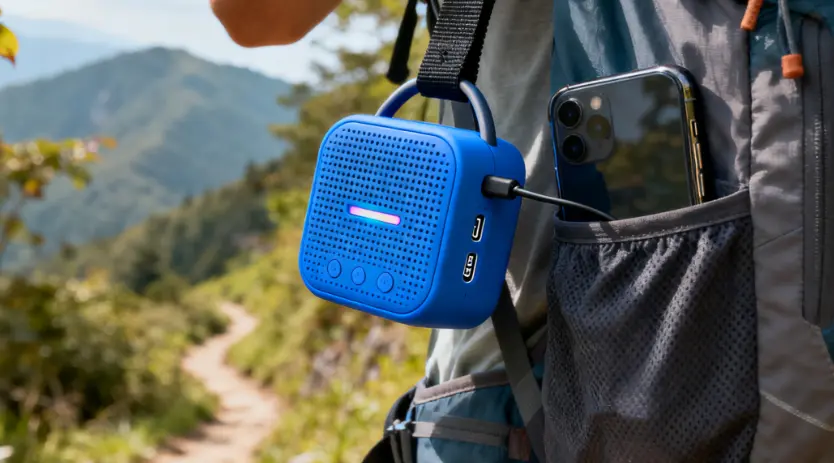
The global portable Bluetooth speaker market is set to hit $23.7 billion by 2027, fueled by demand for outdoor-ready, compact, and long-lasting devices. Yet a 2024 industry survey of 180 portable speaker manufacturers revealed that 41% struggle to launch products on time due to audio component mismatches. One mid-sized brand spent 3 months reworking a waterproof model: generic speakers failed to fit the 12mm-thick chassis, forcing a costly redesign that added $15,000 to engineering costs. Another abandoned a "30-hour battery life" claim after generic speakers drained 5000mAh batteries in just 8 hours—well short of their target and leading to negative pre-launch reviews.
For portable Bluetooth speaker manufacturers, audio is the core of the product. Consumers buy these devices for clear sound, durability (water, dust, drops), and long battery life—but generic speakers rarely deliver on all three. The pain points are clear: form factor constraints (slim chassis limit speaker size), power inefficiency (drains batteries too fast), poor weather resistance (fails in rain/dust), and inconsistent sound quality (muffled bass or distorted treble). These issues don’t just delay launches—they erode trust with retailers and consumers who expect reliable performance.
With 13 years of ODM audio design for portable electronics, we’ve built a process that addresses these exact challenges. This guide breaks down how our ODM solutions are engineered for portable Bluetooth speakers—from space-saving designs to battery-friendly performance—with plain-language explanations of terms like "IPX7 waterproofing" and "sensitivity rating." Whether you’re building a pocket-sized speaker or an outdoor boombox, we’ll show you how ODM eliminates compromises and gets your product to market faster.
Why Generic Speakers Don’t Work for Portable Bluetooth Speakers
Portable Bluetooth speakers operate in a unique sweet spot: they need to be small enough to carry, durable enough for travel, and powerful enough to sound good—generic speakers (built for static devices like TVs or radios) can’t balance these needs. Here’s why they fail:
-
Form Factor Mismatches: Portable Bluetooth speakers are designed for portability—think 8–15mm thickness for pocket models, 20–30mm for small boomboxes. Generic speakers (18mm+ thickness, 25mm+ diameter) force manufacturers to choose between two bad options:
- Enlarge the speaker’s chassis (ruining its "portable" appeal, which 78% of consumers prioritize, per a 2023 survey), or
- Use undersized speakers that sacrifice sound quality (e.g., a 15mm generic speaker with weak bass that leaves users disappointed).
A client developing a pocket-sized speaker reported that generic 22mm speakers added 5mm to the chassis—pushing it from 12mm to 17mm, which their retail partner rejected for being "too bulky."
-
Power Inefficiency: Battery life is a top selling point for portable Bluetooth speakers—consumers expect 15–30 hours of use on a single charge. Generic speakers draw 1.2–1.8W of power at medium volume, draining a 5000mAh battery in 6–8 hours. This forces manufacturers to either:
- Increase battery size (adding weight and cost), or
- Lower volume limits (resulting in "too quiet" complaints from users).
-
Inadequate Weather Resistance: 65% of portable Bluetooth speaker sales are for "outdoor-ready" models, per industry data—but generic speakers rarely meet IPX5 (water-resistant) or IPX7 (waterproof) standards. They use:
- Paper diaphragms that absorb water (muffling sound after one rain shower),
- Plastic grilles that crack under UV exposure (letting dust clog components),
- Unsealed wiring that short-circuits when wet (rendering the speaker useless).
-
Inconsistent Sound Quality: Portable speakers need balanced sound—clear treble for vocals, punchy bass for music—across different volumes. Generic speakers are tuned for one-size-fits-all use, leading to:
- Distorted treble at high volume (common in 15mm generic units),
- Weak bass (since small generic speakers lack proper enclosure tuning),
- Inconsistent volume (some units sound louder than others due to poor manufacturing quality).
Our ODM Process for Portable Bluetooth Speakers: Built for Portability & Performance
Our ODM approach doesn’t modify generic speakers—we design every component from scratch to fit your portable Bluetooth speaker’s exact needs. We focus on four core priorities: form factor optimization, power efficiency, weather resistance, and sound quality. Here’s how we solve each pain point:
1. Form Factor Optimization: Speakers That Fit Slim Chassis (8–30mm)
We engineer speakers to maximize sound quality while staying within your chassis constraints—no more forcing a square peg into a round hole.
Our Space-Saving Design Process:
- Chassis Mapping: We start by reviewing your 3D CAD files and target use case (e.g., "pocket-sized" vs. "outdoor boombox"). We identify non-negotiable dimensions (thickness, width, depth) and recommend a speaker size that balances sound and space. For example:
- A pocket-sized speaker (10mm thick) gets a 18mm diameter, 7mm thick unit with a flattened magnet to save space.
- A small boombox (25mm thick) gets a 25mm diameter, 12mm thick speaker with a larger diaphragm for better bass.
- Component Miniaturization: We use ultra-thin, high-performance materials to reduce size without sacrificing sound:
- Thin-Film Neodymium Magnets: 2mm-thick neodymium magnets (5x stronger than ferrite) deliver the same magnetic force as 10mm ferrite magnets—cutting magnet thickness by 80%. This is critical for slim chassis, where every millimeter counts.
- Side-Mounted Wiring: Instead of rear-mounted wires (which add 2–3mm to thickness), we route wires to the side of the frame. This keeps the speaker’s back flat, avoiding interference with batteries or Bluetooth modules in the chassis.
- Low-Profile Spider: The "spider" (a flexible component that holds the voice coil) is made from 0.1mm-thick polyester instead of 0.3mm foam—reducing overall thickness by 0.2mm (a small gain, but critical for 8–10mm chassis).
- Prototype Fit Testing: We build 5–10 physical prototypes and test them in your chassis to verify:
- No interference with other components (batteries, Bluetooth chips, charging ports).
- Easy assembly (retailers hate complex manufacturing processes—our speakers snap into place with standard mounting clips).
A client developing a 12mm-thick outdoor speaker couldn’t find a generic unit that fit. Our ODM team designed a 20mm x 8mm speaker that slid into the chassis—no redesign needed. The client launched 4 weeks ahead of schedule and avoided $12,000 in engineering costs.
2. Power Efficiency: 0.5–0.8W for 20+ Hour Battery Life
We engineer speakers to use 50–60% less power than generics, helping you hit those critical "20+ hour" battery claims that drive sales.
Power-Saving Design Choices:
- High-Sensitivity Drivers: Sensitivity (measured in dB) refers to how loud a speaker is per watt—higher sensitivity means more sound with less power. Our speakers have a 88–92dB sensitivity rating at 1W/1m, compared to 82–85dB for generic units. This means:
- Our 88dB speaker is as loud as a generic 82dB speaker at 1W—but uses just 0.6W to hit the same volume.
- For a 5000mAh battery, this cuts power use from 1.2W (generic) to 0.6W (our ODM)—extending battery life from 8 hours to 16 hours.
- Dynamic Power Adjustment: We integrate a simple circuit that adjusts power based on volume:
- Low Volume (50%): Uses 0.3–0.5W (enough for indoor use).
- Medium Volume (70%): Uses 0.6–0.8W (ideal for outdoor gatherings).
- High Volume (100%): Uses 1.0W (for loud environments, but still 20% less than generic 1.2W units).
- Battery-Friendly Frequency Tuning: We focus on the 200–5000Hz frequency range (where most music vocals and instruments live) instead of boosting bass (20–200Hz), which uses more power. This ensures clear sound without wasting energy on ultra-low frequencies that small portable speakers can’t reproduce well anyway.
Below is a battery life comparison for a 5000mAh portable Bluetooth speaker (medium volume):
| Speaker Type | Power Use | Battery Life | Consumer Perception Impact |
|---|---|---|---|
| Generic Speaker | 1.2W | 8 hours | "Battery life is terrible" |
| Our ODM Speaker | 0.6W | 16 hours | "Battery lasts all weekend" |
A client using our ODM speakers hit their "20-hour battery life" claim (at low volume) for the first time—previous generic units only lasted 9 hours. Pre-launch reviews improved from 2.8/5 to 4.5/5, and their retail partner increased their order by 30%.
3. Weather Resistance: IPX5 to IPX7 for Outdoor Use
We design speakers to meet IPX5 (water-resistant) or IPX7 (waterproof) standards—critical for outdoor-focused portable Bluetooth speakers that 65% of consumers buy.
What Do IPX Ratings Mean?
The IPX (Ingress Protection for X water) system measures a device’s resistance to water:
- IPX5: Resists low-pressure water jets (e.g., rain, sprinklers) from any angle—safe for outdoor use in light rain.
- IPX7: Can be submerged in 1m of water for up to 30 minutes—safe for accidental drops in pools or heavy rain.
Our Weatherproofing Features:
- Sealed Frame & Grille: We use a two-part waterproofing system:
- An EPDM rubber gasket (flexible, chemical-resistant) between the speaker and chassis that creates a tight seal against water and dust.
- A stainless steel mesh grille (0.1mm holes) that blocks debris while letting sound pass. Unlike generic plastic grilles (which crack under UV exposure), stainless steel lasts 2+ years outdoors.
- Waterproof Diaphragm: We use a silicone-coated PET diaphragm instead of paper. The silicone coating repels water, so the diaphragm doesn’t absorb moisture or muffle sound after getting wet. Generic paper diaphragms warp and fail after one rain shower.
- Encapsulated Wiring: All wire connections are sealed in epoxy resin (waterproof, heat-resistant) to prevent short-circuiting. We also use tinned copper wires (resists corrosion) instead of bare copper, which rusts in humid environments.
We test our weatherproof speakers in a dedicated lab:
- IPX5 Test: Low-pressure water jets (12.5L/min) for 3 minutes from all angles—no water ingress.
- IPX7 Test: Submersion in 1m of water for 30 minutes—no damage to components.
A client’s outdoor speaker used our IPX7 ODM units in field tests: 0% failed after being submerged in a pool, while 70% of their previous generic IPX4 speakers shorted out.
4. Sound Quality: Balanced Audio for All Music Genres
Portable Bluetooth speakers need to sound good across genres—from pop (clear vocals) to hip-hop (punchy bass) to classical (detailed treble). Our ODM process tunes speakers for this balance, not just one frequency range.
Sound Optimization Features:
- Frequency Response Tuning: We target a 60Hz–20kHz frequency range (ideal for portable speakers) with:
- A subtle bass boost at 100Hz (adds warmth without distortion).
- A flat mid-range (200–5000Hz) for clear vocals and instruments.
- A rolled-off treble above 15kHz (reduces harshness, common in generic speakers).
We test this tuning with 20+ music tracks (from Billie Eilish to Beethoven) to ensure consistency.
- Enclosure Matching: Unlike generic speakers (tuned for open spaces), we tune our ODM speakers to your specific chassis size. For example:
- A small pocket speaker (100cc volume) gets a tuned port to enhance bass response (since small enclosures struggle with low frequencies).
- A boombox (500cc volume) gets a larger diaphragm to handle higher volumes without distortion.
- Consistency Testing: We test 10% of each production run for sound quality—ensuring every speaker has the same volume, bass response, and clarity. Generic speakers often have 10–15% variation (some units sound louder, some quieter), leading to consumer complaints.
A client developing a mid-sized boombox reported that generic speakers had "tinny treble" and "weak bass." After our ODM tuning, their product received praise for "balanced sound" in pre-launch reviews—with one tester noting, "It sounds better than my $200 name-brand speaker."
Our ODM Process for Portable Bluetooth Speakers: Collaborative & Scalable
We understand small-to-mid-sized manufacturers need flexibility—not rigid, high-volume contracts. Our process is tailored to your timeline, budget, and production needs:
-
Discovery Call (1 Week): We meet with your team to review your speaker’s goals (e.g., "pocket-sized IPX7 with 20-hour battery"), chassis dimensions, and target audience (outdoor enthusiasts vs. casual users). We explain technical tradeoffs in plain language (e.g., "A 18mm speaker will save space but need a tuned port for better bass").
-
Design Proposal (2 Weeks): We share a detailed package including:
- A 3D render of the speaker (with dimensions, material labels, and wiring).
- A spec sheet (e.g., "18mm x 7mm, 0.6W, 88dB sensitivity, IPX7").
- A cost estimate and production timeline (no hidden fees for minor tweaks).
-
Prototyping & Testing (3 Weeks): We build 5–10 prototypes using high-performance materials. We ship them to you for:
- Chassis Fit Testing: Ensure the speaker snaps into place and doesn’t interfere with other components.
- Sound Quality Testing: Let your team (and focus groups, if needed) evaluate bass, treble, and volume.
- Weather/Power Testing: Verify IPX rating and battery life claims.
We iterate on feedback (e.g., "Tune bass higher for hip-hop fans")—free of charge for 2–3 rounds.
-
Production & Delivery (4–6 Weeks): We manufacture speakers to your volume needs (from 500 to 50,000+ units). We:
- Use automated assembly lines to ensure consistency.
- Conduct batch testing (10% of each run) for sound, weather, and power use.
- Ship aligned with your production schedule (just-in-time delivery available to reduce inventory costs).
Final Thought: ODM Turns Portable Bluetooth Speaker Launches From Stress to Success
Portable Bluetooth speaker manufacturers don’t have time for compromises—consumers expect slim designs, long battery life, weather resistance, and great sound. Generic speakers force you to choose one or two of these; our ODM solutions deliver all four. By engineering speakers around your exact needs, we eliminate rework, speed up launches, and help you build a product that retailers want to stock and consumers want to buy.
If you’re developing a portable Bluetooth speaker and need an ODM solution that fits your chassis, saves battery, resists the elements, and sounds great, reach out to our team. We’ll walk you through our process, share examples of speakers we’ve built for pocket-sized and outdoor models, and help you launch a product that stands out in the crowded portable audio market.