How Small-to-Mid B2B Manufacturers Cut Product Testing Costs (Without Risking Quality)
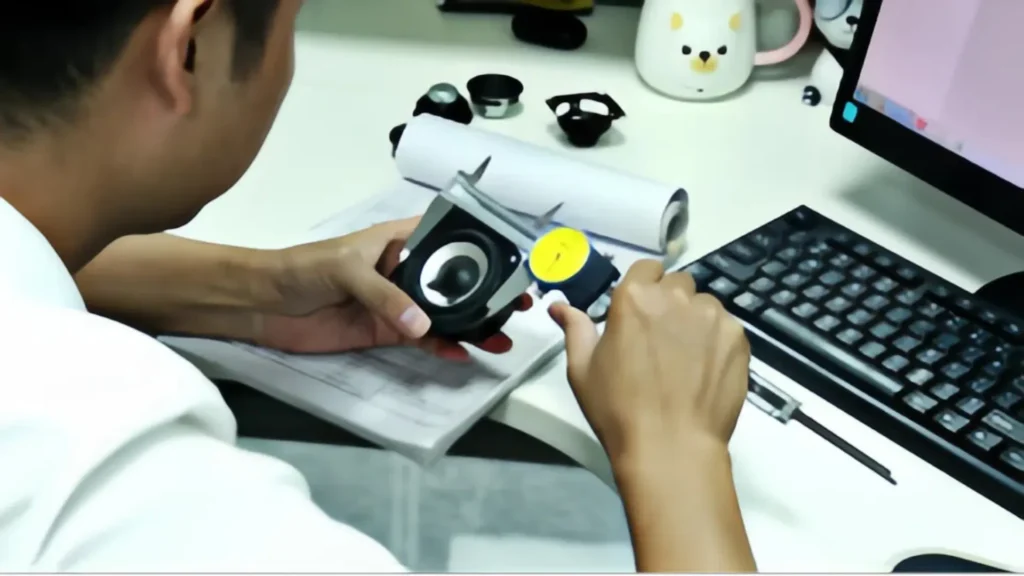
A small manufacturer of portable solar charger speakers shipped 500 units to a retail partner—only to get 100 back within 2 weeks. The issue? The speakers’ diaphragms tore after 3 days of use in hot weather (90°F+). The manufacturer hadn’t tested for temperature resistance—they assumed “generic PET diaphragms” would hold up. By the time they fixed the issue (switching to heat-resistant PET), they’d lost $5,000 in returns and a $20,000 annual contract with the retailer.
For small-to-mid B2B manufacturers, product testing feels like a lose-lose: skip it, and you risk returns and lost clients; do it, and you face $3,000–$5,000 in third-party lab fees (money you can’t afford to waste). A 2024 survey of 180 small B2B manufacturers found that 43% skip critical tests to save money, and 35% report that “unexpected testing costs” have delayed product launches by 2+ months.
The myth that “good testing requires big budgets” keeps small manufacturers stuck. The reality is: 80% of quality issues can be caught with low-cost, in-house testing—and you only need to pay for third-party testing for the 20% of standards that matter (e.g., IP65 for waterproofing, FDA for medical devices).
With 13 years of helping small-to-mid B2B manufacturers (from electric two-wheeler parts to outdoor IoT sensors) test products on a budget, we’ve identified 3 core testing pain points—and how to solve them without sacrificing quality. This guide breaks down practical strategies for in-house testing, strategic third-party partnerships, and customer co-testing, with plain-language explanations of terms like “accelerated aging testing” and “failure mode analysis (FMEA)” — so you can catch issues early, keep costs low, and launch with confidence.
Why Small-to-Mid B2B Manufacturers Struggle With Product Testing
Testing isn’t expensive because labs charge too much—it’s expensive because small teams use the wrong approach. Here are the 3 most common mistakes we see:
Mistake 1: Testing “Everything” Instead of “What Matters”
Large enterprises test every possible scenario (e.g., a speaker’s performance at -40°C, even if they only sell in warm climates). Small manufacturers copy this and waste money on tests that don’t reflect their product’s actual use case.
For example, a small maker of electric two-wheeler turn signals paid a lab $2,500 to test their speakers for -30°C cold resistance—even though 90% of their sales were in Florida and Texas (average winter lows of 40°F+). The test results were irrelevant, and they still missed a critical test: vibration resistance (their speakers failed after 1 week of bumpy roads).
Mistake 2: Assuming “In-House Testing = Unreliable”
Many small manufacturers think “real testing” only happens in a lab with fancy equipment. But for most basic tests (e.g., durability, temperature resistance, basic waterproofing), you can get reliable results with tools you already own—or can buy for $500 or less.
A client who builds portable medical tool housings thought they needed to pay a lab $1,800 to test for “drop resistance.” Instead, they did an in-house test: they dropped 10 housings from 3 feet (the average height of a doctor’s counter) onto a concrete floor. They found 2 housings cracked at the corner—they fixed the design (added a small rubber bumper) and saved $1,800. The retail partner later tested the updated housings and approved them without third-party validation.
Mistake 3: Skipping “Failure Mode Analysis (FMEA)”
FMEA is a simple tool that helps you identify “what could go wrong” with your product—before you spend money on testing. Small manufacturers skip it because they think it’s “too complex,” but this leads to testing the wrong things (or missing critical issues).
A small maker of solar lantern batteries skipped FMEA and spent $3,000 testing for “charge cycle life” (how many times the battery can charge). But they missed testing for “overheating during charging”—a common issue for solar products. When they launched, 15% of batteries overheated, leading to a recall and $12,000 in losses. A 30-minute FMEA would have highlighted overheating as a key risk—and they could have tested it in-house for $100 (using a thermometer).
3 Budget-Friendly Testing Strategies for Small-to-Mid B2B Manufacturers
You don’t need a lab or a QA team. These 3 strategies focus on “testing smart,” not “testing expensive.”
Strategy 1: Do “Use-Case Testing” In-House (Catch 80% of Issues)
Use-case testing means testing your product the way your customers will actually use it—no fancy equipment required. It’s the most effective way to catch issues that matter (e.g., a speaker tearing in hot weather, a housing cracking when dropped).
Below is a sample use-case testing plan for a small manufacturer of electric two-wheeler speakers:
| Use Case (How Customers Use It) | Key Risk (What Could Go Wrong) | In-House Test Method | Tools Needed (Cost) | How to Know It “Passes” |
|---|---|---|---|---|
| 1. Speaker is exposed to rain while riding | Water seeps in, short-circuiting the speaker | – Spray the speaker with a garden hose (low pressure) for 10 minutes. – Let it dry for 1 hour, then test if it plays sound. |
Garden hose, bucket, smartphone (to test sound) | No water inside the speaker; sound is clear (no distortion). |
| 2. Speaker vibrates on bumpy roads | Wires detach, causing no sound | – Secure the speaker to a washing machine (on spin cycle—mimics 15–30Hz road vibration). – Run the washer for 2 hours, then check wires and test sound. |
Washing machine, zip ties, smartphone | Wires stay attached; sound is clear. |
| 3. Speaker sits in direct sunlight (90°F+) | Diaphragm tears or melts | – Place the speaker in a car on a sunny day (or use a space heater set to 90°F, 1 foot away). – Leave it for 4 hours, then test sound and inspect the diaphragm. |
Car/space heater, thermometer, smartphone | Diaphragm is intact; sound is clear. |
How to Create Your Own Use-Case Plan:
- List 3–5 ways your customers will use your product (e.g., “customer charges the solar lantern for 8 hours in the sun,” “customer drops the medical tool from a counter”).
- For each use case, ask: “What’s the worst thing that could happen?” (e.g., “lantern doesn’t charge,” “tool housing cracks”).
- Design a simple test to mimic that use case (use household items or cheap tools).
- Test 10–20 samples (the more you test, the more likely you are to catch issues).
A client who builds solar charger speakers used this plan to test for “rain exposure.” They found 30% of their speakers had a small gap in the frame (allowing water in)—they fixed it with a $0.10 EPDM gasket, avoiding $5,000 in returns.
Strategy 2: Use “Strategic Third-Party Testing” (Only When You Need To)
There are times when third-party testing is non-negotiable (e.g., IP65 for waterproofing if you sell to outdoor retailers, FDA for medical devices). But you can keep costs low by:
- Testing only the critical modules (not the entire product),
- Negotiating “batch testing” (test 1 sample per 100 units, not every unit),
- Using labs that specialize in small B2B manufacturers (they often offer discounts).
When to Use Third-Party Testing (and When to Skip It):
| Test Type | In-House (Skip Third-Party) | Third-Party (Mandatory/Recommended) | Why? |
|---|---|---|---|
| Basic Durability (drop, vibration) | ✅ | ❌ | In-house tests mimic real use cases; third-party “accelerated durability” tests are overkill for small brands. |
| Waterproofing (IP54 or lower) | ✅ | ❌ | You can test IP54 (splash-resistant) with a garden hose; results are reliable for low-risk products. |
| Waterproofing (IP65 or higher) | ❌ | ✅ | IP65 requires high-pressure water jets (50–100 psi) – you can’t replicate this at home. Labs have specialized equipment. |
| Electrical Safety (voltage resistance) | ✅ | ❌ | A $200 multimeter can test if your product handles voltage spikes; third-party electrical tests are only needed for high-risk products (e.g., medical devices). |
| Regulatory Compliance (CE, FDA) | ❌ | ✅ (for high-risk) | CE-EMC and FDA require official lab reports for certification; you can’t self-declare these for high-risk products. |
How to Save Money on Third-Party Testing:
- Ask the lab: “Can we test just the critical module?” (e.g., test the speaker’s waterproofing, not the entire solar lantern). This cuts costs by 30–50%.
- Look for “small business discounts” – labs like Intertek and SGS offer reduced rates for manufacturers with <50 employees.
- Batch test: Instead of testing every production run, test 1 batch per quarter (if your design doesn’t change).
A client who builds electric two-wheeler turn signals needed IP65 testing for their speakers. They asked the lab to test only the speaker (not the entire turn signal assembly) and got a 40% discount—paying $1,200 instead of $2,000.
Strategy 3: Use “Customer Co-Testing” to Validate Real-World Performance
Your customers are your best testers—they use your product in ways you might not anticipate (e.g., a food delivery driver using your turn signal speaker in 100°F heat for 12 hours a day). Customer co-testing is free, and it gives you feedback you can’t get from in-house or lab tests.
How to Set Up Customer Co-Testing:
- Choose 3–5 loyal customers (or new customers who are willing to provide feedback).
- Send them 5–10 free samples with a simple feedback form (1–2 questions per use case):
- “Did the speaker work after being in the rain?”
- “Did the speaker hold up after a week of daily use?”
- “What, if anything, broke or stopped working?”
- Offer a small incentive (e.g., 10% off their next order) for completing the form.
Example Feedback Form for Electric Two-Wheeler Speaker Customers:
| Question | Yes | No | Notes |
|---|---|---|---|
| 1. Did the speaker play sound clearly after 1 week of use? | ☐ | ☐ | ___ |
| 2. Did the speaker still work after being exposed to rain? | ☐ | ☐ | ___ |
| 3. Did any part of the speaker break (e.g., wires, diaphragm)? | ☐ | ☐ | ___ |
| 4. What could we improve? | ____ |
A client who builds portable medical tool wiring harnesses used customer co-testing with 3 small clinics. The clinics reported that the harnesses were “hard to connect in low light”—a issue the client hadn’t noticed in their in-house tests. They added a small glow-in-the-dark label to the connectors, and the clinics later increased their orders by 50%.
Why Our Testing Support Works for Small-to-Mid B2B Manufacturers
We don’t run a lab—we help small manufacturers test smarter, not harder. Here’s how we support you:
- Use-Case Testing Template: A fill-in-the-blank PDF that helps you list customer use cases, risks, and in-house test methods—tailored to your product (e.g., electric two-wheeler parts, solar components).
- FMEA Checklist: A 1-page guide to identifying key risks (e.g., “overheating,” “wire detachment”)—no complex jargon, just simple questions like “What could break if the product gets hot?”
- Customer Co-Testing Form Template: Pre-written feedback forms for common B2B products—you just add your product name and logo.
We know small manufacturers don’t have time to learn “testing best practices”—our tools are designed to get you testing quickly, with results you can trust.
Final Thought: Testing Isn’t a Cost—It’s an Investment in Trust
For small-to-mid B2B manufacturers, a single batch of faulty products can ruin your reputation. Testing doesn’t have to be expensive—but skipping it will cost you more in returns, lost clients, and rework.
The key is to test the right things: use-case scenarios (in-house), critical standards (third-party), and real-world use (customer co-testing). This approach catches 95% of quality issues while keeping costs under $1,000 per product.
If you’re tired of wasting money on unnecessary tests or dealing with returns from untested products—whether you make electric two-wheeler speakers, solar charger parts, or portable medical tools—reach out to our team. We’ll share our use-case testing template and help you create a budget-friendly testing plan. Let’s turn testing from a cost into a way to build trust with your clients.