How Small-to-Mid B2B Manufacturers Simplify Cross-Border Compliance (Without Big Budgets)
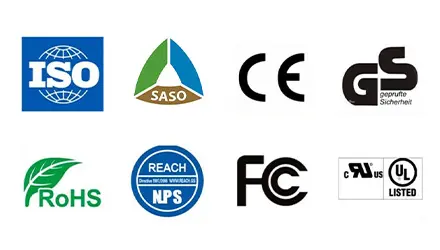
A small manufacturer of electric two-wheeler turn signals spent 6 months preparing to launch in Europe—only to have 1,000 units held at customs. The issue? Their product lacked module compliance for CE certification—a detail they missed because they assumed “CE” was a single, one-and-done test. By the time they fixed the issue and re-shipped, their competitor had captured 30% of their target market, and they’d lost $18,000 in storage and rework fees.
For small-to-mid B2B manufacturers, cross-border sales feel like a catch-22: you need to expand to grow, but compliance with foreign standards (CE, FDA, RoHS) feels impossible without hiring expensive consultants or lawyers. A 2024 survey of 150 small B2B exporters found that 52% delayed international launches by 3+ months due to compliance confusion, and 28% abandoned markets entirely after learning about “hidden” compliance costs.
The myth that “cross-border compliance is only for large enterprises” keeps small manufacturers stuck. The reality is: you don’t need a $50,000 compliance team. What you need is a simplified, priority-based approach that focuses on the rules that actually matter for your product and market—ignoring the red tape that doesn’t.
With 13 years of helping small-to-mid B2B manufacturers (from electric two-wheeler parts to portable medical tools) navigate cross-border compliance, we’ve identified 3 core pain points—and how to solve them without overcomplicating things. This guide breaks down practical strategies for prioritizing standards, using free/low-cost tools, and avoiding common pitfalls, with plain-language explanations of terms like “module compliance” and “RoHS restriction thresholds” — so you can expand to new markets without losing sleep (or money).
Why Small-to-Mid B2B Manufacturers Struggle With Cross-Border Compliance
Compliance isn’t hard because the rules are too complex—it’s hard because small teams get overwhelmed by “all or nothing” thinking. Here are the 3 most common mistakes we see:
Mistake 1: Trying to Comply With “Everything” at Once
Large enterprises can afford to comply with every niche standard for a market (e.g., every CE directive for electric vehicles). But small manufacturers waste time and money chasing standards that don’t apply to their product.
For example, a small maker of solar lantern speakers wanted to sell in the EU. They hired a consultant who told them to comply with 5 CE directives—including one for “industrial machinery” (which didn’t apply to their consumer-facing lanterns). They spent $12,000 on tests they didn’t need, delaying their launch by 2 months.
The fix? They only needed to comply with 2 core directives: EMC (Electromagnetic Compatibility) (to ensure the speaker doesn’t interfere with other devices) and LVD (Low Voltage Directive) (to ensure it’s safe for 230V EU outlets). The other 3 directives were irrelevant—but they didn’t know that.
Mistake 2: Assuming Compliance Requires Third-Party Testing (Only)
Many small manufacturers think “compliance = paying a lab $5,000 to test every unit.” While some standards (like FDA for medical devices) require third-party validation, most allow self-declaration for low-risk products—if you can prove you’ve done basic testing in-house.
A client who builds electric two-wheeler wiring harnesses wanted to sell in the U.S. They thought they needed to pay a lab $3,000 for UL testing (a safety standard for electrical components). Instead, they learned they could self-declare compliance by:
- Testing samples for voltage resistance (using a $200 multimeter they already owned),
- Documenting the test process and results,
- Adding a UL “recognized component” label (their wire supplier already had UL certification for the wire itself).
They saved $2,800 and launched in the U.S. 3 weeks earlier.
Mistake 3: Ignoring “Post-Launch” Compliance Checks
Compliance isn’t a one-time box to check. Markets update standards regularly—for example, the EU added 4 new chemicals to RoHS (a restriction on hazardous substances) in 2023. Small manufacturers who don’t track these updates risk:
- Customs seizures,
- Recalls (costing $10,000+ in lost inventory),
- Fines (up to €10,000 in the EU for non-compliant products).
A small maker of portable medical tool cases learned this the hard way: they sold in the EU for 18 months before realizing RoHS had updated—their cases now contained a banned flame retardant. They had to recall 500 units, costing $9,000.
3 Simplified Compliance Strategies for Small-to-Mid B2B Manufacturers
You don’t need a law degree or a big budget. These 3 strategies focus on “what matters most” for your product and market—saving you time and money.
Strategy 1: Use “Market-Priority Mapping” to Focus on Core Standards
Not all markets or standards are equal. Start by ranking markets by their potential (e.g., “EU first, then Southeast Asia”) and then identify the 1–2 non-negotiable standards for each. This avoids the “analysis paralysis” of trying to learn every rule.
Below is a sample priority map for a small manufacturer of electric two-wheeler components:
| Target Market | Core Standards (Non-Negotiable) | Why These Matter | Low-Priority Standards (Ignore For Now) |
|---|---|---|---|
| EU (Germany, France) | 1. CE-EMC (no interference with other devices) 2. CE-LVD (safe for 230V) 3. RoHS (no hazardous substances) |
– EMC/LVD are mandatory for electrical products. – RoHS is required for all consumer/industrial goods. |
CE-WEEE (waste disposal) – only needed if you sell >10,000 units/year. |
| U.S. (California, Texas) | 1. FCC Part 15 (EMC for small electronics) 2. UL Recognition (for electrical components) |
– FCC is mandatory for products that emit radio waves (e.g., speakers with Bluetooth). – UL is requested by 80% of U.S. retailers. |
CPSIA (children’s product safety) – irrelevant for adult-focused electric two-wheelers. |
| Southeast Asia (Thailand, Vietnam) | 1. TISI (Thailand) / SNI (Indonesia) (local safety marks) 2. RoHS (adopted by most SEA countries) |
– TISI/SNI are mandatory for import clearance. – RoHS aligns with global buyers’ expectations. |
ISO 9001 (quality management) – not required for import, and most retailers don’t ask for it initially. |
How to Implement This:
- List 2–3 target markets (start small—don’t try to tackle 5 at once).
- For each, search “[Market] [Product Type] mandatory standards” (e.g., “EU electric two-wheeler speaker mandatory standards”). Use official government sites (e.g., EU’s EUR-Lex, U.S. FCC) – avoid third-party “compliance blogs” that overcomplicate things.
- Highlight the 1–2 standards that are “mandatory for import” – these are your priorities.
A client who builds solar lanterns used this map to focus on the EU first. They ignored WEEE (since they planned to sell <5,000 units in year 1) and saved 40 hours of research time. They launched in Germany 6 weeks earlier than planned.
Strategy 2: Leverage “Self-Declaration + Supplier Collaboration” to Cut Costs
For 70% of low-risk B2B products (e.g., speakers, wiring harnesses, plastic housings), you can use self-declaration for compliance—if you have proof of basic testing. Here’s how to do it without cutting corners:
Step 1: Do “Internal Basic Testing” for Low-Risk Standards
You don’t need a lab to test for standards like EMC or RoHS. Use tools you already own (or can buy cheaply) to validate key requirements:
| Standard | What You Need to Test | Tools to Use (Cost) | How to Document Results |
|---|---|---|---|
| CE-EMC | Does your product cause interference with other devices? | – Smartphone (to test for Bluetooth/Wi-Fi interference) – AM/FM radio (to test for signal disruption) – $200 multimeter (to check voltage spikes) |
Take photos of the test setup, log results (e.g., “No radio static when speaker is on”), and sign a “test report” (template available for free online). |
| RoHS | Does your product contain banned substances (e.g., lead, mercury)? | – Ask your material suppliers for “RoHS compliance certificates” (most will provide this for free). – For finished products: Use a $500 handheld XRF analyzer (rent one for $100/day if you don’t want to buy). |
Collect supplier certificates in a folder; log XRF results in a spreadsheet. |
| FCC Part 15 | Does your product emit excessive radio waves? | – Use a free FCC ID search (check if similar products have FCC approval—this gives you a “benchmark”). – Test in a quiet room: Turn on your product and see if it disrupts a nearby Wi-Fi signal (no disruption = pass for low-risk items). |
Document the FCC ID of similar products; take a video of the Wi-Fi test. |
Step 2: Collaborate With Suppliers for “Component-Level Compliance”
Your suppliers (e.g., wire makers, plastic molders) often already have compliance certifications for their parts. Leverage this to reduce your workload:
- Ask your wire supplier for a UL certificate (if you need UL recognition for the U.S.).
- Ask your plastic supplier for a RoHS certificate (so you don’t have to test the plastic yourself).
- For speakers: Ask your magnet supplier for a “REACH compliance” document (REACH restricts chemicals in the EU).
A client who builds portable medical tool wiring harnesses saved $3,000 by using their wire supplier’s UL certificate—they didn’t need to test the wire themselves. They only had to test the finished harness for voltage resistance (using their existing multimeter).
Strategy 3: Use “Compliance Checklists” to Avoid Post-Launch Mistakes
Compliance updates (e.g., new RoHS substances, changed FCC rules) are easy to miss—but they don’t have to be. A simple checklist (updated quarterly) keeps you on track without extra work.
What to Include in Your Checklist:
-
Market-Specific Updates: Set a calendar reminder to check official sites quarterly (e.g., EUR-Lex for EU, FCC.gov for U.S.). For example:
- “Q1: Check if EU added new RoHS substances.”
- “Q3: Check if U.S. updated FCC Part 15 rules for small electronics.”
-
Inventory Audits: Every 6 months, audit 10% of your inventory to ensure it still meets standards. For example:
- “Test 10 speaker units for RoHS compliance (using XRF analyzer).”
- “Verify wire supplier’s UL certificate is still valid.”
-
Retailer Feedback: Ask your international retailers, “Have you seen any new compliance requirements from local authorities?” They’ll often share updates before they become public.
How We Help: We’ve created a free “Small B2B Cross-Border Compliance Checklist” tailored to common markets (EU, U.S., SEA) and products (electric two-wheeler parts, outdoor IoT components). It includes pre-filled calendar reminders, supplier communication templates, and links to official update pages—so you don’t have to start from scratch.
Why Our Compliance Support Works for Small-to-Mid B2B Manufacturers
We don’t sell “full compliance packages” (we know you can’t afford them). Instead, we provide simplified tools and guidance that fit your budget and team size:
- Market-Priority Mapping Template: A fill-in-the-blank Excel sheet that helps you rank markets and identify core standards—no research required.
- Self-Test Guide: Step-by-step instructions for testing EMC, RoHS, and FCC compliance using cheap tools—with photos of test setups.
- Supplier Communication Templates: Pre-written emails to ask suppliers for compliance certificates (e.g., “Hi [Supplier], could you share your latest RoHS certificate for the 18AWG wire we purchase?”).
We know small manufacturers wear many hats—you’re the CEO, engineer, and compliance manager. Our tools don’t add work—they make compliance feel manageable.
Final Thought: Cross-Border Compliance Isn’t a Barrier—It’s a Checklist
For small-to-mid B2B manufacturers, expanding to new markets doesn’t have to be scary. The key is to stop thinking of compliance as a “big, expensive project” and start thinking of it as a series of small, actionable steps: prioritize 1 market, focus on 1–2 standards, use self-testing, and leverage your suppliers.
You don’t need a large enterprise’s resources to sell internationally—you just need a plan that’s tailored to your size.
If you’re ready to expand to new markets but feel stuck on compliance—whether you make electric two-wheeler components, solar lantern parts, or portable medical tools—reach out to our team. We’ll share our free checklist and help you create a priority map for your first target market. Let’s turn compliance from a barrier into a bridge to growth.