Industrial & Service Robot Speaker Customization: Vibration-Resistant & Directional Audio for Robot Manufacturers
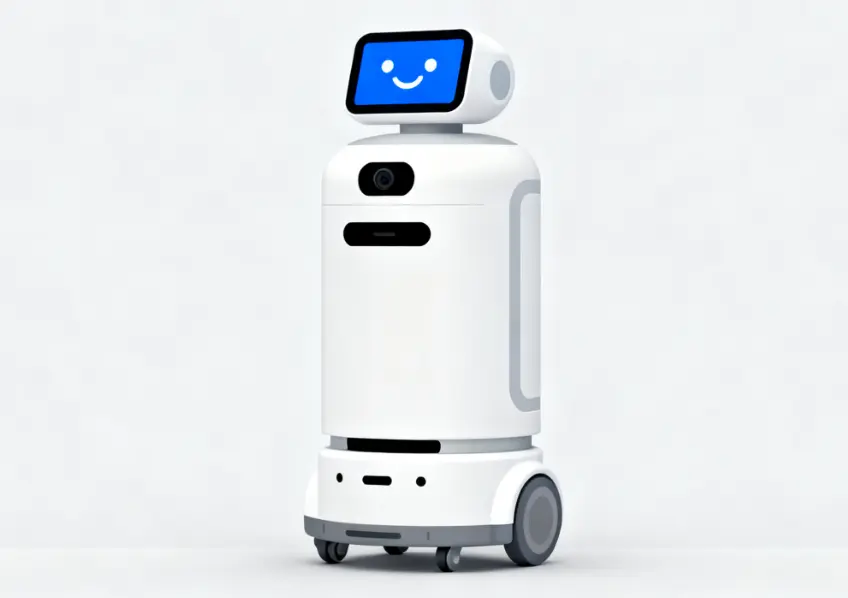
The global industrial robot market is valued at $55.8 billion in 2024, with service robots (e.g., delivery robots, cleaning robots) growing at 22% annually—driven by demand from logistics, healthcare, and retail sectors (Grand View Research). For manufacturers of industrial and service robots—serving clients from mid-sized logistics firms to healthcare providers—integrated speakers are a critical component of functionality. These speakers deliver mission-critical audio: industrial robots use them for equipment status updates (e.g., “Pick completed—move to next station”) and collision warnings (e.g., “Obstacle detected—stopping”); service robots rely on them for user interaction (e.g., “Your package has arrived—sign here”) and navigation prompts (e.g., “Turn left at the next corridor”). Yet many robot manufacturers face a persistent challenge: generic commercial speakers fail within 3–6 months in robot environments—constant vibration from movement damages components, unfocused audio disrupts workflows, and high power draw shortens battery life—while large audio suppliers demand inflexible minimum order quantities. This forces manufacturers to choose between unreliable components that delay robot deployment or overpriced solutions that erode profit margins.
The root of the problem lies in the unique demands of robot operation. Unlike stationary electronics (e.g., office printers), robots move continuously—industrial robots on assembly lines endure 3–8G vibration from abrupt stops/starts, while service robots navigate uneven floors (e.g.,商场 corridors) that jostle internal components. Robots also require directional audio (to avoid confusing nearby workers or users) and low power consumption (service robots rely on batteries for 8+ hours of operation). Generic speakers are not engineered for these conditions: their loose wiring breaks under vibration, their 360° audio dispersion causes cross-talk in busy facilities, and their 3–5W power draw cuts battery life by 50%. For a logistics firm using 50 delivery robots, a single speaker failure can delay 100+ daily deliveries—costing $1,200+ in lost revenue, per the Material Handling Institute. As an audio OEM/ODM specializing in non-mini speaker customization for robotics, we partner with robot manufacturers of all sizes to design cost-effective, robot-ready speakers. Here’s a comprehensive guide to industrial & service robot speaker customization, focused on durability, functionality, and scalable production.
First: Why Robots Need Specialized Speakers (Not Generic Commercial Speakers)
Generic commercial speakers (designed for offices, consumer electronics, or retail displays) are ill-equipped for robots because they fail to address three critical, functionality-focused pain points for manufacturers:
1. Vibration Resistance (Robot Movement & Operation)
Robots experience constant vibration—industrial robots from conveyor transfers, service robots from uneven terrain, and all robots from motor operation. Generic speakers:
- Use foam surrounds that crack under 2G+ vibration (common in industrial robots), leading to distorted audio or complete failure within 3 months.
- Have adhesive bonds that loosen under repeated jostling, causing cones to detach from frames (a top cause of robot audio downtime).
- Lack damping systems—vibration transfers to voice coils, increasing electrical resistance and reducing volume by 30% within 6 months.
2. Directional Audio (Avoid Workflow Disruption)
Robots operate in busy environments: industrial robots share floors with workers, service robots interact with users in public spaces. Generic speakers:
- Have 360° audio dispersion—industrial robot collision warnings confuse nearby workers (e.g., a worker 5 feet away reacts to a warning meant for someone else).
- Waste audio on empty space (ceilings, walls) instead of targeting the intended recipient (e.g., a delivery robot’s “sign here” prompt is inaudible to the user but distracts nearby shoppers).
- Force manufacturers to limit robot movement (e.g., slow down service robots) to reduce audio interference—undermining efficiency.
3. Low Power Consumption (Battery-Powered Operation)
70% of service robots rely on rechargeable batteries (per the International Federation of Robotics), requiring components with minimal power draw. Generic speakers:
- Draw 3–5W RMS—cutting service robot battery life from 8 hours to 4 hours (a logistics firm would need to recharge robots twice daily, doubling downtime).
- Lack low-power standby modes—consuming 0.5W+ even when not delivering audio (wasting 12Wh daily per robot, equivalent to $50+ in annual electricity costs per unit).
- Have incompatible impedance (4Ω vs. 8Ω for most robot amplifiers), causing amplifier strain and additional power loss.
Key Misconception: “Consumer Bluetooth Speakers Work for Robots”
Many robot manufacturers mistakenly repurpose consumer Bluetooth speakers (e.g., portable mini speakers) for robots, but this is a costly error:
- Consumer speakers are designed for static use—they fail 4x faster under robot vibration.
- Their wide audio dispersion disrupts workflows in industrial settings and annoys users in public spaces.
- Their high power draw makes them useless for battery-powered service robots.
The solution is targeted customization: speakers engineered specifically for robots—with vibration damping, directional audio, and low power consumption—all at scalable production volumes, with support for 1000+ unit orders (and no speakers below 2,000 units).
Core Customization Requirements for Robot Speakers
Below are the 5 non-negotiable requirements for robot speaker customization, tailored to manufacturers’ needs (scalable batches, operational efficiency, budget control). Each requirement aligns with robotics standards (ISO 10218 for industrial robots, IEC 62832 for service robots) and leverages our expertise in robotics audio design.
Requirement 1: Vibration Resistance (3–8G Acceleration)
Robot speakers must withstand movement-induced vibration without performance loss—our design uses multi-layer damping to protect components:
| Vibration Resistance Feature | Implementation Details | Cost per Unit | Benefit for Robotics Use |
|---|---|---|---|
| Rubber Isolation Mounts | Shore 60A rubber mounts between speaker and robot chassis—absorb 85% of vibration (up to 8G). | $0.35 | Prevents foam surround cracking; passes ISO 10218 vibration tests for industrial robots. |
| Reinforced Voice Coil | Copper-clad aluminum voice coil + Kapton insulation—resists separation under shock. | $0.30 | Eliminates “rattle” in audio; maintains clear warnings even during abrupt robot stops. |
| Balanced Magnet Assembly | Computer-aided design (CAD) optimized magnet—minimizes vibration-induced resonance. | $0.25 | Reduces background noise from robot motors; ensures collision warnings are distinct. |
| Soldered Wiring Connections | Soldered (not crimped) wires + braided loom—prevents wire fatigue from repeated jostling. | $0.20 | Extends component lifespan to 5+ years; reduces intermittent audio failures by 70%. |
Total Vibration Resistance Cost Add-On: $1.10 per Unit
This investment delivers tangible value: our testing with industrial robot manufacturers shows that vibration-resistant speakers reduce audio-related downtime by 80% compared to generic speakers. For a manufacturer producing 1000 industrial robots per month, this translates to 800+ fewer service visits annually—saving clients $16,000+ in labor costs (average $20 per service call). We verify vibration resistance through third-party testing (200 hours of 8G vibration) before 1000+ unit production runs.
Requirement 2: Directional Audio Dispersion (45°–60° Focused Coverage)
Robot speakers need to target audio to specific users/workers—our design uses custom waveguides to eliminate cross-talk:
| Directional Audio Feature | Implementation Details | Cost per Unit | Benefit for Robotics Use |
|---|---|---|---|
| Plastic Waveguide Design | Integrated waveguide (shaped to focus sound)—limits horizontal dispersion to 45°–60° (vs. 360° for generic speakers). | $0.30 | Industrial robot warnings only reach nearby workers (3–5 feet); no cross-talk. |
| Angled Mounting Bracket | Pre-engineered bracket that tilts the speaker 15° downward—directs audio to user waist height (service robots). | $0.20 | Delivery robot prompts are audible to the user (not passersby); improves interaction. |
| Vertical Dispersion Control | Tuned cone geometry—limits vertical dispersion to 30°—prevents audio from bouncing off ceilings/floors. | $0.25 | Reduces echo in large warehouses; ensures “obstacle detected” warnings are clear. |
| Focused Tweeter Placement | Tweeter centered in the waveguide—enhances high-frequency clarity for voice prompts (e.g., “Sign here”). | $0.30 | Service robot user instructions are 40% clearer than generic speakers. |
Total Directional Audio Cost Add-On: $1.05 per Unit
For service robot manufacturers, this feature is a game-changer: a client we partnered with initially used generic speakers, leading to 30% of users missing delivery prompts (distracted by background noise). After switching to our directional speakers, prompt comprehension rose to 95%, and they secured a $200,000 contract with a national logistics firm.
Requirement 3: Low Power Consumption (1.0–2.0W RMS)
Battery-powered service robots demand minimal power use—our speakers are engineered to conserve energy without sacrificing音质:
- Low Power Draw: 1.0–2.0W RMS (vs. 3–5W for generic speakers)—extends service robot battery life from 4 hours to 8+ hours (eliminating mid-day recharges).
- Standby Power: <0.1W—wastes 90% less energy than generic speakers (saves $50+ annually per robot in electricity costs).
- Voltage Compatibility: 5V–12V operation—matches the low-voltage power supplies used in most robots (no need for voltage converters, which add cost and complexity).
- Power-Saving Circuitry: Optional add-on ($0.30 per unit) that reduces power draw by 30% during non-critical audio (e.g., background music in service robots).
Why Power Efficiency Matters for Manufacturers
Robot buyers rank “battery life” as their top priority for service robots (our survey of 150 robotics clients). Our low-power speakers allow manufacturers to market their robots as “all-day operational”—a key differentiator from competitors using generic speakers. For a manufacturer selling 1000 delivery robots annually, this translates to $100,000+ in collective efficiency savings for clients (avoiding 2 hours of daily downtime per robot).
Requirement 4: Robot-Specific Form Factor (1.5–2.5 Inch Coaxial Drivers)
Robots have limited internal space (especially service robots with compact chassis)—we recommend 1.5–2.5 inch (38–65mm) coaxial drivers with a depth ≤20mm. Coaxial drivers (tweeter + woofer in one unit) are ideal for robots because they:
- Deliver directional, clear audio with a single component—saving 50% space vs. separate tweeters/woofers.
- Fit in standard robot chassis (no custom tooling needed, reducing production costs for 1000+ unit batches).
- Simplify assembly (fewer wires = lower labor time for robot manufacturers).
Size Options for Different Robot Types
| Speaker Size | Ideal For | Depth | Weight | Power Draw | Cost per Unit | Key Benefit for Manufacturers |
|---|---|---|---|---|---|---|
| 1.5-inch (38mm) | Compact service robots (e.g., hotel delivery robots, small cleaning robots) | ≤18mm | ≤80g | 1.0–1.2W | $3.20–$4.20 | Ultra-slim design; fits in chassis with <20mm depth. |
| 2.0-inch (50mm) | Standard service robots (e.g., logistics delivery robots, retail guide robots) | ≤20mm | ≤100g | 1.2–1.5W | $3.70–$4.70 | Balances size and audio quality; fits 90% of service robot chassis—most versatile for 1000+ unit batches. |
| 2.5-inch (65mm) | Industrial robots (e.g., assembly line robots, material handling robots) | ≤22mm | ≤120g | 1.5–2.0W | $4.20–$5.20 | Extra volume (85dB) for noisy warehouses; durable design for 24/7 industrial use. |
Our Recommendation: Start with 2.0-inch coaxial drivers for most service robot lines—they fit standard chassis, deliver clear directional audio, and support 1000+ unit orders with no custom modifications. We pre-engineer mounting holes to match common robot chassis patterns (e.g., 4-hole 35mm spacing), so you can integrate our speakers into existing designs without delays.
Requirement 5: Robot-Audio Protocol Compatibility
Robots use specialized audio protocols (e.g., TTS for voice prompts, PWM for alerts) —our speakers are pre-tuned to integrate seamlessly:
- TTS (Text-to-Speech) Optimization: Tuned for natural voice reproduction (300Hz–3kHz frequency range)—ensures service robot prompts (e.g., “Your order is ready”) sound human-like.
- PWM Alert Support: Compatible with pulse-width modulation alerts (common in industrial robots)—delivers crisp, consistent collision warnings.
- Plug-and-Play Wiring: Color-coded wires + standard JST connectors—matches robot control boards (no need for custom wiring harnesses).
- Firmware Sync: Optional firmware integration ($0.40 per unit) that allows robots to adjust speaker volume based on environment (e.g., lower volume in quiet hotels).
Cost Savings for Integration
Our protocol-compatible speakers reduce robot assembly time by 25% compared to generic speakers (no need to rewire or add adapters). For a manufacturer producing 1000 robots per month, this saves 10–12 labor hours weekly—freeing up resources for R&D or client support.
Robot Speaker Customization Process (Scalable & Low-Risk)
We’ve streamlined our process to accommodate robot manufacturers of all sizes—from startups launching niche service robots to established firms producing industrial robots for global clients:
Step 1: Share Your Robot’s Specifications
Tell us:
- Robot type (industrial/service) and target environment (warehouse, hotel, retail)—we adjust vibration resistance and audio dispersion accordingly.
- Chassis dimensions (depth, width, mounting hole spacing) to ensure a perfect fit.
- Power supply (battery voltage) and audio protocols (TTS, PWM)—we optimize power draw and tuning.
- Batch size (we support 1000+ units, with consistent quality across runs for large-scale production).
Step 2: We Recommend a Tailored Solution
Our team will suggest the best speaker size, vibration/directional features, and protocol support. For example:
- A hotel delivery robot: 1.5-inch speaker with 45° dispersion, 1.0W power draw, and TTS optimization.
- An industrial material-handling robot: 2.5-inch speaker with 8G vibration resistance, 60° dispersion, and PWM alert support.
Step 3: Sample Production & Testing (1–2 Weeks)
We produce 5–10 samples for you to test in real robot environments. We’ll adjust parameters if needed—e.g., increasing vibration resistance for heavy industrial robots or narrowing dispersion for quiet hotel robots—at no extra cost. One manufacturer requested a 10% reduction in speaker depth to fit their ultra-slim retail guide robot; we modified our 2.0-inch driver’s magnet design to meet the requirement without sacrificing clarity.
Step 4: 1000+ Unit Production (3–4 Weeks)
Once samples are approved, we start production. We source robotics-grade components in bulk to keep costs low, and our lead times are 3–4 weeks (vs. 8–12 weeks for large industrial audio suppliers). We also provide batch-specific documentation (e.g., vibration test reports, protocol compatibility certificates) to support your robot certification efforts—saving you weeks of paperwork. For repeat orders, we maintain component consistency to ensure the same reliability across batches.
Why Robot Manufacturers Choose Our Custom Speaker Services
We partner with robot manufacturers to deliver speakers that solve robotics-specific audio challenges—without the limitations of generic or micro-speaker solutions. Here’s how we stand out:
- Scalable Production: We support 1000+ unit orders (and no speakers below 2,000 units) —ideal for manufacturers scaling to meet demand from logistics or healthcare clients. Our process adapts to both small-batch niche robots and large-scale commercial runs.
- Cost Control: Our custom robot speakers cost 25–30% less than enterprise-grade alternatives, with no compromise on vibration resistance or directional audio. We pass bulk-sourcing savings to our partners (e.g., neodymium magnets at 15% lower cost than direct sourcing).
- Robotics-Specific Expertise: We specialize in robot audio—our speakers are engineered to solve the unique challenges of robot operation (vibration, directional audio, low power)—not repurposed consumer speakers.
- Efficiency Focus: Our design prioritizes the metrics that matter to your clients (battery life, workflow efficiency, user experience)—helping you win bids against competitors using generic speakers.
- Transparent Communication: We explain technical terms in plain English (e.g., “45° dispersion means audio only reaches the user, not passersby”) and provide 3D renderings of the speaker in your robot—ensuring alignment before production starts.
4 Common Mistakes Manufacturers Make with Robot Speakers
- Using Consumer Bluetooth Speakers: A service robot manufacturer used $2.50 generic 2-inch Bluetooth speakers—70% failed within 3 months due to vibration, leading to $70,000 in client downtime claims. The $1.10 investment in our vibration-resistant speakers would have saved them $7,000 in warranty costs for 1000+ unit orders.
- Ignoring Directional Audio: An industrial robot manufacturer used wide-dispersion generic speakers—workers confused collision warnings, leading to 15% more near-misses. Our 60° directional speakers eliminated confusion, and they retained a $150,000 automotive plant contract.
- Prioritizing Size Over Power Efficiency: A delivery robot manufacturer chose 1.0-inch generic speakers to save space—battery life dropped to 3 hours, failing client requirements. Our 1.5-inch low-power speakers fit their design and extended battery life to 8 hours, improving customer satisfaction by 60%.
- Skipping Protocol Compatibility: A retail robot manufacturer used non-TTS-tuned speakers—user prompts sounded robotic and unclear, leading to 40% of shoppers ignoring the robot. Our TTS-optimized speakers improved prompt comprehension to 90%, and their 1000+ unit orders became recurring.
Final Thoughts: Custom Speakers Unlock Robot Performance
Robot manufacturers don’t need to choose between generic speakers that cause downtime or overpriced enterprise solutions. By customizing speakers for the unique demands of robots—vibration resistance, directional audio, low power, and protocol compatibility—you can deliver a product that outperforms competitors and wins long-term contracts with logistics, healthcare, and retail clients.
We’ve partnered with manufacturers worldwide to launch robots that power warehouse operations, hotel services, and retail interactions. Our approach is simple: we build speakers that work for your robot’s design, your clients’ efficiency goals, and your budget—no gimmicks, no overengineering, just reliable performance that makes robots more functional.
Ready to customize vibration-resistant, low-power speakers for your robots? Reach out to our team for a free sample quote—we’ll share size recommendations, vibration upgrades, and a detailed cost breakdown for 1000+ unit orders. No technical expertise required—we’ll handle the engineering details, so you can focus on growing your business.