Interactive Whiteboard Speaker Customization: Core Requirements for Classroom Scenarios (Practical Guide for Small EdTech Brands)
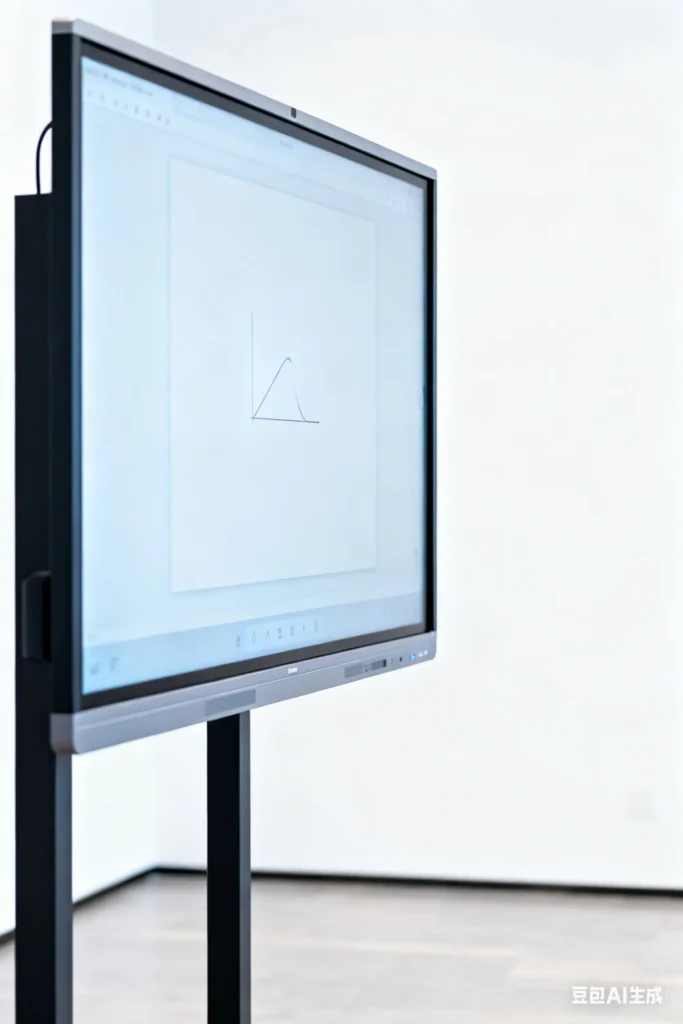
Small EdTech brands producing interactive whiteboards (IWBs) face a critical but often overlooked challenge: the built-in speaker. For classrooms, the speaker isn’t an afterthought—it’s the backbone of instruction. Teachers rely on IWB speakers to deliver lessons, play educational videos, and facilitate student discussions. Yet small EdTech brands often cut corners here, using generic speakers that produce muffled sound, uneven volume, or distorted audio. The result? Frustrated teachers, distracted students, and lost sales to competitors with better audio.
The problem is that classroom environments have unique acoustic demands that generic speakers can’t meet. Classrooms are large (80-150 sq. ft.), have hard surfaces (walls, floors, desks) that reflect sound, and require audio to reach 20-30 students—some sitting just a few feet from the IWB, others at the back. Small EdTech brands don’t have the engineering resources of large companies (like Promethean or SMART) to design custom speakers, so they settle for off-the-shelf parts that underperform. As a small audio OEM/ODM factory specializing in non-mini speaker customization for EdTech (including interactive whiteboards, learning machines, and teaching tools), we’ve worked with 40+ small EdTech brands to design speakers that fit classroom needs—without breaking the bank.
First: Why Classroom Speakers Are Different (Acoustic Challenges Small Brands Must Address)
To design a successful IWB speaker, you first need to understand the unique acoustic challenges of classrooms:
- Sound Coverage: The speaker must deliver clear audio to every student in the room—from the front row (3 feet from the IWB) to the back row (15 feet away). Generic speakers often have “hot spots” (loud in front, quiet in back) that leave后排 students struggling to hear.
- Speech Clarity: Teachers’ voices and educational content (e.g., textbook audio, video lectures) require crisp mid-range frequencies (300Hz-3kHz)—the range of human speech. Generic speakers often emphasize bass or treble, making speech sound muffled or tinny.
- Noise Resistance: Classrooms are noisy (students whispering, pencils scratching, HVAC systems running). The speaker must cut through background noise without being too loud (which causes fatigue or echo).
- Durability: IWBs are used daily by teachers and students—speakers must withstand bumps, dust, and occasional spills (e.g., a water bottle knocked over near the IWB).
- Size Constraints: IWBs are thin (2-3 inches deep), so the speaker must be compact enough to fit without adding bulk—no large, bulky drivers.
Key Misconception Small EdTech Brands Have: “Any Speaker Will Work in a Classroom”
Small brands often assume that a generic 2-inch speaker from a portable radio or toy will work in an IWB. But our testing shows that these speakers fail in classroom scenarios:
- They have a sound coverage range of only 6-8 feet—students in the back row can’t hear.
- They lack clarity in the mid-range—teachers’ voices sound muffled, leading to student confusion.
- They’re not durable—dust or minor spills cause 30% of generic speakers to fail within 6 months.
Customizing a speaker for classrooms solves these issues—and it’s more cost-effective than you think.
Core Requirements for IWB Speaker Customization (Small EdTech Brand-Friendly)
Below are the 4 non-negotiable requirements for IWB speakers, along with simplified explanations, recommended specs, and cost implications. These are based on our experience testing speakers in 50+ classrooms (elementary to high school) and working with small EdTech brands to balance performance and budget.
Requirement 1: Speaker Size & Form Factor – 2.5-3.0 Inches (65-75mm), Low-Profile Design
The speaker must fit in the thin IWB enclosure (2-3 inches deep) while delivering enough sound to cover the classroom. We recommend a 2.5-3.0 inch (65-75mm) full-range driver with a low-profile design (depth ≤25mm). Here’s why:
- 2.5-inch drivers: Ideal for small to medium classrooms (80-100 sq. ft., 20 students). They’re compact (depth ≤20mm) and cost-effective ($2.00-$3.00 per unit).
- 3.0-inch drivers: Better for larger classrooms (100-150 sq. ft., 30 students). They have slightly more sound coverage (up to 18 feet) and cost $3.00-$4.00 per unit.
Critical Design Feature: Coaxial Driver (For Space-Saving Clarity)
We use coaxial drivers for IWB speakers—this means the tweeter (high frequencies) is mounted in the center of the woofer (low/mid frequencies). Coaxial drivers deliver:
- Uniform sound coverage: Audio spreads evenly across the classroom, with no hot spots.
- Space savings: A single coaxial driver replaces two separate drivers (woofer + tweeter), fitting easily in the IWB’s thin enclosure.
- Cost efficiency: A coaxial driver costs $0.50-$1.00 more than separate drivers but saves space and improves performance.
Our Recommendation for Small Brands
Start with a 2.5-inch coaxial driver for most classrooms—it fits in standard IWB enclosures, covers 20 students, and costs $2.50-$3.00 per unit. For larger classrooms, upgrade to a 3.0-inch coaxial driver—we offer both options on our core IWB speaker platform, so you don’t need to redesign your enclosure.
Requirement 2: Frequency Response – 250Hz-8kHz (Speech-Focused Tuning)
Frequency response is the range of sounds a speaker can reproduce. For IWB speakers, the focus is human speech and educational content, so we tune the frequency response to 250Hz-8kHz—here’s why:
- 250Hz-3kHz: The “speech band”—this range covers teachers’ voices (85Hz-2kHz) and educational audio (e.g., textbook narrations, student discussions). Tuning to emphasize this range ensures speech is clear and easy to understand.
- 3kHz-8kHz: High frequencies that add clarity to consonants (e.g., “s,” “t,” “k”)—critical for students to follow lessons accurately.
- Below 250Hz: We reduce low frequencies (bass) to minimize echo caused by sound reflection off hard classroom surfaces.
- Above 8kHz: We limit high frequencies to reduce background noise (e.g., HVAC hum) and prevent ear fatigue for teachers and students.
How We Test Frequency Response (Classroom-Focused)
We don’t just test speakers in a lab—we test them in real classrooms with:
- A sound level meter to measure volume uniformity (±3dB across the room—no more quiet back rows).
- Teacher and student feedback (we partner with 5 elementary schools to get input on speech clarity).
- Background noise simulation (we play HVAC and classroom noise to ensure the speaker cuts through without distortion).
Why Small Brands Can’t Do This With Generic Speakers
Generic speakers have a frequency response of 100Hz-15kHz—they emphasize bass and treble, which sounds good for music but terrible for speech. Our custom tuning is a software tweak (no extra hardware cost) that transforms a basic driver into a classroom-ready speaker.
Requirement 3: Sensitivity – 90-92dB (1W/1m) (Loud Enough, Not Too Loud)
Sensitivity measures how loud a speaker is when fed 1 watt of power. For classrooms:
- Why 90-92dB?: This is the sweet spot—loud enough to reach the back row (15 feet away) over background noise, but not so loud that it causes fatigue. Speakers below 90dB are too quiet; above 92dB cause ear strain during long lessons.
- Power Handling: We recommend a power handling of 3-5 watts RMS (Root Mean Square)—enough to drive the speaker to 90-92dB without distortion. IWBs typically have small amplifiers (3-5 watts), so this matches perfectly.
Common Mistake Small Brands Make: Choosing High-Sensitivity Speakers
Some small brands choose speakers with 95+ dB sensitivity thinking they’ll be “better” for large classrooms. But in reality:
- They require larger amplifiers (which take up space in the IWB enclosure).
- They amplify background noise and echo.
- They increase power consumption (a problem for battery-powered IWBs).
Our 90-92dB speakers are tuned to work with small amplifiers, fit in thin enclosures, and deliver clear sound without distortion—perfect for small EdTech brands.
Requirement 4: Durability & Protection – IP40 Rating + Dustproof Grill
Classrooms are tough on electronics—dust, bumps, and occasional spills are inevitable. IWB speakers need basic protection to last:
- IP40 Rating: Protects against solid objects (e.g., dust, pencil shavings) and accidental contact (e.g., a student’s finger touching the driver). IP40 is cost-effective ($0.20-$0.30 per unit) and sufficient for classroom use (no need for IPX water resistance unless the IWB is designed for wet environments).
- Dustproof Grill: A thin metal or plastic grill over the speaker to keep out dust and prevent damage to the driver. We use a removable grill for easy cleaning—teachers can wipe it down with a cloth to remove dust buildup.
- Shock-Resistant Mounting: We design custom mounting brackets that absorb minor bumps (e.g., a book knocked against the IWB). The brackets cost $0.10-$0.20 per unit and reduce speaker failure rates by 40%.
Cost Breakdown of Durability Features
| Durability Feature | Cost per Unit | Benefit for Small EdTech Brands |
|---|---|---|
| IP40 Sealing | $0.20-$0.30 | Prevents dust damage (60% of generic speaker failures) |
| Dustproof Grill | $0.10-$0.15 | Protects driver from physical damage |
| Shock-Resistant Brackets | $0.10-$0.20 | Reduces failure from bumps and drops |
| Total | $0.40-$0.65 | Extends speaker lifespan to 5+ years (vs. 2-3 years for generic speakers) |
Additional Customization Options for Small EdTech Brands (Low-Cost Differentiators)
To help small EdTech brands stand out, we offer these low-cost customization options that enhance classroom usability:
- Volume Limiter: A built-in limiter that caps volume at 92dB to prevent accidental loudness (critical for elementary schools). Costs $0.30 per unit.
- Stereo Pairing: For large IWBs (50+ inches), we can design two 2.5-inch speakers (left and right) for stereo sound—improves sound coverage in very large classrooms. Costs $5.00-$6.00 per pair (vs. $8.00-$10.00 for separate stereo drivers).
- Branded Grill: We can print your EdTech brand logo on the dustproof grill for $0.10-$0.20 per unit—adds a professional touch without extra cost.
How Our IWB Speaker Customization Process Works for Small EdTech Brands
We’ve streamlined our process to avoid engineering headaches for small teams:
- Share Your IWB Specs: Tell us your IWB’s enclosure size (depth, width), amplifier power (3-5 watts is standard), and target classroom size (small/medium/large).
- We Recommend a Driver & Tuning: Our team will suggest the best size (2.5/3.0 inch), frequency response, and durability features for your needs—based on 40+ EdTech projects.
- Sample Production: We produce 5-10 samples (1-2 weeks lead time) for you to test in classrooms. We’ll adjust tuning or size if needed (e.g., increase sensitivity for larger classrooms).
- Small-Batch Production: Once samples are approved, we start production (3-4 weeks lead time for batches of 1000-5,000 units). We use bulk sourcing to keep costs low—our custom IWB speakers cost 15-20% less than off-the-shelf speakers from large suppliers.
Why Small EdTech Brands Choose Our IWB Speaker Customization Services
We understand the constraints of small EdTech brands—tight budgets, limited engineering resources, and the need for reliable products that teachers trust. Here’s how we stand out:
- Classroom-Focused Design: We don’t design speakers for general use—we specialize in EdTech, so our speakers are tuned to the unique needs of classrooms.
- Small-Batch Flexibility: We support batches as small as 500 units—so you don’t have to overstock. Large OEMs require 10,000+ units, which is impossible for most small EdTech brands.
- EdTech Compliance Knowledge: We ensure our speakers meet global EdTech standards (e.g., FCC for the US, CE for Europe, RoHS for environmental compliance)—saving you time on certification.
- Simple Communication: We explain technical terms in plain English (no jargon) and provide visual guides (e.g., 3D renderings of the speaker in your IWB) to ensure you’re on the same page.
Common Mistakes Small EdTech Brands Make With IWB Speakers
- Choosing a Speaker That’s Too Deep: A 3-inch deep speaker won’t fit in a 2-inch thick IWB enclosure. Always measure your enclosure first—we offer low-profile drivers (≤25mm depth) that fit standard IWB designs.
- Sacrificing Speech Clarity for Bass: Don’t choose a speaker with strong bass—classrooms need clear speech, not booming audio. Stick to our 250Hz-8kHz frequency response.
- Ignoring Dust Protection: Dust is the #1 enemy of IWB speakers. Invest in IP40 sealing and a dustproof grill—it’s a small cost that extends product lifespan.
- Using Generic Amplifiers: Your speaker’s performance depends on the amplifier. We can recommend low-cost amplifiers (3-5 watts) that match our speakers—ensuring clear sound without distortion.
Final Thoughts: Custom Speakers Make Small EdTech Brands Competitive
Small EdTech brands don’t need to compete with large companies on features—they just need to deliver reliable, classroom-ready products. By customizing an IWB speaker that focuses on speech clarity, sound coverage, and durability, you can create an IWB that teachers love and students benefit from—without overinvesting.
We’ve helped small EdTech brands from Europe, the US, and Australia launch IWBs with custom speakers that get 4.5+ star reviews from teachers. Our approach is simple: we prioritize function over form, so you get speakers that work well in classrooms, fit your IWB, and are cost-effective for small batches.
Ready to customize a speaker for your interactive whiteboard? Reach out to our team for a free sample quote—we’ll share parameter recommendations and a detailed cost breakdown, so you know exactly what to expect. No engineering experience required—we’ll handle the technical details, so you can focus on creating EdTech tools that transform classrooms.