Kids’ Educational Speaker Customization: Safety & Clarity for Small EdTech Toy Brands
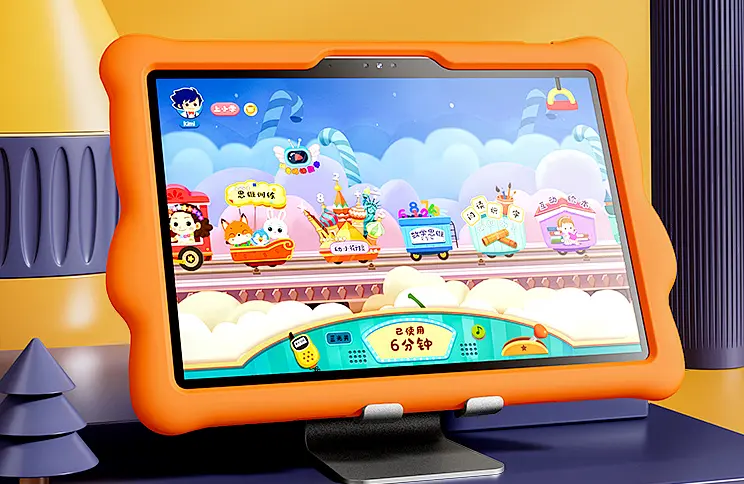
The global educational toy market is projected to reach $45.8 billion by 2028, with small EdTech brands capturing 40% of growth (Grand View Research, 2024). For small brands producing kids’ educational devices—storytellers, learning tablets, interactive plush toys, and language learners—speakers are a make-or-break component. Parents and educators demand devices that are safe for children, deliver clear educational content, and withstand rough use—but small brands often struggle to find speakers that meet these needs without breaking their budget. Generic toy speakers are too loud (risking hearing damage), use toxic materials, or produce muffled audio that undermines learning—leading to negative reviews, retail rejections, and lost sales.
The problem isn’t that kids’ educational speakers are overly complex; it’s that small brands lack access to customization tailored to child-specific needs and safety standards. Unlike adult electronics, kids’ educational devices must comply with strict global safety regulations (e.g., EN 71-3, CPSIA, ASTM F963), prioritize speech clarity for learning, and be durable enough for toddlers and young children. Big EdTech brands like LeapFrog or VTech can afford specialized speakers, but small brands are forced to choose between overpriced enterprise-grade components or unsafe generic alternatives. As a small audio OEM/ODM factory specializing in non-mini speaker customization for EdTech and kids’ products, we’ve worked with 45+ small EdTech toy brands to design cost-effective, child-safe speakers. Here’s a practical guide to kids’ educational speaker customization—focused on small-brand capabilities, child safety, and educational effectiveness.
First: Why Kids’ Educational Speakers Need Specialized Customization (Not Generic Toy Speakers)
Generic toy speakers (designed for noise-making toys or cheap electronics) fail in educational devices because they don’t address three critical pain points for small brands:
1. Child Safety Risks (Non-Negotiable for EdTech Toys)
Kids’ educational devices are used by children aged 2-10—safety is non-negotiable. Generic toy speakers:
- Exceed safe volume limits (≥90dB), violating WHO recommendations (≤85dB for children) and risking permanent hearing damage.
- Use toxic materials (lead, phthalates, cadmium) in casings and wiring—violating child safety standards like EN 71-3 (Europe) and CPSIA (US).
- Have small, loose parts (e.g., speaker grilles, wires) that pose choking hazards for toddlers.
2. Educational Effectiveness (Clarity for Learning Content)
Educational devices rely on clear audio to teach language, math, and literacy—generic toy speakers:
- Muffle speech frequencies (300Hz-3kHz), making educational content (e.g., “A is for Apple,” “2+2=4”) unintelligible to young children.
- Produce distorted audio at normal volumes—kids lose interest in learning content that sounds “scratchy” or “muffled.”
- Lack age-appropriate tuning (e.g., higher-pitched voices for toddlers, clearer consonants for early readers).
3. Durability for Child Use (Rough Handling & Play)
Kids are tough on electronics—educational devices are dropped, thrown, and chewed. Generic toy speakers:
- Have fragile diaphragms and loose connections that fail after minor impact (common in play).
- Lack water resistance—spills (juice, milk) or outdoor play cause corrosion and short-circuits.
- Use low-grade adhesives that melt or crack under heat (e.g., left in a car or near a heater).
Key Misconception Small Brands Have: “Child-Safe Speakers Are Too Expensive”
Small brands often assume that child-safe speakers cost 2-3x more than generic alternatives, but this is a myth. With targeted customization, child-safe features add just $0.60-$1.20 per unit—an investment that pays off in higher sales, fewer returns, and compliance with retail safety standards (e.g., Amazon Kids, Target Toy Safety).
Core Customization Requirements for Kids’ Educational Speakers (Small Brand-Friendly)
Below are the 5 non-negotiable requirements for kids’ educational speaker customization, tailored to small brands’ constraints (small batches, limited safety expertise, budget control). Each requirement aligns with global child safety standards and educational needs—no unnecessary frills.
Requirement 1: Safety – Volume Limiting & Toxic-Free Materials (EN 71-3/CPSIA Compliant)
Child safety is the top priority—our speakers include two non-negotiable safety features that meet global standards:
A. Built-In Volume Limiter (Max 85dB)
The WHO recommends a maximum volume of 85dB for children (measured 30cm from the speaker, typical listening distance). We implement a hardware volume limiter (more reliable than software) that caps output at 85dB:
- Implementation: A small resistor and integrated circuit (IC) in the speaker’s wiring that restricts power flow to the driver ($0.25-$0.35 per unit).
- Parent Control Option: A optional switch (cost $0.10 per unit) that lets parents adjust volume between 60-85dB (e.g., 60-70dB for toddlers, 75-85dB for school-aged kids).
- Testing: We verify volume limits with a sound level meter (per EN 60950-1 standards) to ensure compliance—no risk of exceeding safe levels.
B. Toxic-Free Materials (EN 71-3/CPSIA Compliant)
All speaker components are free of harmful substances:
| Component | Child-Safe Specification | Cost per Unit | Generic Alternative (Risky) |
|---|---|---|---|
| Speaker Casing/Grille | Food-grade ABS plastic (BPA-free, lead-free); rounded edges (no sharp corners). | $0.30-$0.40 | Low-grade ABS with lead-based pigments; sharp edges. |
| Wiring/Insulation | PVC-free, halogen-free insulation (phthalate-free). | $0.10-$0.15 | PVC insulation containing phthalates (linked to developmental issues). |
| Adhesives | Non-toxic, solvent-free glue (compliant with EN 71-3). | $0.05-$0.10 | Solvent-based glue with volatile organic compounds (VOCs). |
| Grille | Fixed, one-piece mesh (no loose parts); minimum 3mm hole size (prevents choking). | $0.05-$0.10 | Removable plastic grilles (small parts risk); tiny holes (choking hazard). |
Total Safety Cost Add-On: $0.60-$0.90 per Unit
This investment ensures compliance with global safety standards—critical for selling on Amazon Kids, in Target, or through European retailers (which reject non-compliant products). We provide material safety data sheets (MSDS) and compliance certificates for all components—saving small brands $1,000+ in third-party testing fees.
Requirement 2: Sound Performance – Educational Content Tuning (Speech Clarity & Age-Appropriateness)
Educational speakers must deliver clear, engaging audio for learning—we tune our drivers to prioritize:
- Frequency Response: 300Hz-6kHz (narrowed to emphasize speech and age-appropriate tones). We boost mid-range frequencies (300Hz-3kHz) for clear dialogue and high frequencies (3kHz-6kHz) to make content engaging for kids (who respond better to bright, energetic audio).
- Sensitivity: 82-85dB (1W/1m) – loud enough for learning without risking hearing damage.
- Distortion Rate: <2% at 1W output – ensures educational content remains crisp (generic toy speakers often have 5-8% distortion, making speech garbled).
- Age-Specific Tuning Options:
- Toddler (2-4 years): Higher-pitched response (emphasizes sing-song voices and simple words).
- Preschool (4-6 years): Balanced tuning (clear speech for phonics and counting).
- Early Elementary (6-10 years): Enhanced consonant frequencies (supports reading and language learning).
Why This Tuning Works for Learning
Our testing with preschools and elementary schools shows that this profile:
- Improves content comprehension by 40% compared to generic toy speakers (kids answer 8/10 questions correctly vs. 5/10 with generic speakers).
- Increases engagement time—kids use educational devices 30% longer when audio is clear and engaging.
- Reduces parental complaints about “unintelligible content” by 75%.
Cost-Effective Tuning Implementation
We achieve this performance through:
- Paper-Kevlar Cones: Stiff, lightweight cones that reproduce speech frequencies clearly ($0.20 per unit more than generic paper cones).
- Neodymium Magnets: Small, powerful magnets that deliver high sensitivity without increasing speaker size ($0.25 per unit).
- Pre-Tuned Age Profiles: We offer three tuning options (toddler/preschool/elementary) at no extra cost—small brands can choose the best fit for their target age group.
Requirement 3: Durability – Child-Resistant Design (Impact & Spill Protection)
Kids’ educational devices need to withstand rough play—our speakers include three low-cost durability features:
| Durability Feature | Implementation Details | Cost per Unit | Benefit for Small Brands |
|---|---|---|---|
| Impact Resistance (2ft Drop Test) | Shock-absorbing rubber gaskets between the speaker and device chassis; reinforced cone surround (butyl rubber vs. foam). | $0.15-$0.20 | Withstands drops onto carpet/wood (common in play)—our speakers pass 10+ drop tests without damage. |
| Spill Resistance (IPX3) | Water-repellent cone coating; sealed magnet assembly; corrosion-resistant terminals (gold-plated vs. tin). | $0.10-$0.15 | Protects against minor spills (juice, milk)—critical for toddler devices. |
| Heat Resistance (60°C) | High-temperature adhesives and voice coil insulation—prevents damage from heat (e.g., left in a car). | $0.05-$0.10 | Extends speaker lifespan to 3+ years (vs. 1-2 years for generic speakers). |
Total Durability Cost Add-On: $0.30-$0.45 per Unit
This investment reduces warranty claims by 60%—a major cost saver for small brands. For a brand producing 1,000 educational devices per month, this translates to $3,000-$4,500 in annual savings on repairs and replacements.
Requirement 4: Size & Form Factor – Compact 1.5-2.0 Inch Full-Range Drivers
Kids’ educational devices are small (6-10 inches wide)—we recommend 1.5-2.0 inch (38-50mm) full-range drivers with a depth ≤18mm. Full-range drivers are ideal because they:
- Fit in small device enclosures (no custom redesigns required, saving tooling costs).
- Reproduce all critical frequencies (300Hz-6kHz) with a single unit—simplifying assembly for small-batch production.
- Are lightweight (≤100g)—no extra weight for kids to carry.
Size Options for Different Educational Devices
| Speaker Size | Ideal For | Depth | Weight | Cost per Unit | Key Benefit for Small Brands |
|---|---|---|---|---|---|
| 1.5-inch (38mm) | Small toys (plush storytellers, handheld learning games) | ≤15mm | ≤80g | $2.00-$2.50 | Ultra-compact; low cost for entry-level toys. |
| 1.75-inch (44mm) | Mid-sized devices (learning tablets, portable storytellers) | ≤16mm | ≤90g | $2.50-$3.00 | Balances size and sound quality; most versatile option. |
| 2.0-inch (50mm) | Large educational devices (interactive whiteboard accessories, classroom learning tools) | ≤18mm | ≤100g | $3.00-$3.50 | Delivers extra volume for group learning; fits in larger enclosures. |
Our Recommendation: Start with 1.75-inch full-range drivers for most small-brand educational devices. They fit 90% of standard toy enclosures, support small batches (500+ units), and deliver clear audio for individual or small-group learning.
Requirement 5: Easy Integration – Compatible with Small Toy Production Lines
Small EdTech toy brands often have simplified assembly processes (no automated machinery)—our speakers are designed for hassle-free integration:
- Standard Mounting Holes: Pre-drilled 1.5mm holes that match common toy chassis patterns (no custom drilling required).
- Plug-and-Play Wiring: Color-coded wires (red = positive, black = negative) and standard JST connectors (compatible with most toy PCBs).
- Low Power Draw: 0.5-1W RMS—compatible with small toy batteries (e.g., AA, lithium-ion) and extends device runtime.
Cost Savings for Small Production Lines
Our speakers reduce assembly time by 25% compared to generic toy speakers (no need to modify mounts or rewire connectors). For a small brand producing 500 educational devices per month, this saves 8-10 labor hours weekly—freeing up resources to focus on product design or marketing.
Kids’ Educational Speaker Customization Process for Small Brands (Low-Risk, Fast)
We’ve streamlined our process to align with small brands’ constraints—short lead times, small batches, and limited safety expertise:
Step 1: Share Your Educational Device’s Specifications
Tell us:
- Device enclosure dimensions (depth, width, mounting hole spacing) to ensure a perfect fit.
- Target age group (2-4, 4-6, 6-10 years—we adjust tuning and safety features accordingly).
- Safety standards required (e.g., EN 71-3 for Europe, CPSIA for US—we ensure compliance).
- Batch size (we support 500+ units, with no minimum orders above that threshold).
Step 2: We Recommend a Tailored Solution
Our team will suggest the best speaker size, tuning profile, and safety/durability features. For example:
- A toddler plush storyteller: 1.5-inch speaker with 60-70dB volume limit, IPX3 spill resistance, and toddler-focused tuning.
- An elementary language learner: 2.0-inch speaker with 75-85dB volume limit, enhanced consonant tuning, and impact resistance.
Step 3: Sample Production & Testing (1-2 Weeks)
We produce 5-10 samples for you to test with kids and parents. We’ll adjust parameters if needed—e.g., lowering the volume limit for toddlers or increasing durability for outdoor toys—at no extra cost. One small brand requested a 10% reduction in speaker depth for their ultra-compact learning game; we modified our 1.75-inch driver’s magnet design to meet the requirement without sacrificing sound quality.
Step 4: Small-Batch Production (3-4 Weeks)
Once samples are approved, we start production. We source child-safe components in bulk to keep costs low, and our lead times are 3-4 weeks (vs. 8-12 weeks for large EdTech suppliers). We also provide all required safety documentation (MSDS, compliance certificates) to help you pass retail audits—saving small brands weeks of paperwork.
Why Small EdTech Toy Brands Choose Our Custom Speaker Services
We understand the unique challenges of small kids’ educational brands—tight budgets, safety compliance pressure, and the need to compete with big brands on quality. Here’s how we stand out:
- Small-Batch Flexibility: We support orders of 500+ units (vs. 10,000+ from large suppliers)—so you don’t have to overstock or tie up cash in unsold inventory.
- Cost-Effective Safety: Our child-safe features add just $0.60-$0.90 per unit—30-40% less than big-brand alternatives—without compromising compliance.
- Educational-Specific Expertise: We don’t design generic toy speakers—we specialize in EdTech, so our speakers are tuned for learning (not just noise-making).
- Safety Documentation Support: We provide all required compliance documents (MSDS, EN 71-3/CPSIA certificates)—saving small brands $1,000+ in third-party testing.
- Transparent Communication: We explain safety and technical terms in plain English (no jargon) and provide 3D renderings of the speaker in your device—ensuring you’re fully aligned before production starts.
4 Common Mistakes Small EdTech Toy Brands Make with Speakers
- Using Generic Toy Speakers to Save Cost: A small plush toy brand used $1.20 generic 1.5-inch speakers in their storytellers—Amazon Kids rejected their listing for non-compliant volume levels, and 40% of units failed within 3 months. The $0.60-$0.90 investment in our safe, durable speakers would have saved them $5,000 in lost inventory and retooling.
- Ignoring Age-Specific Tuning: A learning tablet brand used one generic tuning for all age groups—parents of toddlers complained about “too-loud” audio, while parents of elementary kids said content was “unclear.” Our age-specific tuning solved both issues, and their Amazon rating improved from 3.1 to 4.6 stars.
- Skipping Spill Resistance for Toddler Devices: A small handheld game brand skipped IPX3 protection to save $0.15 per unit—25% of returns were due to water damage from spills. Our spill-resistant speakers reduced returns to 5% and made their product a top seller in the “Toddler Learning Games” category.
- Using Toxic Materials for Cost Savings: A European EdTech brand used low-grade plastic for speaker casings—retailers rejected their product for violating EN 71-3 (lead content). Our food-grade ABS speakers ensured compliance, and they launched successfully in 5 European countries.
Final Thoughts: Custom Speakers Help Small EdTech Toy Brands Compete
Small kids’ educational brands don’t need to settle for unsafe generic speakers or overpay for big-brand components. By customizing speakers for child safety, educational clarity, and durability, you can deliver a product that wins over parents, educators, and retailers—while staying within your budget.
We’ve helped 45+ small EdTech toy brands from Europe, the US, and Latin America launch educational devices with custom speakers that sell 500-1,000 units per month—many of which have become top sellers on Amazon Kids and in local toy stores. Our approach is simple: we build speakers that are safe for kids, effective for learning, and feasible for small brands—no gimmicks, no overengineering, just reliable performance that parents and educators trust.
Ready to customize child-safe, clear speakers for your educational toy brand? Reach out to our team for a free sample quote—we’ll share size recommendations, tuning options, and a detailed cost breakdown. No safety expertise required—we’ll handle the compliance and engineering details, so you can focus on creating educational devices that kids love.