ODM Audio Solutions for Industrial Equipment Manufacturers – From Design to Deployment
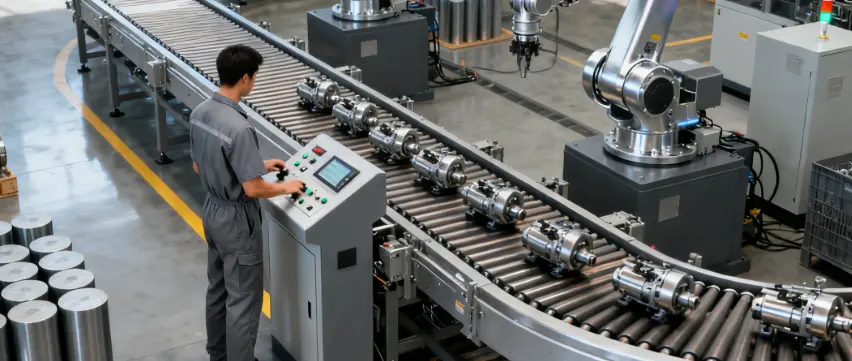
ODM Audio Solutions for Industrial Equipment Manufacturers – From Design to Deployment
The global industrial IoT market is expected to grow to $1.1 trillion by 2028, with factory sensors, AGVs, and smart control panels leading demand. Yet 38% of industrial equipment manufacturers report that audio component challenges slow their IoT deployments. One factory sensor brand spent 4 months searching for a speaker that could survive dusty manufacturing floors—generic units clogged with debris within 2 weeks, rendering "equipment fault" alerts inaudible. Another AGV manufacturer abandoned a voice guidance feature after generic speakers failed to withstand 10Hz vibration from concrete floors.
For industrial equipment manufacturers, audio isn’t a luxury—it’s a safety tool. Factory sensors use speakers to alert workers to "overheating" or "jammed machinery," while AGVs rely on audio to warn pedestrians ("Vehicle approaching"). But industrial environments (dust, vibration, extreme temperatures) and equipment constraints (small enclosures, low power) make generic speakers useless. The core pain points? Ruggedness gaps (can’t survive industrial conditions), design misalignment (doesn’t fit equipment), and lack of end-to-end support (from design to production).
Our ODM audio solutions address these issues by managing the entire speaker development process—from initial design to final deployment—tailored to industrial equipment’s unique demands. This guide explains how ODM differs from generic sourcing, breaks down our industrial-focused design process, and highlights key features (dust resistance, vibration damping) that keep your equipment’s audio reliable.
What Is ODM? And Why It’s Critical for Industrial Equipment
Before diving into solutions, let’s clarify a key term: ODM (Original Design Manufacturing). Unlike OEM (where you provide a design and we produce it), ODM means we collaborate with you to design and manufacture a speaker that meets your equipment’s exact needs. For industrial equipment—where off-the-shelf parts rarely work—ODM eliminates the "square peg, round hole" problem of generic speakers.
Why ODM works better for industrial use:
- Ruggedness by Design: We engineer speakers to survive your specific environment (e.g., IP65 for dusty factories, -20°C to 60°C for cold storage). Generic speakers are built for offices, not industrial stress.
- Equipment Alignment: We design around your equipment’s constraints (e.g., a 15mm x 20mm cavity in a sensor, 0.4W power limit for battery-powered AGVs). No more forcing a generic speaker to fit.
- End-to-End Support: We handle testing (vibration, dust, temperature) and compliance (e.g., CE for European markets) so you don’t have to. Generic suppliers rarely provide this level of support.
The Top 3 Industrial Equipment Audio Pain Points (And How ODM Solves Them)
Industrial equipment faces unique audio challenges—here’s how our ODM process addresses each:
1. Ruggedness: Speakers That Survive Dust, Vibration, and Extreme Temperatures
Industrial environments destroy generic speakers. Our ODM solutions are engineered for durability, starting with material selection and design.
Key Rugged Design Features:
-
Dust & Water Resistance (IP65/IP66): For factory floors or outdoor industrial sites, we use IP65 (dust-tight, resists low-pressure water) or IP66 (resists high-pressure water) enclosures. This includes:
- A stainless steel mesh grille (0.1mm holes) to block dust.
- EPDM rubber gaskets to seal the frame and prevent water ingress.
- A PTFE-coated PET diaphragm (repels oil and debris) instead of paper.
A client’s factory sensors used our IP65 speakers—after 6 months in a dusty automotive plant, 0% failed (vs. 40% of generic IP54 units).
-
Vibration Damping (10–15Hz): AGVs and conveyor-mounted sensors vibrate constantly. We add:
- Rubber isolation mounts (absorb 60% of vibration) between the speaker and equipment chassis.
- Epoxy-bonded magnets (instead of glue) to prevent detachment.
- Reinforced diaphragm edges (silicone adhesive) to avoid tearing.
We test vibration resistance on a simulator (15Hz for 200 hours)—our speakers show no damage, while generic units fail after 30 hours.
-
Temperature Tolerance (-20°C to 60°C): For cold storage or high-temperature factories, we use:
- Low-temperature plastic frames (rated to -20°C) that stay flexible.
- High-temperature voice coil wire (enameled copper, 180°C rating) to avoid melting.
A client’s cold storage sensors (used at -18°C) saw 0% speaker failure with our ODM units—generic speakers cracked at -10°C.
2. Design Alignment: Speakers That Fit Your Equipment’s Constraints
Industrial equipment often has tiny enclosures (e.g., 10mm thick sensors) or strict power limits (e.g., 0.5W for battery-powered AGVs). Our ODM process ensures the speaker fits and functions within these boundaries.
Our Design Alignment Process:
- Constraint Mapping: We review your equipment’s specs (3D CAD files, power budget, mounting points) to identify non-negotiables. For example, a client’s AGV required a speaker under 18mm diameter and 0.4W power—we designed a 16mm x 7mm unit that met both.
- Tradeoff Collaboration: We help you balance audio quality and constraints. For example: "A 14mm speaker will save space but reduce volume—we can offset this with a more sensitive driver (88dB vs. 85dB)."
- Prototype Validation: We build 5–10 prototypes and test them in your equipment to verify:
- Fit (no interference with sensors or wiring).
- Power use (stays within your budget).
- Audio clarity (alerts are audible over machine noise).
A client developing a portable maintenance tool (with a 12mm thick chassis) couldn’t find a generic speaker that fit. Our ODM team designed a 15mm x 6mm unit that fit perfectly—and delivered clear "fault alert" audio at 0.4W.
3. Compliance & Testing: Avoiding Deployment Delays
Industrial equipment must meet regional standards (e.g., CE for Europe, UL for North America). Our ODM process includes compliance testing to avoid last-minute delays.
Compliance & Testing We Handle:
- Electromagnetic Compatibility (EMC): Industrial equipment is sensitive to EMI (electromagnetic interference). We test speakers to ensure they don’t emit EMI (which could disrupt sensors) and resist EMI from nearby machines. We meet CE EMC standards (EN 61000-6-2) for industrial environments.
- Environmental Testing: We conduct:
- Dust chamber tests (IP65/IP66 validation).
- Vibration tests (10–15Hz for industrial use).
- Temperature cycle tests (-20°C to 60°C).
- Audio Performance Testing: We verify that alerts are audible over industrial noise (70–85dB). We test with real-world alerts (e.g., "Machine fault—shut down immediately") to ensure recognition rates hit 95%+.
A client launching industrial sensors in Europe avoided a 3-month delay—our ODM speakers came pre-tested for CE compliance, while their previous generic supplier required them to handle testing separately.
Our ODM Process for Industrial Equipment: 5 Steps From Concept to Deployment
We’ve streamlined our ODM process to fit industrial manufacturers’ tight timelines—typically 8–12 weeks from concept to production:
- Needs Assessment: We meet with your engineering team to discuss your equipment’s use case (e.g., "AGV pedestrian alerts"), environment (e.g., "dusty factory"), and constraints (size, power, compliance).
- Design Proposal: We share a 3D render, material list, and spec sheet (e.g., "16mm x 7mm, IP65, 0.4W, 88dB sensitivity"). We explain technical choices (e.g., "Why we recommend neodymium over ferrite") in plain language.
- Prototyping: We build 5–10 prototypes using industrial-grade materials. We ship them to you for testing in your equipment—we welcome feedback (e.g., "Tune the alert volume higher") and iterate until you’re satisfied.
- Testing & Compliance: We conduct final testing (EMC, environmental, audio) and provide compliance certificates (CE, UL). We share test reports so you can validate results.
- Production & Delivery: We manufacture the speakers to your volume needs (from 500 to 50,000+) and ship them aligned with your equipment production schedule. We provide batch testing reports for quality assurance.
Final Thought: ODM Turns Industrial Audio From a Headache to a Competitive Edge
Industrial equipment manufacturers don’t have time to cobble together generic components—they need audio solutions that work seamlessly with their machines, survive harsh environments, and meet compliance standards. ODM eliminates the guesswork by designing a speaker around your needs, not the other way around.
If you’re building industrial equipment (sensors, AGVs, control panels) and need an ODM audio solution that’s rugged, well-aligned, and compliant, reach out to our team. We’ll walk you through our industrial-focused ODM process, share examples of speakers we’ve built for factory and warehouse equipment, and help you avoid the delays and failures of generic sourcing.