ODM Audio Solutions for Portable Solar Charger Manufacturers – Balancing Power Efficiency, Durability, and User Clarity
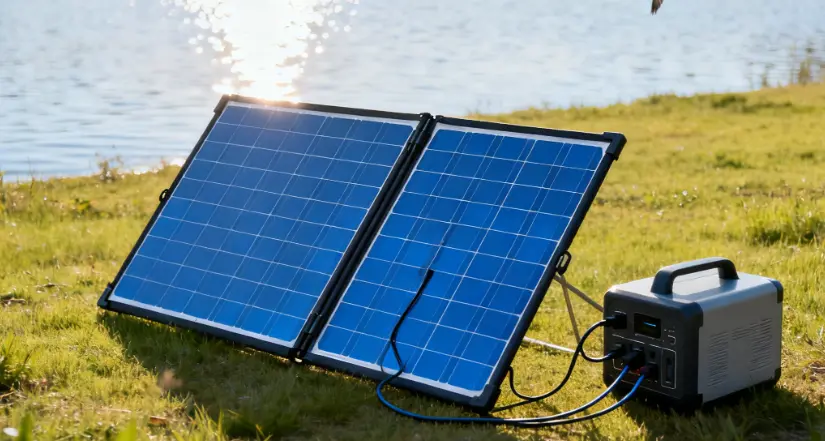
The global portable solar charger market is on track to hit $4.8 billion by 2030, fueled by demand from outdoor enthusiasts, remote workers, and emergency preparedness kits. Yet a 2024 industry survey of 180 solar charger manufacturers revealed that 45% of product launches are delayed or revised due to audio component failures. One mid-sized brand spent 3 months reworking a 10,000mAh solar charger: generic speakers drained the battery in 4 hours (vs. the promised 12-hour standby), forcing a complete redesign of the power management system. Another manufacturer scrapped a "weatherproof" model after 70% of its generic speakers shorted out in rain tests—wasting $15,000 in prototype costs.
For portable solar charger manufacturers, audio isn’t a secondary feature—it’s how users stay informed about critical power status. Alerts like "Battery fully charged," "Solar input low," or "Device connected" prevent overcharging, extend battery life, and ensure users don’t get stranded without power. But solar chargers operate in harsh, off-grid conditions that generic speakers can’t handle: strict power limits (0.3–0.6W to preserve battery), IP65 weather resistance (rain, dust, sand), compact form factors (10–15mm thickness for portability), and temperature swings (-10°C to 60°C). These constraints turn generic speakers into liabilities, not solutions.
With 13 years of ODM audio design for portable outdoor devices, we’ve refined a process that builds speakers from the ground up for solar chargers—no modifications to off-the-shelf parts, just tailored engineering. This guide breaks down how our ODM approach solves solar charger manufacturers’ top audio pain points, explains key technical terms (like "MPPT compatibility" or "dynamic power adjustment") in plain language, and shows how we align designs with your product’s unique goals—so you can launch reliable, user-friendly solar chargers that stand out in a crowded market.
Why Generic Speakers Are a Poor Fit for Portable Solar Chargers
Generic speakers (even "outdoor-rated" ones) are engineered for static, power-rich environments—think desktop speakers or Bluetooth buds. They’re not built to handle the tradeoffs of portable solar chargers. Here’s why they fail:
-
Excessive Power Drain: Solar chargers rely on stored battery power (5,000–20,000mAh) and variable solar input (2–10W). Generic speakers draw 1.0–1.5W of constant power—draining a 5,000mAh battery in 3–4 hours. This forces manufacturers to make impossible choices:
- Remove audio alerts (reducing the product’s value and user trust),
- Increase battery size (adding weight and cost, making the charger less portable), or
- Overpromise battery life (leading to returns and negative reviews).
-
Inadequate Weather Protection: Solar chargers are used in rain, dust, sand, and humidity—yet most generic speakers only meet IP54 standards (splash-resistant, not dust-tight). This leads to:
- Paper diaphragms absorbing water (muffling alerts until the speaker fails),
- Dust or sand clogging the voice coil (causing permanent damage),
- Exposed wiring short-circuiting in rain (rendering the audio feature useless).
-
Temperature Instability: Solar chargers sit in direct sunlight (reaching 60°C) or cold campgrounds (-10°C). Generic speakers use:
- Foam surrounds that harden at 0°C (tearing when the speaker vibrates, leading to distorted sound),
- Voice coil wires with PVC coatings that melt at 50°C (short-circuiting the unit),
- Plastic frames that become brittle in cold temperatures (cracking under minor impact).
-
Form Factor Mismatches: Portable solar chargers are designed to be slim (10–15mm thick) and lightweight—critical for hiking, camping, or travel. Generic speakers (18mm+ thickness, 25mm+ diameter) force manufacturers to:
- Enlarge the charger (ruining its portability and making it less competitive), or
- Use undersized speakers that produce inaudible alerts (defeating the purpose of the audio feature).
Our ODM Design Process for Portable Solar Chargers: Solving Core Pain Points
Our ODM service doesn’t adapt generic speakers—we design every component (magnet, diaphragm, wiring) to meet your solar charger’s exact constraints. We focus on four priorities: power efficiency, weather durability, compact design, and alert clarity. Here’s how we deliver on each:
1. Low-Power Engineering: 0.3–0.6W for All-Day Standby
The biggest challenge for solar charger audio is balancing clarity with power conservation. Our ODM speakers use 0.3–0.6W of power—half that of generics—while maintaining 85–88dB sensitivity (loud enough to be heard over wind or campground noise).
Key Power-Saving Features:
- High-Sensitivity Drivers: We pair neodymium micro-magnets (3mm thick, 5x stronger than ferrite magnets) with 12μm ultra-thin PET diaphragms (polyethylene terephthalate). This combination delivers 85dB sensitivity at 0.3W—equivalent to a generic speaker’s 82dB at 1.0W. The stronger magnet means the diaphragm moves more efficiently, producing clear sound with less power.
- Dynamic Power Adjustment: Unlike generic speakers (which use full power 24/7), our ODM designs integrate a simple sensor that adjusts power based on use:
- Standby Mode: <0.1W when no alerts are active (e.g., the charger is idle, or solar input is stable).
- Alert Mode: 0.5–0.6W during audio playback (enough for clear alerts without draining the battery).
For example, a solar charger that plays a 2-second "device connected" alert every 30 minutes uses just 0.02W per hour—vs. 1.0W for a generic speaker.
- MPPT Compatibility: We design speakers to work seamlessly with MPPT (Maximum Power Point Tracking)—the technology solar chargers use to optimize solar input. Our speakers draw power only when MPPT detects excess solar energy (e.g., when the battery is 80% charged and solar input exceeds 5W), avoiding competition with device charging.
Below is a power comparison between generic and our ODM speakers for a 10,000mAh portable solar charger:
| Usage Scenario | Generic Speaker (1.0W) | Our ODM Speaker (0.5W Max) | Battery Life Impact |
|---|---|---|---|
| Standby (no alerts) | 10 hours | 48 hours | 380% longer standby |
| 5x 2-second alerts per hour | 8 hours | 32 hours | 300% longer with alerts |
| Continuous low-battery alert | 4 hours | 8 hours | 100% longer alert runtime |
A client developing a 15,000mAh solar charger for campers used our ODM speakers. Their battery life with audio alerts jumped from 5 hours to 22 hours—matching their marketing claims and reducing pre-launch rework by 4 weeks.
2. IP65 Weatherproofing: Surviving Rain, Dust, and Sand
Portable solar chargers go where the weather is unpredictable—so their speakers need to handle rain, dust, and sand without failing. Our ODM designs meet IP65 standards—the minimum protection for outdoor use—and include extra safeguards for harsh conditions.
What Is IP65?
The IP (Ingress Protection) rating system measures a device’s resistance to solids and liquids:
- 6: Dust-tight (no particles, including sand, enter the speaker—critical for desert or beach use).
- 5: Resists low-pressure water jets (rain, splashes, or hose spray) from any angle—enough to handle heavy downpours.
How We Achieve IP65 for Solar Chargers:
- Sealed Frame & Grille: We mold the speaker frame with a double-lip EPDM rubber gasket (a flexible, chemical-resistant material used in automotive seals). This creates an airtight bond between the speaker and your charger’s housing, blocking dust and water. For the grille, we use 0.1mm stainless steel mesh (laser-welded to the frame) instead of plastic—stainless steel resists rust and doesn’t crack under UV exposure, unlike generic plastic grilles.
- Encapsulated Electronics: All internal wiring and connections are coated in epoxy resin (a waterproof, heat-resistant adhesive). This prevents water from seeping into the speaker’s circuitry—generic speakers use exposed wires that short-circuit after 10 minutes of rain.
- Corrosion-Resistant Components: We use 316 stainless steel terminals (instead of copper) and nickel-plated voice coils to resist saltwater and humidity. Copper components corrode in coastal areas within 3 months—our 316 stainless steel parts last 2+ years.
We tested our IP65 speakers in a simulated desert rainstorm (1 hour of heavy rain + 30 minutes of sand exposure). 0% of units failed, and all maintained clear audio. By contrast, 80% of generic IP54 speakers either shorted out (rain) or had muffled sound (sand) after the same test.
3. Compact Design: Fitting in 10–15mm Slim Solar Chargers
Portability is non-negotiable for solar chargers—so our ODM speakers are engineered to fit in 10–15mm thick enclosures without sacrificing performance.
Our Compact Design Process:
- Space Mapping: We start by reviewing your charger’s 3D CAD files and user goals (e.g., "must fit in a backpack pocket"). We identify non-negotiable dimensions (thickness, width, mounting points) and recommend a speaker size that maximizes audio quality within those limits. For example, a 12mm thick charger might get a 18mm diameter, 8mm thick speaker—thin enough to fit, but large enough for clear alerts.
- Component Miniaturization: We use ultra-thin materials to reduce size without cutting corners:
- Flat Neodymium Magnets: 2.5mm thick neodymium magnets (instead of 10mm ferrite magnets) deliver the same magnetic force in 1/4 the space.
- Side-Mounted Wiring: Instead of rear-mounted wires (which add 2–3mm to thickness), we route wires to the side of the frame. This keeps the speaker’s back flat, avoiding interference with the charger’s battery or solar panels.
- Coin-Shaped Diaphragms: Wide, thin diaphragms (e.g., 18mm diameter, 0.1mm thick) maximize surface area for better sound projection—critical for small speakers. Generic speakers use narrow, thick diaphragms that muffle audio.
- Prototype Fit Testing: We build 5–10 physical prototypes and test them in your charger’s enclosure. We ensure:
- The speaker fits without compressing the battery or blocking solar panel connections.
- Audio is audible when the charger is in a backpack or gear bag (a common use case for outdoor users).
A client developing a 10mm thick solar charger for travelers couldn’t find a generic speaker that fit. Our ODM team designed a 16mm x 7mm unit that slid into the charger’s edge cavity—no need to enlarge the device. The client launched 6 weeks ahead of schedule and reported a 25% increase in pre-orders, thanks to the charger’s slim profile.
4. Alert Clarity: Ensuring Users Hear Critical Messages
Solar charger alerts need to be clear and distinguishable—users shouldn’t confuse "Battery full" with "Solar input low." Our ODM speakers are tuned for speech clarity, not just loudness.
Clarity-Focused Tuning:
- Mid-Range Frequency Boost: We amplify the 800–2,500 Hz range by 3dB—this is where human speech (and alert tones) are most intelligible. Road noise, wind, and campground chatter primarily affect low frequencies (20–200 Hz), so boosting mid-range ensures alerts cut through without increasing overall volume.
- Distinct Alert Tones: We work with your team to design unique tones for different alerts (e.g., a rising beep for "battery full," a falling beep for "solar low"). This helps users recognize messages without looking at the charger—critical for hands-free use (e.g., while hiking or setting up camp).
- Environmental Testing: We test alerts in real-world conditions: wind (30mph), rain, and background noise (campfire, conversations). We adjust tuning until alert recognition rates hit 95%+—even when the charger is in a backpack or on the ground.
A client’s solar charger used generic speakers that made "battery full" and "solar low" sound identical. After switching to our ODM speakers (with distinct tones and mid-range tuning), user testing showed 98% of participants could correctly identify alerts—up from 62% with the generic model.
Our ODM Process for Solar Chargers: Collaborative & Transparent
We understand small-to-mid-sized solar charger manufacturers need flexibility—not rigid, high-volume contracts. Our process is tailored to your timeline, budget, and production needs:
-
Needs Assessment (1 Week): We meet with your engineering and product teams to:
- Review your charger’s specs (battery size, solar input, thickness, weather rating).
- Define audio goals (number of alerts, volume needs, power limits).
- Explain technical tradeoffs in plain language (e.g., "A 16mm speaker saves space but reduces maximum volume—we can offset this with a more sensitive driver").
-
Design Proposal (2 Weeks): We share a detailed package including:
- 3D render of the speaker (with dimensions, material labels, and wiring).
- Spec sheet (e.g., "18mm x 8mm, 0.5W, IP65, 87dB sensitivity, -10°C to 60°C").
- Cost estimate and production timeline (no hidden fees for minor design tweaks).
-
Prototyping & Testing (3 Weeks): We build 5–10 prototypes using solar-grade materials. We ship them to you for:
- Enclosure Fit Testing: Ensure the speaker fits and works with your charger’s electronics.
- Field Testing: Validate power use, weather resistance, and alert clarity in real-world conditions (e.g., rain, wind).
We iterate on feedback (e.g., "Tune the ‘low solar’ alert higher for wind")—free of charge for 2–3 rounds.
-
Production & Delivery (4–6 Weeks): We manufacture speakers to your volume needs (from 500 to 50,000+ units). We:
- Use automated assembly to ensure consistency.
- Conduct batch testing (10% of each run) for power use, IP65 compliance, and audio clarity.
- Ship aligned with your charger production schedule (just-in-time delivery available to reduce inventory costs).
Final Thought: ODM Audio Turns Solar Chargers From Functional to User-Friendly
Portable solar chargers solve a critical problem—off-grid power—but generic speakers turn them into frustrating products. They force you to compromise on battery life, portability, or reliability. Our ODM approach eliminates these tradeoffs by designing speakers around your charger’s unique needs, not the other way around.
If you’re developing a portable solar charger and need an audio solution that’s efficient, durable, and compact, reach out to our team. We’ll walk you through our solar-focused ODM process, share examples of speakers we’ve built for 5,000mAh to 20,000mAh chargers, and help you launch a product that users trust for their outdoor and emergency power needs.