RCM Certification for Audio Products in Australia – A Simplified Guide to Avoid Customs Delays
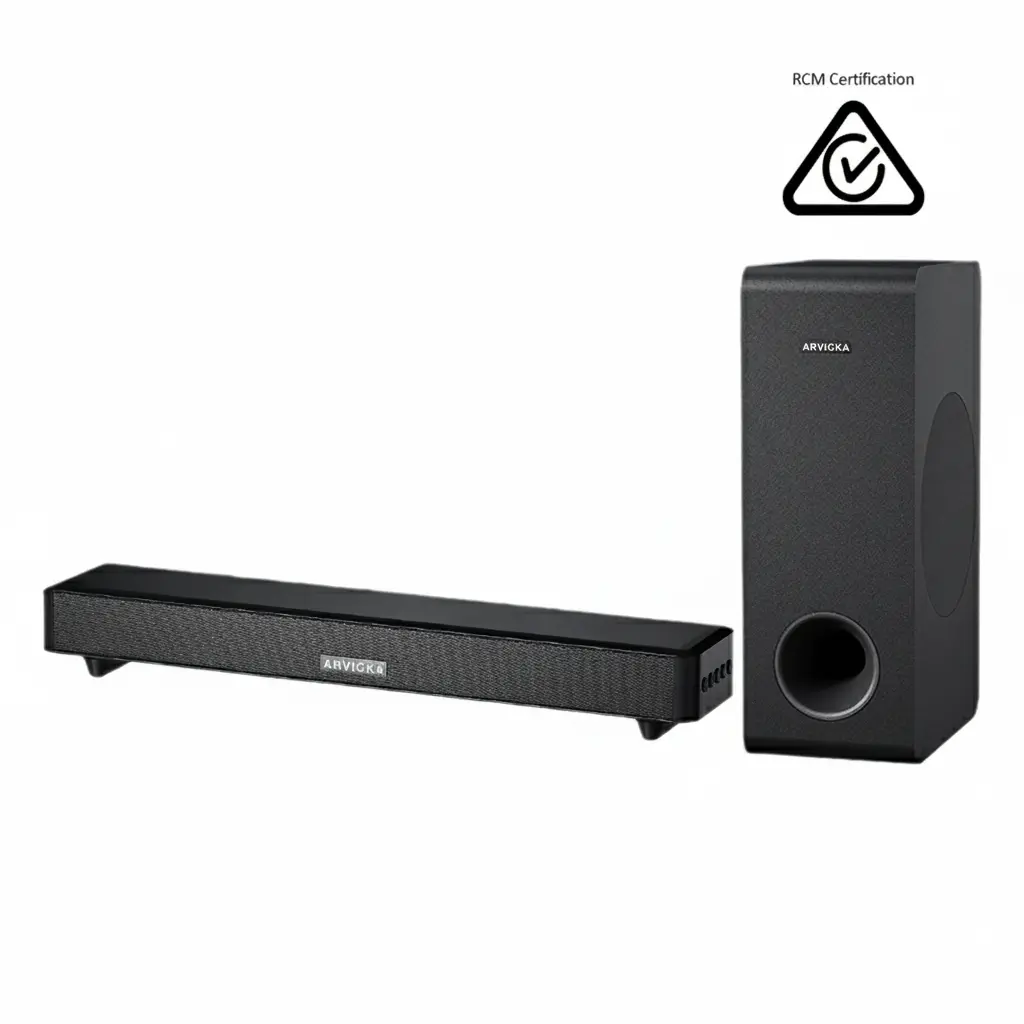
RCM Certification for Audio Products in Australia – A Simplified Guide to Avoid Customs Delays
If you’re a B2B partner selling audio products in Australia—whether you’re distributing to local electronics stores or fulfilling Amazon AU orders—you’ve likely heard of RCM certification. But here’s the reality: Navigating RCM compliance is confusing for growing partners, and mistakes (like missing paperwork or incorrect testing) lead to customs delays that cost you weeks of sales.
We’ve seen it happen: A Southeast Asian distributor shipped 200 units of Bluetooth speakers to Australia, only to have them held at customs for 14 days. The issue? They used a generic “CE-like” certificate instead of official RCM documentation. By the time they sorted it out, their retail clients had canceled orders, and they’d spent $1,200 on storage fees. For growing partners, these delays aren’t just frustrating—they eat into already tight profit margins.
Large suppliers often hand over a stack of RCM papers and walk away, leaving you to figure out the rest. But with 13 years of audio experience and a track record of helping 30+ B2B partners enter the Australian market, we take a different approach: We simplify RCM certification by handling testing, paperwork, and follow-up—so you can get your products to Australia without customs headaches. In this guide, we’ll break down what RCM certification really requires, common mistakes to avoid, and how our support makes compliance easy.
What Is RCM Certification, and Why Do You Need It?
First, let’s clear up confusion: RCM (Regulatory Compliance Mark) isn’t a single certification—it’s a mandatory mark that proves your audio product meets Australia’s electrical safety and electromagnetic compatibility (EMC) standards. It’s required for all audio products sold in Australia, whether you’re selling to retailers, businesses, or consumers.
Two key standards apply to most audio products (e.g., Bluetooth speakers, TWS earbuds, bookshelf speakers):
- AS/NZS 60065: Covers electrical safety for audio, video, and similar equipment. This ensures your product won’t cause electric shock or fire (e.g., insulation meets Australian standards, wiring is secure).
- AS/NZS CISPR 32: Covers EMC, meaning your product won’t interfere with other devices (like TVs or Wi-Fi routers) and won’t be disrupted by them (e.g., your speaker won’t crackle when a phone is nearby).
Without RCM certification:
- Your products will be seized at Australian customs (and you may have to pay to ship them back).
- Retailers won’t stock your products (they risk fines for selling non-compliant goods).
- Amazon AU will remove your listings (they require RCM proof for audio products).
For example, a US-based Amazon seller tried to list uncertified TWS earbuds on Amazon AU—their listing was taken down within 24 hours, and they had to wait 3 weeks to relist after getting RCM certification.
3 Common RCM Mistakes That Cause Customs Delays
Growing partners often stumble over RCM compliance because large suppliers don’t explain the details. Here are the mistakes we see most often—and how to avoid them:
1. Confusing CE with RCM (They’re Not the Same)
Many partners assume a CE certificate (for Europe) is enough for Australia. This is a costly error: CE and RCM have different standards. For example:
- CE’s EMC standard (EN 301 489) allows higher emission levels than Australia’s AS/NZS CISPR 32.
- CE doesn’t require testing to Australia’s specific voltage (230V, 50Hz) for electrical safety.
A client in India once shipped 150 CE-certified bookshelf speakers to Australia—customs rejected them because the speakers weren’t tested to AS/NZS 60065. They had to pay $800 for re-testing and wait 10 days for clearance.
2. Skipping the “Declaration of Conformity” (DoC)
RCM certification requires two key documents:
- A test report from an accredited Australian lab (proving your product meets AS/NZS 60065 and 32).
- A Declaration of Conformity (DoC)—a legal document signed by you (or your supplier) stating the product complies with RCM standards.
Large suppliers often forget to provide the DoC, or they give a generic version that doesn’t include your business details. Customs will reject shipments without a valid DoC—even if the test report is correct.
3. Ignoring Labeling Requirements
Your audio product must have the RCM mark printed clearly on it—usually on the bottom or back. The mark must meet specific size requirements (at least 5mm tall) and be permanent (not a sticker that peels off).
A distributor in Brazil shipped 100 Bluetooth speakers to Australia with RCM stickers (instead of printed marks). Customs held the shipment until they could re-label each unit—adding 5 days of delay and $300 in labor costs.
Our Simplified RCM Certification Process (We Handle the Hard Parts)
We don’t just give you RCM papers—we manage the entire process to ensure compliance and avoid delays. Here’s how we support your Australian market entry:
Step 1: Pre-Tested Audio Products (Save 7 Days)
All our audio products (Bluetooth speakers, TWS earbuds, etc.) are pre-tested to AS/NZS 60065 and 32 by our partner lab in Melbourne (accredited by Australia’s AEMC). This means you don’t have to pay for expensive testing or wait weeks for results. We share the test report with you upfront—so you can review it before placing an order.
For example, our best-selling “WaveMini” Bluetooth speaker has a current test report (dated 2024) proving it meets both RCM standards. When a client orders 50 units for Australia, we send the test report with their invoice—no extra steps.
Step 2: Customized Declaration of Conformity (DoC)
We create a DoC tailored to your business, including:
- Your company name, address, and contact details (not just ours).
- The product model, SKU, and batch number.
- A clear statement that the product complies with AS/NZS 60065 and 32.
- Our signature (as the manufacturer) and your signature (as the importer/distributor).
This ensures customs recognizes the DoC as valid. We even help you fill it out—you just review and sign. A client in Europe told us this saved them 5 hours of research (they’d previously spent hours trying to write a DoC from a generic template).
Step 3: Compliant RCM Labeling (No Re-Work)
We print the RCM mark directly on your product (or packaging) during production—no stickers, no last-minute re-labeling. We follow Australia’s sizing rules (5mm+ tall) and use durable ink that won’t fade.
If you need custom packaging (e.g., with your logo), we integrate the RCM mark into the design. For example, a distributor in Singapore ordered 75 units of our TWS earbuds with custom boxes—we added the RCM mark next to their logo, so the packaging looked cohesive and compliant.
Step 4: Customs Support (We Help If Issues Arise)
Even with perfect paperwork, customs sometimes has questions. We provide a dedicated contact at our partner lab in Melbourne—if customs asks for additional test details, we respond within 24 hours. This avoids the “waiting game” that often traps growing partners.
A client in the US had their shipment of bone conduction headphones flagged by customs (they wanted to verify the EMC test results). We connected customs with our lab, and the issue was resolved in 48 hours—no delays to the shipment.
How Much Does RCM Support Cost? (No Hidden Fees)
We know growing partners have tight budgets, so we don’t charge extra for RCM support. Here’s how pricing works:
- Pre-tested products: No additional cost for test reports—they’re included with your order.
- Custom DoC: Free for all clients (we don’t charge $500+ like some large suppliers).
- RCM labeling: Included in production costs (no extra fee for printing the mark).
The only cost you’ll incur is if you need a new test for a fully custom product (e.g., a unique speaker unit for a Australian security firm). In that case, we charge a flat fee of $300 for testing (our lab gives us a bulk discount, which we pass on to you)—far less than the $800+ other labs charge.
RCM Compliance Checklist for Your Next Australian Shipment
To ensure you’re fully prepared, use this checklist (we’ll go through it with you before your order ships):
| Checklist Item | What We Provide | What You Need to Do |
|---|---|---|
| RCM Test Report | Accredited lab report (AS/NZS 60065/32) | Review and keep a copy for customs |
| Declaration of Conformity (DoC) | Customized, pre-filled DoC | Sign and include with shipment paperwork |
| RCM Labeling | Permanently printed RCM mark on product | Confirm mark placement (we share samples) |
| Voltage Compatibility | Products pre-tested for 230V (Aus standard) | No action needed (we handle voltage tuning) |
| Lab Contact Details | Dedicated lab contact for customs queries | Share with your logistics partner |
Final Thought: RCM Compliance Doesn’t Have to Be Stressful
Entering the Australian audio market shouldn’t mean navigating confusing certification rules or risking customs delays. Our pre-tested products, customized paperwork, and hands-on support make RCM compliance easy—so you can focus on growing your Australian business.
If you’re ready to ship audio products to Australia without the headache, reach out to our team. We’ll share test reports for your desired products, help you complete your DoC, and ensure your shipment is fully compliant—so you can avoid delays and start selling faster.