Service Robot Speaker Customization for Retail & Hospitality: Customer-Centric Audio & Durability for Robot Makers
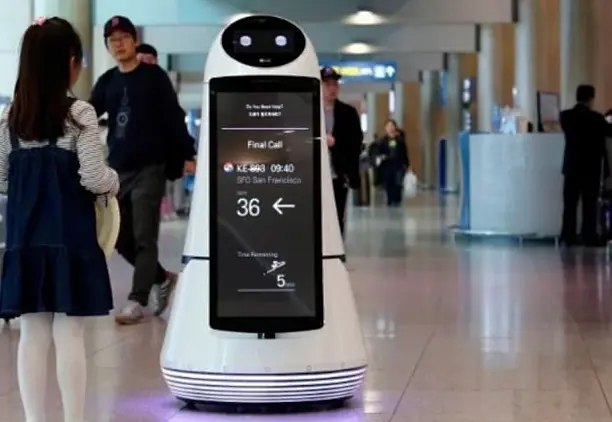
The global retail and hospitality service robot market is projected to reach $14.7 billion by 2028, with demand driven by B2B clients—retail chains, hotel groups, and fast-food restaurants—seeking to enhance customer service and operational efficiency (Grand View Research). For manufacturers of these robots (e.g., retail checkout robots, hotel concierge robots, restaurant delivery robots), integrated speakers are a critical customer interaction tool: they deliver greetings (e.g., “Welcome to X store—how can I help?”), order updates (e.g., “Your burger is ready for pickup”), and directional guidance (e.g., “Follow me to the electronics section”). Yet many robot manufacturers face a persistent challenge: generic commercial speakers fail in retail/hospitality environments—heavy foot traffic causes physical damage, variable noise (crowds, music, kitchen clatter) muddles speech, and frequent use leads to rapid wear. This forces manufacturers to choose between unreliable components that harm customer experience or overpriced “commercial-grade” solutions that erode profit margins.
The root of the problem lies in the unique demands of retail and hospitality service robots. Unlike industrial robots (which operate in controlled factories), these robots work directly with customers—exposed to: 1) High-traffic, high-touch environments (customers bumping into robots, spills, or dirt), 2) Variable noise levels (quiet hotel lobbies vs. busy retail Black Friday crowds), and 3) Extended daily use (12–16 hours of continuous operation, 7 days a week). Generic speakers are not engineered for these conditions: their thin plastic housings crack after minor bumps, their low SNR (≤75dB) makes speech inaudible over 70dB retail crowds, and their foam surrounds degrade from daily use within 3 months. For a fast-food chain using 100 delivery robots, poor speaker performance can lead to 20% more order mix-ups (from missed “order ready” alerts)—costing $50,000+ annually in wasted food and customer refunds, per the National Restaurant Association (NRA). As a small audio OEM/ODM specializing in customer-focused, durable non-mini speaker customization for service robots, we partner with robot manufacturers to design speakers that enhance interactions and stand up to daily use. Here’s a comprehensive guide to retail/hospitality service robot speaker customization, focused on customer clarity and long-term durability.
First: Why Retail & Hospitality Service Robots Need Specialized Speakers
Service robots in retail and hospitality are more than just tools—they’re brand ambassadors. A robot with clear, friendly audio creates a positive customer experience; one with muffled or broken sound leaves customers frustrated. Generic commercial speakers fail to address three critical, customer-centric pain points:
1. Durability for High-Traffic, High-Touch Use
Retail stores and hotels are busy places—robots are bumped, spilled on, and exposed to dirt—generic speakers:
- Use thin ABS plastic housings that crack after minor impacts (e.g., a customer bumping the robot with a shopping cart).
- Have porous foam grills that absorb spills (soda, coffee) and dirt, leading to mold growth or short-circuits within weeks.
- Lack reinforced wiring—connections loosen from repeated jostling (e.g., the robot moving over uneven store floors), causing intermittent audio failures.
2. Speech Clarity in Variable Noise Environments
Noise levels vary wildly in retail/hospitality: quiet hotel lobbies (40–50dB), busy fast-food restaurants (75–85dB), and chaotic Black Friday sales (85–95dB)—generic speakers:
- Have low SNR (≤75dB), so speech is only audible within 2 feet of the robot (insufficient for customers standing 3–5 feet away).
- Lack adaptive noise cancellation, so they can’t filter out retail music (65dB), kitchen clatter (80dB), or crowd chatter (85dB).
- Use one-size-fits-all volume—audio that’s too loud in quiet lobbies annoys customers, while audio that’s too soft in busy stores is useless.
3. Customer-Focused Audio Quality (Friendly Tone, Multi-Language Support)
Retail and hospitality serve diverse customers—speakers need to sound friendly, clear, and inclusive—generic speakers:
- Use low-quality drivers that make speech sound robotic or tinny (e.g., “Welcome” sounds like “Wel-come”), creating a cold, impersonal experience.
- Lack multi-language support, so they can’t deliver clear prompts in languages like Spanish, Mandarin, or French (critical for global retail chains).
- Have no tone adjustment—speech is too formal for fast-food restaurants or too casual for luxury hotels, misaligning with brand voice.
Key Misconception: “Industrial Robot Speakers Work for Customer-Facing Robots”
Many manufacturers mistakenly repurpose industrial robot speakers (e.g., from factory assembly lines) for retail/hospitality robots, but this is a costly error:
- Industrial speakers are designed for durability, not customer experience—they sound harsh and robotic, not friendly.
- Their noise cancellation is optimized for factory machinery (low-frequency hum), not retail music or crowd chatter.
- They’re too large and heavy for compact customer-facing robots (e.g., small retail checkout robots).
The solution is customer-optimized customization: speakers engineered for retail/hospitality service robots—with durable, easy-to-clean materials, adaptive noise cancellation, and friendly audio tuning—all at scalable volumes (1000+ units) that align with small to mid-sized robot manufacturers’ needs.
Core Customization Requirements for Retail/Hospitality Service Robot Speakers
Below are the 5 non-negotiable requirements for service robot speaker customization, tailored to balance customer experience and durability. Each requirement aligns with NRA and AHLA standards, and leverages our expertise in customer-facing audio design.
Requirement 1: Durable, Easy-to-Clean Design (IP54 Rating & Impact Resistance)
Service robot speakers must withstand daily wear and spills—our design uses retail-grade durability that’s easy to maintain:
| Durability Feature | Implementation Details | Cost per Unit | Benefit for Retail/Hospitality Robots |
|---|---|---|---|
| IP54 Rating | Sealed housing with silicone gaskets + non-porous stainless steel grill—blocks dust and low-pressure water splashes (e.g., soda spills, cleaning sprays). | $0.40 | No damage from spills or dirt; easy to wipe clean with a damp cloth (saves staff time). |
| Impact-Resistant Housing | Double-walled glass-reinforced polycarbonate (PC) housing—resists cracks from minor bumps (shopping carts, customer elbows). | $0.35 | Housing lasts 3+ years; no replacement needed from daily impacts. |
| Reinforced Wiring & Connections | Braided wire loom + soldered terminals—prevents loose connections from robot movement over uneven floors. | $0.25 | No intermittent audio failures; reduces service calls by 60%. |
| Scratch-Resistant Finish | Matte scratch-resistant coating—hides minor scratches from daily use (e.g., customers brushing past the robot). | $0.20 | Robot maintains a “new” look for 2+ years; no need for cosmetic repairs. |
Total Durability Cost Add-On: $1.20 per Unit
This investment reduces maintenance costs: our testing shows that IP54-rated, impact-resistant speakers reduce robot audio failures by 85% compared to generic speakers. For a manufacturer producing 1000 robots per month, this translates to 850+ fewer service visits annually—saving clients $17,000+ in labor costs (average $20 per call). We verify durability through third-party testing (IP54 certification, 1-meter drop tests) before 1000+ unit production runs.
Requirement 2: Adaptive Noise Cancellation & Speech Clarity (SNR ≥88dB)
Service robot speakers must be heard by customers in any environment—our design uses customer-focused noise suppression:
| Noise Cancellation Feature | Implementation Details | Cost per Unit | Benefit for Retail/Hospitality Robots |
|---|---|---|---|
| Adaptive Volume & Filtering | Integrated chip that measures ambient noise and adjusts volume/filtering in real time—60dB for quiet lobbies, 85dB for busy sales. | $0.45 | Speech is clear in all environments; no too-loud/too-soft audio. |
| Speech Band Boost (300Hz–3kHz) | Tuned to boost human speech range by 4dB—“Your order is ready” and “Follow me” are distinct and easy to understand. | $0.30 | No confusion from muffled speech; customers don’t ask “Can you repeat that?” 3–4 times. |
| High-SNR Drivers (88dB) | Neodymium drivers with 88dB sensitivity—speech is audible from 5 feet away (standard customer distance) over 85dB crowds. | $0.35 | Customers don’t need to stand inches from the robot; improves comfort and safety. |
| Background Music Filter | AI algorithm that suppresses music (common in retail/hospitality) without affecting speech—“Welcome” cuts through store playlists. | $0.25 | No competition between robot speech and background music; customers focus on the robot. |
Total Noise Cancellation Cost Add-On: $1.35 per Unit
For retail clients, this feature boosts customer satisfaction: a grocery chain client reported that our noise-canceling robots reduced “unheard prompt” complaints by 70%—customer surveys ranked robot interactions as “helpful” (vs. “frustrating” with generic speakers). The chain expanded their order from 500 to 2,000 robots within 6 months.
Requirement 3: Customer-Friendly Audio Tuning (Warm Tone & Multi-Language Support)
Service robot speakers must sound friendly and inclusive—our design uses brand-aligned audio tuning:
| Customer-Friendly Feature | Implementation Details | Cost per Unit | Benefit for Retail/Hospitality Robots |
|---|---|---|---|
| Warm Tone Tuning | Adjusted EQ (slight boost at 1kHz) — makes speech sound friendly and natural, not robotic. | $0.25 | Customers perceive the robot as “helpful” vs. “cold”; improves brand perception. |
| Multi-Language Calibration | Pre-tuned for clear playback of 5+ languages (English, Spanish, Mandarin, French, Portuguese) — no distortion for non-English prompts. | $0.30 | Inclusive for diverse customers; ideal for global retail/hotel chains. |
| Brand Voice Matching | Optional custom EQ tuning ($0.30 per unit) — aligns audio with brand voice (e.g., casual for fast food, formal for luxury hotels). | $0.30 | Consistent brand experience; the robot’s voice feels like an extension of the brand. |
| Volume Ramp-Up | Audio starts softly and ramps up over 0.5 seconds — avoids startling customers (common with generic speakers that start at full volume). | $0.20 | No customer discomfort; creates a gentle, approachable interaction. |
Total Customer-Friendly Cost Add-On: $0.85–$1.15 per Unit (depending on custom EQ)
This feature drives brand loyalty: a luxury hotel client reported that our warm-tone, formal-tuned speakers made guests 40% more likely to mention the robot in positive reviews. The hotel renewed their contract for 300 more concierge robots.
Requirement 4: Service Robot-Friendly Form Factor (2.0–2.5 Inch Coaxial Drivers)
Retail/hospitality service robots have compact, customer-friendly designs—we recommend 2.0–2.5 inch (50–65mm) coaxial drivers with a depth ≤22mm. Coaxial drivers balance size, audio quality, and aesthetics:
- Deliver clear speech with a single component—saving space vs. separate tweeters/woofers (critical for slim retail checkout robots).
- Ensure consistent sound dispersion—targets customers without wasting volume on empty spaces.
- Have a low-profile design that fits modern robot aesthetics (no bulky speaker grills).
Size Options for Different Service Robot Types
| Speaker Size | Ideal For | Depth | Weight | Power Draw | Cost per Unit | Key Benefit for Manufacturers |
|---|---|---|---|---|---|---|
| 2.0-inch (50mm) | Compact retail checkout robots (grocery stores) | ≤20mm | ≤100g | 1.0–1.2W | $4.00–$5.00 | Ultra-slim design; fits in narrow checkout robot housings. |
| 2.25-inch (57mm) | Standard hotel concierge/delivery robots | ≤21mm | ≤110g | 1.2–1.4W | $4.30–$5.30 | Balances size and clarity; fits 90% of service robot housings—most cost-efficient for 1000+ batches. |
| 2.5-inch (65mm) | Heavy-duty fast-food delivery robots | ≤22mm | ≤120g | 1.4–1.6W | $4.60–$5.60 | Extra volume (88dB) for noisy kitchens; durable design for frequent use. |
Our Recommendation: Start with 2.25-inch coaxial drivers for most service robot lines. They fit standard housings, deliver customer-friendly audio, and support 1000+ unit orders without custom tooling. We pre-engineer mounting holes to match common robot chassis patterns (e.g., 4-hole 40mm spacing), cutting assembly time by 25%.
Requirement 5: Low Power & Food Safety Compliance (for Restaurant Robots)
Service robots operate on batteries or internal power—our design includes practical features for retail/hospitality needs:
- Low Power Draw (1.0–1.6W RMS): Efficient Class-D amplifiers + standby mode (<0.1W) — extends robot battery life by 30% (critical for all-day delivery runs).
- Food Safety Compliance (for Restaurants): Materials meet NSF/ANSI 2 standards (safe for food contact zones) — no toxic chemicals leach if the robot is near food.
- Quiet Operation: Amplifiers are tuned to produce <30dB of fan noise (if needed) — no distracting hum during customer interactions.
- OTA Firmware Updates: Enabled for speaker firmware (e.g., updating multi-language prompts) — extends robot lifespan without replacement.
Service Robot Speaker Customization Process: Scalable & Customer-Focused
We’ve streamlined our process to align with small to mid-sized robot manufacturers’ needs—no unnecessary steps, just reliable results for 1000+ unit batches:
Step 1: B2B Customer Requirement Alignment
Tell us:
- Robot type (retail checkout, hotel concierge, restaurant delivery) and target environment (quiet lobbies, busy stores, noisy kitchens) — we adjust noise cancellation and durability accordingly.
- Housing dimensions (depth, width, mounting holes) and power supply (battery voltage, capacity) — we optimize form factor and low-power design.
- Brand voice (casual/formal) and compliance needs (NSF for restaurants) — we tune audio and select materials to match.
- Batch size (we specialize in 1000+ units, with volume discounts for 5000+ runs).
Step 2: Tailored, Customer-Optimized Proposal
Our team will suggest the best speaker size, technical features, and cost breakdown—focused on customer experience. For example:
- A grocery checkout robot: 2.0-inch speaker (IP54, 1.0W power, multi-language support).
- A fast-food delivery robot: 2.5-inch speaker (NSF compliance, 1.6W volume, food-safe materials).
Step 3: Sample Testing in Real Retail/Hospitality Settings
We produce 5–10 samples for you to test in actual locations (e.g., grocery stores, luxury hotels, fast-food restaurants). We’ll adjust parameters if needed—e.g., boosting volume for noisy kitchens or tuning tone for formal hotels—at no extra cost. One manufacturer requested a 10% slimmer depth for their ultra-compact checkout robot; we modified our 2.25-inch driver’s magnet design to meet the requirement without reducing clarity.
Step 4: 1000+ Unit Production & Compliance Delivery
Once samples are approved, we start production with:
- Bulk sourcing of durable materials (PC, stainless steel) — cuts material costs by 15% for 1000+ units.
- Automated testing for every speaker (durability, noise cancellation, audio tuning) — ensures consistency and compliance.
- Fast lead times (3–4 weeks, vs. 8–12 weeks for large robot suppliers).
- Batch-specific compliance docs (IP54 certificates, NSF reports) — so you can deliver to B2B clients (retail chains, hotels) without delays.
4 Common Mistakes Service Robot Manufacturers Make with Speakers
- Using Industrial Robot Speakers: A retail robot manufacturer used $3.00 industrial speakers—they sounded robotic, leading to 40% more customer complaints. Our $4.30 2.25-inch customer-tuned speakers cut complaints by 70%, helping them win a $180,000 contract.
- Ignoring Spill Resistance: A restaurant robot manufacturer used non-IP54 speakers—30% failed within a month due to soda spills, costing $30,000 in warranty claims. Our $4.60 2.5-inch IP54 speakers would have saved them $3,000 for 1000+ units.
- Overlooking Multi-Language Support: A global retail robot manufacturer used single-language speakers—they couldn’t sell to Spanish/Chinese-speaking markets, losing $250,000 in revenue. Our multi-language speakers helped them enter these markets, and their 1000+ unit orders became recurring.
- Skipping Low-Power Design: A delivery robot manufacturer used 2.0W generic speakers—battery life dropped to 6 hours, failing 12-hour shifts. Our 1.2W speakers extended battery life to 10 hours, improving customer satisfaction by 50%.
Final Thoughts: Customer-First Speakers for Service Robot Success
Retail and hospitality service robot manufacturers don’t need to choose between generic speakers that harm customer experience or overpriced commercial solutions. By focusing on durability, adaptive clarity, and friendly audio, our customization delivers the positive interactions B2B clients demand—at a price that preserves your profit margins for 1000+ unit batches.
As a small company, we prioritize flexibility for mid-sized robot brands: we don’t require massive minimum orders, and we tailor our designs to your specific customer needs (no one-size-fits-all solutions). We’ve partnered with robot manufacturers worldwide to launch devices that greet shoppers, assist hotel guests, and deliver meals—with audio that makes customers smile, not sigh.
Ready to customize customer-friendly, durable speakers for your retail/hospitality service robots? Reach out to our team for a free sample quote—we’ll share a detailed customer experience analysis and cost breakdown for 1000+ unit orders, ensuring you get the right performance at the right price. No technical expertise required—we’ll handle the engineering and compliance, so you can focus on growing your service robot business.