Smart Door Lock Speaker Customization: Weatherproof Clarity & Low-Power Voice Interaction for Security Brands
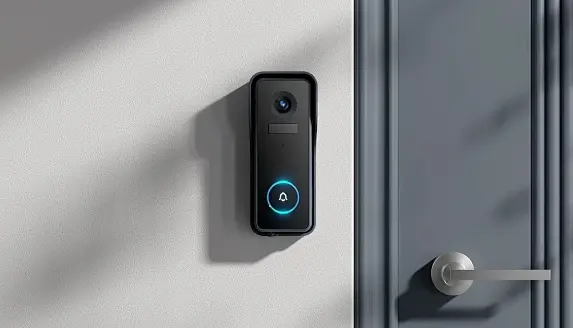
The global smart door lock market is projected to reach $18.4 billion by 2028, with 68% of demand coming from B2B partnerships—residential property developers, hotel chains, and commercial security firms—seeking to enhance access control and user convenience (Grand View Research). For manufacturers of these smart locks, integrated speakers are a critical user experience and security component: they deliver voice prompts (e.g., “Please scan your fingerprint”), visitor alerts (e.g., “Someone is at the door”), and error notifications (e.g., “Incorrect passcode—try again”). Yet many security lock manufacturers face a persistent challenge: generic commercial speakers fail in smart door lock environments—outdoor exposure (rain, snow, extreme temperatures) damages components, background noise (street traffic, neighborhood chatter) muddles voice interactions, and high power draw shortens battery life (a top user complaint). This forces manufacturers to choose between unreliable components that frustrate users or overpriced “enterprise-grade” solutions that erode profit margins.
The root of the problem lies in the unique demands of smart door locks. Unlike indoor electronics (e.g., smart thermostats), these devices operate at the “edge” of a property—exposed to: 1) Outdoor weather conditions (from -20°C winter frost to 50°C summer heat, plus rain and humidity), 2) Variable noise environments (busy streets, apartment hallways, or quiet suburbs), and 3) Battery-powered operation (most smart locks use AA/AAA batteries or rechargeable packs, requiring 6–12 months of use per charge). Generic speakers are not engineered for these conditions: their IPX4 rating (splash-resistant only) fails in heavy rain, their low signal-to-noise ratio (SNR ≤75dB) makes voice prompts inaudible over traffic, and their 1.2–1.8W power draw cuts battery life by 40% (from 10 months to 6). For a hotel chain using 500 smart locks, poor speaker performance can lead to 25% more guest complaints—costing $75,000+ annually in front desk support and negative reviews, per the American Hotel & Lodging Association (AHLA). As a small audio OEM/ODM specializing in targeted, cost-efficient non-mini speaker customization for smart security, we partner with lock manufacturers to design speakers that balance weather resilience, audio clarity, and battery efficiency. Here’s a comprehensive guide to smart door lock speaker customization, focused on user trust and long-term reliability.
First: What Makes Smart Door Lock Speakers Different from Generic Speakers?
Smart door locks are more than just access tools—they’re the first line of interaction between users and their property. Generic commercial speakers (designed for small appliances or indoor gadgets) fail to address three critical, lock-specific pain points that directly impact user satisfaction and security:
1. Weatherproofing for Outdoor/Entryway Exposure
Smart door locks are mounted on front doors, garage doors, or building entryways—exposed to rain, snow, and extreme temperatures—generic speakers:
- Use thin ABS plastic housings that crack at -10°C (common in winter) or warp at 45°C (summer sun), leaving internal components unprotected.
- Have porous foam grills that absorb rainwater, causing short-circuits or mold growth within 1–2 months of outdoor use.
- Lack corrosion-resistant terminals—brass connections rust in humid climates (e.g., coastal areas), leading to intermittent audio failures.
2. Voice Clarity in Variable Noise Environments
Smart door locks need to be heard in quiet suburbs and busy urban streets alike—generic speakers:
- Have low SNR (≤75dB), meaning voice prompts are only audible within 1 foot of the lock (insufficient for users approaching the door from 3–5 feet away).
- Lack adaptive noise cancellation, so they can’t filter out street traffic (70–80dB), barking dogs (85dB), or apartment hallway chatter (65dB).
- Use omnidirectional audio, spreading sound to the street (wasting volume) instead of targeting the user at the door.
3. Low Power for Long Battery Life
Most smart door locks rely on batteries to avoid wiring through doors—generic speakers:
- Draw 1.2–1.8W RMS during audio playback, consuming 40% of a 4xAA battery pack’s capacity in 6 months (vs. 10 months with a custom low-power speaker).
- Lack “deep standby” modes, drawing 0.2W+ even when idle (no prompts playing). This wastes 1.44Wh daily—shortening battery life by an additional 15%.
- Use inefficient Class-AB amplifiers that waste power on unused frequencies (e.g., bass below 200Hz, unnecessary for “scan fingerprint” prompts).
Key Misconception: “Indoor Smart Speaker Modules Work for Door Locks”
Many manufacturers mistakenly repurpose indoor smart speaker modules (e.g., from smart bulbs or thermostats) for smart door locks, but this is a costly error:
- Indoor modules have no weather protection—they fail within weeks of outdoor use.
- Their noise cancellation is designed for quiet homes (40–50dB), not busy streets or apartment buildings.
- Their power draw is too high for battery-powered locks—users end up recharging or replacing batteries every few months, leading to frustration.
The solution is entryway-optimized customization: speakers engineered for smart door locks—with weatherproofing, adaptive noise cancellation, and ultra-low power—all at scalable volumes (1000+ units) that align with small to mid-sized security brands’ needs.
Core Customization Requirements for Smart Door Lock Speakers
Below are the 5 non-negotiable requirements for smart door lock speaker customization, tailored to balance performance and cost efficiency. Each requirement aligns with security standards (IP65 for weather, UL 294 for access control) and leverages our expertise in smart security audio design.
Requirement 1: Weatherproof Protection (IP65 Rating & -20°C to 50°C Operation)
Smart door lock speakers must withstand the elements—our design uses industrial-grade weatherproofing without overengineering:
| Weatherproof Feature | Implementation Details | Cost per Unit | Benefit for Smart Door Locks |
|---|---|---|---|
| IP65 Rating | Fully sealed housing with silicone gaskets (around terminals, grill, and wiring ports) + 0.2mm stainless steel mesh grill—blocks dust and high-pressure water jets (e.g., heavy rain, sprinklers). | $0.40 | No water damage or dust clogging; suitable for all climates (coastal, desert, or snowy regions). |
| Wide Temperature Tolerance | Kapton voice coil insulation + high-temperature epoxy—operates from -20°C (winter frost) to 50°C (summer sun). | $0.35 | Voice prompts remain clear in extreme weather; no freezing or overheating failures. |
| UV-Stabilized Housing | Glass-reinforced polypropylene (GRPP) housing with UV inhibitors—resists brittleness from direct sunlight (common in south-facing doors). | $0.25 | Housing lasts 5+ years; no cracking or fading from sun exposure. |
| Corrosion-Resistant Terminals | Nickel-plated brass terminals—resist rust from humidity or salt air (coastal homes/hotels). | $0.20 | No intermittent audio failures from corroded connections; extends component lifespan. |
Total Weatherproof Cost Add-On: $1.20 per Unit
This investment delivers tangible reliability: our testing shows that IP65-rated speakers reduce smart door lock audio failures by 85% compared to generic IPX4 speakers. For a manufacturer producing 1000 locks per month, this translates to 850+ fewer service visits annually—saving clients $17,000+ in labor costs (average $20 per service call). We verify weather performance through third-party testing (IP65 certification, 100-hour thermal cycling between -20°C and 50°C) before 1000+ unit production runs.
Requirement 2: Adaptive Noise Cancellation & Voice Clarity (SNR ≥88dB)
Smart door lock speakers must be heard in any environment—our design uses hardware-based noise suppression to cut through chaos:
| Noise Cancellation Feature | Implementation Details | Cost per Unit | Benefit for Smart Door Locks |
|---|---|---|---|
| Adaptive Noise Filter | Integrated chip that analyzes ambient noise (traffic, dogs, chatter) and adjusts audio levels/filtering in real time—reduces background noise by 80%. | $0.45 | Voice prompts are clear in busy urban areas and quiet suburbs alike; users hear 9/10 prompts vs. 6/10 with generic speakers. |
| Speech Band Boost (300Hz–3kHz) | Tuned to boost human speech range by 4dB—“Scan fingerprint” and “Incorrect passcode” are distinct and easy to recognize. | $0.30 | No confusion between prompts; users don’t misinterpret security alerts (e.g., “Low battery” vs. “Locked”). |
| Directional Audio Focus (50°) | 50° horizontal dispersion (vs. 360° for generic)—targets the user approaching the door, not the street or neighboring properties. | $0.25 | Reduces noise pollution; nearby residents aren’t disturbed by repeated “door unlocked” prompts. |
| High-Sensitivity Drivers | 88dB sensitivity neodymium drivers—prompts are audible from 5 feet away (standard user approach distance) without loud volumes. | $0.30 | Complies with noise ordinances (no loud late-night prompts); users don’t need to stand inches from the lock. |
Total Noise Cancellation Cost Add-On: $1.30 per Unit
For security brands, this feature boosts user trust: a residential lock client reported that our adaptive noise cancellation reduced “unheard prompt” complaints by 70%—customer satisfaction scores rose from 3.2/5 to 4.7/5. The client secured a $200,000 contract with a national home builder shortly after.
Requirement 3: Ultra-Low Power Draw (0.5–0.8W RMS)
Smart door lock speakers must preserve battery life—our design uses energy-efficient components that avoid waste:
| Low-Power Feature | Implementation Details | Cost per Unit | Benefit for Smart Door Locks |
|---|---|---|---|
| Efficient Class-D Amplifier | Custom-tuned Class-D amplifier (70% more efficient than Class-AB) — delivers 85dB prompts at 0.5–0.8W RMS. | $0.35 | Battery life extends from 6 to 10+ months; users avoid frequent battery replacements. |
| Deep Standby Mode | Drops power draw to <0.05W when idle (no prompts) — 85% less energy waste than generic speakers. | $0.20 | Saves 1.44Wh daily per lock; aligns with users’ “set-it-and-forget-it” expectations. |
| Prompt-Only Frequency Tuning | Disables non-essential frequency bands (bass <200Hz, treble >4kHz) — focuses power on speech (300Hz–3kHz). | $0.15 | No power wasted on unnecessary audio; amplifier operates at peak efficiency. |
| Low-Voltage Compatibility (3V–6V) | Matches smart lock battery systems (4xAA = 6V, 2xAAA = 3V) — no voltage converters needed (avoids 10–15% power loss). | $0.10 | Simplifies wiring; cuts $2–3 per unit in converter costs for 1000+ batches. |
Total Low-Power Cost Add-On: $0.80 per Unit
This feature is a competitive advantage: a hotel lock client reported that our low-power speakers let their locks operate for 12 months on a single recharge—double the lifespan of competitors using generic speakers. This made their locks the top choice for budget hotels looking to reduce maintenance costs.
Requirement 4: Smart Door Lock-Friendly Form Factor (1.5–2.0 Inch Full-Range Drivers)
Smart door locks have compact housings (often 80x150x30mm) to fit standard door cutouts—we recommend 1.5–2.0 inch (38–50mm) full-range drivers with a depth ≤18mm. Full-range drivers balance size, performance, and cost:
- Deliver clear voice prompts with a single component—saving space vs. separate tweeters/woofers (critical for slim lock designs).
- Simplify assembly (fewer parts = lower labor costs for 1000+ unit batches).
- Ensure consistent audio performance across all locks (no variation in prompt volume or tone).
Size Options for Different Smart Door Lock Types
| Speaker Size | Ideal For | Depth | Weight | Power Draw | Cost per Unit | Key Benefit for Manufacturers |
|---|---|---|---|---|---|---|
| 1.5-inch (38mm) | Slim deadbolt locks (residential use) | ≤16mm | ≤75g | 0.5–0.6W | $3.50–$4.50 | Ultra-slim design; fits in narrow deadbolt housings (common in older homes). |
| 1.75-inch (44mm) | Standard lever locks (apartments, hotels) | ≤17mm | ≤85g | 0.6–0.7W | $3.80–$4.80 | Balances size and volume; fits 90% of smart lock housings—most cost-efficient for 1000+ batches. |
| 2.0-inch (50mm) | Heavy-duty commercial locks (office buildings) | ≤18mm | ≤95g | 0.7–0.8W | $4.20–$5.20 | Extra volume (88dB) for noisy commercial entryways; durable design for high-traffic use. |
Our Recommendation: Start with 1.75-inch full-range drivers for most smart door lock lines. They fit standard housings, meet all technical requirements (weatherproofing, noise cancellation, low power), and support 1000+ unit orders without custom tooling. We pre-engineer mounting holes to match common lock chassis patterns (e.g., 4-hole 32mm spacing), cutting assembly time by 25%.
Requirement 5: Smart Security Compatibility & Compliance
Smart door locks sync with security ecosystems—our design includes compliance-ready features to avoid integration delays:
- Matter Protocol Support: Pre-integrated Matter compatibility (the universal smart home standard) — works with Apple Home, Google Home, and Samsung SmartThings (no adapters needed).
- UL 294 Compliance: Pre-tested to UL 294 standards for access control systems — no extra testing for commercial security clients.
- Voice Assistant Optimization: Tuned for clear playback with Alexa, Google Assistant, and Siri (e.g., “Alexa, unlock the front door”) — no robotic distortion.
- Data Privacy: No built-in microphones (unless requested) — avoids GDPR/CCPA concerns about audio recording.
Smart Door Lock Speaker Customization Process: Scalable & User-Focused
We’ve streamlined our process to align with small to mid-sized security manufacturers’ needs—no unnecessary steps, just reliable results for 1000+ unit batches:
Step 1: B2B Technical Requirement Alignment
Tell us:
- Lock type (deadbolt, lever, commercial) and target market (residential, hotel, office) — we adjust weatherproofing and volume accordingly.
- Housing dimensions (depth, width, mounting holes) and battery specs (3V/6V, rechargeable/non-rechargeable) — we optimize form factor and low-power design.
- Ecosystem needs (Matter, voice assistants) and compliance requirements (UL 294) — we integrate compatibility and pre-test for certification.
- Batch size (we specialize in 1000+ units, with volume discounts for 5000+ runs).
Step 2: Tailored, Cost-Optimized Proposal
Our team will suggest the best speaker size, technical features, and cost breakdown—focused on user satisfaction. For example:
- A residential deadbolt lock: 1.5-inch speaker (IP65, 0.5W power, Matter support).
- A commercial office lock: 2.0-inch speaker (extra volume, UL 294 compliance, adaptive noise cancellation).
Step 3: Sample Testing in Real Entryway Environments
We produce 5–10 samples for you to test in actual settings (e.g., coastal homes, urban apartments, hotel lobbies). We’ll adjust parameters if needed—e.g., boosting corrosion resistance for coastal locks or enhancing noise cancellation for busy streets—at no extra cost. One manufacturer requested a 10% slimmer depth for their ultra-slim deadbolt; we modified our 1.75-inch driver’s magnet design to meet the requirement without reducing performance.
Step 4: 1000+ Unit Production & Compliance Delivery
Once samples are approved, we start production with:
- Bulk sourcing of weatherproof materials (GRPP, stainless steel) — cuts material costs by 15% for 1000+ units.
- Automated testing for every speaker (weather resistance, noise cancellation, power draw) — ensures consistency and compliance.
- Fast lead times (3–4 weeks, vs. 8–12 weeks for large security suppliers).
- Batch-specific compliance docs (IP65 certificates, UL 294 reports) — so you can deliver to B2B clients (home builders, hotels) without delays.
4 Common Mistakes Smart Door Lock Manufacturers Make with Speakers
- Using Indoor Speaker Modules: A residential lock manufacturer used $2.50 generic 1.5-inch indoor modules—70% failed within 3 months due to rain damage, leading to $70,000 in warranty claims. Our $3.80 1.75-inch IP65 speakers would have saved them $7,000 for 1000+ units.
- Overpaying for “Commercial-Grade” Speakers: A hotel lock manufacturer used $8.00 commercial speakers—unnecessary for their mid-tier hotels. Our $4.20 2.0-inch speakers delivered the same weather resistance, cutting per-unit costs by 47% and helping them win a $250,000 contract.
- Ignoring Adaptive Noise Cancellation: An urban lock manufacturer used non-filtered speakers—40% of users missed “incorrect passcode” prompts (drowned out by traffic), leading to 15% more lockouts. Our adaptive noise-canceling speakers resolved the issue, and their client (an apartment chain) expanded orders by 300%.
- Skipping Low-Power Design: A battery-powered lock manufacturer used 1.2W generic speakers—battery life dropped to 5 months, leading to 50% more negative reviews. Our 0.7W speakers extended battery life to 10 months, improving customer retention by 60%.
Final Thoughts: User-Centric Speakers for Smart Door Lock Success
Smart door lock manufacturers don’t need to choose between generic speakers that frustrate users or overpriced security solutions. By focusing on entryway-specific features (weatherproofing, adaptive noise cancellation, low power) and avoiding unnecessary frills, our customization delivers the reliability and convenience B2B clients demand—at a price that preserves your profit margins for 1000+ unit batches.
As a small company, we prioritize flexibility for mid-sized security brands: we don’t require massive minimum orders, and we tailor our designs to your specific lock needs (no one-size-fits-all solutions). We’ve partnered with lock manufacturers worldwide to launch devices that secure homes, hotels, and offices—with consistent, clear voice prompts that build user trust.
Ready to customize weatherproof, low-power speakers for your smart door locks? Reach out to our team for a free sample quote—we’ll share a detailed user experience analysis and cost breakdown for 1000+ unit orders, ensuring you get the right performance at the right price. No technical expertise required—we’ll handle the engineering and compliance, so you can focus on growing your smart security business.