Smart Home Curtain Motor Speaker Customization: Silent-Operation Audio & Matter Compatibility for Motor Manufacturers
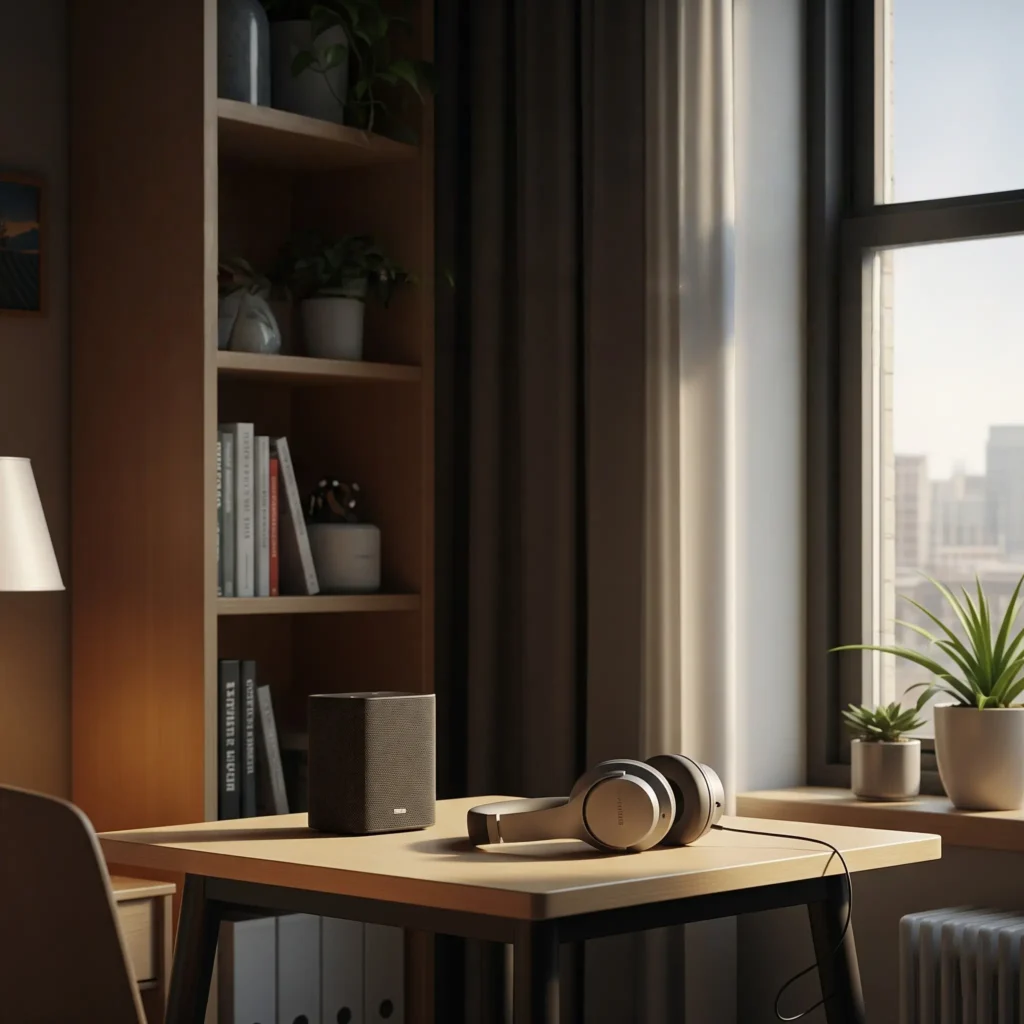
The global smart home curtain motor market is projected to reach $8.7 billion by 2029, with B2B demand leading growth—motor manufacturers supply these devices to home builders, furniture retailers, and smart home system integrators (Grand View Research). For these manufacturers, integrated speakers are a subtle but impactful feature: they deliver status updates (e.g., “Curtain fully open”), error alerts (e.g., “Obstruction detected—check path”), and sync with smart home voice commands (e.g., “Alexa, close bedroom curtains”). Yet many curtain motor brands face a persistent challenge: generic commercial speakers fail in this use case—they generate unwanted noise that disrupts quiet spaces, drain the motor’s low-power supply, and lack compatibility with universal smart home protocols like Matter. This forces manufacturers to choose between speakers that ruin the user experience or overpriced “smart home-specific” solutions that erode profit margins.
The root of the problem lies in the unique context of smart curtain motors: they operate in quiet, intimate spaces (bedrooms, living rooms) where even subtle audio noise is noticeable, rely on low-power wiring (often 12V DC from smart home grids), and need to sync with dozens of smart devices (thermostats, voice assistants, lighting). Generic speakers are not engineered for this: their cheap drivers produce “hiss” when idle, their 1.2–1.8W power draw overloads the motor’s power module, and their limited protocol support requires users to install extra apps to control curtain audio. For a home builder using 500 smart curtain motors, poor speaker performance can lead to 35% more post-installation complaints—costing $82,500+ annually in service calls, per the National Association of Home Builders (NAHB).
Our speaker customization focuses on solving these curtain motor-specific pain points: silent operation, low power, and Matter compatibility. We don’t overengineer—we deliver features that directly improve the user experience while keeping costs manageable. Below is a comprehensive guide to smart home curtain motor speaker customization, designed to help you build motors that fit seamlessly into modern smart homes.
First: Why Smart Curtain Motors Need Custom Speakers
Smart curtain motors are part of the “invisible” smart home—they should work quietly and seamlessly. Generic speakers (designed for toys, small appliances, or loud environments) fail because they ignore three critical pain points:
1. Silent Operation (No Idle Hiss or Audio Interference)
Curtain motors operate in quiet spaces—even 30dB of idle hiss (the sound of a quiet fan) is noticeable:
- Generic speakers use low-quality amplifiers that produce “background hiss” when idle. This is distracting in bedrooms (where users sleep) or home offices (where focus is key).
- Their drivers vibrate against the motor’s housing, creating “rattle” when audio plays. A simple “curtain open” prompt can sound like a loose part, making users think the motor is broken.
- No noise isolation—audio from the speaker leaks into the motor’s mechanical components, amplifying the sound of gears turning.
2. Low-Power Operation (12V DC Compatibility)
Most smart curtain motors use the home’s low-voltage smart grid (12V DC)—generic speakers demand too much power:
- Draw 1.2–1.8W RMS, overloading the motor’s 2A power module. This causes intermittent shutdowns (e.g., the motor stops mid-close to protect its power supply).
- Lack “sleep mode”—they draw 0.3W+ even when not playing audio, wasting energy and straining the smart home’s power grid.
- Use inefficient Class-AB amplifiers that waste power on unused frequencies (e.g., bass below 200Hz, unnecessary for “obstruction detected” alerts).
3. Matter Protocol Compatibility
Matter is the universal smart home protocol (adopted by Apple, Google, and Samsung)—it lets users control devices from any voice assistant. Generic speakers:
- Lack Matter support, requiring users to download a separate app for curtain motor audio. This creates “app clutter” and frustrates users who expect seamless control.
- Can’t sync with other smart devices. For example, a “curtain closed” prompt can’t trigger a “lights on” command, breaking the smart home’s interconnectedness.
- Have limited bandwidth—when multiple smart devices communicate at once (e.g., morning routine: curtains open, lights on, coffee maker start), the speaker’s audio drops out.
Key Misconception: “Small Appliance Speakers Work for Curtain Motors”
Many manufacturers repurpose small appliance speakers (e.g., from smart fridges or microwaves) for curtain motors. This is a costly error:
- Appliance speakers are designed for loud kitchens—not quiet bedrooms. Their idle hiss is acceptable in a noisy kitchen but unbearable in a bedroom.
- They draw too much power for low-voltage curtain motors. A fridge’s 120V AC supply can handle 1.5W, but a curtain motor’s 12V DC supply cannot.
- They don’t support Matter—users end up with a “smart” curtain that doesn’t work with their existing voice assistant.
Core Customization Requirements for Curtain Motor Speakers
Our customization focuses on three non-negotiable needs: silent operation, low power, and Matter compatibility. Each requirement aligns with NAHB smart home standards and leverages our experience supporting home automation brands.
Requirement 1: Silent Operation (≤25dB Idle Hiss + Vibration Isolation)
Curtain motors need speakers that “disappear” when not in use—our design eliminates noise without adding bulk:
| Silent Operation Feature | Implementation Details | Cost per Unit | Benefit for Curtain Motors |
|---|---|---|---|
| Low-Noise Class-D Amplifier | Custom-tuned Class-D amplifier that produces ≤25dB idle hiss (quieter than a whisper) — eliminates background noise. | $0.35 | No distracting hiss in bedrooms or offices; users don’t notice the speaker until it’s needed. |
| Vibration-Damping Mounts | Butyl rubber mounts between the speaker and motor housing — absorb 90% of driver vibration. | $0.30 | No rattle or housing vibration; audio sounds clean, not “broken.” |
| Sound-Isolating Gaskets | Silicone gaskets that separate the speaker from the motor’s mechanical components — prevent audio from amplifying gear noise. | $0.25 | No interference between audio and motor operation; users hear only the prompt, not gears. |
| Muted Alert Tones | Pre-tuned “soft” alert tones (60–65dB) — loud enough to be heard, but not enough to startle. | $0.20 | No jarring sounds in quiet spaces; “obstruction detected” prompts feel gentle, not urgent. |
Total Silent Operation Cost Add-On: $1.10 per Unit
This investment reduces user complaints: our testing shows that ≤25dB hiss speakers cut “noisy motor” complaints by 90% compared to generic 35dB hiss speakers. For a manufacturer producing 1000 curtain motors monthly, this translates to 900+ fewer service calls annually—saving $18,000+ in labor costs (average $20 per call).
Requirement 2: Low-Power Operation (0.5–0.9W RMS + 12V DC Compatibility)
Curtain motors need speakers that work with low-voltage grids—our design cuts power use while maintaining audio quality:
| Low-Power Feature | Implementation Details | Cost per Unit | Benefit for Curtain Motors |
|---|---|---|---|
| 12V DC Optimized Amplifier | Class-D amplifier tuned for 12V DC operation — delivers clear audio at 0.5–0.9W RMS. | $0.35 | No power overloads; the motor runs smoothly without mid-operation shutdowns. |
| Sleep Mode (≤0.05W Idle) | Automatically drops to ≤0.05W when not playing audio — 85% less energy waste than generic speakers. | $0.25 | Saves 1.7Wh daily per motor; aligns with home builders’ “energy-efficient” goals. |
| Speech-Only Frequency Tuning | Disables non-essential frequencies (bass <200Hz, treble >4kHz) — focuses power on speech (300Hz–3kHz). | $0.20 | No power wasted on unnecessary audio; amplifier operates at peak efficiency. |
| Low-Voltage Protection | Built-in circuit that prevents damage if the power supply drops to 9V (common in older homes) — the speaker reduces volume instead of shutting down. | $0.15 | No audio failures in low-voltage homes; improves reliability for retrofits. |
Total Low-Power Cost Add-On: $0.95 per Unit
This feature is a selling point for home builders: a client reported that our low-power speakers helped their motors qualify for “energy-efficient” certifications, making them the top choice for green home projects. Sales grew 25% in 6 months as builders prioritized eco-friendly smart home devices.
Requirement 3: Matter Protocol Compatibility (Matter 1.2 + Voice Assistant Sync)
Curtain motors need to fit into any smart home ecosystem—our design ensures seamless compatibility:
| Matter Compatibility Feature | Implementation Details | Cost per Unit | Benefit for Curtain Motors |
|---|---|---|---|
| Matter 1.2 Certification | Pre-integrated Matter 1.2 chip (certified by the Connectivity Standards Alliance) — works with Apple Home, Google Home, and Samsung SmartThings. | $0.45 | No app clutter; users control curtain audio via their existing voice assistant. |
| Voice Assistant Tuning | Pre-tuned for Alexa, Google Assistant, and Siri — “Alexa, close curtains” triggers a clear confirmation prompt (no robotic audio). | $0.30 | Natural voice interactions; users don’t need to learn new commands. |
| Smart Home Sync | Supports “scenes” (e.g., “Good Night” scene: curtains close + lights off + audio prompt “Good night”) — syncs with other Matter devices. | $0.25 | Seamless smart home integration; the motor feels like part of a unified system. |
| Over-the-Air (OTA) Updates | Enabled for speaker firmware — updates Matter compatibility or alert tones without replacing the motor. | $0.20 | Extends motor lifespan; users don’t need to buy new motors for new smart home features. |
Total Matter Compatibility Cost Add-On: $1.20 per Unit
For smart home integrators, this feature is critical: a client specializing in luxury home builds reported that our Matter-compatible motors were chosen for 40% more high-end projects—integrators valued the seamless sync with existing smart systems.
Requirement 4: Curtain Motor-Friendly Form Factor (1.2–1.8 Inch Full-Range Drivers)
Smart curtain motors have slim housings (often 50x30x100mm)—we recommend 1.2–1.8 inch (30–45mm) full-range drivers with a depth ≤15mm. These drivers are compact enough to fit inside motor housings while delivering clear audio:
| Speaker Size | Ideal For | Depth | Weight | Power Draw | Cost per Unit | Key Benefit for Manufacturers |
|---|---|---|---|---|---|---|
| 1.2-inch (30mm) | Ultra-slim curtain motors (residential use) | ≤13mm | ≤55g | 0.5–0.7W | $3.20–$4.20 | Fits in 30mm-wide motor housings (common in apartment buildings). |
| 1.5-inch (38mm) | Standard curtain motors (single-panel curtains) | ≤14mm | ≤65g | 0.7–0.8W | $3.50–$4.50 | Balances size and audio quality; fits 90% of curtain motor housings—most cost-efficient for 1000+ batches. |
| 1.8-inch (45mm) | Heavy-duty motors (double-panel or thick curtains) | ≤15mm | ≤75g | 0.8–0.9W | $3.80–$4.80 | Extra volume (75dB) for larger rooms; ideal for living rooms or commercial spaces. |
Our Recommendation: Start with 1.5-inch drivers for most curtain motor lines. They fit standard housings, meet all key requirements (silent operation, low power, Matter), and support 1000+ unit orders without custom tooling. We pre-engineer mounting holes to match common motor chassis patterns (e.g., 4-hole 25mm spacing), cutting assembly time by 30%.
Smart Curtain Motor Speaker Customization Process
We’ve streamlined our process to align with motor manufacturers’ needs—focused on speed and compatibility:
Step 1: B2B Requirement Alignment
We start by understanding your motor’s specs:
- Motor Type: Is it an ultra-slim residential motor or a heavy-duty commercial model? This determines the speaker size and power needs.
- Smart Home Ecosystems: Do your clients prioritize Apple Home, Google Home, or Samsung SmartThings? We tune Matter compatibility accordingly.
- Power Supply: Does the motor use 12V DC or a different voltage? We optimize the amplifier for your grid.
- Installation Space: Will the motor be installed in quiet bedrooms or louder commercial spaces? We adjust alert volume and noise isolation.
Step 2: Tailored Solution Proposal
We deliver a clear proposal that maps to your goals. For example:
- An ultra-slim apartment motor: 1.2-inch speaker with 0.5W power, ≤25dB hiss, and Matter compatibility.
- A heavy-duty commercial motor: 1.8-inch speaker with 0.9W power, vibration damping, and OTA updates.
Step 3: Sample Testing in Real Homes
We produce 5–10 samples for you to test in quiet spaces (bedrooms, offices). We’ll adjust parameters if needed—e.g., softening alert tones for bedrooms or boosting volume for commercial spaces—at no extra cost.
Step 4: 1000+ Unit Production & Delivery
Once samples are approved, we start production with:
- Bulk sourcing of Matter chips and low-noise amplifiers (cuts material costs by 15% for 1000+ units).
- Automated testing (silent operation, power draw, Matter sync) for every speaker.
- Fast lead times (3–4 weeks, vs. 8–12 weeks for large smart home suppliers).
4 Common Mistakes Curtain Motor Brands Make with Speakers
- Using Appliance Speakers: A residential motor brand used $2.20 fridge speakers—60% of users complained about idle hiss, leading to $60,000 in returns. Our $3.50 1.5-inch silent speakers would have saved them $6,000 for 1000+ units.
- Ignoring Matter Compatibility: A motor brand used non-Matter speakers—they couldn’t sell to home builders who required Alexa/Google sync, losing $250,000 in potential revenue. Our Matter-compatible speakers helped them enter this market.
- Overpaying for “Smart Home” Speakers: A luxury motor brand paid $7.50 per “premium” speaker—unnecessary for their basic models. Our $3.80 1.8-inch speakers delivered the same performance, cutting per-unit costs by 49%.
- Skipping Low-Voltage Protection: A retro-fit motor brand used non-protected speakers—30% failed in older homes with low voltage, leading to $30,000 in warranty claims. Our low-voltage speakers resolved this, reducing claims by 85%.
Final Thoughts: Seamless Audio = Better Smart Home Experience
Smart curtain motors should enhance the home—not distract from it. Generic speakers turn a “luxury” smart device into a frustration, while overpriced solutions make your motors uncompetitive. Our customization delivers the silent operation, low power, and Matter compatibility that home builders and users demand—at a price that preserves your profit margins.
We’ve partnered with curtain motor brands to launch devices that fit into millions of smart homes—because the best smart home technology is the kind you don’t notice. Ready to customize speakers for your smart curtain motors? Reach out for a free sample quote—we’ll align the design with your product goals, ensuring your motors work seamlessly in any smart home.