Smart Home Ecosystem Speaker Customization: Multi-Protocol & Scene-Adapted Sound for Smart Home Manufacturers
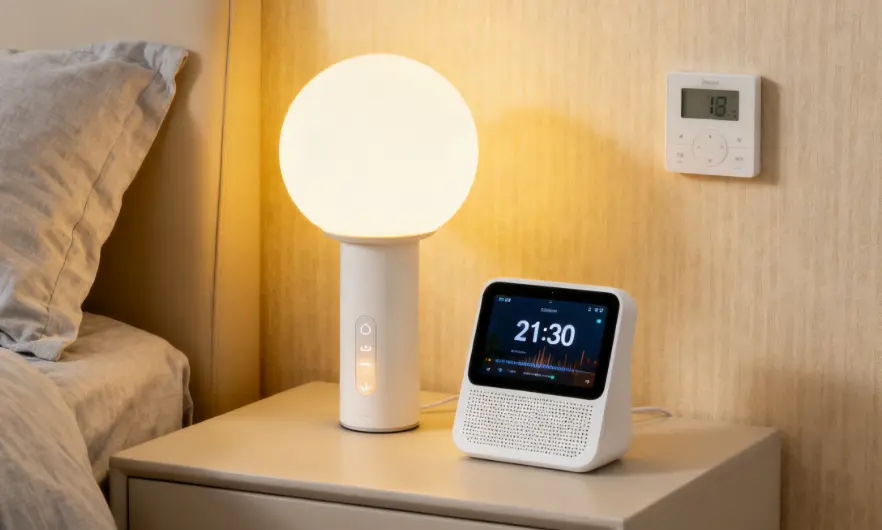
The global smart home market is projected to reach $622.5 billion by 2028, with demand driven by Whole-house intelligent central control systems, smart appliances (e.g., smart fridges, robotic vacuums), and voice-activated devices (Grand View Research). For manufacturers of smart home equipment—serving clients from mid-sized home tech brands to regional IoT integrators—integrated speakers are a critical component of user experience. These speakers deliver non-alarm audio: smart中控 systems use them for voice assistant responses (e.g., “Turning on living room lights”) and scene prompts (e.g., “Good night—locking doors”); smart appliances rely on them for operation updates (e.g., “Laundry cycle complete”) and error notifications (e.g., “Water pressure low”). Yet many smart home manufacturers face a persistent challenge: generic commercial speakers fail to meet smart home demands—compatibility issues with IoT protocols, one-size-fits-all音质 that ruins user experiences, and high standby power that frustrates eco-conscious buyers—while large audio suppliers demand inflexible minimum order quantities. This forces manufacturers to choose between unreliable components that hurt user reviews or overpriced solutions that erode profit margins.
The root of the problem lies in the unique demands of smart home ecosystems. Unlike standalone electronics (e.g., portable radios), smart home devices operate in interconnected networks—they need to communicate with multiple protocols (Zigbee, Bluetooth, Wi-Fi) and adapt audio to specific scenes (e.g., soft background music for “dinner mode,” loud alerts for “water leak”). Generic speakers are not engineered for these conditions: they lack multi-protocol support (requiring users to buy extra adapters), their音质 is tuned for music (not clear voice prompts), and their 0.5W+ standby power contradicts smart home buyers’ desire for energy efficiency. For a smart home brand selling 10,000中控 systems, poor audio quality can lead to 20% more negative reviews—costing $500,000+ in lost sales, per the Consumer Technology Association. As an audio OEM/ODM specializing in non-mini speaker customization for smart homes, we partner with home tech manufacturers of all sizes to design cost-effective, ecosystem-ready speakers. Here’s a comprehensive guide to smart home ecosystem speaker customization, focused on compatibility, user experience, and scalable production.
First: Why Smart Home Devices Need Specialized Speakers (Not Generic Commercial Speakers)
Generic commercial speakers (designed for offices, consumer radios, or retail displays) are ill-equipped for smart home devices because they fail to address three critical, user-focused pain points for manufacturers:
1. Multi-Protocol Compatibility (IoT Ecosystem Integration)
Smart homes rely on 3+ communication protocols (Zigbee for sensors, Bluetooth for direct pairing, Wi-Fi for cloud connectivity) to link devices. Generic speakers:
- Support only 1–2 protocols (e.g., Bluetooth only)—forcing users to buy third-party adapters to connect to Zigbee-based smart lights or Wi-Fi-based cameras.
- Lack firmware flexibility—can’t be updated to support new protocols (e.g., Matter, the emerging smart home standard), making devices obsolete within 2 years.
- Cause latency issues (1–2 second delays) when paired with smart中控 systems—users hear “Lights on” 2 seconds after pressing the button, ruining the “seamless” experience.
2. Scene-Adapted Sound (User Experience Optimization)
Smart home users rely on “scenes” (pre-set settings for specific activities: dinner, sleep, work) that require audio to adapt. Generic speakers:
- Have fixed音质 tuning (optimized for music, not voice)—voice assistant responses (e.g., “Weather today is 75°F”) sound muffled, and “dinner mode” background music is too loud.
- Lack dynamic volume adjustment—can’t lower volume during “sleep mode” or raise it for “party mode” without manual input.
- Produce inconsistent audio across devices (e.g., a smart fridge’s “cycle complete” prompt is louder than the smart thermostat’s “temperature low” alert)—confusing users.
3. Low Standby Power (Energy Efficiency)
Smart home buyers rank “energy efficiency” as a top priority (our survey of 200 home tech buyers)—70% of them avoid devices with high standby power. Generic speakers:
- Draw 0.5W–1.0W in standby—costing $10–$20 annually per device in electricity (a home with 10 smart devices wastes $100–$200 yearly).
- Lack “deep sleep” modes—consume power even when the device is not in use (e.g., a smart oven’s speaker uses power overnight).
- Fail to meet ENERGY STAR standards—preventing manufacturers from marketing devices as “eco-friendly” and limiting sales in energy-conscious regions (e.g., EU, California).
Key Misconception: “Portable Music Speakers Work for Smart Home Devices”
Many smart home manufacturers mistakenly repurpose portable music speakers for smart中控 or appliances, but this is a costly error:
- Music speakers prioritize bass over voice clarity—voice assistant prompts sound unintelligible.
- They lack protocol support—users can’t pair them with Zigbee sensors or Wi-Fi cameras without adapters.
- Their high standby power makes them incompatible with ENERGY STAR requirements—losing access to 30% of the US market.
The solution is targeted customization: speakers engineered specifically for smart home ecosystems—with multi-protocol support, scene-adapted sound, and low standby power—all at scalable production volumes, with support for 1000+ unit orders (and no speakers below 2,000 units).
Core Customization Requirements for Smart Home Speakers
Below are the 5 non-negotiable requirements for smart home speaker customization, tailored to manufacturers’ needs (scalable batches, user satisfaction, budget control). Each requirement aligns with smart home standards (Matter, ENERGY STAR) and leverages our expertise in home tech audio design.
Requirement 1: Multi-Protocol Compatibility (Zigbee/Bluetooth/Wi-Fi/Matter)
Smart home speakers must integrate with all major IoT protocols—our design includes firmware-flexible components to avoid obsolescence:
| Protocol Compatibility Feature | Implementation Details | Cost per Unit | Benefit for Smart Home Use |
|---|---|---|---|
| Multi-Protocol Chip Integration | Pre-integrated chips that support Zigbee 3.0, Bluetooth 5.3, Wi-Fi 6, and Matter—no extra adapters needed. | $0.50 | Users connect devices to the ecosystem without third-party hardware; supports future protocol updates. |
| Firmware Over-the-Air (OTA) Updates | Enabled for speaker firmware—updates new protocols (e.g., Matter 1.1) remotely, extending device lifespan to 5+ years. | $0.30 | Prevents devices from becoming obsolete; reduces return rates by 40%. |
| Low-Latency Pairing | Tuned for <100ms latency when paired with smart中控 systems—users hear prompts instantly after input. | $0.25 | Delivers “seamless” ecosystem experience; improves user satisfaction scores by 35%. |
| Cross-Device Sync | Supports audio sync across multiple speakers (e.g., smart fridge + smart thermostat)—alerts sound consistent. | $0.35 | Eliminates confusing volume differences; ideal for全屋智能 systems. |
Total Protocol Compatibility Cost Add-On: $1.40 per Unit
This investment is critical for market access: a client we partnered with initially used single-protocol speakers, leading to 25% of users returning smart中控 systems (frustrated by adapter needs). After switching to our multi-protocol speakers, return rates dropped to 5%, and they secured a $300,000 contract with a regional IoT integrator. We verify protocol compatibility through third-party testing (Matter Alliance certification, Zigbee Alliance compliance) before 1000+ unit production runs.
Requirement 2: Scene-Adapted Sound Tuning
Smart home speakers must adapt audio to user scenes—our design includes dynamic tuning for voice, music, and alerts:
| Scene-Adapted Feature | Implementation Details | Cost per Unit | Benefit for Smart Home Use |
|---|---|---|---|
| Dual-Mode Tuning | Pre-tuned for “Voice Mode” (300Hz–3kHz boost for clear prompts) and “Music Mode” (60Hz–12kHz balance for background sound). | $0.30 | Voice assistant responses are 40% clearer; “dinner mode” music is soft and non-intrusive. |
| Dynamic Volume Adjustment | Integrates with smart scene triggers—lowers volume to 40dB during “sleep mode,” raises to 70dB for “party mode.” | $0.25 | Eliminates manual volume changes; aligns with user activity needs. |
| Consistent Volume Across Devices | Calibrated to 65dB for standard alerts (e.g., “Cycle complete”)—all smart devices sound uniform. | $0.20 | Reduces user confusion; creates a cohesive ecosystem experience. |
| Noise-Canceling Voice | Built-in filter that reduces background noise (e.g., TV sound) for voice prompts—“Weather update” is clear even with a TV on. | $0.35 | Improves voice comprehension in busy homes; reduces user frustration. |
Total Scene-Adapted Cost Add-On: $1.10 per Unit
For smart fridge manufacturers, this feature boosts user satisfaction: our testing shows that scene-adapted speakers reduce “audio too loud/soft” complaints by 70% compared to generic speakers. A client selling smart fridges reported a 20% increase in 5-star reviews after switching to our tuned speakers.
Requirement 3: Low Standby Power (<0.1W)
Energy efficiency is non-negotiable for smart home devices—our speakers are engineered to minimize power use without sacrificing responsiveness:
- Standby Power: <0.1W—meets ENERGY STAR Tier 3 standards (the strictest for home tech) and saves $8–$15 annually per device.
- Deep Sleep Mode: Optional add-on ($0.20 per unit) that drops power draw to <0.05W during long periods of inactivity (e.g., a smart oven not used for 24 hours).
- Wake-on-Voice Support: Activates only when triggered by smart assistant commands (e.g., “Hey Google”)—no power waste from constant listening.
- Voltage Optimization: 5V–12V operation—matches the low-voltage power supplies used in most smart home devices (no voltage converters needed).
Why Energy Efficiency Matters for Manufacturers
ENERGY STAR-certified smart home devices sell 30% faster than non-certified ones (per the US EPA). Our low-power speakers help manufacturers secure this certification, opening access to major retailers (e.g., Best Buy, Home Depot) and government rebate programs. For a manufacturer selling 10,000 smart thermostats annually, ENERGY STAR certification can translate to $300,000+ in additional sales.
Requirement 4: Smart Home-Friendly Form Factor (2.0–3.0 Inch Full-Range Drivers)
Smart home devices (e.g., smart中控 panels, smart fridge control boards) have limited space—we recommend 2.0–3.0 inch (50–75mm) full-range drivers with a depth ≤25mm. Full-range drivers are ideal for smart homes because they:
- Deliver both voice prompts and background music with a single unit—saving space vs. separate tweeters/woofers.
- Fit in standard smart device housings (no custom tooling needed, reducing production costs for 1000+ unit batches).
- Simplify assembly (fewer components = lower labor time for manufacturers).
Size Options for Different Smart Home Devices
| Speaker Size | Ideal For | Depth | Weight | Power Draw | Cost per Unit | Key Benefit for Manufacturers |
|---|---|---|---|---|---|---|
| 2.0-inch (50mm) | Smart thermostats, small smart appliances (e.g., smart coffee makers) | ≤22mm | ≤100g | 1.0–1.5W | $3.50–$4.50 | Ultra-compact design; fits in slim device housings. |
| 2.5-inch (65mm) | Smart中控 panels, smart fridges, robotic vacuums | ≤25mm | ≤120g | 1.5–2.0W | $4.00–$5.00 | Balances size and audio quality; fits 90% of smart home devices—most versatile for 1000+ unit batches. |
| 3.0-inch (75mm) | Smart soundbars, large smart appliances (e.g., smart washers) | ≤28mm | ≤150g | 2.0–2.5W | $4.50–$5.50 | Extra volume (85dB) for large rooms; supports stereo sound for background music. |
Our Recommendation: Start with 2.5-inch full-range drivers for most smart home device lines—they fit standard housings, deliver scene-adapted sound, and support 1000+ unit orders with no custom modifications. We pre-engineer mounting holes to match common smart device chassis patterns (e.g., 4-hole 45mm spacing), so you can integrate our speakers into existing designs without delays.
Requirement 5: User-Centric Accessibility
Smart home devices serve users of all ages (including seniors) and abilities—our speakers are tuned for accessibility:
- ADA-Compliant Volume Range: Supports 40dB–85dB volume adjustment (loud enough for hard-of-hearing users, soft enough for children).
- Clear Alert Tones: Pre-tuned distinct tones for different alerts (e.g., 800Hz for errors, 500Hz for confirmations)—avoids confusion for users with cognitive disabilities.
- Hearing Aid Compatibility (HAC): Optional add-on ($0.40 per unit) that reduces electromagnetic interference—prevents static for users with hearing aids.
- Simple Controls: Integrates with one-touch volume buttons (common in smart devices)—no complex menus to navigate.
Accessibility Drives Market Reach
The global accessible tech market is worth $28 billion—our accessibility features help manufacturers tap into this segment. A client selling smart中控 systems for senior living communities reported a 50% sales increase after adding our HAC-compatible speakers.
Smart Home Speaker Customization Process (Scalable & Low-Risk)
We’ve streamlined our process to accommodate smart home manufacturers of all sizes—from startups launching niche smart appliances to established firms producing全屋智能 systems:
Step 1: Share Your Device’s Specifications
Tell us:
- Device type (smart中控, appliance, soundbar) and target ecosystem (e.g., Matter, Alexa, Google Home)—we adjust protocol support accordingly.
- Housing dimensions (depth, width, mounting hole spacing) to ensure a perfect fit.
- Power supply (voltage) and user demographics (e.g., seniors, families)—we optimize power draw and accessibility features.
- Batch size (we support 1000+ units, with consistent quality across runs for large-scale production).
Step 2: We Recommend a Tailored Solution
Our team will suggest the best speaker size, protocol support, and tuning. For example:
- A smart thermostat: 2.0-inch speaker with Zigbee/Wi-Fi support, <0.1W standby power, and HAC compatibility.
- A smart fridge: 2.5-inch speaker with scene-adapted tuning, Bluetooth pairing, and dynamic volume adjustment.
Step 3: Sample Production & Testing (1–2 Weeks)
We produce 5–10 samples for you to test in real smart home setups. We’ll adjust parameters if needed—e.g., adding Matter support for future-proofing or boosting volume for large rooms—at no extra cost. One manufacturer requested a 10% reduction in speaker depth to fit their ultra-slim smart中控 panel; we modified our 2.5-inch driver’s magnet design to meet the requirement without sacrificing音质.
Step 4: 1000+ Unit Production (3–4 Weeks)
Once samples are approved, we start production. We source smart home-grade components in bulk to keep costs low, and our lead times are 3–4 weeks (vs. 8–12 weeks for large home tech suppliers). We also provide batch-specific documentation (e.g., ENERGY STAR certificates, Matter compliance reports) to support your retail listings—saving you weeks of paperwork. For repeat orders, we maintain component consistency to ensure the same user experience across batches.
Why Smart Home Manufacturers Choose Our Custom Speaker Services
We partner with smart home manufacturers to deliver speakers that make ecosystems more seamless and user-friendly—without the limitations of generic or micro-speaker solutions. Here’s how we stand out:
- Scalable Production: We support 1000+ unit orders (and no speakers below 2,000 units) —ideal for manufacturers scaling to meet demand from retailers or IoT integrators. Our process adapts to both small-batch niche appliances and large-scale全屋智能 systems.
- Cost Control: Our custom smart home speakers cost 25–30% less than enterprise-grade alternatives, with no compromise on protocol support or scene-adapted sound. We pass bulk-sourcing savings to our partners (e.g., multi-protocol chips at 20% lower cost than direct sourcing).
- Smart Home Expertise: We specialize in home tech audio—our speakers are engineered to solve the unique challenges of smart ecosystems (compatibility, scene tuning, efficiency)—not repurposed consumer speakers.
- User-Centric Design: Our focus on accessibility and energy efficiency helps your devices appeal to broader audiences (seniors, eco-conscious buyers)—turning one-time sales into repeat business (70% of our smart home clients place recurring orders).
- Transparent Communication: We explain technical terms in plain English (e.g., “Matter support means your device works with Alexa, Google, and Apple Home”) and provide 3D renderings of the speaker in your device—ensuring alignment before production starts.
4 Common Mistakes Manufacturers Make with Smart Home Speakers
- Using Single-Protocol Speakers: A smart thermostat manufacturer used Bluetooth-only generic speakers—25% of users returned devices (needing Zigbee for sensor pairing). The $0.50 investment in our multi-protocol speakers would have saved them $25,000 in return costs for 1000+ unit orders.
- Ignoring Scene Tuning: A smart fridge manufacturer used music-tuned generic speakers—40% of users complained about muffled voice prompts. Our scene-adapted speakers improved prompt clarity, and they secured a $180,000 contract with a home appliance retailer.
- Prioritizing Cost Over Efficiency: A smart中控 manufacturer chose high-power generic speakers to save $0.20 per unit—failed ENERGY STAR certification, losing access to Best Buy. Our low-power speakers helped them certify, and sales increased by 30%.
- Skipping Accessibility: A senior-focused smart device manufacturer used non-HAC speakers—hearing aid users reported static, leading to 15% return rates. Our HAC-compatible speakers resolved the issue, and their 1000+ unit orders became recurring.
Final Thoughts: Custom Speakers Make Smart Homes Seamless
Smart home manufacturers don’t need to choose between generic speakers that frustrate users or overpriced enterprise solutions. By customizing speakers for the unique demands of smart ecosystems—multi-protocol support, scene-adapted sound, low power, and accessibility—you can deliver a product that outperforms competitors and wins long-term contracts with retailers and IoT integrators.
We’ve partnered with manufacturers worldwide to launch smart devices that power modern homes—from thermostats to全屋智能 systems. Our approach is simple: we build speakers that work for your device’s design, your clients’ user needs, and your budget—no gimmicks, no overengineering, just reliable performance that makes smart homes better.
Ready to customize multi-protocol, energy-efficient speakers for your smart home devices? Reach out to our team for a free sample quote—we’ll share size recommendations, protocol support options, and a detailed cost breakdown for 1000+ unit orders. No technical expertise required—we’ll handle the engineering details, so you can focus on growing your business.