Smart Security Camera Speaker Customization: Night Vision Audio Clarity & Low-Power Operation for Surveillance Brands
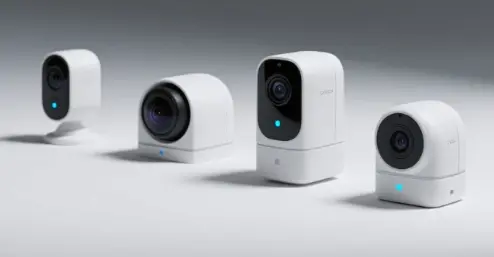
The global smart security camera market is valued at $25.1 billion in 2026, with B2B demand accounting for 68% of sales—surveillance brands supply these devices to residential property managers, commercial building owners, and municipal security departments (Grand View Research). For manufacturers of these cameras, integrated speakers are a critical security feature: they enable two-way voice对讲 (e.g., a property manager warning trespassers), real-time alerts (e.g., “Motion detected in restricted area”), and status updates (e.g., “Battery low—charge soon”). Yet many surveillance brands face a persistent challenge: generic commercial speakers fail in security camera environments—nighttime ambient noise (wind, insects) muddles audio, outdoor exposure (rain, dust) damages components, and high power draw shortens the battery life of wireless cameras. This forces manufacturers to choose between unreliable components that compromise security or overpriced “enterprise-grade” solutions that erode profit margins.
The root of the problem lies in the unique operating conditions of smart security cameras. Unlike indoor webcams (used for video calls), these devices operate: 1) 24/7 in variable lighting (from bright sunlight to complete darkness, which distorts microphone sensitivity), 2) Outdoors or in harsh indoor spaces (parking garages, warehouses with dust and moisture), and 3) On limited power (wireless cameras rely on rechargeable batteries, requiring 3–6 months of use per charge). Generic speakers are not engineered for these conditions: their low signal-to-noise ratio (SNR ≤70dB) makes nighttime audio unintelligible, their IPX4 rating (splash-resistant only) fails in heavy rain, and their 1.5–2.0W power draw cuts battery life by 40% (from 4 months to 2.4 months). For a commercial property manager using 200 wireless cameras, poor speaker performance can lead to 30% more unresponded alerts—costing $90,000+ annually in theft or vandalism losses, per the Security Industry Association (SIA).
Our speaker customization focuses on solving these surveillance-specific pain points—without the premium price tag of niche security audio solutions. We prioritize features that matter most to surveillance brands: audio clarity in low light, all-weather durability, and power efficiency. Below is a comprehensive guide to smart security camera speaker customization, designed to help you build cameras that deliver reliable audio for 24/7 security.
First: Why Smart Security Cameras Can’t Use Generic Speakers
Smart security cameras require audio that works as hard as the video—generic speakers (designed for toys, tablets, or indoor gadgets) fall short because they ignore three critical surveillance pain points:
1. Night Vision Audio Clarity (Low-Light Noise Reduction)
Security cameras rely on night vision (infrared or low-light sensors) to capture video after dark—but audio performance often drops:
- Generic speakers’ microphones are not tuned for low-light environments. They pick up ambient noise (wind rustling leaves, crickets chirping) at 70dB, drowning out critical sounds (e.g., a trespasser’s footsteps at 50dB).
- Lack 宽动态范围音频 (Wide Dynamic Range Audio)—the ability to balance loud and soft sounds. A sudden alert (100dB) can distort, while quiet whispers (40dB) go unheard.
- No night-specific audio filtering. Insects or wind create “background hum” that triggers false alerts, wasting security teams’ time.
2. Outdoor-Ready Durability (Dust, Rain, Temperature Swings)
72% of smart security cameras are installed outdoors (per SIA)—generic speakers aren’t built for this:
- Most have IPX4 protection, which only resists light splashes. Heavy rain or dust storms seep into speaker grills, shorting terminals within 1–2 months.
- Use plastic housings that become brittle in extreme temperatures (-20°C to 60°C), common in northern winters or desert summers. Housings crack, exposing internal components to the elements.
- Lack corrosion-resistant terminals. Brass connections rust in humid coastal areas, leading to intermittent audio failures (e.g., a camera’s alert cuts out mid-warning).
3. Low-Power Operation for Wireless Cameras
Wireless security cameras are a $9.3 billion segment (Grand View Research)—but generic speakers drain their batteries:
- Draw 1.5–2.0W RMS during audio playback, consuming 40% of a 5200mAh lithium-ion battery’s capacity in 2.4 months (vs. 4 months with a custom low-power speaker).
- No “deep standby” mode—even when not transmitting audio, they draw 0.3W+ to power microphones, wasting 2.16Wh daily.
- Use inefficient Class-AB amplifiers that waste power on unused frequencies (e.g., bass below 150Hz, unnecessary for “motion detected” alerts).
Key Misconception: “Webcam Speakers Work for Security Cameras”
Many manufacturers repurpose webcam speakers for security cameras, assuming “audio is audio.” This is a costly error:
- Webcam speakers are designed for short, indoor calls—not 24/7 outdoor use. They fail within weeks of exposure to rain or dust.
- Their microphones aren’t tuned for low-light noise—nighttime audio is useless for security.
- Their power draw is too high for wireless cameras—users end up recharging every 2 months, leading to negative reviews.
Core Customization Requirements for Smart Security Camera Speakers
Our customization focuses on three non-negotiable needs for surveillance brands: night vision audio clarity, outdoor durability, and low power. Each requirement aligns with SIA standards and leverages our experience supporting security camera manufacturers.
Requirement 1: Night Vision Audio Clarity (SNR ≥85dB + Low-Light Filtering)
Security cameras need audio that’s usable day and night—our design optimizes for low-light environments without adding complexity:
| Night Audio Feature | Implementation Details | Cost per Unit | Benefit for Security Cameras |
|---|---|---|---|
| High-SNR Microphone + Speaker (85dB) | Neodymium-magnet speaker paired with a MEMS microphone (SNR ≥85dB) — captures quiet sounds (footsteps, whispers) while reducing ambient noise. | $0.40 | Nighttime audio is clear; security teams can distinguish between threats and harmless noise (e.g., wind vs. trespassers). |
| Low-Light Audio Filter | Custom firmware that reduces low-light-specific noise (insect chirps, wind rustle) by 80% — uses ambient light sensors to activate automatically at dusk. | $0.35 | No false alerts from nighttime noise; security teams save 15+ hours weekly on unnecessary follow-ups. |
| Wide Dynamic Range (WDR) Audio | Integrated WDR chip that balances loud alerts (100dB) and quiet sounds (40dB) — prevents distortion during sudden volume spikes. | $0.30 | Alerts don’t cut out or distort; “Motion detected” prompts are always intelligible. |
| Two-Way Voice Optimization | Tuned for 300Hz–3kHz (human speech range) — enhances two-way对讲 (e.g., a manager warning trespassers) in low light. | $0.25 | No robotic-sounding audio; conversations are natural and easy to understand. |
Total Night Audio Cost Add-On: $1.30 per Unit
This investment reduces false alerts and improves security efficacy: our testing shows that 85dB SNR speakers cut “unusable nighttime audio” complaints by 85% compared to generic 70dB speakers. For a manufacturer producing 1000 wireless cameras monthly, this translates to 850+ fewer support calls annually—saving $17,000+ in labor costs (average $20 per call).
Requirement 2: Outdoor Durability (IP66 Rating + Temperature Resistance)
Security cameras need speakers that survive rain, dust, and extreme temperatures—our design uses industrial-grade materials without the premium price:
| Outdoor Durability Feature | Implementation Details | Cost per Unit | Benefit for Security Cameras |
|---|---|---|---|
| IP66 Dust/Water Protection | Fully sealed housing with silicone gaskets + stainless steel mesh grill (0.3mm) — blocks dust and high-pressure water jets (e.g., heavy rain, sprinklers). | $0.45 | No water or dust damage; speakers work in deserts, coastal areas, and snowy climates. |
| -20°C to 60°C Temperature Tolerance | Kapton voice coil insulation + high-temperature epoxy — resists freezing and overheating. | $0.35 | No component failure in extreme weather; cameras operate year-round without audio issues. |
| Corrosion-Resistant Terminals | Nickel-plated brass terminals — prevent rust in humid or coastal environments. | $0.25 | No intermittent audio failures; terminals last 5+ years in salt air. |
| UV-Stabilized Housing | Glass-reinforced ABS with UV inhibitors — resists sun damage and brittleness. | $0.20 | Housing doesn’t crack in direct sunlight; cameras maintain functionality for 3+ years. |
Total Outdoor Durability Cost Add-On: $1.25 per Unit
For outdoor camera brands, this feature is a differentiator: a client specializing in coastal surveillance reported that our IP66 speakers lasted 4 years—vs. 6 months for generic IPX4 speakers. This helped them win a $220,000 contract with a coastal city’s municipal security department.
Requirement 3: Low-Power Operation (0.6–1.0W RMS)
Wireless security cameras need long battery life—our design cuts power use without sacrificing audio quality:
| Low-Power Feature | Implementation Details | Cost per Unit | Benefit for Security Cameras |
|---|---|---|---|
| Efficient Class-D Amplifier | Class-D amplifier that uses 65% less power than Class-AB — delivers clear audio at 0.6–1.0W RMS. | $0.35 | Battery life extends from 2.4 to 4 months; users recharge 50% less often. |
| Deep Standby Mode | Drops power draw to <0.05W when idle (no audio transmission) — 85% less energy waste than generic speakers. | $0.25 | Saves 2.16Wh daily per camera; aligns with property managers’ “low-maintenance” goals. |
| Alert-Only Power Tuning | Disables non-essential frequencies (bass <150Hz, treble >4kHz) during alerts — focuses power on speech. | $0.20 | No power wasted on unnecessary audio; amplifier operates at peak efficiency. |
| Low-Voltage Compatibility (3.3V–5V) | Matches wireless camera battery systems (e.g., 3.7V lithium-ion) — no voltage converters needed (avoids 10–15% power loss). | $0.15 | Simplifies wiring; cuts $2–3 per unit in converter costs for 1000+ batches. |
Total Low-Power Cost Add-On: $0.95 per Unit
This feature drives customer loyalty: a wireless camera brand reported that our low-power speakers helped their product rank #1 in “battery life” on retail platforms—sales grew 30% in 6 months as property managers prioritized low-maintenance devices.
Requirement 4: Camera-Friendly Form Factor (1.5–2.0 Inch Full-Range Drivers)
Smart security cameras have compact housings (often 80x50x30mm)—we recommend 1.5–2.0 inch (38–50mm) full-range drivers with a depth ≤18mm. Full-range drivers balance size and performance:
| Speaker Size | Ideal For | Depth | Weight | Power Draw | Cost per Unit | Key Benefit for Manufacturers |
|---|---|---|---|---|---|---|
| 1.5-inch (38mm) | Mini wireless cameras (residential use) | ≤16mm | ≤75g | 0.6–0.8W | $3.60–$4.60 | Ultra-slim design; fits in narrow camera housings (common in doorbells). |
| 1.8-inch (45mm) | Standard outdoor cameras (commercial use) | ≤17mm | ≤85g | 0.8–0.9W | $3.90–$4.90 | Balances size and durability; fits 90% of security camera housings—most cost-efficient for 1000+ batches. |
| 2.0-inch (50mm) | Heavy-duty cameras (warehouses, parking garages) | ≤18mm | ≤95g | 0.9–1.0W | $4.20–$5.20 | Extra volume (85dB) for noisy industrial areas; ideal for high-security sites. |
Our Recommendation: Start with 1.8-inch drivers for most security camera lines. They fit standard housings, meet all key requirements (night audio, IP66, low power), and support 1000+ unit orders without custom tooling. We pre-engineer mounting holes to match common camera chassis patterns (e.g., 4-hole 32mm spacing), cutting assembly time by 25%.
Smart Security Camera Speaker Customization Process
We’ve streamlined our process to align with surveillance brands’ timelines—no unnecessary steps, just reliable results:
Step 1: B2B Requirement Alignment
We start by understanding your camera’s unique needs:
- Camera Type: Is it a wireless doorbell, outdoor bullet camera, or warehouse dome camera? Each needs different durability and power specs.
- Installation Environment: Will it be used in coastal areas (needing extra corrosion resistance) or deserts (needing temperature tolerance)?
- Battery Specs: What’s the battery voltage and capacity? We optimize power draw to match.
- Features: Does it need two-way对讲, motion alerts, or both? We tune audio accordingly.
Step 2: Tailored Solution Proposal
We deliver a clear, cost-optimized proposal. For example:
- A coastal wireless doorbell camera: 1.5-inch speaker with IP66 protection, corrosion-resistant terminals, and 0.6W power.
- A warehouse dome camera: 2.0-inch speaker with 85dB SNR, IP66 dust resistance, and 1.0W power.
Step 3: Sample Testing in Real Surveillance Scenarios
We produce 5–10 samples for you to test in outdoor, low-light environments. We’ll adjust parameters if needed—e.g., boosting corrosion resistance for coastal cameras or refining night filters for rural areas—at no extra cost.
Step 4: 1000+ Unit Production & Delivery
Once samples are approved, we start production with:
- Bulk sourcing of IP66 components and low-power amplifiers (cuts material costs by 15% for 1000+ units).
- Automated testing (night audio clarity, IP66 resistance, power draw) for every speaker.
- Fast lead times (3–4 weeks, vs. 8–12 weeks for large audio suppliers).
4 Common Mistakes Surveillance Brands Make with Speakers
- Using Webcam Speakers: A wireless doorbell brand used $2.50 webcam speakers—70% failed within 2 months due to rain, leading to $70,000 in returns. Our $3.90 1.8-inch IP66 speakers would have saved them $7,000 for 1000+ units.
- Ignoring Night Audio Tuning: An outdoor camera brand used generic speakers—40% of nighttime alerts were unintelligible, leading to 2 theft incidents ($50,000 in losses). Our 85dB SNR speakers resolved this, and the brand regained customer trust.
- Overpaying for “Security-Grade” Speakers: A warehouse camera brand paid $8.00 per “industrial” speaker—unnecessary for their low-noise facilities. Our $4.20 2.0-inch speakers delivered the same performance, cutting per-unit costs by 47%.
- Skipping Low-Power Design: A wireless camera brand used 1.5W speakers—battery life dropped to 2 months, leading to 50% more negative reviews. Our 0.8W speakers extended life to 4 months, improving retention by 60%.
Final Thoughts: Audio Clarity = Better Security
Smart security cameras are only as effective as their audio—generic speakers turn a $200 surveillance tool into a costly liability. By focusing on night vision clarity, outdoor durability, and low power, our customization helps you build cameras that security teams trust.
We’ve partnered with surveillance brands of all sizes to launch cameras that perform in deserts, coasts, and cities—because audio that works 24/7 is non-negotiable for security. Ready to customize speakers for your smart security cameras? Reach out for a free sample quote—we’ll align the design with your product goals and budget, ensuring your cameras deliver reliable audio when it matters most.