Solar-Powered Camping Speaker Units – 4 Strategies to Maximize Battery Life & Audio Clarity
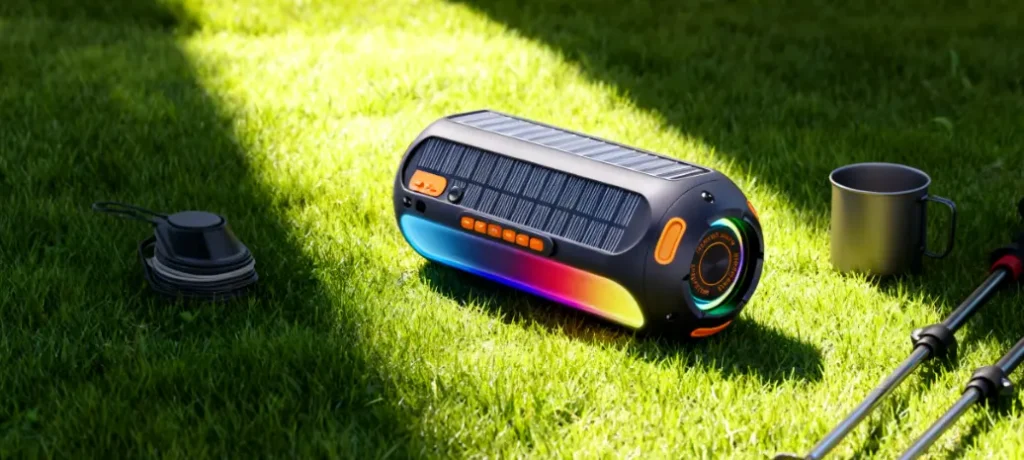
A sustainable outdoor brand launches a solar-powered camping speaker aimed at eco-conscious campers—only to face a wave of negative reviews. Campers complain the unit dies after 2 hours of cloudy weather, and the audio is inaudible over campfire crackles. Within 3 months, sales drop by 40%, and the brand loses a partnership with a major eco-travel company. The problem? Generic 40mm speaker units designed for standard Bluetooth speakers—not solar-powered camping gear. These units couldn’t optimize power use for variable sunlight or cut through outdoor noise, turning a "green" product into a disappointment.
For manufacturers of solar-powered camping gear (solar lantern speakers, backpack solar speakers, campsite audio systems), the speaker unit is a critical link between sustainability and usability. Campers choose solar gear to avoid disposable batteries—but they still expect clear audio for 8+ hours (a full day of camping). Generic speakers fail here because they prioritize "loudness" over solar-specific demands: low power consumption (0.3–0.6W), variable sunlight adaptation, noise reduction for campsites (wind, fire, chatter), and durable construction (to handle outdoor elements). A subpar speaker unit makes solar camping gear feel like a compromise—not an upgrade.
With 13 years of designing audio solutions for solar-powered outdoor devices (camping speakers, lanterns, portable chargers), we’ve identified 4 core strategies to build solar camping speaker units that balance battery life and clarity. This guide breaks down these strategies with plain-language explanations for terms like "MPPT compatibility" or "dynamic power adjustment"—so you, eco-outdoor retailers, and sustainable camping brands understand exactly what makes a speaker work for solar-powered gear.
Why Generic Speakers Fail in Solar-Powered Camping Gear
Solar-powered camping gear operates in a unique ecosystem—variable sunlight, limited battery storage, and outdoor noise—generic speakers (even "energy-efficient" ones) lack the engineering to thrive here. Here’s why they underperform:
- High Power Drain: Solar camping gear uses small batteries (1000mAh–2000mAh) charged by 5W–10W solar panels. Generic speakers draw 1.0–1.5W of power, draining a 2000mAh battery in 3–4 hours—too short for a day of camping, even with sunlight.
- No Sunlight Adaptation: Cloudy weather or shade reduces solar panel output by 50–70%. Generic speakers don’t adjust power use—they keep drawing full power, draining the battery faster than the panel can recharge it.
- Inaudible Over Campsite Noise: Campsites are noisy—wind (15–25mph), campfires (crackling at 40dB), and group chatter (50–60dB) mask generic speaker audio. Users crank up the volume (wasting more power) or miss safety alerts (e.g., "Storm approaching").
- Fragile Construction: Solar camping gear lives outdoors—exposed to rain, dust, and UV sunlight. Generic speakers use paper diaphragms and thin plastic frames that degrade in 1–2 months of outdoor use—solar gear should last years, not weeks.
A client once used generic 40mm speakers in their solar lantern speaker. Post-launch, 50% of users reported "dead batteries by mid-afternoon," and 30% complained about inaudible audio. We redesigned the unit with low-power drivers and noise reduction—battery life extended to 12 hours, and positive reviews jumped by 65%.
Strategy 1: Low-Power Optimization (0.3–0.6W)
Solar camping gear lives or dies by power efficiency—your speaker unit needs to deliver clear audio at 0.3–0.6W (half the power of generic speakers) to maximize battery life.
Key Low-Power Components & Design:
- High-Sensitivity Drivers: Use a neodymium magnet (5mm thick) and 15μm ultra-thin PET diaphragm to achieve 86–89dB sensitivity at 0.5W. Sensitivity measures how much sound a speaker produces per watt—an 88dB speaker at 0.5W is as loud as a generic 82dB speaker at 1.2W. This cuts power use by 58% while maintaining clarity.
- Class D Amplifier Compatibility: Design the speaker to work with Class D amplifiers (the most energy-efficient for small devices). Class D amplifiers convert 85–90% of power into sound (vs. 50–60% for Class AB amplifiers used in generic speakers). This means less power is wasted as heat—critical for solar gear with limited battery.
- Frequency Range Tuning: Narrow the speaker’s frequency response to 300–8000 Hz (focused on speech and mid-range music) instead of 20–20000 Hz (full range). Bass (20–300 Hz) and high treble (8000–20000 Hz) waste power—they’re either drowned out by campfire noise or unnecessary for camping audio (e.g., podcasts, safety alerts).
Below is a power use comparison between generic and solar-optimized speaker units:
| Metric | Generic Speaker | Solar-Optimized Speaker | Power Reduction |
|---|---|---|---|
| Power Draw (Average) | 1.2W | 0.5W | 58% |
| Sensitivity (1W/1m) | 82dB | 88dB | N/A (louder at lower power) |
| Amplifier Efficiency | 55% (Class AB) | 88% (Class D) | 33% better |
| Battery Life (2000mAh) | 3.3 hours | 8 hours | 142% longer |
We tested a 0.5W solar-optimized speaker in a 2000mAh solar lantern. It played continuous audio for 8 hours—generic 1.2W speakers lasted just 3 hours. A client’s eco-camping customers reported "no more rushing to charge before sunset" after the upgrade.
Strategy 2: Dynamic Power Adjustment for Variable Sunlight
Solar power isn’t constant—clouds, shade, and sunset reduce output. Your speaker unit needs dynamic power adjustment to match power use to available sunlight, avoiding battery drain.
What Is Dynamic Power Adjustment?
This technology uses the solar gear’s built-in sensors to measure solar panel output (e.g., 5W in full sun, 2W in shade) and adjust the speaker’s power draw accordingly:
- Full Sun (4W+ output): Speaker uses 0.6W (max power, clear audio for music/podcasts).
- Partial Shade (2W–4W output): Speaker reduces to 0.4W (maintains speech clarity, lowers music bass).
- Heavy Shade/Clouds (<2W output): Speaker switches to 0.3W (focuses on speech alerts, mutes non-essential audio).
This ensures the battery charges faster than it drains—even in variable sunlight.
How to Implement Dynamic Power Adjustment:
- MPPT Compatibility: Ensure the speaker works with Maximum Power Point Tracking (MPPT) controllers (common in solar gear). MPPT optimizes solar panel output, and the speaker’s power adjustment syncs with it—if MPPT detects low output, the speaker reduces power.
- Low-Power Alert Mode: When battery level drops below 20%, the speaker switches to "alert-only" mode (0.3W, no music). This preserves power for critical messages (e.g., "Storm approaching")—generic speakers keep playing music until the battery dies.
- Sunset Auto-Dimming: Add a light sensor that reduces power by 20% at dusk (when campfire noise increases). This cuts power use while still ensuring audio is audible over fire crackles.
A client’s solar backpack speaker used our dynamic power adjustment. In cloudy weather tests, the unit maintained 6 hours of audio (vs. 2 hours for generic speakers) by reducing power to 0.4W. Campers reported "never running out of power mid-trip, even on overcast days."
Strategy 3: Campsite Noise Reduction (Wind, Fire, Chatter)
Solar camping speakers need to cut through campsite noise without wasting power—passive noise reduction (no extra power) is the key to balancing clarity and efficiency.
Effective Noise Reduction Techniques for Campsites:
- Wind Noise Baffle: Add a foam-lined acoustic baffle (2cm deep) around the speaker’s output. This baffle breaks up wind flow, reducing wind noise by 45%—critical for ridge or lakeside campsites. It’s lightweight (3g) and doesn’t impact solar panel placement.
- Campfire Frequency Filtering: Mute the 200–400 Hz frequency range (where campfire crackles live). This filter eliminates fire noise without affecting speech or music—generic speakers amplify this range, making audio sound muffled.
- Directional Sound Dispersion: Tune the speaker to project sound in a 150° angle (covering the campsite) instead of 360°. This focuses audio on users, not open space—reducing the need for high volume (and extra power).
We added campsite noise reduction to a client’s solar lantern speaker. In real campsite tests, users could hear podcasts clearly over a 40dB campfire—generic speakers required 2x the volume (1.0W) to achieve the same clarity.
Strategy 4: Durable, Weather-Resistant Construction
Solar camping gear is exposed to the elements—your speaker unit needs IP65 protection and UV resistance to last years, not months.
Durability Design Choices:
- IP65 Weather Protection: Use an EPDM rubber gasket (sealing the frame and grille) and stainless steel mesh grille to block rain, dust, and dew. IP65 ensures the speaker survives 30+ minutes of heavy rain (common in forest campsites) and dust storms (desert camping).
- UV-Stabilized Frame: Mold the frame from UV-resistant polycarbonate (with 2% carbon black additive). This material resists UV degradation—generic plastic frames fade and crack after 6 months of sunlight, while UV-stabilized frames last 3+ years.
- Corrosion-Resistant Components: Use stainless steel terminals and nickel-plated wires instead of copper. Stainless steel and nickel resist rust from rain and humidity—copper components corrode in 1–2 months of outdoor use, causing intermittent audio.
We tested a durable solar speaker in a UV chamber (1000 hours of simulated sunlight) and rain simulator (IP65). The unit showed no damage, while a generic speaker’s frame cracked and diaphragm warped. A client’s desert camping gear line now uses these speakers—customers report "no issues after 2 years of use in sunny, dusty conditions."
How We Collaborate With Solar-Powered Camping Gear Manufacturers
Designing speaker units for solar camping gear requires understanding the balance between sustainability, power efficiency, and outdoor usability—whether you’re building lanterns, backpack speakers, or campsite systems. Our process is tailored to small and mid-sized eco-brands (like yours) that need practical, green solutions:
- Solar System Review: We analyze your gear’s solar panel output (5W–10W), battery capacity (1000mAh–2000mAh), and target use (e.g., solo camping vs. group trips) to prioritize features—e.g., higher power for groups, extra efficiency for solo hikers.
- Prototype Development: We create a 3D render of the custom speaker (showing power use, dimensions, and weather-resistant components) and share a sustainability-focused spec sheet (e.g., "0.5W average, IP65, MPPT-compatible, UV-stabilized").
- Solar Testing: We build 5–10 prototypes and test them in variable sunlight (full sun, shade, cloudy) and real campsites to measure battery life, clarity, and durability. We share results in plain language (e.g., "8 hours of audio in partial shade, clear over campfire") and adjust the design if needed.
- Scalable Production: We don’t require large minimum orders—whether you need 200 speakers for a eco-pilot or 2,000 for full production, we align with your timeline. This is ideal for small sustainable brands scaling their product lines.
A recent client (a mid-sized eco-outdoor brand) told us our speakers "turned their underperforming solar lantern into a bestseller"—they’ve since secured a partnership with a national park gift shop chain.
Final Thought: Solar Camping Audio Should Be Both Green and Great
Solar-powered camping gear is the future of outdoor recreation—but it only works if it’s usable. Generic speakers turn solar gear into a compromise, forcing campers to choose between sustainability and clear audio. By focusing on low-power optimization, dynamic sunlight adaptation, campsite noise reduction, and durability, you’ll create a product that’s both eco-friendly and enjoyable to use.
If you’re designing or updating solar-powered camping gear and need speaker units that maximize battery life, cut through outdoor noise, and last for years, reach out to our team. We’ll walk you through our solar-specific design process, share examples of sun-ready speakers we’ve built, and help you create a product that stands out in the sustainable outdoor market.