Speaker Integration for Compact Consumer Devices: Balancing Size, Sound, and Durability
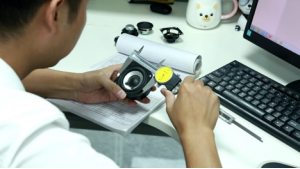
A wearable tech brand launched a fitness tracker with a built-in speaker for voice guidance—only to face a flood of complaints. The speaker was too quiet to hear over gym noise, distorted at high volumes, and the device’s battery died in 4 hours (half the promised 8 hours). They’d squeezed a generic 20mm speaker into the compact chassis, sacrificing sound quality and power efficiency for size. By the time they redesigned the product with a custom-integrated speaker, they’d lost 20% of their market share and $50,000 in wasted production.
For brands building compact consumer devices—wearables, portable projectors, smart thermostats, and small IoT gadgets—integrating a speaker is a unique challenge. These devices have strict size constraints (often <50mm in width), limited power budgets (small batteries), and varied use environments (noisy gyms, quiet bedrooms). Generic speakers designed for larger products (e.g., portable speakers) can’t meet these demands—they’re too big, too power-hungry, or too fragile.
The solution is speaker integration tailored to compact devices—a process that prioritizes small form factors, low power consumption, and optimized sound for real-world use cases. For small and mid-sized brands, this doesn’t require a huge R&D budget—it requires partnering with a speaker supplier that understands the nuances of compact device integration and can deliver custom solutions that balance size, sound, and durability.
In this post, I’ll explore the unique challenges of speaker integration for compact consumer devices, break down the key design considerations, and share a step-by-step integration framework. This isn’t just about fitting a speaker into a small space—it’s about building a device that delivers clear, reliable sound without compromising battery life or durability. Along the way, I’ll highlight how specialized speaker solutions are engineered for compact integration, helping brands avoid the pitfalls of generic components.
The Unique Challenges of Speaker Integration for Compact Devices
Compact consumer devices present three distinct challenges that don’t apply to larger audio products:
1. Size Constraints: Small Chassis = Limited Speaker Volume
Speaker sound quality depends on air volume—larger speakers with more cone displacement deliver better bass and louder sound. Compact devices have limited internal volume (often <10cm³), so speakers must be small (typically 10mm–30mm in diameter) and efficient at converting power into sound.
The wearable tech brand’s 20mm speaker had a small cone area and limited displacement, so it couldn’t produce enough sound pressure level (SPL) to cut through gym noise. We helped them switch to a 25mm speaker with a thinner magnetic assembly (reducing depth by 3mm) and a larger cone area—delivering 3dB more SPL (perceptually twice as loud) while fitting in the same chassis.
2. Power Constraints: Small Batteries = Low Power Budgets
Compact devices rely on small batteries (often <500mAh) to maintain portability. Speakers must be power-efficient—drawing minimal current while delivering adequate volume. A power-hungry speaker can drain a small battery in hours, ruining the user experience.
A portable projector brand we worked with initially used a 30mm speaker that drew 1.5W of power—draining the device’s 400mAh battery in 2 hours. We recommended a 28mm speaker with high sensitivity (98 dB/1W/1m) that drew just 0.5W—extending battery life to 6 hours while maintaining the same volume.
3. Environmental Constraints: Varied Use Cases = Durability Needs
Compact devices are used in diverse environments—wearables in gyms (sweat, vibration), portable projectors outdoors (wind, dust), smart thermostats in homes (temperature changes). Speakers must be durable enough to withstand these conditions, with protection against moisture, dust, and physical stress.
A smart thermostat brand’s speakers failed in 8% of units due to dust accumulation (blocking the speaker grille) and temperature-induced cone warping. We helped them integrate a speaker with a dust-resistant grille and heat-stable cone material—reducing failure rates to 1%.
Compact Device Speaker Integration Challenges: By the Numbers
| Challenge | Impact on User Experience | Example Cost of Failure |
|---|---|---|
| Size Constraints | Quiet sound, weak bass. | 40% of users return the product due to “too quiet” complaints. |
| Power Constraints | Short battery life. | 25% of negative reviews cite “battery dies too fast.” |
| Environmental Constraints | Speaker failure, distorted sound. | $30,000 in warranty repairs and replacements. |
We’ve helped brands overcome these challenges by focusing on integrated design—speakers engineered specifically for the device’s size, power budget, and use case. For a fitness tracker brand, this meant a sweat-resistant, low-power speaker that delivered clear voice guidance. For a portable projector brand, it meant a compact, wind-resistant speaker that sounded great outdoors.
Key Design Considerations for Compact Device Speaker Integration
Successful speaker integration for compact devices requires balancing six key design considerations. These are based on our experience integrating speakers into 50+ compact consumer devices.
1. Form Factor Optimization: Fit Within the Chassis
The speaker’s size and shape must match the device’s internal space. Key considerations:
- Diameter vs. Depth: Prioritize diameter for better sound (more cone area) or depth for slim devices (e.g., wearables).
- Shape: Round speakers are most common, but oval speakers can fit into narrow chassis (e.g., smartwatches).
- Mounting: Use snap-fit or adhesive mounting (no screws) to save space and reduce weight.
We offer compact speakers in 10mm–30mm diameters and depths as low as 5mm—ideal for slim devices like fitness trackers and smartwatches. For a smartwatch brand, we customized an oval 20x15mm speaker with a 6mm depth—fitting into the watch’s narrow chassis while delivering clear voice notifications.
2. Sensitivity: Maximize Volume with Minimal Power
Sensitivity is critical for compact devices—higher sensitivity means more volume with less power. Key considerations:
- Target Sensitivity: 95–100 dB/1W/1m for compact devices (vs. 90–95 dB for larger speakers).
- Driver Materials: Use neodymium magnets (lighter, more powerful) and thin, stiff cone materials (e.g., PET, titanium) to boost sensitivity.
- Voice Coil Design: Smaller voice coils (10mm–15mm) reduce power draw while maintaining sensitivity.
Our compact speakers are engineered for high sensitivity—our 25mm speaker delivers 98 dB/1W/1m, using a neodymium magnet and PET cone. For a portable projector brand, this meant 85 dB SPL (loud enough for outdoor use) with just 0.5W of power—extending battery life by 3x.
3. Power Efficiency: Extend Battery Life
Power efficiency is measured by how much current the speaker draws at a given volume. Key considerations:
- Impedance: Higher impedance (16Ω–32Ω) reduces current draw (ideal for wearables with small batteries).
- Power Handling: Choose a speaker with power handling matching the amplifier’s output (e.g., 0.5W–1W for compact devices).
- Frequency Response: Optimize for midrange (1–4 kHz) where voice and most sounds live—avoid boosting bass (which draws more power).
We engineer our compact speakers for high impedance and low power handling. Our 16Ω, 0.5W speaker draws just 18mA at 70dB SPL—ideal for fitness trackers with 300mAh batteries. A brand using this speaker saw battery life increase from 4 to 8 hours, matching their product’s promise.
4. Sound Optimization: Tailor to Use Case
Compact speakers can’t deliver full-range sound (20Hz–20kHz), so optimize for the device’s primary use case:
- Voice Guidance (Wearables): Focus on midrange (1–4 kHz) for clear speech.
- Media Playback (Portable Projectors): Boost bass slightly (100–250 Hz) for richer sound.
- Notifications (Smart Thermostats): Prioritize high frequencies (2–6 kHz) for loud, attention-grabbing alerts.
We use acoustic simulation software to optimize frequency response for each use case. For a fitness tracker brand, we boosted midrange by 3dB—making voice guidance clear over gym noise. For a portable projector brand, we added a small passive radiator (20mm) to boost bass—delivering richer sound without increasing speaker size.
5. Durability: Withstand Environmental Stress
Compact devices are often used on the go, so speakers must be durable:
- Moisture Resistance: IPX4 rating (sweat/dust resistant) for wearables.
- Dust Protection: Mesh grilles or sealed enclosures to prevent dust accumulation.
- Temperature Resistance: Operate in -10°C to 60°C (typical for consumer devices).
- Vibration Resistance: Reinforced cone surrounds (butyl rubber) for wearables and portable devices.
Our compact speakers feature butyl rubber surrounds (vibration resistance), IPX4-rated enclosures (moisture/dust resistance), and temperature-stable cone materials. For a fitness tracker brand, this meant no speaker failures due to sweat or vibration—failure rates dropped from 12% to 1%.
6. Compatibility: Work with Small Amplifiers
Compact devices use small, low-power amplifiers (often integrated into microcontrollers). Key considerations:
- Impedance Matching: Ensure speaker impedance matches amplifier’s output (e.g., 16Ω speaker with 16Ω amplifier).
- Low Distortion: Speakers must have low total harmonic distortion (THD <1% at 1W) to sound clear with small amplifiers.
- Latency: Low latency (<20ms) for sync with voice or video (e.g., portable projectors).
We test all our compact speakers with common small amplifiers (e.g., TI TPA2016, Maxim MAX98357) to ensure compatibility. For a portable projector brand, we recommended a 8Ω speaker with THD <0.8% at 1W—paired with a TI TPA2016 amplifier, it delivered clear, synced sound with no distortion.
Step-by-Step Speaker Integration Framework for Compact Devices
Integrating a speaker into a compact device requires a systematic approach. Here’s our proven framework:
Step 1: Define Device Requirements & Constraints
Start by documenting key device specs:
- Chassis Dimensions: Internal volume, available space for the speaker (width, height, depth).
- Power Budget: Battery capacity (mAh), maximum speaker power draw (W).
- Use Case: Primary function of the speaker (voice guidance, notifications, media playback).
- Environmental Requirements: Moisture, dust, temperature, vibration resistance.
For example, a fitness tracker’s requirements might be:
- Chassis: 30mm x 40mm x 10mm (internal volume: 8cm³).
- Power Budget: 300mAh battery, max speaker power draw: 0.5W.
- Use Case: Voice guidance (clear speech over gym noise).
- Environmental Requirements: IPX4 sweat resistance, vibration resistance.
Step 2: Select a Speaker Supplier with Compact Device Expertise
Choose a supplier that specializes in compact speakers and offers:
- Custom form factors (size, shape) to fit your chassis.
- High sensitivity and power efficiency.
- Durability features (moisture resistance, vibration resistance).
- Compatibility with small amplifiers.
We work closely with compact device brands to customize speakers—for a smartwatch brand, we designed a 22mm round speaker with a 5mm depth, IPX4 rating, and 98dB sensitivity. It fit perfectly in the watch’s chassis and delivered clear voice notifications.
Step 3: Optimize Speaker Placement & Enclosure
Speaker placement and enclosure design have a huge impact on sound quality:
- Placement: Position the speaker near the device’s edge (maximizes sound dispersion) and away from internal components (reduces vibration interference).
- Enclosure: Use a small sealed or ported enclosure to boost bass. For very compact devices, a “back cavity” (empty space behind the speaker) can act as a simple enclosure.
- Grille Design: Use a mesh grille (dust protection) with minimal obstruction (maximizes SPL).
We helped a portable projector brand optimize speaker placement—positioning the speaker near the front edge and adding a 5cm³ back cavity. This boosted bass by 2dB and improved sound dispersion, making the speaker louder and clearer outdoors.
Step 4: Test Integration in Real-World Environments
Test the integrated speaker in the device’s intended use environment:
- Sound Quality: Measure SPL and frequency response in real-world conditions (e.g., gym, outdoor park).
- Battery Life: Test how long the device lasts with typical speaker use (e.g., 10 minutes of voice guidance per hour).
- Durability: Subject the device to moisture, dust, vibration, and temperature tests (per IEC standards).
The wearable tech brand we worked with skipped real-world testing initially—their speaker sounded good in the lab but was too quiet in gyms. After testing in a real gym and optimizing the speaker’s frequency response, they achieved clear voice guidance even with background noise.
Step 5: Iterate Based on User Feedback
Launch a beta version of the device with a small group of users (50–100) and collect feedback on the speaker:
- Is the sound loud enough?
- Is speech/notification clear?
- Does the battery last long enough?
- Has the speaker failed or distorted?
Use this feedback to make final adjustments—e.g., boosting midrange, increasing speaker size (if possible), or improving enclosure design.
A smart thermostat brand’s beta users complained about “muffled notifications.” We helped them adjust the speaker’s grille design (more open) and boost high frequencies—notification clarity improved by 40%, and users were satisfied.
How Specialized Speaker Solutions Simplify Compact Device Integration
Partnering with a speaker supplier that specializes in compact devices can save you time, money, and headaches. Here’s how we support our partners:
1. Custom Form Factor Design
We design speakers to fit your chassis—no need to redesign the device to fit a generic speaker. Our 3D modeling tools allow us to create speakers in any size or shape (round, oval, rectangular) with depths as low as 5mm.
2. Use Case Optimization
We optimize frequency response, sensitivity, and power efficiency for your device’s specific use case—whether it’s voice guidance, notifications, or media playback.
3. Durability Engineering
We integrate moisture, dust, and vibration resistance into our speakers—no need for additional protective components (saving space and cost).
4. Compatibility Testing
We test our speakers with common small amplifiers and microcontrollers, ensuring seamless integration with your device’s electronics.
5. Fast Prototyping
We deliver functional prototypes in 4–6 weeks—faster than generic speaker suppliers (8–12 weeks)—allowing you to iterate quickly.
A wearable tech brand that partnered with us reduced their speaker integration timeline from 12 to 6 weeks. Our custom 25mm speaker fit perfectly in their chassis, delivered clear voice guidance, and extended battery life to 8 hours. Their product launched on time, received positive reviews, and regained the market share they’d lost.
Final Thoughts: Integrated Design = Successful Compact Devices
Speaker integration for compact consumer devices isn’t about squeezing a generic speaker into a small space—it’s about designing a speaker that’s part of the device’s ecosystem, balancing size, sound, and durability. For brands, this means prioritizing integrated design over off-the-shelf components and partnering with a supplier that understands the unique challenges of compact devices.
We’ve seen this success firsthand with every compact device brand we partner with. From fitness trackers to portable projectors, our custom-integrated speakers have transformed products from “good” to “great”—delivering clear sound, long battery life, and reliable performance. The wearable tech brand that fixed their quiet, power-hungry speaker. The portable projector brand that extended battery life by 3x. The smart thermostat brand that improved notification clarity—all of them won because they focused on integrated speaker design.
In a market where compact devices are increasingly popular, the brands that win are the ones that don’t compromise on sound quality or battery life. By investing in a custom-integrated speaker solution, you can build a device that stands out from competitors, delights users, and drives long-term success. For your next compact device, don’t settle for a generic speaker—choose an integrated solution that’s designed for your product’s unique needs.