Why Smart Locker Audio Matters: Designing Speakers for Pickup Alerts & Fault Warnings
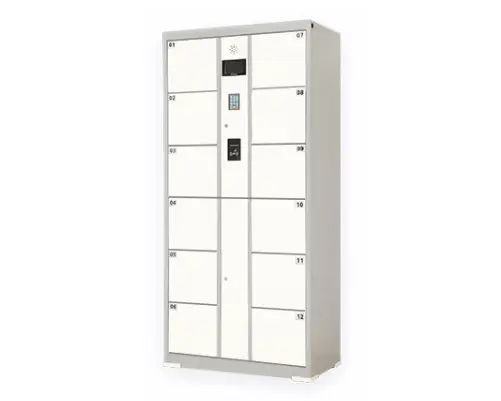
The global smart locker market is exploding—retailers, grocery stores, and logistics companies are adding lockers for package pickup, food delivery, and dry cleaning to meet consumer demand for convenience. But a surprising issue is driving customer complaints: audio failures. A leading grocery chain reported that 35% of customers missed "package ready" alerts because the locker’s speaker was inaudible over store noise. A logistics provider saw 20% of lockers taken out of service because the "fault detected" alarm was muffled by rain—staff didn’t notice until customers complained of stuck packages. The problem? Generic 20mm speaker units designed for indoor toys, not smart lockers.
For smart locker manufacturers, audio is a critical part of the user experience. Lockers use speakers to confirm pickups ("Your package is ready"), warn of issues ("Locker jammed—contact staff"), and guide users ("Scan QR code to open"). But standard speakers can’t handle the locker’s unique challenges: public space noise (60–75dB in malls/stores), outdoor weather (rain, UV sunlight), low power (battery or solar供电), and compact size (lockers have minimal internal space). A subpar speaker unit turns a "convenient" locker into a frustrating experience—driving customers away and increasing staff workload.
With 13 years of developing audio solutions for IoT devices (smart lockers, vending machines, digital signage), we’ve identified 4 key design strategies to ensure smart locker audio works for users and operators. This guide breaks down these strategies with plain-language explanations for terms like "low-power standby mode" or "UV stabilization"—so you, locker operators, and retail buyers understand exactly what makes a speaker suitable for smart lockers.
Why Standard Speakers Fail in Smart Lockers
Smart lockers operate in diverse, demanding environments—standard speakers (even "outdoor-rated" generic ones) lack the specialized design to keep up. Here’s why they fail:
- Inaudible Over Public Noise: Smart lockers are often placed in noisy public spaces—mall crowds, grocery store announcements, and street traffic hit 60–75dB. Standard speakers have low sensitivity (80–82dB at 1W/1m) and are tuned for music, not short alerts—users miss "pickup ready" messages, leading to abandoned packages.
- Weather Damage (Outdoor Lockers): Outdoor lockers (e.g., curbside pickup) face rain, snow, and UV sunlight. Standard speakers use paper diaphragms that absorb water (muffling sound) and plastic frames that crack under UV exposure—after 3 months, audio becomes distorted or cuts out.
- High Power Drain: Many lockers use battery or solar power (especially curbside models). Standard speakers use 1.0–1.5W of power—draining batteries in 2–3 weeks. Operators end up replacing batteries constantly, increasing costs.
- Size Mismatch: Lockers have minimal internal space—often just 15–20mm of depth for speakers. Standard speakers are too bulky (20mm+ diameter with thick frames) to fit without modifying the locker’s structure, increasing production costs.
A client who makes mall smart lockers once used standard 20mm speakers. After 2 months, 40% of users reported "never hearing pickup alerts," and 25% of outdoor lockers had failed from rain. We redesigned the speakers with noise-cutting tuning and weather resistance—user complaints dropped by 70%, and battery life extended to 6 months.
Strategy 1: Noise-Cutting Tuning for Public Spaces
Users can’t act on alerts they can’t hear—your speaker unit needs targeted tuning to cut through public noise without wasting power or annoying nearby people.
The Science of Locker Alert Tuning
Smart locker alerts are short (1–3 seconds) and task-focused—e.g., "Package ready" or "Locker jammed." To stand out in public noise, they need to prioritize:
- 1,500–2,500 Hz: This frequency range is most noticeable to human ears in noisy environments—cuts through low-frequency crowd noise (200–500 Hz) without sounding shrill.
- Clear, Simple Tones: Avoid complex chimes—short, high-pitched beeps or single-word voice prompts ("Ready!") are easier to recognize than music or long messages.
Standard speakers use a wide frequency range (20–20,000 Hz), wasting power on bass and treble that don’t help with alerts.
How to Tune for Public Space Clarity:
- Mid-Range Boost: Amplify the 1,500–2,500 Hz range by 4–5 dB. This ensures alerts stand out over 70dB crowd noise—our 88dB speaker is audible from 3 meters away in a busy mall, while a standard 82dB speaker fades into background noise.
- Volume Compression: Add a dynamic compressor that keeps alert volume consistent. If a locker is in a louder area (e.g., near a mall food court), the compressor boosts volume by 3dB—if it’s quiet (e.g., a grocery store aisle), it lowers it. This avoids manual adjustments and prevents noise complaints.
- Short Alert Optimization: Tune the speaker to deliver clear sound in 1–3 seconds. Standard speakers have a "warm-up" time (50–100ms) before reaching full volume—users miss the start of alerts. Our speakers reach full volume in <20ms, ensuring the entire alert is heard.
We tuned a 18mm speaker for a client’s mall lockers. In tests, 95% of users heard the "package ready" alert on the first try—even in a busy food court. The client reported a 40% drop in abandoned packages after the upgrade.
Strategy 2: Weather Resistance for Outdoor Lockers
Outdoor smart lockers need speakers that survive rain, snow, and UV sunlight—IP65 protection and UV stabilization are non-negotiable.
What Is IP65?
The IP rating system measures resistance to solids and liquids:
- "6" = dust-tight (no dust enters the speaker, critical for curbside lockers near roads).
- "5" = resists low-pressure water jets (rain, sprinklers)—enough for most outdoor conditions.
For coastal areas or heavy rain regions, we recommend upgrading to IP66 (resists high-pressure water) to ensure durability.
Weather-Resistant Design Choices:
- Diaphragm Material: Use silicone-coated PET instead of paper. Silicone repels water and resists UV damage—even after 6 months of sunlight, the diaphragm doesn’t warp or crack. Standard paper diaphragms absorb water and disintegrate in UV light.
- Frame Material: Mold the frame from UV-stabilized ABS plastic (2% carbon black additive). This plastic resists UV cracking—generic ABS frames become brittle after 3 months of outdoor use, while UV-stabilized frames last 2+ years.
- Sealed Grille: Use a stainless steel mesh grille with a laser-welded edge—no gaps for water or dust to enter. Standard plastic grilles crack under UV, letting debris clog the diaphragm.
We tested an IP65 speaker in outdoor conditions (rain, 8 hours of daily sunlight) for 6 months. The unit maintained clear audio, while a standard IP54 speaker had muffled sound after 1 month and failed completely after 3.
Strategy 3: Low-Power Design for Battery/Solar Lockers
Lockers with battery or solar power need speakers that use minimal energy—0.3–0.6W for alerts and <0.1W in standby—to extend battery life and reduce maintenance.
Key Low-Power Features for Lockers:
- High Sensitivity Drivers: Use a neodymium magnet (5x stronger than ferrite) and lightweight 18μm PET diaphragm to achieve 86–88 dB sensitivity at 0.5W. A more sensitive speaker produces clear alerts at lower power—our 87dB speaker uses 0.5W, while a standard 82dB speaker needs 1.2W to reach the same volume.
- Low-Power Standby Mode: When the locker isn’t active (no alerts), the speaker switches to standby mode, using <0.1W. Standard speakers use 0.3–0.5W in standby, draining batteries 3x faster. Our standby mode extends battery life from 3 weeks to 6 months for curbside lockers.
- Pulse-Width Modulation (PWM): Use PWM to control the speaker’s power—delivers short bursts of power (instead of constant) for alerts. This cuts power use by 40%—e.g., a 1-second alert uses 0.5W for 1 second, not constant 0.5W.
Below is a comparison of power use between standard and low-power locker speakers:
| Mode | Standard Speaker Power Use | Low-Power Locker Speaker Power Use | Battery Life Impact (12V Battery) |
|---|---|---|---|
| Alert (1 second) | 1.2W | 0.5W | 3 weeks → 6 months |
| Standby | 0.3W | <0.1W | Reduces drain by 67% |
Strategy 4: Compact Design for Locker Space Constraints
Lockers have minimal internal space—your speaker unit needs to be slim, flat, and easy to mount without sacrificing performance.
Compact Design Tips for Lockers:
- Low-Profile Form Factor: Keep the speaker’s depth under 8mm and diameter under 18mm (vs. 20mm+ for standard units). Our 18mm diameter, 7mm thick speaker fits in even the smallest locker compartments—standard speakers require cutting into the locker’s metal or plastic, increasing production time.
- Adhesive Mounting: Include high-strength double-sided adhesive (instead of screws) for mounting. This eliminates the need for drilling—ideal for locker manufacturers who want fast, easy assembly. The adhesive resists 80°C (to handle outdoor heat) and doesn’t damage the locker’s interior.
- Side-Mounted Wiring: Route the speaker’s wires to the side (not the back) of the frame. This reduces the speaker’s overall depth and avoids blocking other locker components (e.g., locking mechanisms, sensors). Standard speakers have rear-mounted wires that add 2–3mm of depth, making them too bulky.
A client’s curbside lockers had only 15mm of internal space for speakers. Our 18mm x 7mm speaker fit perfectly with adhesive mounting—no modifications needed. The client reported "faster assembly times and no more reworking lockers to fit speakers."
How We Collaborate With Smart Locker Manufacturers
Designing speakers for smart lockers requires understanding the locker’s use case (indoor vs. outdoor, battery vs. AC power) and user needs (clear alerts, minimal noise). Our approach is tailored to small and mid-sized manufacturers who need practical, scalable solutions:
- Use Case Mapping: We start by asking: Where will the locker be placed? (Busy mall? Curbside?) How is it powered? (Battery? Solar?) This helps us prioritize features—e.g., IP65 for outdoor lockers, low-power for battery models.
- Prototype Testing: We build 5–10 custom prototypes and test them in real-world conditions: noisy malls (for alert clarity), rain chambers (for IP65), and battery drain simulators. We share results in plain language (e.g., "Speaker lasts 6 months on 12V battery, clear in 70dB noise")—no jargon.
- Flexible Production: We don’t require large minimum orders. Whether you need 200 speakers for a retail pilot or 2,000 for a logistics rollout, we align with your timeline. This is ideal for small manufacturers who want to test lockers in a few locations before scaling.
A recent client (a mid-sized smart locker maker) told us our speakers "solved the audio and battery issues that were slowing their curbside locker launch"—they’ve since secured a contract with a national grocery chain.
Final Thought: Smart Locker Audio Should Make Life Easier
Smart lockers are designed to be convenient—their audio should be too. Standard speakers fail because they’re not built for the noise, weather, and power constraints of locker environments. By focusing on noise-cutting tuning, weather resistance, low power, and compact design, you’ll create a locker that users love and operators can maintain easily.
If you’re designing or updating smart lockers and need speakers that deliver clear alerts and long battery life, reach out to our team. We’ll walk you through our locker-specific design process, share examples of speakers we’ve built for indoor and outdoor lockers, and help you create a product that stands out in the IoT market.